
"The Party Must Go On" – 11458 rezultate
0.03 secundeMeilisearch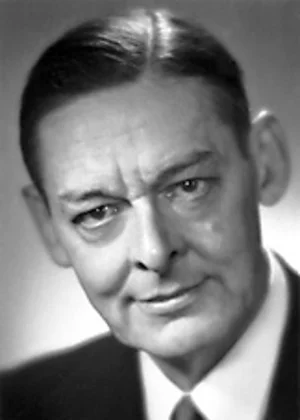 TE
TET.S. Eliot
Thomas Stearns Eliot, OM (26 September 1888–4 January 1965), was a poet, playwright and literary critic. He received the Nobel Prize in Literature in 1948. Among his most famous writings are the poems The Love Song of J. Alfred Prufrock, The Waste Land, The Hollow Men, Ash Wednesday and Four Quartets; the plays Murder in the Cathedral and The Cocktail Party; and the essay "Tradition and the Individual Talent". Eliot was born in the United States, moved to the United Kingdom in 1914 (at age 25), and became a British subject in 1927 at the age of 39. Of his nationality and its role in his work, Eliot said: "[My poetry] wouldn't be what it is if I'd been born in England, and it wouldn't be what it is if I'd stayed in America. It's a combination of things. But in its sources, in its emotional springs, it comes from America."
25 poezii, 0 proze
 ÉG
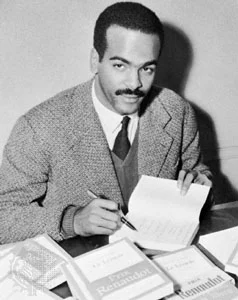
ÉGÉdouard Glissant
Edouard Glissant (born in Sainte-Marie, Martinique in 1928) is a French writer, poet and literary critic. He is widely recognised as being one of the most influential figures in Caribbean thought and cultural commentary. He studied at the Lycée Schoelcher, named after the abolitionist Victor Schoelcher, where the poet Aimé Césaire had studied and had come back to as a teacher. Césaire had met Léon Damas there; later in Paris they would join with Léopold Senghor, a poet and the future first president of Senegal, to formulate and promote the conecpt of négritude. Césaire did not teach Glissant, but did serve as an inspiration to him; another student at the school at that time was Franz Fanon. Glissant left Martinique in 1946 for Paris, where he received his PhD, having studied ethnography at the Musée de l'Homme and History and philosophy at the Sorbonne. He established, with Paul Niger, the separatist Front Antillo-Guyanais pour l'Autonomie party in 1959, as a result of which Charles...
16 poezii, 0 proze
Jelaluddin Rumi
RUMI Rumi is one of the most read and well known poets in the world. Jelaluddin Rumi was born in the Eastern part of the Ancient Persian Empire near Balkh (presently Afghanistan), on September 30, 1207. His first name literally means Majesty of Religion, Jalal means majesty and din means religion. Because of the threat of Mongol invasion in Persia his family fled, finally settling in Konya, Turkey. He passed away, on December 17, 1273. His shrine is in Konya. As a genius theologian, a brilliant scholar, and a pillar of Islam, he followed in his father place until his spiritual friend and teacher, Shams of Tabriz appeared in his life. Rumi underwent a spiritual transformation in 1244 after meeting Shams. With appearance of Shams, Rumi became reborn and soon started his marvelous work \"Masnavi,\" (Mathnawi) consisting of 24,000 verses at age 38. His other famous work is \"Divan-e Shams-e Tabriz\" (the collective poems of Shams of Tabriz). Rumi\'s poetry has a mystic connotation, a...
0 poezii, 0 proze
Jelaluddin Rumi
RUMI Rumi is one of the most read and well known poets in the world. Jelaluddin Rumi was born in the Eastern part of the Ancient Persian Empire near Balkh (presently Afghanistan), on September 30, 1207. His first name literally means Majesty of Religion, Jalal means majesty and din means religion. Because of the threat of Mongol invasion in Persia his family fled, finally settling in Konya, Turkey. He passed away, on December 17, 1273. His shrine is in Konya. As a genius theologian, a brilliant scholar, and a pillar of Islam, he followed in his father place until his spiritual friend and teacher, Shams of Tabriz appeared in his life. Rumi underwent a spiritual transformation in 1244 after meeting Shams. With appearance of Shams, Rumi became reborn and soon started his marvelous work \"Masnavi,\" (Mathnawi) consisting of 24,000 verses at age 38. His other famous work is \"Divan-e Shams-e Tabriz\" (the collective poems of Shams of Tabriz). Rumi\'s poetry has a mystic connotation, a...
0 poezii, 0 proze
 JR
JRJelaluddin Rumi
RUMI Rumi is one of the most read and well known poets in the world. Jelaluddin Rumi was born in the Eastern part of the Ancient Persian Empire near Balkh (presently Afghanistan), on September 30, 1207. His first name literally means Majesty of Religion, Jalal means majesty and din means religion. Because of the threat of Mongol invasion in Persia his family fled, finally settling in Konya, Turkey. He passed away, on December 17, 1273. His shrine is in Konya. As a genius theologian, a brilliant scholar, and a pillar of Islam, he followed in his father place until his spiritual friend and teacher, Shams of Tabriz appeared in his life. Rumi underwent a spiritual transformation in 1244 after meeting Shams. With appearance of Shams, Rumi became reborn and soon started his marvelous work \"Masnavi,\" (Mathnawi) consisting of 24,000 verses at age 38. His other famous work is \"Divan-e Shams-e Tabriz\" (the collective poems of Shams of Tabriz). Rumi\'s poetry has a mystic connotation, a...
13 poezii, 0 proze
 AH
AHAldous Leonard Huxley
[[en]] Aldous Leonard Huxley was born on July 26, 1894, into a family that included some of the most distinguished members of that part of the English ruling class made up of the intellectual elite. Aldous' father was the son of Thomas Henry Huxley, a great biologist who helped develop the theory of evolution. His mother was the sister of Mrs. Humphrey Ward, the novelist; the niece of Matthew Arnold, the poet; and the granddaughter of Thomas Arnold, a famous educator and the real-life headmaster of Rugby School who became a character in the novel Tom Brown's Schooldays.Brave New World book cover Undoubtedly, Huxley's heritage and upbringing had an effect on his work. Gerald Heard, a longtime friend, said that Huxley's ancestry "brought down on him a weight of intellectual authority and a momentum of moral obligations." Throughout Brave New World you can see evidence of an ambivalent attitude toward such authority assumed by a ruling class. Like the England of his day, Huxley's Utopia...
8 poezii, 0 proze
 JS
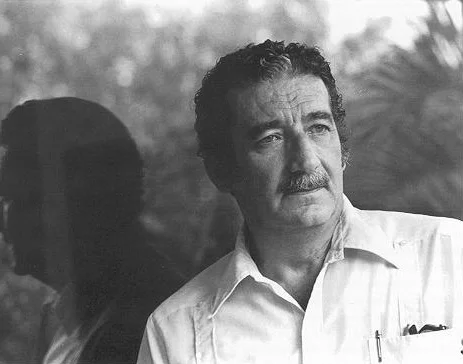
JSJaime Sabines
Jaime Sabines Gutiérrez (March 25, 1926 - March 19, 1999) is arguably Mexico's most influential contemporary poet. Known as “the sniper of Literature” as he formed part of a group that transformed literature into reality, he wrote ten volumes of poetry, and his work has been translated into more than twelve languages. His writings chronicle the experience of everyday people in places such as the street, hospital, and playground. Sabines was also a politician. Jaime Sabines was born on March 25, 1926 in Tuxtla Gutiérrez, Chiapas. Before he devoted himself to the study of literature, he spent three years studying medicine before moving on to his real vocation: Spanish and literature, studying at the Universidad Nacional Autónoma de México (UNAM), and obtaining a postgraduate degree. Sabines was an outstanding student at the Mexican Writers Centre from 1964 to 1965 and part of the jury for the Casa de las Americas prize. In addition to his literary activity, he participated in politics...
8 poezii, 0 proze
Robert Browning
Robert Browning was born on May 7, 1812 in Camberwell, which is south of London. His birthday falls within a couple of months of the births of Dickens and Thackeray. He was the eldest of 2 children, born to Robert and Sarah Anna Browning. His father was a bank clerk. He attended London University for a short while in 1828, but received most of his education by readinghis from his father\'s library. His first poem, Pauline, was published when he was 21. It was soon followed by Paracelsus (1835) and Sordello (1840). A year later, Pippa Passes, the first in a series entitled Bells and Pomegranates was published; the remaining seven parts appeared between 1841-46. In 1846, Browning eloped with Elizabeth Barrett and lived with her in Italy until his death in 1861. Various difficulties made the poet\'s requested burial in Florence impossible, and his body was returned to England to be interred in Westminster Abbey. The they left you for their pleasure: till in due time, one by one, Some...
12 poezii, 0 proze
 RB
RBRobert Burns
Biography of Robert Burns Robert Burns (25 January 1759 – 21 July 1796) (also known as Rabbie Burns, Scotland\'s favourite son, the Ploughman Poet, the Bard of Ayrshire and in Scotland as simply The Bard) was a poet and a lyricist. He is widely regarded as the national poet of Scotland, and is celebrated worldwide. He is the best-known of the poets who have written in the Scots language, although much of his writing is also in English and a \'light\' Scots dialect, accessible to an audience beyond Scotland. He also wrote in standard English, and in these pieces, his political or civil commentary is often at its most blunt. He is regarded as a pioneer of the Romantic movement and after his death became an important source of inspiration to the founders of both liberalism and socialism. A cultural icon in Scotland and among Scots who have relocated to other parts of the world (the Scottish Diaspora), celebration of his life and work became almost a national charismatic cult during the...
5 poezii, 0 proze
 AS
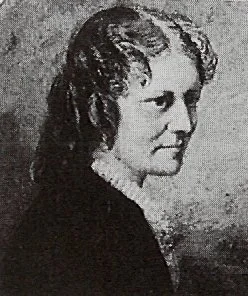
ASAnna Sewell
Anna Sewell (30 March 1820 – 25 April 1878) was an English novelist, best known as the author of the classic novel Black Beauty. Anna Mary Sewell was born in Great Yarmouth, Norfolk, England into a devoutly Quaker family. Her father was Isaac Phillip Sewell (1793-1879), and her mother, Mary Wright Sewell (1798 - 1884) was a successful author of children's books. Anna Sewell had one sibling, a younger brother named Philip Sewell. Anna Sewell was largely educated at home. When Anna was twelve years old, the family moved to Stoke Newington, where Sewell attended school for the first time. Two years later, however, she slipped while walking home from school and severely injured both of her ankles. Her father took a job in Brighton in 1836, partly in the hope that the climate there would help to cure her. Despite this, and most likely because of mistreatment of her injury, for the rest of her life Anna was unable to stand without a crutch or to walk for any length of time. For greater...
5 poezii, 0 proze
Hamlet
de William Shakespeare
HAMLET DRAMATIS PERSONAE (PAGINA 4) ACT II SCENE I A room in POLONIUS\' house. [Enter POLONIUS and REYNALDO] LORD POLONIUS Give him this money and these notes, Reynaldo. REYNALDO I will, my lord....
Internautul...
de Cătălin Angelo Ioan
Din difuzorul computerului irupse violent, ca un mesager al unui implacabil destin, un strigăt către posteritate al unui celebru artist: „The show must go on...” Arcuindu-se, cu mâinile plasate deloc...
Vis De Viitor
de Sorana Petrescu Felicia
Astăzi n-am fost pregătită pentru înfruntarea ce urma să aibă loc, pentru a nu știu câta oară, în mine. Așa că s-a consumat undeva, departe, în golful subconștientului. Am închis ochii într-o nouă...
Billie Jean nu era iubita mea
de Helena Schmetterling
I. sunt ca dracu de precaută. a nu dori să schimbi oamenii în niciun fel, a-ți fie teamă să nu care cumva să pășești prea gălăgios prin tihna vieților lor, a nu dori să le rearanjezi nici măcar vreun...
Producția și consumul - fețe sociale ale egoismului uman
de Miriam Cihodariu
Societatea contemporană, în goana ei după himerele acumulării, a status-ului dat de lucrurile pe care le deții, a fost numită nu de puține ori o junglă. Asta nu pentru că ar fi mai junglă decât...
Taming of the Shrew
de William Shakespeare
Induction, Scene I SCENE I. Before an alehouse on a heath. Enter Hostess and SLY SLY I\'ll pheeze you, in faith. Hostess A pair of stocks, you rogue! SLY Ye are a baggage: the Slys are no rogues;...
Interview with Enrique Iglesias
de A.M. Rika
Enrique Iglesias reaches for the stars with his feet on the ground Enrique Iglesias is the boy next door, someone who grew up doing things quietly, but effectively. Dreaming of becoming a pop star...
Dracula
de Bram Stoker
Chapter 21 - Dr. Seward\'s Diary 3 October. Let me put down with exactness all that happened, as well as I can remember it, since last I made an entry. Not a detail that I can recall must be...
The Apocalyptic Subculture of a Woman\'s Man
de Ohm
Where can I begin? Where will it end? Well, either in the year 2003 or the year 2006, most likely the latter. The remaining timeline grows thinner as the world grows fatter. It doesn\'t matter,...
zarathustra
de Friedrich Nietzsche
1891 THUS SPAKE ZARATHUSTRA by Friedrich Nietzsche translated by Thomas Common PROLOGUE Zarathustra\'s Prologue 1. WHEN Zarathustra was thirty years old, he left his home and the lake of his home,...