
"Haiku j" – 15541 rezultate
0.01 secundeMeilisearch GM
GMGelu Bogdan Marin
Jurnalist. A scris si publicat poezii, povestiri, eseuri. Membru al Societății române de haiku. e.mail :gelu.bogdan@yahoo.com apariții în volum : " Diavol cu șal mătăsos " - 2007 la editura Fundația Culturală Antares. " Ucis prin lehamite ' - 2008 la editura Fundatia Culturala Antares . "Mamiferul minoritar " - 2008 la editura Fundatia Culturala Antares membru al U.S.R.
309 poezii, 0 proze
 YB
YBYosa Buson
Yosa Buson (1716-1783) a fost un poet japonez, situat printre cei mai mari autori de poeme haiku alaturi de Matsuo Basho si Kobayashi Issa. *** Yosa Buson: 1716 - December 25 1784), was a Japanese Haiku poet and painter, usually referred to simply as "Buson". He is one of the greatest poet of the Edo period, comparable with Matsuo Basho and Kobayashi Issa. He was born in Osaka, his real family name was Taniguchi. When he became 20 years old, he went to Edo and studied Haiku under Yahantei Soua. He named himself as Saicho. The master was gone when Buson was 27 years old, he stayed with Sunaoka Gando in Shimotuke. He had longing for Matsuo Basho, he began the long journeys like Basho, he went around Tohoku, Tango, Sanuki and so on. During this travel, he called himself Bushon. From 1758, he began to live in Kyoto, and he stayed there for rest of his life. He got married when he was 45 years old, and became a father of his daughter Kuno. *** ä¸Žè¬ è•Șæ‘ï¼ˆă‚ˆă• ă¶ăă‚“ă€ă‚ˆă•ă®...
1 poezii, 0 proze
 KI
KIKobayashi Issa
Kobayashi Issa (1763-1828) a fost un poet japonez. *** Kobayashi Issa (1763-1827) - original name Kobayashi Nobuyki - Also called Kobayashi Yataro, born in some sources on May 5, 1763 Kobayashi Issa was born in Kashiwabara, Shinano province (now part of Shinano Town, Nagano Prefecture), a son of a farmer. His father was widowed a few years after Issa was born. Issa was looked after by his grandmother until his father remarried. During this period, he started to study haiku under a local poet, Shimpo. Issa's troubles with his stepmother started when she gave birth to a son. Later Issa complainen that he was beaten "a hundred times a day." In 1777, at the age of fourteen, he was sent by his father to Edo (Tokyo today), where he studied haiku under the poets Mizoguchi Sogan and Norokuan Chikua (died 1790). Possibly Issa also worked as a clerk at a Buddhist temple. Issa's works gained the attention Seibi Natsume, who became his patron. Although his poems became more and more known, he was...
2 poezii, 0 proze
Matsuo Basho
Matsuo Bashō (în japoneză 松尾芭蕉), pe numele lui adevărat Matsuo Munefusa (n. 1644 Ueno, Mie - d. 28 noiembrie 1694, Osaka), a fost un poet japonez renumit pentru perfecționarea formei poetice haiku.
0 poezii, 0 proze
 HH
HHHidenori Hiruta
Hidenori Hiruta was born in Akita in 1942, Japan. Between 1965 and 2009 he taught English at High School. In 2009 became Secretary-General at the Akita International Haiku Network. http://akitahaiku.blogspot.com/
12 poezii, 0 proze
 LH
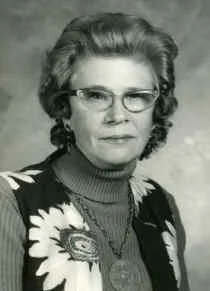
LHLorraine Ellis Harr
Lorraine Ellis Harr was one of the important figures in the history of American haiku. She lived in Portland, Oregon, where for almost four decades she worked tirelessly to promote the understanding of the haiku form and to encourage the reading and writing of haiku in English through the publication of a quarterly journal, Dragonfly, the organization, Western World Haiku Society and the fifteen books of her own poems in all the Japanese genres . Internationally known poet and editor, Kazuo Sato once commented that if Lorraine Ellis Harr lived in Japan, she would be a national treasure. Opal Lorraine Ellis Harr was born on Halloween, October 31, 1912, in Sullivan, Illinois. Her father left the family when she was three years old. The mother and three girls (Lorraine is the youngest) moved to Cooperstown, North Dakota to live for several years before moving to Portland. Her mother had a sister who lived there. The sister's husband promised Lorraine's mother a job if they moved to...
4 poezii, 0 proze
 AU
AUAna Urma
Debut literar - 2009 editura Semănătorul, - vol. "File de jurnal fără sfârșit" Volume publicate: Isadorable[poezie], edituraArtBook 2015; Ploaie de vară[haiku], editura Pim 2015, File de jurnal[poezie], editura Pim 2016; Începând cu anul 2010 prezentă în antologii sub sigla cenaclului Lira21 și ale grupului RomanianKukai, până în prezent peste cincisprezece Premii: Premiul I, II și III, mențiuni haiku 2010-2016, concursuri RomaniaKukai, Premiul Poemul Anului 2014, Haiku Club Premiul III 2013, proză, Vis vegetal, concurs Lira21 Locul I 2014, poezie În țara magiei, concurs Oglinda lumii, Agonia.ro&Cărturești Locul I 2014, recenzie Patria mea A4/Ana Blandiana, concurs Oglinda lumii, Agonia.ro&Cărturești Premiul III 2015, poezie religioasă, Festivalul Credo Premiul I/Trofeul Iarna 2015, poezie/Saudade, concurs Iarna&agonia.ro Premiul III 2015, poezie, Un mail în noapte, concurs Marele premiu Agonia.ro Mențiune 2015, festivalul internațional Romeo și Julieta la Mizil Premiul III 2016,...
212 poezii, 0 proze
 KI
KIKeiko Imaoka
Beginner\'s Mind (Keiko Imaoka - Tucson, Arizona) I cannot be sure when I first became aware of haiku and tanka in my childhood in Japan. They seemed to have existed for a long time in the perimeter of my awareness, undifferentiated from proverbs, mottoes, aphorisms, and song lyrics that were phrased in similar forms. Sometime during my grade school years, \"Ogura Hyakunin-Isshu\" (\"Ogura Collection of One Hundred Tanka\", edited by Teika Fujiwara around 1235) became known to me as a New Year\'s card game, in which players compete to capture shimonoku cards (100 cards on each of which the last half of a verse is printed, spread out on the floor in front of the players) that finish the verses being read aloud. At abacus school, where we played this game at every new year\'s party, my prowess in the game improved dramatically when I was in the sixth grade, after I had memorized all the poems with my tenth-grade sister who was required to do so in her archaic grammar course in school. I...
1 poezii, 0 proze
 TS
TSTaneda Santôka
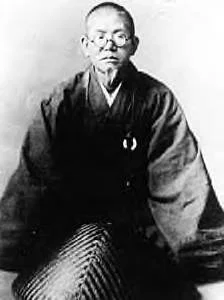
Taneda Santōka, birth name: Taneda Shōichi; 3 December 1882 - 11 October 1940) was the pen-name of a Japanese author and haiku poet. He is known for his free verse haiku. Santoka, an ordained Zen priest, after spending most of his life wandering all over the country as a begging monk, chose to settle in Matsuyama only to die 10 months later. The humble cottage where he dwelt -- Isso-an (A Blade of Grass Hermitage) is preserved north of Ehime University. His books and documents are also preserved in Shiki Memorial Museum. "In February of 1929 I received ordination as a monk and became resident priest at Mitori Kannon-do in the countryside of Kumamoto Prefecture. It was truly a solitary forest life (sanrin dokuju); as for quietness it was quiet, as for loneliness it was lonely -- such a life it was." (Taneda Santoka - from "Sômokutô") The Zen he was ultimately to practice, however, though traditional, was unusual. It was the Zen of solitary walking. The open road was to become...
2 poezii, 0 proze
 RN
RNRoman Natasa
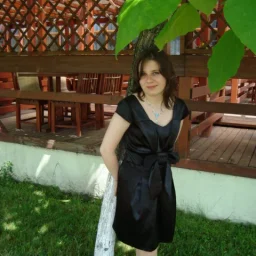
Apariții literare: Pe urmele cireșerilor, 2009. În căutarea jocului sfârșit, 2010. În căutarea jocului sfârșit, 2011. Revista Singur, numărul 36-37, aprilie 2014. Revista Gutenberg, numărul 21, decembrie 2014 Revista Gutenberg, numărul 22, martie 2015 cu articolul Femeia- atunci și acum Revista Gutenberg, numărul 23, iunie 2015 cu articolul Adrian Melicovici Antologia PE ALEEA CUVINTELOR (Editura Inspirescu, 2015) Antologia Urzeala Cuvintelor (Editura Fundației „Ioan Slavici”, Arad 2016) Volum personal de versuri ÎN PALMA EVEI (Editura Sfântul Nicolae, Brăila 2015) Premii obținute Mențiune la Concursul interjudețean de haiku și fotografie „Floare de cireș” Ediția I, Timișoara, aprilie 2007. Premiul al III-lea la la concursul de scrisori, eseuri și mesaje de dragoste „Dulcea mea doamnă.Eminul meu iubit.”, ediția a IX-a, secțiunea adulți 2015 Mențiune la concursul național „Unifero” 2015 secțiunea adulți Premiul special la concursul de...
34 poezii, 0 proze
Haiku j
de gheorghe Sarbu
rafale de vânt mătură iazul absent - la copcă vara
orientalism
de Dumitru Sava
haiku japonez puritate şi sînge cireş înflorit
Haikul “Broasca” al lui Matsuo Basho, în diferite traduceri, una fidelă și 20 umoristice
de Marian C Ghilea
Cel mai celebru haiku japonez a fost compus de Matsuo Basho (1644-1694). Momentul împietrit în eternitate a inspirat mii de poeți și filosofi asiatici sau europeni în generațiile ce i-au urmat....
Declaratie de razboi
de adrian grauenfels
Manevre belice: --------------- nu, nu te mai iubesc ai prea multi chiloti negri prea multi amanti cu ochi bleu scri mult prea bine haiku joci tenis elegant, fara sa furi mingea ai sanii prea sus si...
la vreme de seară
de Macovei Costel
aseară m-am trezit cu Regina Angliei în curte auzise că am o gradină deosebită și-n drum spre Operă (avea invitație la premieră la Don Paquale) a zis să intre să se convingă, să vadă. dar Majestate,...
Un val. O ușă.
de Cristina Martiuc
Ea :singură. El și ea :rar. Ea:singură. Ei Și viața :a mea , a ta , a celorlalți. Fragment. În camera aceea imensă, goală, cu pereți inalti. Marea Pusă pe panză. Tăcută, cuminte, timidă, chiar-în...
haiku (las jos creionul)
de Flavia Muntean
las jos creionul – nici un cuvânt să nu atingă luna de toamnă
haiku din jurnalul lui rembrandt
de Cătălin Al DOAMNEI
1.ochiul privea furtuna cuvântului salcia a fost găsită smulsă 2. casă veche sânge țâșnind din zid 3. mă ținea atât de strâns cu ochii închiși desenam plânsul 4.aer virgin repetându-se ecoul soarelui...
Un român a câștigat un concurs de haiku din Japonia
de Maria Tirenescu
Asahi Shimbun anunța în numărul de azi, 29 aprilie 2010, că un român este câștigătorul primului concurs de haiku în limba engleză Japonia-Uniunea Europeană. La concurs au fost înscrise 182 de...
Concursul anual al revistei Haiku
de Maria Tirenescu
Colectivul de redacție al revistei de interferențe culturale româno-japoneze HAIKU organizează concursul anual de poeme haiku în formă fixă (5-7-5 silabe, kigo, kireji, care corespund normelor...