
"russian nostalgia" – 90 rezultate
0.01 secundeMeilisearch CD
CDCristian Dumitru
3 poezii, 0 proze
 AT
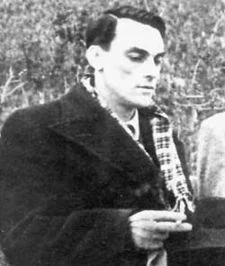
ATArseny Tarkovsky
Arseny Alexandrovich Tarkovsky (Russian: Арсе́ний Алекса́ндрович Тарко́вский, June 25 [O.S. June 12] 1907, Elisavetgrad – May 27, 1989, Moscow) was a prominent Russian poet and translator. His poems appeared in the films The Mirror and Stalker, directed by Andrei Tarkovsky, his son. Tarkovsky was born in Elisavetgrad to the family of a Narodnik on June 24 N.S. 1907. By 1924 he had moved to Moscow, and from 1924-1925 he worked for a newspaper for railroad workers called "Gudok." Tarkovsky managed a section that was to be filled by an editorial written in verse, that was supposedly easier for the readers than the ordinary prosaic editorials. Each day, Tarkovsky would either write such poetical editorials himself, or find somebody else to do it. Needless to say, the poetry of these editorials...
8 poezii, 0 proze
 YY
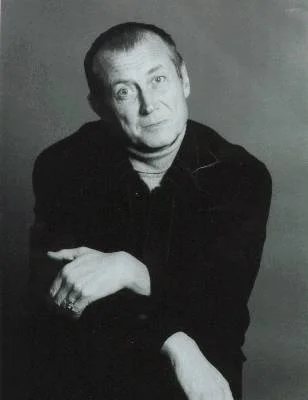
YYYevgeny Yevtushenko
Yevgeny Yevtushenko Best known poet of the post-Stalin generation of Russian poets, Yevtushenko\'s early poems show the influence of Mayakovsky and loyalty to communism, but with such works as The Third Snow (1955) Yevtushenko become a spokesman for the young post-Stalin generation and travelled abroad widely throughout the Khrushchev and the Brezhnev periods. Yevtushenko was born in Zima in Irkutsk (July 18, 1933) as a fourth-generation descendant of Ukrainians exiled to Siberia. He moved to Moscow in 1944, where he studied at the Gorky Institute of Literature from 1951 to 1954. In 1948 he accompanied his father on geological expeditions to Kazakhstan and to Altai in 1950. His first important narrative poem Zima Junction was published in 1956 but gained international fame in 1961 with Babi Yar, in which he denounced Nazi and Russian anti-Semitism. The poem was not published in Russia until 1984, althoug it was frequently recited in both Russia and abroad. The Heirs of Stalin (1961),...
0 poezii, 0 proze
 AP
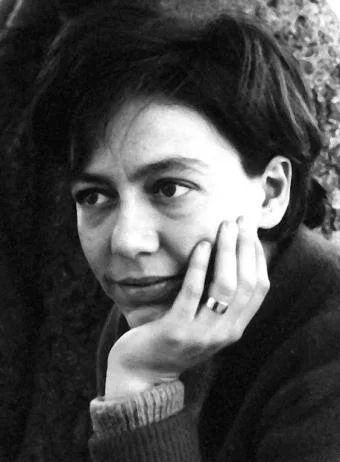
APAlejandra Pizarnik
Life and Work She was born on April 29, 1936 to Russian Jewish immigrant parents in Avellaneda, a suburb of Buenos Aires, Argentina. A year after entering the department of Philosophy and Letters at the Universidad de Buenos Aires, Pizarnik published her first book of poetry, La tierra más ajena (1955). Soon after, she studied painting with Juan Batlle Planas. Pizarnik followed her debut work with two more volumes of poems, La última inocencia (1956) and Las aventuras perdidas (1958). From 1960 to 1964 Pizarnik lived in Paris. There she worked for the journal Cuadernos, sat on the editorial board of the magazine Les Lettres Nouvelles, and participated in the Parisian literary world. Pizarnik also attended a variety of courses at the Sorbonne, including contemporary French Literature. She died in Buenos Aires of a self-induced overdose of seconal. [edit] Words in life * The Land Far Beyond(La tierra más ajena) (1955) * The Last Innoncence (La última inocencia, 1956) * The Lost...
8 poezii, 0 proze
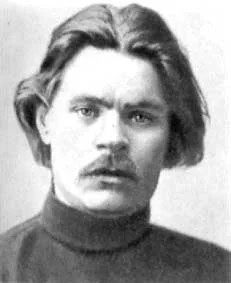 MG
MGMaxim Gorki
[[en]] * Born: 16 March 1868 * Birthplace: Nizhny Novgorod (now Gorky), Russia * Death: June 1936 * Best Known As: Russian writer known for his socialist realism Name at birth: Aleksey Maksimovich Peshkov Maxim Gorky (also spelled Maksim Gorki) is one of the giants of 20th century Russian literature and theater, known for his realistic depictions of how terrible it is to be poor and oppressed. Gorky himself grew up in rough times and was a lifelong spokesperson for the underclass. His political activism led to several years of exile, in spite of his popularity with Russian readers. By 1900 Gorky was a famous literary figure, thanks in part to help from Anton Chekhov. His short stories and his first novel, Foma Gordeyev (1902) gave him notoriety as well as critical success, but his outspoken opposition to the rule of Nicholas II led to his exile to the island of Capri (1907-13). After the 1917 revolution Gorky's criticism of his friend V. I. Lenin and the Bolsheviks led to another...
2 poezii, 0 proze
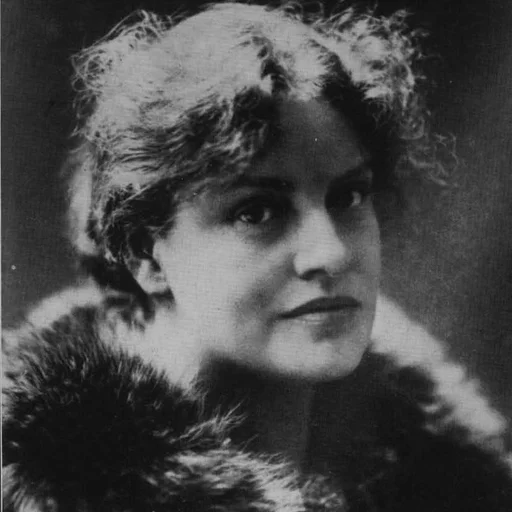 LA
LALou Andreas-Salomé
Lou Andreas-Salomé (née Louise von Salomé) (February 12, 1861 in St. Petersburg – January 5, 1937 in Göttingen) was a Russian-born psychoanalyst and author. Her diverse intellectual interests led to friendships with a broad array of distinguished western luminaries, including Nietzsche, Wagner, Freud, and Rilke. Lou Salomé ( born Luíza Gustavovna Salomé - Луиза Густавовна Саломе) was born in St. Petersburg to an army general and his wife. Salomé was their only daughter; she had five brothers. Although she would later be attacked by the Nazis as a "Finnish Jewess," her parents were actually of French Huguenot and Northern German descent. Seeking an education beyond a typical woman's station of that time and place, when she was seventeen Salomé persuaded the Dutch preacher Hendrik Gillot, twenty-five years her senior, to teach her theology, philosophy, world...
10 poezii, 0 proze
Daniil Harms
\'Daniil Kharms\' was the main, and subsequently the sole, pen-name of Daniil Ivanovich Yuvachov. The son of a St. Petersburg political, religious and literary figure, Daniil was to achieve limited local renown as a Leningrad avant-garde eccentric and a writer of children\'s stories in the 1920s and 30s. Among other pseudonyms, he had employed \'Daniil Dandan\' and \'Kharms-Shardam\'. The predilection for \'Kharms\' is thought to derive from appreciation of the tension between the English words \'charms\' and \'harms\' (plus the German Charme; indeed, there is an actual German surname \'Harms\'), but may also owe something to a similarity in sound to Sherlock Holmes (pronounced \'Kholms\' in Russian), a figure of fascination to Kharms.
44 poezii, 0 proze
Isaac Asimov
Biographical (non-literary) How do you pronounce \"Isaac Asimov\"? \"EYE\'zik AA\'zi-mov\". The name is spelled with an \"s\" and not a \"z\" because Asimov\'s father didn\'t understand the English alphabet clearly when the family moved to the U.S. in 1923. (In Russian, the spelling was the Cyrillic equivalent of Azimov, and in Yiddish, the Hebrew letters were aleph-zayin-yod-mem-aleph-vav-vav.) One way to remember this pronunciation is the pun from The Flying Sorcerers by Larry Niven and David Gerrold: \"As a color, shade of purple-grey\", or \"As a mauve\". Asimov wrote a poem (\"The Prime of Life\") in which he rhymes his surname with \"stars above\"; someone else suggested amending the poem to rhyme it with \"mazel tov\", which he thought an improvement. Asimov\'s own suggestion, however, as to how to remember his name was to say \"Has Him Off\" and leave out the H\'s. When did Asimov die? What was the cause of his death? Where is he buried? Asimov died on April 6, 1992 of heart...
0 poezii, 0 proze
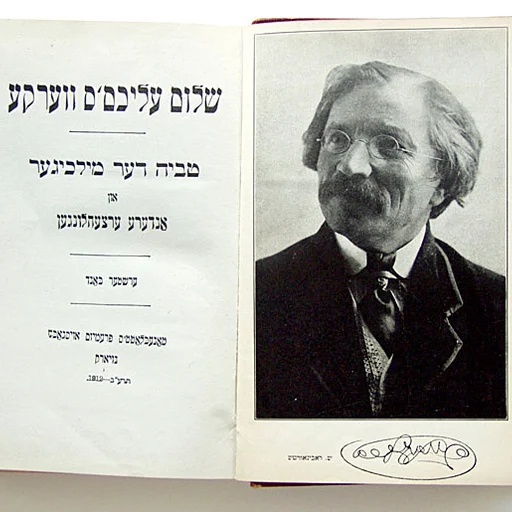 SA
SASholem Alecheim
Nascut Sholem Yaacov Rabinovitz in Ucraina. Scriitor de limba rusa, ebraica si idis. In urma persecutiilor rusiei tariste, emigreaza in Elvetia si ulterior Statele Unite. Moare in 1916 in U.S.A. *** Sholem Aleichem (Yiddish: שלום־עליכם, Russian: Шолом-Алейхем, Ukrainian: Шолом-Алейхем; March 2 [O.S. February 18] 1859 – May 13, 1916) was the pen name of Sholem Naumovich Rabinovich, the popular humorist and Jewish author of Yiddish literature, including novels, short stories, and plays. He did much to promote Yiddish writers, and was the first to pen children's literature in Yiddish. His work has been widely translated. The 1964 musical Fiddler on the Roof, loosely based on Sholem Aleichem's stories about his character Tevye the Milkman, was the first commercially successful...
1 poezii, 0 proze
 JT
JTJan Twardowski
Jan Jakub Twardowski (June 1, 1915 – January 18, 2006) was a famous Polish poet, but, as he said of himself, he was a priest (of the Catholic Church) first of all. He was a chief Polish representative of contemporary religious lyrics. He wrote short, simple poems, humorous, sometimes with colloquialisms. He joins observation of nature with philosophical reflexion. Twardowski received many awards and medals for his output. Jan Twardowski was born on June 1, 1915 in Warsaw, Congress Poland, Russian Empire as a son of Jan Twardowski and Aniela Maria Konderska. Several weeks later his family was forced to move to Russia (it was World War I). After 3 years the family moved back to Warsaw. In 1927, after finishing a primary school, he started his education in mathematical and environmental gymnasium. He finished it in 1935. In 1932 he began working with the gymnasium youth newspaper called KuŸnia M³odych. He had his own column there, he wrote poems, short stories, interviews with writers,...
1 poezii, 0 proze
russian nostalgia
de Madalina STATE
aleargă Nadejda cu pletele încrucișate a superstion venise vestea mâinilor lui întoarse din exil uscate și îmbărtânite înstrăinate mâini care se întorc vântul poartă auriu subțirile aripi ale rochiei...
EgoPHobia #21
de Sorin - Mihai Grad
Vă anunțăm apariția pe www.egophobia.ro a EgoPHobia #21 în care în postura de invitat apare nu un scriitor, un filosof sau un artist ci un curent artistic deja cunoscut cititorilor revistei noastre,...
white russian
de emilian valeriu pal
și nu era nimeni să-mi vorbească de tine bătrînul strîngea mîncarea-n batistă îi vedeam mîinile pătate ca o ușă veche pe care un nepriceput a dat cu vopsea proaspătă lăutarul cînta fals din cînd în...
Fata din laptarie merge acasa
de Motoc Lavinia
Fata din laptarie Sfarcul noptii Intarit de ganduri In cocon sunt doar eu Afara fluturi lenesi Trag dupa ei cortine La vie-en -rose se canta In nuante anodine De gri si mov De cea mai joasa speta....
Vals vienez
de Lory Cristea
mă dusesem să văd Viena nu să rămân acolo pe nemțește ploaia cade vals vienez rece cald rece cald poate de vină eram eu poate haina mea de blană udă sau trecătorii sau ploaia... are you a russian...
An exotic holiday
de Adrian Arvunescu
My boyfriend took me to Siberia last winter. He said to me: My, let s go deer hunting! Totally in love, I understood: my dear, let s go to Hawaii! Said and done. Except that, when we got there, the...
Festivalul International de Film B-EST s-a încheiat
de Radu Herinean
Cea de a3a editie a Festivalului International de Film B-EST s-a incheiat. E vremea bilanturilor, a aprecierilor. Timp de o saptamana intreaga, la doua dintre cinematografele din Bucuresti - Scala si...
motanul negru
de Silvia Goteanschii
Caut în tăcerile noastre cu o lupă poate mai găsesc amprenta motanului negru care ne-a trecut drumul, i-aș smulge mustățile și i-aș călca în picioare pălărioara, cum așa, să îndrăznească, nesimțitul,...
gupka
de octav luca simota
[губка] - rânjet critic garnisit cu referințe aș putea începe cu IMDb dacă b ar fi мягкий знак din păcate nu...
Portret 9
de Adrian Firica
Facerea lumii 1 1.La început, Dumnezeu a făcut cerurile și pământul. Lumina 2.Pământul era pustiu și gol; peste fața adâncului de ape era întunerec și Duhul lui Dumnezeu se mișca pe deasupran apelor....