
"Persian rectangles" – 265 rezultate
0.01 secundeMeilisearchJelaluddin Rumi
RUMI Rumi is one of the most read and well known poets in the world. Jelaluddin Rumi was born in the Eastern part of the Ancient Persian Empire near Balkh (presently Afghanistan), on September 30, 1207. His first name literally means Majesty of Religion, Jalal means majesty and din means religion. Because of the threat of Mongol invasion in Persia his family fled, finally settling in Konya, Turkey. He passed away, on December 17, 1273. His shrine is in Konya. As a genius theologian, a brilliant scholar, and a pillar of Islam, he followed in his father place until his spiritual friend and teacher, Shams of Tabriz appeared in his life. Rumi underwent a spiritual transformation in 1244 after meeting Shams. With appearance of Shams, Rumi became reborn and soon started his marvelous work \"Masnavi,\" (Mathnawi) consisting of 24,000 verses at age 38. His other famous work is \"Divan-e Shams-e Tabriz\" (the collective poems of Shams of Tabriz). Rumi\'s poetry has a mystic connotation, a...
0 poezii, 0 proze
Jelaluddin Rumi
RUMI Rumi is one of the most read and well known poets in the world. Jelaluddin Rumi was born in the Eastern part of the Ancient Persian Empire near Balkh (presently Afghanistan), on September 30, 1207. His first name literally means Majesty of Religion, Jalal means majesty and din means religion. Because of the threat of Mongol invasion in Persia his family fled, finally settling in Konya, Turkey. He passed away, on December 17, 1273. His shrine is in Konya. As a genius theologian, a brilliant scholar, and a pillar of Islam, he followed in his father place until his spiritual friend and teacher, Shams of Tabriz appeared in his life. Rumi underwent a spiritual transformation in 1244 after meeting Shams. With appearance of Shams, Rumi became reborn and soon started his marvelous work \"Masnavi,\" (Mathnawi) consisting of 24,000 verses at age 38. His other famous work is \"Divan-e Shams-e Tabriz\" (the collective poems of Shams of Tabriz). Rumi\'s poetry has a mystic connotation, a...
0 poezii, 0 proze
 JR
JRJelaluddin Rumi
RUMI Rumi is one of the most read and well known poets in the world. Jelaluddin Rumi was born in the Eastern part of the Ancient Persian Empire near Balkh (presently Afghanistan), on September 30, 1207. His first name literally means Majesty of Religion, Jalal means majesty and din means religion. Because of the threat of Mongol invasion in Persia his family fled, finally settling in Konya, Turkey. He passed away, on December 17, 1273. His shrine is in Konya. As a genius theologian, a brilliant scholar, and a pillar of Islam, he followed in his father place until his spiritual friend and teacher, Shams of Tabriz appeared in his life. Rumi underwent a spiritual transformation in 1244 after meeting Shams. With appearance of Shams, Rumi became reborn and soon started his marvelous work \"Masnavi,\" (Mathnawi) consisting of 24,000 verses at age 38. His other famous work is \"Divan-e Shams-e Tabriz\" (the collective poems of Shams of Tabriz). Rumi\'s poetry has a mystic connotation, a...
13 poezii, 0 proze
 A
AAnvari
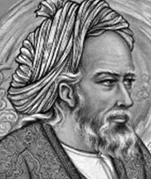
Anvari (1126–1189), full name Awhad ad-Din 'Ali ibn Mohammad Khavarani or Awhad ad-Din 'Ali ibn Mahmud was one of the greatest Persian poets. He was born in Abivard of (now in Turkmenistan) and died in Khurasanian Balkh, now in Afghanistan, and studied science and literature at the collegiate institute in Tun (now Firdaus, Iran), becoming a famous astronomer as well as a poet. Anvari's poems were collected in a Deewan, and contains panegyrics, eulogies, satire, and others. His elegy "Tears of Khorasan", translated into English in 1789, is considered to be one of the most beautiful poems in Persian literature. The Cambridge History of Iran calls Anvari "one of the greatest figures in Persian literature". Despite their beauty, his poems often required much help with interpretation, as they were often complex and difficult to understand. Anvari's panegyric in honour of the Seljuk sultan Sultan Sanjar (1117–1157), ruler of Khorasan, won him royal favour, and allowed him to go on to enjoy...
2 poezii, 0 proze
 S
SSaadi
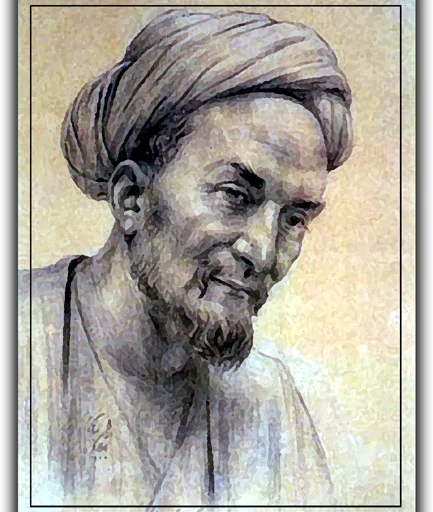
Abū-Muḥammad Muṣliḥ al-Dīn bin Abdallāh Shīrāzī, better known by his pen-name as Saʿdī or, simply, Saadi, was one of the major Persian poets of the medieval period. He is not only famous in Persian-speaking countries, but he has also been quoted in western sources. He is recognized for the quality of his writings, and for the depth of his social and moral thoughts. A native of Shiraz, his father died when he was an infant. Saadi experienced a youth of poverty and hardship, and left his native town at a young age for Baghdad to pursue a better education. As a young man he was inducted to study at the famous an-Nizzāmīya center of knowledge (1195–1226), where he excelled in Islamic Sciences, law, governance, history, Arabic literature and theology. The unsettled conditions following the Mongol invasion of Khwarezm and Iran led him to wander for 30 years abroad through Anatolia (he visited the Port of Adana, and near...
2 poezii, 0 proze
 MR
MRMevlana Jalaluddin Rumi
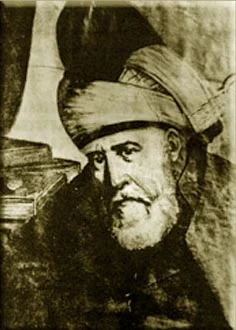
Mawlānā Jalāl ad-Dīn Muḥammad Balkhī, also known as Jalāl ad-Dīn Muḥammad Rūmī, but known to the English-speaking world simply as Rumi, (30 September 1207 – 17 December 1273), was a 13th-century Persian poet, Islamic jurist, theologian, and mystic. Rūmī is a descriptive name meaning "the Roman" since he lived most of his life in an area called Rūm because it was once ruled by the Byzantine Empire. According to tradition, Rumi was born in Balkh, Khorasan (now in Afghanistan), the hometown of his father's family. Scholars, however, argue that he was most likely born in Wakhsh, a small town located at the river Wakhsh in what is now Tajikistan. Wakhsh belonged to the larger province of Balkh, and in the year Rumi was born, his father was an appointed scholar there. Both these cities were at the time included in the Greater Persian cultural sphere of Khorasan, the easternmost province of historical Persia, and were...
162 poezii, 0 proze
 JR
JRJalal ad-Dīn Muhammad Rumi
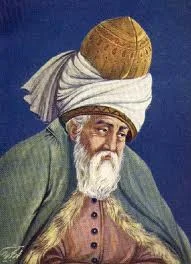
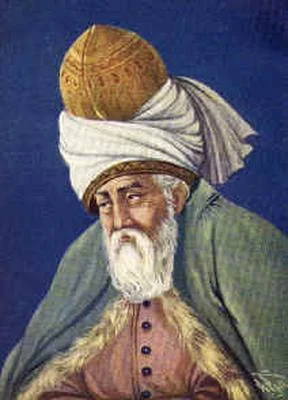
Jalāl ad-Dīn Muḥammad Balkhī, also known as Jalāl ad-Dīn Muḥammad Rūmī, and popularly known as Mowlānā but known to the English-speaking world simply as Rumi (30 September 1207 – 17 December 1273), was a 13th-century Persian (Tajik) Muslim poet, jurist, theologian, and Sufi mystic. Rūmī is a descriptive name meaning "the Roman" since he lived most of his life in an area called Rūm because it was once ruled by the Eastern Roman Empire. It is likely that he was born in the village of Wakhsh, a small town located at the river Wakhsh in what is now Tajikistan. Wakhsh belonged to the larger province of Balkh, and in the year Rumi was born, his father was an appointed scholar there. Both these cities were at the time included in the greater Persian cultural sphere of Khorasan, the easternmost province of Persia, and were part of the Khwarezmian Empire. Image of the Rumi on an old book in the Mevlâna museum; Konya,...
0 poezii, 0 proze
 DR
DRDjalal-Ud-Din Rumi
Jalaluddin Rumi a fost un teolog genial, adorator al lui Dumnezeu si totodata unul din cei mai mari poeti mistici ai tuturor timpurilor. Numit Jalaluddin Balkhi de persani , Rumi s-a nascut la 30 septembrie 1207 la Balkh, ( o zona din Imperiului Persan). A incetat din aceasta viata la 17 decembrie 1273. Rumi inseamna - “din Anatolia romana”. A fost cunoscut sub acest nume dupa ce el si familia sa au emigrat in 1219. S-au indreptat spre vest; au ajuns mai intâi la Nishapur, apoi Bagdad, Siria si Meca, iar in final s-au stabilit la Laranda, in Anatolia, la 80 km de Konya. Tatal sau a fost un profesor renumit de sufism; a scris un tratat mistic numit “Gnosis” (Cunoasterea mistica). Se spune ca in perioada copilariei sale, Rumi s-a intâlnit cu multi maestri sufiti printre care si cu Farid al-Din Attar, care i-a dat o copie a celebrei sale lucrari “Cartea secretelor”- un poem mistic plin de forta, din care Rumi a citat de multe ori in scrierile sale. Attar a recunoscut de la inceput...
9 poezii, 0 proze
 DL
DLDoris Lessing
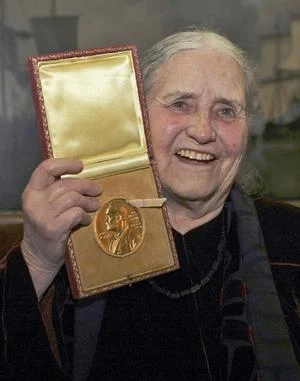
Laureată a Premiului Nobel pentru literatură pe anul 2007. Doris Lessing, s-a născut cu numele de Doris May Tayler la data de 22 octombrie 1919 în Iran, din părinți englezi, perioada in care parintii sai traiau la Kermanshah, Persia (acum Iran). In 1925, impreuna cu familia, s-a mutat in colonia britanica din Rhodesia de Sud, acum Zimbabwe. In 1949 s-a mutat la Londra, unde traieste si acum. Scriitoarea britanica Doris Lessing este cea mai in varsta persoana si cea de-a 11-a femeie care primeste aceasta distinctie. In justificarea premiului, Academia Regala de stiinta a Suediei a apreciat-o pe Doris Lessing drept "o naratoare a experientei feminine, care, cu scepticism, ardoare si forta vizionara, a expus critic o civilizatie divizata". Numele autoarei constituie o surpriza deosebita, aceasta fiind preferata de Academie scriitorilor mai cunoscuti, considerati favoriti la acest premiu, precum Philip Roth, Haruki Murakami sau Amos Oz. In ciuda unei copilarii dificile si nefericite,...
0 poezii, 0 proze
 YE
YEYunus Emre
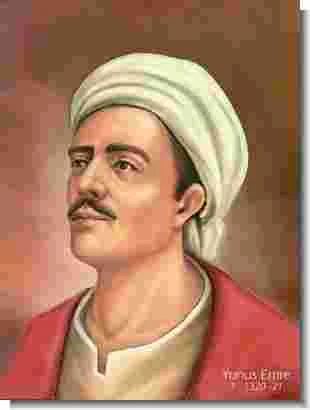
Yunus Emre (1240? - 1321?) Viața poetului se pierde în legendă, poeziile fiind singurul izvor biografic. Din acestea se desprinde faptul că și-a însușit o temeinică instrucție filozofică și religioasă, fiind discipolul unui mare învățat al vremii, Taptuk Emre, căruia i-a slujit mult timp și de la care, din respect, a împrumutat numele. În căutarea adevărului și frumosului, a pelegrinat prin toată lumea islamică, întâlnindu-se cu mari poeți și învățați ai vremii, printre care și genialul poet persan Gelaleddin Rumi Mevlana (m. 1273). Informații despre ultima perioadă a vieții sale lipsesc cu desăvârșire, poetul încetând să mai transmită ceva din enigmatica sa existență, sporind și mai mult misterul în jurul său. În 1970, în localitatea Sarıköy, locul presupus al morții poetului, a fost ridicată în semn de adâncă pioșenie o nouă piatră funerară. Numărul total al poeziilor sale se consideră a fi de 360 și au cunoscut mai multe ediții, cea mai completă fiind tipărită cu noul alfabet,...
1 poezii, 0 proze
îmbrățișare
de ioan albu
mergeau alături prin odaia obscură cu dulapuri simetrice mirosind a prescură pe lângă divanul cuprins în macat verde absint și catifelat au apucat să deslușească prin seară un herb înaintau cu copite...
nici moartea nu îmbracă de două ori aceeași veșnicie
de Ioan Barb
îmi spun să sfârșesc frumos să nu mă uit înapoi trecutul retează cu un cuțit suspinul buzelor simt marea amețită în amurg sirenele străbătându-ne îmbrățișările trecând prin zidurile altor tăceri fără...
Cum citesc eu un articol
de Elena Malec
O dimineață de iunie.Deschid pagina web de poezie-agonie. Atenția mi-e atrasă de un titlu „Arienii si lumea de azi” articol [ Societate ] Zic, iată ceva nou.Ce s-o mai fi spus la teoria-dispută veche...
Sădește-ți, inimă arsă, florile negre de cenușă
de Bot Eugen Iulian
Ploaia seamănă în mine flori negre și amare de cenușă, cu mâini reci grădinărește-n pieptul meu cuprins de febră, în pieptul animat de-o rană pulsatilă care lesne se aprinde de la cea mai...
Fardad (de Călin Sămărghițan)
de Petru Teodor
== FARDAD == Editura Print ATU Sibiu, 2009 Volum de poezii - Călin Sămărghițan Coperta și foto - Alice Drogoreanu. Cuvânt înainte: Călin Sămărghițan. Coperta IV: Marina Nicolaev, Vasile Avram....
ars pohetica
de Igor Ursenco
*** Dar iată Puterea nemărginită a Poeziei și Poezia fără limită a Puterii: pe 28 iunie 1883 Poetul român cu descendență polonă Eminescu e băgat la ospiciu prin concursul prietenilor, dușmanilor...
Poezie de dulce
de felix nicolau
Întotdeauna este captivant să parcurgi opera literară a unui savant, să vezi dacă intelectul lui cartezian poate face față unui joc bazat pe viteză, rupere de ritm, improvizație. Tentat de bivalența...
Heliotrop persan
de Rainer Maria Rilke
Prea tare-elogiul unui trandafir să-ți pară pentru-aleasa-ți, s-ar putea: Ia plantă fin brodată fir cu fir și cu-ascuțita-i șoaptă-nvinge-așa privighetoarea, care-n umbră-naltă, strigând, ți-o...
poem persan
de Goea Maria Daniela
boabe de rodii sahib boabe de rodii picură de pe buzele mele raze de lună din gene noaptea e păcat să vorbești e păcat noaptea se moare sahib noaptea se moare când inimile explodează sub tălpi iar eu...
Aiureli pe un covor persan
de Stan Liviu
Câteodată-n serile purpurii, totu-n jur este visare, și mă găsește visul nopții de vară despuiat pe un cocor aiurind cuvinte ce nu vor a fi auzite. Totul stă de-și este-n mișcare și poartă sigla lui...