
"s.s.s.-Naked" – 21519 rezultate
0.01 secundeMeilisearchJohn Milton
1608 - 1674 One of the greatest poets of the English language, best-known for his epic poem PARADISE LOST (1667). Milton's powerful, rhetoric prose and the eloquence of his poetry had an immense influence especially on the 18th-century verse. Besides poems, Milton published pamphlets defending civil and religious rights. John Milton was born in London. His mother Sarah Jeffrey, a very religious person, was the daughter of a merchant sailor. His father, also named John, had risen to prosperity as a scrivener or law writer - he also composed music. The family was wealthy enough to afford a second house in the country. Milton's first teachers were his father, from whom he inherited love for art and music, and the writer Thomas Young, a graduate of St Andrews University. At the age of twelve Milton was admitted to St Paul's School near his home and five years later he entered Christ's College, Cambridge. During this period, while considering himself destined for the ministry, he began to...
17 poezii, 0 proze
 JK
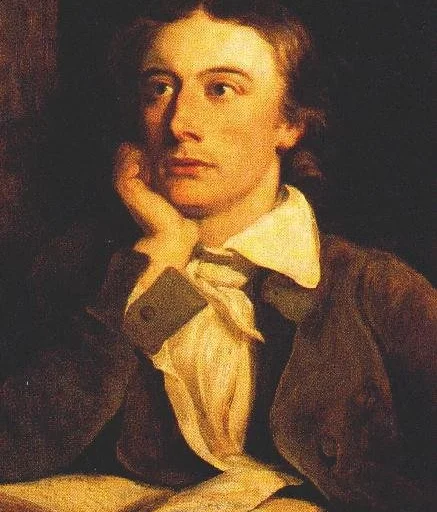
JKJohn Keats
John Keats was born on 31 October 1795 (probably), first child of Thomas Keats and Frances Jennings Keats, who had apparently eloped1. Everything was pretty ordinary for all concerned for a while--the Keatses had three more sons (George and Thomas, plus Edward who died as a baby) and one daughter, Frances, by 1803. That was also the year when John went away to school at Enfield. In 1804, John\'s father was killed in a fall from a horse. Just over two months later, for mysterious reasons, Frances remarried, to a London bank clerk named William Rawlings. Frances quickly decided she\'d made some sort of terrible error and left, taking nothing with her since the laws of the time decreed that all her property and even her children belonged to her husband. Frances\' mother, Alice, swept in and took custody of the children, but she could do nothing about the Swan and Hoop, which Rawlings sold immediately before disappearing. It was around this time that John became prone to fistfights, which...
32 poezii, 0 proze
Susan Howe
Susan Howe was born in 1937 in Boston, Massachusetts. She is the author of several books of poems and two volumes of criticism. Her most recent poetry collections are The Midnight (New Directions, 2003), The Europe of Trusts (2002), Pierce-Arrow (1999), Frame Structures: Early Poems 1974-1979 (1996), The Nonconformist\'s Memorial (1993), The Europe of Trusts: Selected Poems (1990), and Singularities (1990). Her books of criticism are The Birth-Mark: Unsettling the Wilderness in American Literary History (1993), which was named an \"International Book of the Year\" by the Times Literary Supplement, and My Emily Dickinson (1985). Her work also has appeared in Anthology of American Poetry, edited by Cary Nelson (Oxford University Press, 1999); Moving Borders: Three Decades of Innovative Writing by Women, edited by Mary Margaret Sloan (1998); and Poems for the Millennium, Volume 2, edited by Pierre Joris and Jerome Rotherberg (1998). She has received two American Book Awards from the...
3 poezii, 0 proze
 PG
PGPhyllis Gotlieb
Phyllis Gotlieb, born in Toronto on May 25, 1926, to parents who owned a movie theatre, received her B.A. (1948) and M.A. (1950) from the University of Toronto. She published five volumes of poetry from 1964 to 2002, one of them nominated for a Governor General's Award. In 1964 she published the first of nine novels of science fiction, Sunburst, after which the Sunburst Award for Canadian Literature of the Fantastic is named. Three sf series followed: the Dahlgren, 1976-89 (O Master Caliban! and Heart of Red Iron), the Ungrukh or Starcats, 1980-85 (A Judgment Of Dragons, Emperor, Swords and Pentacles, The Kingdom of Cats), and the GalFed, 1998-2002 (Flesh and Gold, Violent Stars, Mindworld). A Judgment Of Dragons won the Aurora award in 1982. She has also published a mainstream novel, Why Should I Have all the Grief (1969), and two volumes of short stories, notably Blue Apes (1995). Gotlieb edited Tesseracts 2 in 1987, and Transversions Poetry from 1995 to 2000. She has lived in...
2 poezii, 0 proze
 AM
AMAugusto Monterroso
Augusto Monterroso Bonilla (December 21, 1921 - February 7, 2003) was a Guatemalan writer. Monterroso was born in Tegucigalpa, Honduras to a Honduran mother and Guatemalan father. In 1936 his family settled definitively in Guatemala City, where he would remain until early adulthood. Here he published his first short stories and began his clandestine work against the dictatorship of Jorge Ubico. To this end he founded the newspaper El Espectador with a group of other writers. He was detained and exiled to Mexico City in 1944 for his opposition to the dictatorial regime. Shortly after his arrival in Mexico, the revolutionary government of Jacobo Arbenz triumphed in Guatemala, and Monterroso was assigned to a minor post in the Guatemalan embassy in Mexico. In 1953 he moved briefly to Bolivia upon being named Guatemalan consul in La Paz. He relocated to Santiago de Chile in 1954, when Arbenz's government was toppled with help from a North American intervention. In 1956 he returned...
2 poezii, 0 proze
 EL
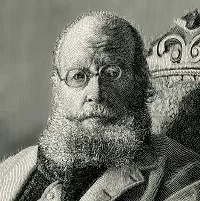
ELEdward Lear
Edward Lear (12 May 1812 – 29 January 1888) was an English artist, illustrator, author, and poet, renowned today primarily for his literary nonsense, in poetry and prose, and especially his limericks, a form that he popularised. Lear was born into a middle-class family in the village of Holloway, the 21st child of Ann and Jeremiah Lear. He was raised by his eldest sister, also named Ann, 21 years his senior. Ann doted on Lear and continued to mother him until her death, when Lear was almost 50 years of age. Due to the family's failing financial fortune, at age four he and his sister had to leave the family home and set up house together. Largely educated by himself, Lear has been described as idiosyncratic yet brilliantly talented[citation needed]. Lear also suffered from health issues. From the age of six he suffered frequent grand mal epileptic seizures, and bronchitis, asthma, and in later life, partial blindness. Lear experienced his first seizure at a fair near Highgate with his...
2 poezii, 0 proze
 TW
TWtenesee williams
Tennessee Williams, pseudonimul literar al lui Thomas Lanier Williams, (n. 26 martie 1911 – d. 25 februarie 1983) a fost un dramaturg, poet și romancier american, laureat al premiului Pulitzer pentru dramă pentru piesa de teatru A Streetcar Named Desire (Un tramvai numit dorință) în 1948 și ulterior pentru piesa Cat On a Hot Tin Roof (Pisica pe acoperișul fierbinte) în 1955. Tennessee Williams s-a născut la Columbus, Mississippi. Când avea trei ani familia sa s-a mutat la Clarksdale, Mississippi, apoi în anul 1918, la Saint Louis, Missouri. Piese timpurii 1936 – Candles to the Sun 1937 – Fugitive Kind 1937 – Spring Storm 1938 – Not about Nightingales 1940 – Battle of Angels -- rescrisă în 1957 ca Orpheus Descending 1945 – You Touched Me 1944 – Stairs to the Roof Piese majore 1944 – The Glass Menagerie -- Menajeria de sticlă 1947 – A Streetcar Named Desire -- Un tramvai numit dorință 1948 – Summer and Smoke -- Vară și fum 1950 – The Rose Tatoo -- Trandafirul tatuat 1955 – Cat on a Hot...
0 poezii, 0 proze
 CC
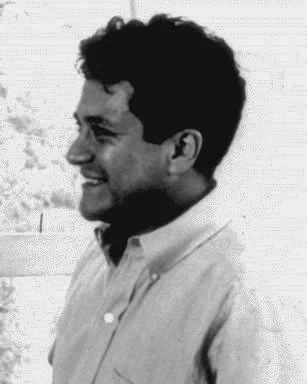
CCCarlos Castaneda
Carlos Castaneda (25 December 1925 – 27 April 1998) was a Peruvian-born American anthropologist and author. Starting with The Teachings of Don Juan in 1968, Castaneda wrote a series of books that describe his purported training in traditional Mesoamerican shamanism. His 12 books have sold more than 8 million copies in 17 languages. The books and Castaneda, who rarely spoke in public about his work, have been controversial for many years. Supporters claim the books are either true or at least valuable works of philosophy and descriptions of practices which enable an increased awareness. Academic critics claim the books are works of fiction, citing the books' internal contradictions, discrepancies between the books and anthropological data, alternate sources for Castaneda's detailed knowledge of shamanic practices and lack of corroborating evidence. In his books, Castaneda narrated in first person what he claimed were his experiences under the tutelage of a Yaqui shaman named don Juan...
2 poezii, 0 proze
 AS
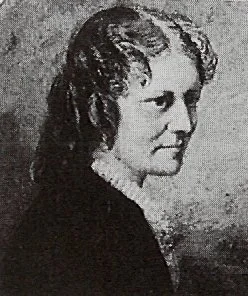
ASAnna Sewell
Anna Sewell (30 March 1820 – 25 April 1878) was an English novelist, best known as the author of the classic novel Black Beauty. Anna Mary Sewell was born in Great Yarmouth, Norfolk, England into a devoutly Quaker family. Her father was Isaac Phillip Sewell (1793-1879), and her mother, Mary Wright Sewell (1798 - 1884) was a successful author of children's books. Anna Sewell had one sibling, a younger brother named Philip Sewell. Anna Sewell was largely educated at home. When Anna was twelve years old, the family moved to Stoke Newington, where Sewell attended school for the first time. Two years later, however, she slipped while walking home from school and severely injured both of her ankles. Her father took a job in Brighton in 1836, partly in the hope that the climate there would help to cure her. Despite this, and most likely because of mistreatment of her injury, for the rest of her life Anna was unable to stand without a crutch or to walk for any length of time. For greater...
5 poezii, 0 proze
 EC
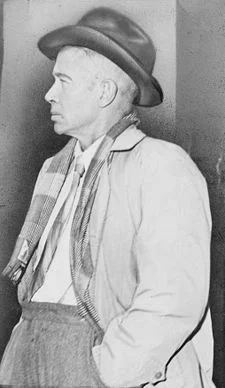
ECEdward Estlin Cummings
Edward Estlin Cummings (October 14, 1894 – September 3, 1962), popularly known as E. E. Cummings, with the abbreviated form of his name often written by others in all lowercase letters as e. e. cummings, was an American poet, painter, essayist, author, and playwright. His body of work encompasses approximately 2,900 poems, an autobiographical novel, four plays and several essays, as well as numerous drawings and paintings. He is remembered as a preeminent voice of 20th century poetry, as well as one of the most popular. Cummings was born in Cambridge, Massachusetts, on October 14, 1894 to Edward and Rebecca Haswell Clarke Cummings. He was named after his father but his family called him by his middle name. Estlin's father was a professor of sociology and political science at Harvard University and later a Unitarian minister. Cummings described his father as a hero and a person who could accomplish anything that he wanted to. He was well skilled and was always working or repairing...
46 poezii, 0 proze
Light As The Breeze
de Leonard Cohen
She stands before you naked you can see it, you can taste it, and she comes to you light as the breeze. Now you can drink it or you can nurse it, it don\'t matter how you worship as long as you\'re...
Naked
de Alexandra Velescu
[absența poate fi: 1. dimineața întins pe pătură te joci cu gesturile mâinilor prins de o poveste din lumea ta -ca în copilărie- și eu nu pot ajunge până la tine. cu senzația că vrei să pleci în...
fear (naked)
de Leonard Ancuta
# ce avem noi în comun e singurătatea și după ea vin spaimele și toate celelalte orori. pînă și iubirea vine laolaltă cu frica. dacă ai poze într-un album vezi că tot ce-i frumos e la trecut. dacă...
I’m getting sentimental over you
de carstea anca-cristina
I said god what’s with my fingerprints sweating tenderness on the edge of the senses? cause you see: somehow, there’s no one in sight and not many tears are to dry. but then it all just flew through...
Awake
de Jim Morrison
Shake dreams from your hair My pretty child, my sweet one. Choose the day and choose the sign of your day The day\'s divinity First thing you see. A vast radiant beach in a cool jeweled moon Couples...
Birds
de Saint-John Perse
A man at sea, feeling noon in the air, lifts his head at this wonder: a white gull opened on the sky, like a woman\'s hand before the flame of a lamp, elevating in daylight the pink translucence of a...
replica(la Wolf Moon)
de andreea musat
Burnt leavs perfume /and woods green mists The eco breaks in screams You caught me under the red moon Your hair is darkness, Deepness, Smoky green eyes They shine but not alive they seem YOUR ODOUR...
Paper thin hotel
de Leonard Cohen
The walls of this hotel are paper-thin Last night I heard you making love to him The struggle mouth to mouth and limb to limb The grunt of unity when he came in I stood there with my ear against the...
Sonnet XXVI
de William Shakespeare
Lord of my love, to whom in vassalage Thy merit hath my duty strongly knit, To thee I send this written embassage, To witness duty, not to show my wit: Duty so great, which wit so poor as mine May...
Flowers and Answers
de Coana Loenida
She sat in rapt contemplation of the tiny tender flower she was slowly, methodically destroying. She wondered at how this age-old childhood ritual had come to hold so much importance to her now. “He...