
"WAR 2" – 414 rezultate
0.01 secundeMeilisearch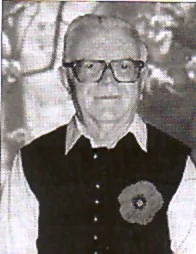 JV
JVJakob Vorberger
Jakob Vorberger *20.10.1926, Freidorf/Banat/Rumänien; †29.09.2001, Freilassing/Bayern/Deutschland Jakob Vorberger war gerade mal 19 Jahre alt, als er in ein stalinistisches Arbeitslager deportiert wurde. Da hatte er allerdings schon einen Gymnasiumsabschluss der deutschen Lehranstalt „Banatia“ in der Tasche. Der sollte ihm auch dienlich werden, als er bereits 1946 aus dem Zwangsarbeitslager krankheitsbedingt vorzeitig entlassen wurde und nach Freidorf zurückkehren konnte. Seiner Neigung folgend, suchte er seinen Brotberuf nicht in der hauseigenen Schreinerei, sondern in der Schreiberzunft. FREIHEIT hieß sein erster Arbeitgeber, ein sozialdemokratisches Temeswarer Tageblatt, und eine Journalistenlaufbahn hatte ihren Anfang genommen. Das war im Jahre 1947. Ein Jahr später heuerte er bei der berühmten TEMEVARER ZEITUNG an. Es war halt eine ungute Zeit, auch für junge, ambitionierte Journalisten. 1949 stellten die Kommunisten dieses verdiente Presseorgan ein. Das veranlasste Jakob...
1 poezii, 0 proze
 KK
KKKarl Kraus
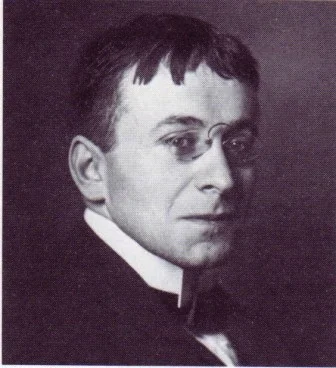
Karl Kraus *28.04.1874, Jitschin/Böhmen - †12.06.1936, Wien Karl Kraus war der Sohn eines jüdischen Papierfabrikanten. Er kam 1877 nach Wien und studierte ebenda Jura und Philosophie, nach anderen Quellen auch Germanistik. Er versuchte sich als Schauspieler, Journalist und Literaturkritiker. 1899 rief er die legendäre Zeitschrift „Die Fackel“ ins Leben, die er bis zu seinem Tode selbst gestalten sollte. Karl Kraus verfügte über eine ausgeprägte polemisch-satirische Begabung, die er in seiner radikal aggressiven Kulturkritik einsetzte. Er schuf aber auch literarische Werke: dramatische Satiren, Aphorismen, Essays, Gedichte, Epigramme und, als wohl bekanntestes Werk, das Antikriegsdrama „Die letzten Tage der Menschheit“ (1919), in dem er den Untergang der österreichischen Vorkriegsgesellschaft thematisiert. Bibliographie (Auszüge): Die demolierte Literatur, Essays, 1896; Sittlichkeit und Kriminalität, Essays, 1908; Sprüche und Widersprüche, Aphorismen, 1909; Epigramme, 1927;...
1 poezii, 0 proze
 LS
LSLudwig Schwarz
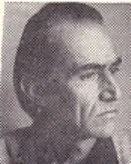
Ludwig Schwarz *22.8.1925, Dolatz/Banat/Rumänien; + 3.7.1981, Bukarest/Rumänien Am 22. August 1925 in der Banater Gemeinde Dolatz geboren, blieb Ludwig Schwarz die Biografie vieler seiner Landsleute nicht erspart. Kriegs- und Bărăganerfahrungen haben auch sein Leben geprägt. In den 1950ger Jahren erlernte er den Beruf eines Baufachmannes. Im Bauwesen allein verdiente er aber nicht sein tägliches Brot. In einer Schwarz-Retrospektive schreibt der Journalist Luzian Geier in der BANATER POST/München vom 20. September 1995 dazu: „Zum Studium wurde er nicht zugelassen, selbst als Hilfslehrer abgelehnt; als Baumeister arbeitete er über viele Jahre als unqualifizierter Land- und Gelegenheitsarbeiter, war Dorfmusikant und Gemeindeschreiber.“ Die kommunistischen Behörden in Rumänien haben den seit 1956 in Neupetsch/Peciu Nou beheimateten Ludwig Schwarz zeitlebens schikaniert. Eine Anstellung als Redakteur bei der Kronstädter KARPATENRUNDSCHAU durfte auch keine Dauerstelle werden....
1 poezii, 0 proze
 RB
RBRupert Chawner Brooke
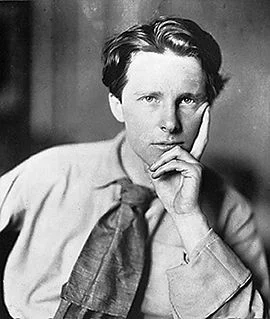
Rupert Chawner Brooke (middle name sometimes given as Chaucer)(3 August 1887–23 April 1915) was an English poet known for his idealistic war sonnets written during the First World War (especially The Soldier); however, he never experienced combat at first hand. He was also known for his boyish good looks, which prompted the Irish poet William Butler Yeats to describe him as \"the handsomest young man in England\". English poet Brooke was born at 5 Hillmorton Road in Rugby, Warwickshire, the second of the three sons of William Parker Brooke, a Rugby schoolmaster, and Ruth Mary Brooke, née Cotterill. He attended Hillbrow Prep School before being educated at Rugby School. While travelling in Europe, he prepared a thesis entitled \"John Webster and the Elizabethan Drama\", which won him a scholarship to King\'s College, Cambridge, where he became a member of the Cambridge Apostles, helped found the Marlowe Society drama club and acted in plays including the Cambridge Greek Play. Brooke...
7 poezii, 0 proze
 WH
WHWilhelm Hauff
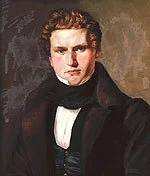
Wilhelm Hauff (November 29, 1802 – November 18, 1827) was a German poet and novelist. Wilhelm Hauff was born in Stuttgart, the son of August Friedrich Hauff, a secretary in the ministry of foreign affairs, and Hedwig Wilhelmine Elsaesser Hauff. He was the second of four children. Young Hauff lost his father when he was seven years old, and his early education was practically self-gained in the library of his maternal grandfather at Tübingen, where his mother had moved after the death of her husband. In 1818 he was sent to the Klosterschule at Blaubeuren, and in 1820 began to study at the University of Tübingen. In four years he completed his philosophical and theological studies at the Tübinger Stift. On leaving the university, Hauff became tutor to the children of the famous Württemberg minister of war, General Baron Ernst Eugen von Hugel (1774-1849), and for them wrote his Märchen (fairy tales), which he published in his Märchen almanach auf das Jahr 1826 (Fairytale Almanac of...
1 poezii, 0 proze
 EM
EMEdwin Morgan
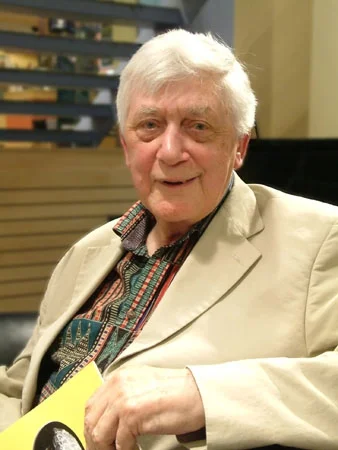
Edwin George Morgan OBE (born 27 April 1920) is a Scottish poet and translator who is associated with the Scottish Renaissance. He is widely recognised as one of the foremost Scottish poets of the 20th century. In 1999, Morgan was made the first Glasgow Poet Laureate. In 2004, he was named as the first Scottish national poet: The Scots Makar. Morgan was born in Glasgow and grew up in Rutherglen. He entered the University of Glasgow in 1937 and, after interrupting his studies to serve in World War II as a non-combatant conscientious objector with the Royal Army Medical Corps, graduated in 1947 and became a lecturer at the University. He worked there until his retirement in 1980. He came out as gay in Nothing Not Giving Messages: Reflections on his Work and Life , but explored his sexuality in many previous works.[1] He had written many famous love poems, among them "Strawberries" and "The Unspoken", in which the love object was not gendered; this was partly because of legal problems at...
1 poezii, 0 proze
 RW
RWRosmarie Waldrop
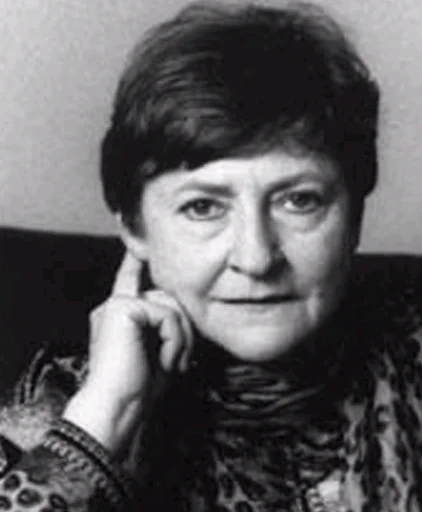
Rosmarie Waldrop (born August 24, 1935) is a contemporary American poet, translator and publisher. Born in Germany, she has lived in the United States since 1958. She has lived in Providence, Rhode Island since the late 1960s. Waldrop is coeditor and publisher of Burning Deck Press, as well as the author or coauthor (as of 2006) of 17 books of poetry, two novels, and three books of criticism. Early life in Germany Waldrop was born in Kitzingen am Main on August 24, 1935. Towards the end of the Second World War, she joined a travelling theatre, but returned to school after in early 1946. At school, she studied piano and flute and played in a youth orchestra. At Christmas 1954, the orchestra gave a concert for American soldiers stationed at Kitzingen. Afterwards, one of the audience, Keith Waldrop invited members of the orchestra to listen to his records. He and Rosmarie became friendly and worked together over the next few months, translating German poetry into English. University...
1 poezii, 0 proze
Kurt Weill
Biography Early Years Kurt Weill was born on 2 March 1900 in Dessau, Germany. The son of a cantor, Weill displayed musical talent early on. By the time he was twelve, he was composing and mounting concerts and dramatic works in the hall above his family\'s quarters in the Gemeindehaus. During the First World War, the teenage Weill was conscripted as a substitute accompanist at the Dessau Court Theater. After studying theory and composition with Albert Bing, Kapellmeister of the Theater, Weill enrolled at the Berlin Hochschule für Musik, but found the conservative training and the infrequent lessons with Engelbert Humperdinck too stifling. After a season as conductor of the newly formed municipal theater in Lüdenscheid, he returned to Berlin and was accepted into Ferruccio Busoni\'s master class in composition. He supported himself through a wide range of musical occupations, from playing organ in a synagogue to piano in a Bierkeller, by tutoring students (including Claudio Arrau and...
1 poezii, 0 proze
 JB
JBJames G. Ballard
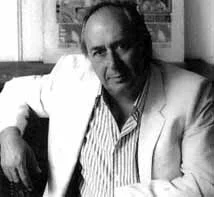
James Graham Ballard (15 November 1930 – 19 April 2009) was an English novelist and short story writer who was a prominent part of the science fiction New Wave movement. His best-known novels are the controversial Crash, an exploration of sexual fetishism connected to automobile accidents, and the loosely autobiographical Empire of the Sun, about his childhood internment by the Japanese during World War II after the invasion and conquest of Shanghai, where Ballard was born in the International Settlement. Both books were adapted into films, by David Cronenberg and Stephen Spielberg respectively. So distinctive was his work that the adjective "Ballardian" entered the language, defined by the Collins English Dictionary as "resembling or suggestive of the conditions described in J. G. Ballard's novels and stories, especially dystopian modernity, bleak man-made landscapes and the psychological effects of technological, social or environmental developments." Ballard was diagnosed with...
0 poezii, 0 proze
 AS
ASAlan Seeger
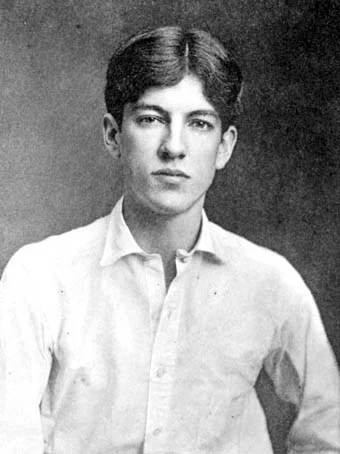
Alan Seeger, born on June 22, 1888 and died July 4, 1916, was an American poet who also fought in World War I. Born in New York, Seeger moved with his family to Staten Island at the age of one and remained there until the age of ten. In 1900, his family moved to Mexico for two years, which influenced the imagery of some of his poetry. His brother Charles Seeger, a noted musicologist, was the father of the American folk singer, Pete Seeger. Seeger entered Harvard in 1906 after attending several elite preparatory schools, including Hackley School. At Harvard, he edited and wrote for the Harvard Monthly. After graduating in 1910, he moved to Greenwich Village for two years, where he wrote poetry and enjoyed the life of a young bohemian. During that time, he attended soirées at the Mlles. Petitpas\' boardinghouse (319 West 29th Street), where the presiding genius was the artist and sage John Butler Yeats, father of the poet.[1] Having moved to the Latin Quarter of Paris to continue his...
20 poezii, 0 proze
WAR 2
de Pacurar Lucian
WAR 2 Din mare cer Un zeu s-arata Si,tot ce-i sfant,El cheama laolalta. E insotit de ingeri pazitori, Caci,omule,tu vrei sa Il omori. E insotit de sfintii din trecut Si de TACEREA ce-o ascult....
Propoziția săptămânii (29)
de Anton Potche
Was für mich interessant war und was ich so extrem nicht angenommen hatte: Ich bin auch in Berlin weiterhin unter Beobachtung gewesen, in Westberlin, und die letzte Eintragung, ein Maßnahmenplan der...
japanese war song
de emilian valeriu pal
cînd pleacă un om carnea mi se strînge în jurul oaselor ca un cort de campanie. atunci cel mai greu e să tac tot ceea ce n-am spus se cere afară imaginează-ți că forezi în marea nordului dai brusc...
war like - work like me
de Albert Cătănuș
Uneori pământul uită să se mai oprească din învârtit Contrar așteptărilor, nu amețesc deloc Mă uit fix la voi Îmi scot un pix din buzunar și vă notez pe toți. Fiecare gest, fiecare înjurătură,...
Zilele Eminescu 2010
de Paul Gorban
Program Zilele Emnescu 2010 Zilele Eminescu, organizate de Primaria Botosani, Consiliul Local Botosani, Consiliul Judetean Botosani, Uniunea Scriitorilor din Romania, Fundatia Culturala...
Jean de la Strehaia ii povesteste lui Gicu despre filmul Troia.
de B.S.
Troy (2004) Starring: Brad Pitt Director: Wolfgang Petersen Synopsis: Brad Pitt plays Achilles and Orlando Bloom is Paris in this retelling of the oft-told story of the long, bloody Trojan War, which...
Propoziția săptămânii (7)
de Anton Potche
Wahrscheinlich war diese simple Knobelei – 5 waagerecht: deutscher Dichter, von Karl Marx verehrt, Verfasser der „Loreley”, 6 senkrecht: blutsaugendes Gespenst im rumänischen Volksglauben – die...
Scrisoare din linia intai
de Motoc Lavinia
-make love not war- Razboiul este o alta forma de zbor moartea mimeaza la nesfarsit pasarile frica isi cauta ofrandele in pumnii mei stransi, in subsorile cu botul de caine. Ling minutele ca pe firul...
A dangerous working place
de Adrian Arvunescu
My brother is a war journalist. He corresponds for Reality TV from places all over the world where conflagrations take place. This year, he went to Iraq to question Saddam, but unfortunately, the...
Propoziția săptămânii (16)
de Anton Potche
Unsere Revolte war eine Farce. – Revolta noastră a fost o farsă. Istoricul Götz Aly a fost implicat și a găsit azi o explicație simplă pentru eșuarea revoltei studențești din Germania anului 1968....