
"Through Time" – 556 rezultate
0.02 secundeMeilisearch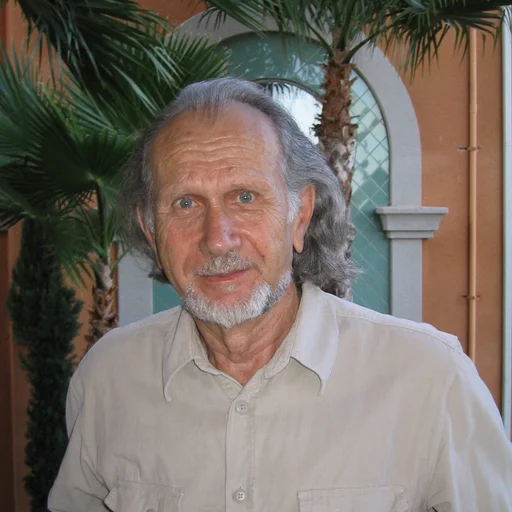 TM
TMToma George Maiorescu
Surname: MAIORESCU Given Names: TOMA GEORGE Date of Birth: December 8, 1928 Married on: July 15, 1955 Number of Children: 1, Daughter - Daniela Wanda Education: Graduate, Faculty of Letters and Philosophy University of Bucharest, Graduate, Literaturni Institut, Moscow, Doctor in Humane Letters, Doctor Honoris Causa. Career to Date: 1954-1971 Editor "Contemporanul" Magazine; 1971-1982 Deputy Editor-in-Chief "Romania Pitoreasca" Magazine; 1990-Present Director of "ECO" Magazine, "Ecosophia", President of the Romanian Ecological Movement; President of The European Foundation for Ecological Education and Culture. Memberships: Active member of the "New York Academy of Sciences"; Member of the "Academie Internationale du Tourisme" (Monaco); Honor member of the Academy of Ecology (Romania). Publications: PROSE: A Trip Through Time, 1956; The Place where Cosmonauts Return, 1962; Barefoot Gods, 1966; A Dialogue with the Century, Volume I 1967, Volume II 1972; 0,17 Operation,1972; Wandering...
2 poezii, 0 proze
 DA
DADîrzu Andrei-Ovidiu
I'm Alunelu from Hunedoara, Romania, a graduating student from Informatics College, a becoming artist. My hobbies are: reading books and the imitative arts. I am a funny person and I make the people around me to laugh. When I am sad I am not showing it directly. The sadness is shown many times through the verses I write.
144 poezii, 0 proze
Kurt Weill
Biography Early Years Kurt Weill was born on 2 March 1900 in Dessau, Germany. The son of a cantor, Weill displayed musical talent early on. By the time he was twelve, he was composing and mounting concerts and dramatic works in the hall above his family\'s quarters in the Gemeindehaus. During the First World War, the teenage Weill was conscripted as a substitute accompanist at the Dessau Court Theater. After studying theory and composition with Albert Bing, Kapellmeister of the Theater, Weill enrolled at the Berlin Hochschule für Musik, but found the conservative training and the infrequent lessons with Engelbert Humperdinck too stifling. After a season as conductor of the newly formed municipal theater in Lüdenscheid, he returned to Berlin and was accepted into Ferruccio Busoni\'s master class in composition. He supported himself through a wide range of musical occupations, from playing organ in a synagogue to piano in a Bierkeller, by tutoring students (including Claudio Arrau and...
1 poezii, 0 proze
 IM
IMIohann Mayer
An emissary of the Queen Christina of Sweden to the khan of the Tartars Islam Giray the 3rd, Iohann Mayer made a journey through Moldavia during May 1651. He was sent to accompany the Tartar messenger who had brought to the queen the letter of the khan that contained proposals of common operation against Poland and he was to hand over to the khan the answer of the queen as well. He passed through The White Citadel for the first time in December 1650 on his way towards Crimea. Now, in the summer of the next year, he was coming back on the same route and was finding again the same boatmen he had used six months earlier, on leaving. One cannot be aware of any other details of his winter journey towards Crimea, no other details about his itinerary through Moldavia he is most likely to have used to make his way to the khan` s court. His journey diary is preceded with the words: These are those that happened and occurred during my journey to Bakhchisaray and during the period I spent there,...
1 poezii, 0 proze
 US
USUmberto Saba
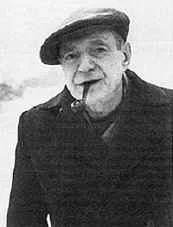
Umberto Saba (9 March 1883 - 26 August 1957) was the pseudonym of Italian poet and novelist Umberto Poli. His creative work was hampered by a life-long struggle with mental illness. Saba was born in Trieste, then a part of the Austro-Hungarian Empire. He had Italian citizenship through his father. His mother was Jewish. His father abandoned the family before Umberto was born, and his mother employed a Slovene nanny, Peppa Sabaz, to raise him. He became very attached to her, and revered her memory in his poetry. From 1903-1904, he attended the University of Pisa, where he studied archaeology, German, and Latin. In was in this period that he began to complain of a nervous disorder, which was to become more severe with time. Quitting school, Saba worked for a time as an apprentice and was a cabin-boy on a merchant ship. From 1907-1908 he served in the military in Salerno. He married Carolina Wölfler in 1909, and they had a daughter, Lina, the following year. By 1928, Saba was suffering...
4 poezii, 0 proze
 JL
JLJosé Lezama Lima
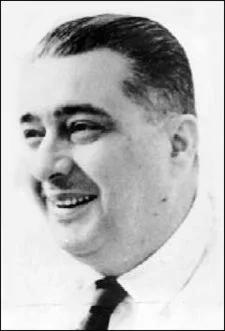
José Lezama Lima (19 decembrie, 1910 în Havana, Cuba - 8 august, 1976 în Havana, Cuba) a fost un romancier ți poet cubanez. Born in the Columbia Military Encampment close to Havana in the city of Marianao where his father was a colonel, Lezama lived through the most turbulent times of Cuba's history, fighting first against the Machado dictatorship, and later surviving the Castro regime. A gay man himself,[1] his literary output includes the semi-autobiographical, baroque novel Paradiso (1966), the story of a young man and his struggles with his mysterious illness, the death of his father, and his developing homosexuality and poetic sensibilities. Lima also edited several anthologies of Cuban poetry and the magazines Verbum and Orígenes, presiding as the patriarch of Cuban letters for most of his later years. In addition to his poems and novels, Lezama wrote many essays on figures of world literature like Mallarmé, Valéry, Góngora and Rimbaud as well as on Latin American baroque...
3 poezii, 0 proze
 MA
MAManuel Acuña
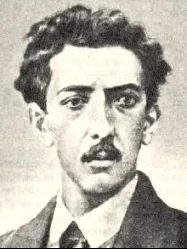
Manuel Acuña Narro (27 August 1849 – 6 December 1873) was a 19th-century Mexican writer. He focused on poetry, but also wrote some novels and plays. Even though he was famous at an early time of his life, he decided to commit suicide. It is not certain why he killed himself, but it is thought that he did so because of a woman. Acuña was born in the city of Saltillo, Coahuila, on August 27, 1849 to Francisco Acuña and Refugio Narro. He was taught how to write and read at an early age. Later he studied in the “Colegio Josefino”, in Saltillo. Around 1865 he was transferred to Mexico City to the School of San Ildefonso, where he entered as a full time student. Here he studied mathematics, Latin, French and philosophy. Acuña lived at a time at which Mexican society was dominated by philosophical-positivist intellectuality. Furthermore he was living as a romantic tendency in poetry was occurring. In January 1868, Acuña initiated his studies in medicine at the...
1 poezii, 0 proze
 AF
AFAnatole France
Anatole France, pseudonym for Jacques Anatole Thibault (1844-1924), was the son of a Paris book dealer. He received a thorough classical education at the Collège Stanislas, a boys\' school in Paris, and for a while he studied at the École des Chartes. For about twenty years he held diverse positions, but he always had enough time for his own writings, especially during his period as assistant librarian at the Senate from 1876 to 1890. His literary output is vast, and though he is chiefly known as a novelist and storyteller, there is hardly a literary genre that he did not touch upon at one time or another. France is a writer in the mainstream of French classicism. His style, modelled on Voltaire and Fénélon, as well as his urbane scepticism and enlightened hedonism, continue the tradition of the French eighteenth century. This outlook on life, which appears in all his works, is explicitly expressed in collection of aphorisms, Le Jardin d\'Épicure (1895) [The Garden of...
6 poezii, 0 proze
G.K. Chesterton
Gilbert Keith Chesterton was born in London, England on the 29th of May, 1874. Though he considered himself a mere \"rollicking journalist,\" he was actually a prolific and gifted writer in virtually every area of literature. A man of strong opinions and enormously talented at defending them, his exuberant personality nevertheless allowed him to maintain warm friendships with people-- such as George Bernard Shaw and H. G. Wells--with whom he vehemently disagreed. Chesterton had no difficulty standing up for what he believed. He was one of the few journalists to oppose the Boer War. His 1922 Eugenics and Other Evils attacked what was at that time the most progressive of all ideas, the idea that the human race could and should breed a superior version of itself. In the Nazi experience, history demonstrated the wisdom of his once \"reactionary\" views. His poetry runs the gamut from the comic The Logical Vegetarian to dark and serious ballads. During the dark days of 1940, when Britain...
2 poezii, 0 proze
 LH
LHLorraine Ellis Harr
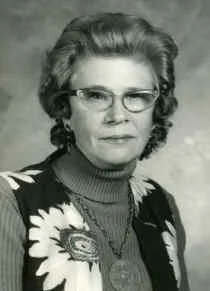
Lorraine Ellis Harr was one of the important figures in the history of American haiku. She lived in Portland, Oregon, where for almost four decades she worked tirelessly to promote the understanding of the haiku form and to encourage the reading and writing of haiku in English through the publication of a quarterly journal, Dragonfly, the organization, Western World Haiku Society and the fifteen books of her own poems in all the Japanese genres . Internationally known poet and editor, Kazuo Sato once commented that if Lorraine Ellis Harr lived in Japan, she would be a national treasure. Opal Lorraine Ellis Harr was born on Halloween, October 31, 1912, in Sullivan, Illinois. Her father left the family when she was three years old. The mother and three girls (Lorraine is the youngest) moved to Cooperstown, North Dakota to live for several years before moving to Portland. Her mother had a sister who lived there. The sister's husband promised Lorraine's mother a job if they moved to...
4 poezii, 0 proze
Infinite
de Giacomo Leopardi
These solitary hills have always been dear to me. Seated here, this sweet hedge, which blocks the distant horizon opening inner silences and interminable distances. I plunge in thought to where my...
The Final Cut
de Pink Floyd
Through the fish-eyed lens of tear stained eyes I can barely define the shape of this moment in time And far from flying high in clear blue skies I\'m spiralling down to the hole in the ground where...
Dream
de Antemir Antonio Eduard
I listen how time passes And I choose beautiful words Which I lign up along the way destiny takes I am watching through the window of a bitter-sweet smile A mob of words awaits To sacrifice...
Grave stone
de Elif
I passed beyond Death one more time, I passed through the light, Another day that goes by, I have defeated Death once more... But I still haven\'t found you!!! I know my destiny, in its misery, I...
I
de Andrei Dumitrescu
I am the earth still breathing through the leaves and the thorns deepest in the heart of the lovers, In a time so thick that only nothingness can get by its unborn pains and dark aged nightmares...
ForEver
de Cristi Constantin
\"Living a timeless tale, behold the truth unveiled, passion and fury fills my heart, knowing my fate.\" Numele meu este \"Tăcere\" și azi e ziua mea... Iar azi, de ziua mea, viața mi s-a schimbat...
DEMOCRACY
de Leonard Cohen
It’s coming through a hole in the air From those nights in Tianamen Square It’s coming from the feel That is ain’t exactly real Or it’s real, but ain’t exactly there. From the wars against disorder,...
Hearts a mess
de Miruna Gavriliu
I think I should get lost and hide in time, in a vast nook of shrouded obsolescence Perhaps I cannot grasp this nonsense feeling that pushes through like a fully loaded steamer when the siren is...
Olden Ways
de Gheorghe Constantin Marius
Only the moonlight now remains To guide me through the ancient woods; The restful place of our fathers in the dark. Infront of me there lies, an unknown path, Now hidden in the mist. A mountain...
The Last Question
de Isaac Asimov
The last question was asked for the first time, half in jest, on May 21, 2061, at a time when humanity first stepped into the light. The question came about as a result of a five-dollar bet over...