
"Poem by Emily Dickinson" – 21087 rezultate
0.02 secundeMeilisearchpoezii-cu-ingeri
Poeme cu si despre îngeri
de Marius Surleac
Susan Howe
Susan Howe was born in 1937 in Boston, Massachusetts. She is the author of several books of poems and two volumes of criticism. Her most recent poetry collections are The Midnight (New Directions, 2003), The Europe of Trusts (2002), Pierce-Arrow (1999), Frame Structures: Early Poems 1974-1979 (1996), The Nonconformist\'s Memorial (1993), The Europe of Trusts: Selected Poems (1990), and Singularities (1990). Her books of criticism are The Birth-Mark: Unsettling the Wilderness in American Literary History (1993), which was named an \"International Book of the Year\" by the Times Literary Supplement, and My Emily Dickinson (1985). Her work also has appeared in Anthology of American Poetry, edited by Cary Nelson (Oxford University Press, 1999); Moving Borders: Three Decades of Innovative Writing by Women, edited by Mary Margaret Sloan (1998); and Poems for the Millennium, Volume 2, edited by Pierre Joris and Jerome Rotherberg (1998). She has received two American Book Awards from the...
3 poezii, 0 proze
 AB
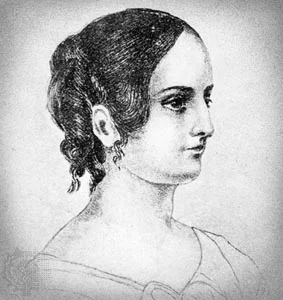
ABAnne Bronte
Anne Bronte s-a nascut la 17 ianuarie 1820 la Thornton, Yorkshire, Anglia. Era cel mai mic dintre cei sase copii ai reverendului Patrick si a sotiei sale Maria Bronte. Alaturi de celelalte doua surori ale sale, Charlotte si Emily si de fratele Branwell, ea a supravietuit mamei, care moare in 1821, si altor doua surori, Maria si Elizabeth, care au decedat in acelasi an – 1825. Cea mai mica dintre surorile Bronte, Anne a ramas in istoria literaturii britanice ca romancier si poet. Initial ea a folosit ca si surorile sale un pseudonim masculin, Acton Bell, pentru a publica in prima lor carte – de fapt una dintre primele carti publicate exclusiv de catre autori-femei. In volumul lor de debut POEMS BY CURRER, ELLIS AND ACTON BELL (Poeme de Currer, Ellis si Acton Bell, 1846, vandut in doar doua exemplare) Anne isi exprima dorinta de libertate “Poor restless dove, I pity thee; / And when I hear thy plaintive moan, / I mourn for thy captivity, / And in thy woes forget mine own.” – Biata...
16 poezii, 0 proze
 MR
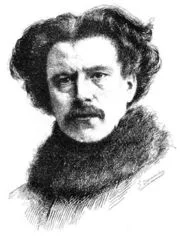
MRMaurice Rollinat
Maurice Rollinat (December 29, 1846 in Châteauroux, France – October 26, 1903 in Ivry-sur-Seine) was a French poet. His father represented Indre in the National Assembly of 1848, and was a friend of George Sand, whose influence is very marked in young Rollinat's first volume, Dans les brandes (1877), and to whom it was dedicated. After its publication, he abandoned realism and worked in a very different manner. He joined a literary circle that called themselves Les Hydropathes, founded by Émile Goudeau, an anti-clerical group with ties to the decadent literary movement. Under their influence wrote the poems that made his reputation. In Les Névroses, with the sub-title Les Âmes, Les Luxures, Les Refuges, Les Spectres, Les Ténèbres, he showed himself as a disciple of Charles Baudelaire. He constantly returns in these poems to the physical horrors of death, and is obsessed by unpleasant images. Less outre in sentiment are L'Abîme (1886), La Nature, and a book of children's verse, Le...
8 poezii, 0 proze
 AB
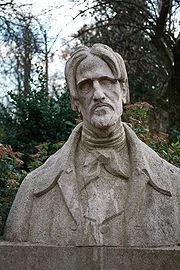
ABAloysius Bertrand
Louis-Jacques-Napoléon “Aloysius” Bertrand (20 April 1807 – 29 April 1841) was a French poet instrumental in the introduction of the prose poem into French literature and is credited with inspiring later Symbolist poets [1]. He wrote a collection of poems entitled Gaspard de la nuit, after which composer Maurice Ravel wrote a suite of the same name, based on the poems "Scarbo", "Ondine", and "Le Gibet". Bertrand was born in Ceva, Piedmont, Italy (then a part of Napoleonic France) and his family settled in Dijon in 1814. There he developed an interest in the Burgundian capital. His contributions to a local paper lead to recognition by Victor Hugo and Sainte-Beuve. He lived in Paris shortly with little success. He returned to Dijon and continued writing for local newspapers. Gaspard was sold in 1836 but it wasn't published until 1842 after his death of tuberculosis. The book was rediscovered by Charles Baudelaire and Stéphane Mallarmé. It is now considered a classic of poetic and...
8 poezii, 0 proze
Olly Komenda Soentgerath
Olly Komenda Soentgerath was born as German in Prague. She studied Germanistik and History at the Karl University. First poems appeared in the \"Prager day sheet\". In the Federal Republic of Germany she published so far ten poem volumes and a Prosaband. Seifert translated her poems into Czech and published them in three volumes in Prague two years before she received the 1984 Nobelprize. The poems of Olly Komenda Soentgerath were published in numerous anthologies, newspapers and magazines. They were toned and translated into several languages - the authoress is member of the PEN- club.She won several literary awards kept among others being the Culture Prize for Bibliography 1992 endowed by the Free State of Bavaria; the Honour Gift of Andreas Gryphius; and in 1996 the Kuenstlergilde endowed by the Federal Ministry of the Inside.
3 poezii, 0 proze
Sylvia Plath
Born to middle class parents in Jamaica Plain, Massachusetts, Sylvia Plath published her first poem when she was eight. Sensitive, intelligent, compelled toward perfection in everything she attempted, she was, on the surface, a model daughter, popular in school, earning straight A\'s, winning the best prizes. By the time she entered Smith College on a scholarship in 1950 she already had an impressive list of publications, and while at Smith she wrote over four hundred poems. Sylvia\'s surface perfection was however underlain by grave personal discontinuities, some of which doubtless had their origin in the death of her father (he was a college professor and an expert on bees) when she was eight. During the summer following her junior year at Smith, having returned from a stay in New York City where she had been a student ``guest editor\'\' at Mademoiselle Magazine, Sylvia nearly succeeded in killing herself by swallowing sleeping pills. She later described this experience in an...
0 poezii, 0 proze
 EB
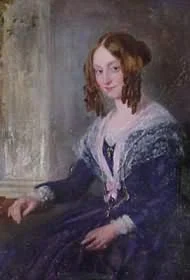
EBElizabeth Barrett Browning
Elizabeth Barrett Browning (6 March 1806 – 29 June 1861) was one of the most prominent poets of the Victorian era. Her poetry was widely popular in both England and the United States during her lifetime.[1] A collection of her last poems was published by her husband, Robert Browning, shortly after her death. Works/Collections 1820: The Battle of Marathon: A Poem. Privately printed 1826: A Essay On Mind, with Other Poems. London: James Duncan 1833: Prometheus Bound, Translated from the Greek of Aeschylus,and Miscellaneous Poems. London: A.J. Valpy 1838: The Seraphim, and Other Poems. London: Saunders and Otley 1844: Poems (UK) / A Drama of Exile, and other Poems (US). London: Edward Moxon. New York: Henry G. Langley 1850: Poems ("New Edition", 2 vols.) Revision of 1844 edition adding Sonnets from the Portuguese and others. London: Chapman & Hall 1851: Casa Guidi Windows. London: Chapman & Hall 1853: Poems (3d ed.). London: Chapman & Hall 1854: Two Poems: "A Plea for the Ragged Schools...
1 poezii, 0 proze
 MA
MAMiroslav Antici
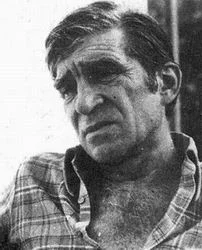
Miroslav "Mika" Antiæ (March 14, 1932 – June 24, 1986) was a Serbian poet, journalist and painter. Antiæ was born in Mokrin, Vojvodina, Serbia (then Yugoslavia). He wrote poems, articles, dramas, movie and TV scripts and documentaries. Mika also acted in several movies, and was an amateur painter. His best known poem is "Srem", in which he mourns for dead in World War II and describes the beauty of Srem using "beæarac" song form. He is well known as a bohemian. Mika Antiæ is best known as a children and youth poet, a master of delicate and gentle sentiments. His bohemian, hard-drinking lifestyle is best illustrated by a barely translatable pun about him: "Èika Jova deci, èika Mika Antiæ dva deci" "Èika Jova deci" meaning "Mister Jova to the children", referring to Jovan Jovanoviæ Zmaj, a known children's poet. "Èika Mika Antiæ dva deci" means "Mister Mika Antiæ two deciliters", referring to drinking from a glass, likely of alcohol.
1 poezii, 0 proze
 AB
ABAlan Brownjohn
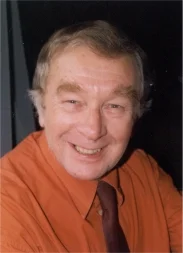
Alan Charles Brownjohn FRSL (born 28 July 1931) is an English poet and novelist. He was born in London and educated at Merton College, Oxford. He taught until 1979, when he became a full-time writer. He participated in Philip Hobsbaum's weekly poetry discussion meetings known as The Group. Alan Brownjohn is a Distinguished Supporter of the British Humanist Association. Works Travellers Alone (1954) poems The Railings (1961) poems To Clear the River (1964) novel, as John Berrington Penguin Modern Poets 14 (1965) with Michael Hamburger, Charles Tomlinson The Lions' Mouths (1967) A Day by Indirections (1969) broadsheet poem First I Say This: A Selection of Poems for Reading Aloud (1969) editor Sandgrains On A Tray (1969) Woman Reading Aloud (1969) broadsheet poem Synopsis (1970) Brownjohn's Beasts (1970) Transformation Scene (1971) broadside poem An Equivalent (1971) poem New Poems 1970 - 71. A P.E.N. Anthology of Contemporary Poetry (1971) edited with Seamus Heaney and Jon Stallworthy...
3 poezii, 0 proze
Isaac Asimov
Biographical (non-literary) How do you pronounce \"Isaac Asimov\"? \"EYE\'zik AA\'zi-mov\". The name is spelled with an \"s\" and not a \"z\" because Asimov\'s father didn\'t understand the English alphabet clearly when the family moved to the U.S. in 1923. (In Russian, the spelling was the Cyrillic equivalent of Azimov, and in Yiddish, the Hebrew letters were aleph-zayin-yod-mem-aleph-vav-vav.) One way to remember this pronunciation is the pun from The Flying Sorcerers by Larry Niven and David Gerrold: \"As a color, shade of purple-grey\", or \"As a mauve\". Asimov wrote a poem (\"The Prime of Life\") in which he rhymes his surname with \"stars above\"; someone else suggested amending the poem to rhyme it with \"mazel tov\", which he thought an improvement. Asimov\'s own suggestion, however, as to how to remember his name was to say \"Has Him Off\" and leave out the H\'s. When did Asimov die? What was the cause of his death? Where is he buried? Asimov died on April 6, 1992 of heart...
0 poezii, 0 proze
Poem by Emily Dickinson
de Coana Loenida
Did Our Best Moments last- \'Twould supersede the Heaven- A few-and they by Risk-procure- So this Sort-are not given- Except as stimulants-in Cases of Despair- Or Stupor-The Reserve- These Heavenly...
EgoPHobia #26
de Sorin - Mihai Grad
De câteva zile pe www.egophobia.ro puteți citi EgoPHobia #26, care cuprinde: ~ editorial >>> Ștefan Bolea – Frozen Spring ~ invitat >>> Petrișor Militaru – Cosmin Dragoste – invitatul din EgoPHobia...
Literra nr 1 (8) - Ianuarie 2006
de Geta Adam
Ne face plăcere să vă anunțăm că a apărut numărul 1(8) al revistei LITERRA , publicație editată de Asociația „Proiectul Rastko România” Timișoara. Numărul din ianuarie al revistei poate fi citit la...
EgoPHobia #27
de Sorin - Mihai Grad
De câteva zile pe www.egophobia.ro puteți citi EgoPHobia #27, care cuprinde: ~ editorial >>> Ștefan Bolea – 2nd Revolution ~ invitat >>> Sorin-Mihai Grad – Gelu Vlașin – invitatul din EgoPHobia #27...
<b>Analiza lunii noiembrie 2002</b>
de Frentiu Toma Adrian
A SOSIT LUNA CADOURILOR (Analiza poezie ro pe noiembrie) Analiza cuprinsa între textul: Revelație. (Kyre)…………… 31 X In lut (kosmolir ) 30 XI Texte în totalitate…… ……………. …………………….1817 Din care;...
Poem
de Iulia Caba
I sink into my past Contemplating the beauty of my self. I am my own story Told with a whispering voice, With a sincere innocence By the foaming waves Of my souls.
poem cu toamnă la Viena
de Ștefania Pușcalãu
se-apleacă toamna-ntr-un sărut pe fruntea cerului caldă într-o seară la Viena când oamenii se pierd în false amănunte nu mai contează cât e ceasul ca să bem o cafea când pâlpâie blând apusul nu ți-am...
Poem cu zăpadă
de Zavalic Antonia-Luiza
fără de început soarele strălucea în solzii peștilor cârligele se desprindeau din gurile lor și fiecare gol de carne se umplea cu lumină ce apă frumoasă în care a nins sper că moartea nu doare nici...
Gift of a Poem
de Stéphane Mallarmé
I bring you the child of an Idumaean night! Black, with wing bleeding, pale and unfeathered, Through the glass burnt with incense and gold, Through the panes, frozen, and still gloomy, alas The dawn...