
"Of another side of the word" – 9676 rezultate
0.05 secundeMeilisearch PI
PIPhaedrus Caius Iulius
Phaedrus, Gaius Julius (c.15 BC—c. AD 50), Thracian slave who came to Rome and became a freedman in the household of Augustus, the author (in Latin) of a collection of fables in five books containing some hundred stories, published probably in the thirties of the first century AD. There is also an appendix of another thirty-two fables, probably also by Phaedrus. The collection includes fables proper, a number of anecdotes (e.g. about Aesop, Socrates, and Menander), and defences of the author against detractors. The fables are based on those of Aesop and on beast-stories from other sources which had come to be attributed to Aesop. They are written in verse, in iambic senarii (see METRE, LATIN 2), and their object is two-fold, to give advice and to entertain. They are generally serious or satirical, dealing with the injustices of life and social and political evils, but occasionally they are light and amusing. In general they express patient resignation. Phaedrus observed in the...
1 poezii, 0 proze
 WJ
WJWilliam Wymark Jacobs
William Wymark Jacobs (8 September 1863 – 1 September 1943), was an English author of short stories and novels. He is now best remembered for his macabre tales "The Monkey's Paw" (published 1902 in the collection of short stories The Lady of the Barge) and "The Toll House" (published 1909 in the collection of short stories Sailors' Knots). However the majority of his output was humorous in tone. His favourite subjects were marine life: "men who go down to the sea in ships of moderate tonnage" said Punch, reviewing his first collection of stories, Many Cargoes, which achieved great popular success on its publication in 1896. Many Cargoes was followed by the novel The Skipper's Wooing in 1897, and another collection of short stories, Sea Urchins (1898) set the seal on his popularity. Among his other titles are Captains All, Sailors' Knots, and Night Watches. The title of the last reflects the popularity of perhaps his most enduring character: the night-watchman on the wharf in Wapping,...
1 poezii, 0 proze
Nitu Alexandru
Nothin much , just another soul :) . Hope you'l enjoy my work and i'm looking forwoard lots of comments :)
1 poezii, 0 proze
 PC
PCPierre de Saint Cloud
This skillful and cultured poet brought the adventures of Renart the Fox, known previously only in Latin, to a wider, French-speaking public. The two earliest branches of the Roman de Renart, II and Va (ca. 1174–77), which relate the love affair of Renart and Hersent the she-wolf, are attributed to him. Though he imitated Ysengrimus for three episodes (“Renart and Chantecler,” “Renart and the Titmouse,” “Renart and Hersent”) and Marie de France for another (“The Fox and the Crow”), “Renart and Tibert the Cat” is his own invention. He pokes fun at the legal system, pontifical legates and certain religious institutions, princes and nobles, through a subtle parody, intended largely to evoke laughter, of the chansons de geste and Arthurian romance. He was read and imitated by French and foreign authors of beast epics, such as Jacquemart Gielée, Heinrich der Glîchezâre, and Chaucer), by fabulists and writers of exempla (Eudes de Cheriton, Nicole Bozon, Jacques de Vitry), and by Philippe de...
9 poezii, 0 proze
Dylan Thomas
Dylan Marlais Thomas was born on October 27, 1914 in Swansea, Glamorganshire (Wales). He was educated at Swansea Grammar School and became well-known for his obscure poetry and amusing plays and prose. Before the publishing of Thomas' first book in 1934, he worked as a reporter for The South Wales Daily Post, in Swansea, (1931-1932) and as a free-lance writer from 1933. "18 Poems", Thomas' first book, was published as the result of a prize. Thomas was only 19 when this volume of poetry was released. He wrote nearly 30 poems in late 1933 and early 1934, of which 13 were published in this volume. Between May and October 1934, he completed another five for inclusion in the book. The Thomas' poems first appeared in the Sunday Referee in 1933 in a feature column called the "Poets' Corner," edited by Victor Neuburg and Runia Sheila MacLeod. Neuburg began to award prizes to poets whose work was judged to be the finest printed in the column over a period of six months. The prize was that the...
28 poezii, 0 proze
 AF
AFAnatole France
Anatole France, pseudonym for Jacques Anatole Thibault (1844-1924), was the son of a Paris book dealer. He received a thorough classical education at the Collège Stanislas, a boys\' school in Paris, and for a while he studied at the École des Chartes. For about twenty years he held diverse positions, but he always had enough time for his own writings, especially during his period as assistant librarian at the Senate from 1876 to 1890. His literary output is vast, and though he is chiefly known as a novelist and storyteller, there is hardly a literary genre that he did not touch upon at one time or another. France is a writer in the mainstream of French classicism. His style, modelled on Voltaire and Fénélon, as well as his urbane scepticism and enlightened hedonism, continue the tradition of the French eighteenth century. This outlook on life, which appears in all his works, is explicitly expressed in collection of aphorisms, Le Jardin d\'Épicure (1895) [The Garden of...
6 poezii, 0 proze
ron mael
In collaboration with vocalist brother Russell, composer/keyboardist Ron Mael was the mastermind behind the skewed pop smarts and wiseguy wordplay of cult favorite Sparks. Born August 12, 1950, in Culver City, CA, Mael spent his childhood modeling young men\'s apparel for mail-order catalogues; while attending UCLA in 1970, he and Russell formed their first group, Halfnelson. Although Todd Rundgren produced the band\'s self-titled 1971 debut, their quirky, tongue-in-cheek art pop initially failed to find an audience. After their manager successfully convinced the Maels to change the group\'s name, however, Sparks almost reached the Hot 100 with the single \"Wonder Girl.\" 1972\'s sublimely bizarre A Woofer in Tweeter\'s Clothing cemented the band\'s cult status, and scored another near-hit with \"Girl From Germany.\" Following the Maels\' relocation to England, 1974\'s glam-bubblegum opus Kimono My House reached the Top Five on the U.K. album charts and spawned two major British hits,...
14 poezii, 0 proze
 CS
CSCarl Sandburg
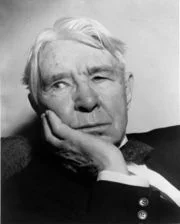
Carl Sandburg (January 6, 1878 – July 22, 1967) was an American writer and editor, best known for his poetry. He won two Pulitzer Prizes, one for his poetry and another for a biography of Abraham Lincoln. H. L. Mencken called Carl Sandburg "indubitably an American in every pulse-beat." Sandburg was born in Galesburg, Illinois to Swedish ancestry. At the age of thirteen he left school and began driving a milk wagon. He subsequently became a bricklayer and a farm laborer on the wheat plains of Kansas.[1] After an interval spent at Lombard College in Galesburg,[2] he became a hotel servant in Denver, then a coal-heaver in Omaha. He began his writing career as a journalist for the Chicago Daily News. Later he wrote poetry, history, biographies, novels, children's literature, and film reviews. Sandburg also collected and edited books of ballads and folklore. He spent most of his life in the Midwest before moving to North Carolina. Sandburg fought in the Spanish-American War with the 6th...
24 poezii, 0 proze
 ÉG
ÉGÉdouard Glissant
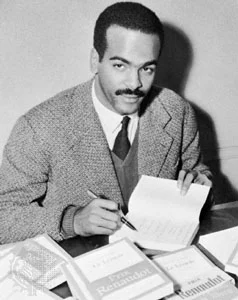
Edouard Glissant (born in Sainte-Marie, Martinique in 1928) is a French writer, poet and literary critic. He is widely recognised as being one of the most influential figures in Caribbean thought and cultural commentary. He studied at the Lycée Schoelcher, named after the abolitionist Victor Schoelcher, where the poet Aimé Césaire had studied and had come back to as a teacher. Césaire had met Léon Damas there; later in Paris they would join with Léopold Senghor, a poet and the future first president of Senegal, to formulate and promote the conecpt of négritude. Césaire did not teach Glissant, but did serve as an inspiration to him; another student at the school at that time was Franz Fanon. Glissant left Martinique in 1946 for Paris, where he received his PhD, having studied ethnography at the Musée de l'Homme and History and philosophy at the Sorbonne. He established, with Paul Niger, the separatist Front Antillo-Guyanais pour l'Autonomie party in 1959, as a result of which Charles...
16 poezii, 0 proze
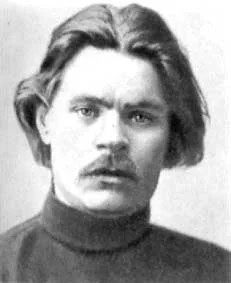 MG
MGMaxim Gorki
[[en]] * Born: 16 March 1868 * Birthplace: Nizhny Novgorod (now Gorky), Russia * Death: June 1936 * Best Known As: Russian writer known for his socialist realism Name at birth: Aleksey Maksimovich Peshkov Maxim Gorky (also spelled Maksim Gorki) is one of the giants of 20th century Russian literature and theater, known for his realistic depictions of how terrible it is to be poor and oppressed. Gorky himself grew up in rough times and was a lifelong spokesperson for the underclass. His political activism led to several years of exile, in spite of his popularity with Russian readers. By 1900 Gorky was a famous literary figure, thanks in part to help from Anton Chekhov. His short stories and his first novel, Foma Gordeyev (1902) gave him notoriety as well as critical success, but his outspoken opposition to the rule of Nicholas II led to his exile to the island of Capri (1907-13). After the 1917 revolution Gorky's criticism of his friend V. I. Lenin and the Bolsheviks led to another...
2 poezii, 0 proze
Cyber Lesson Learned
de Ohm
A letter is being written for you. 10/26 Written in draft form, why? Because I know not what else to do? It is as cold here, in draft, as it is in my heart. My body chilled, by your absence. My mind...
Porn meditation
de Theodor Emilian Barbu
Porn has ruined it for me. I mean now I can never be with a girl who is less than perfect. Pretty just won’t do it anymore. It seems this is my curse. It’s hard even to talk to the ugly ones. That...
The Wood-Pile
de Robert Frost
Out walking in the frozen swamp one gray day I paused and said, \'I will turn back from here. No, I will go on farther- and we shall see\'. The hard snow held me, save where now and then One foot...
Mending Wall
de Robert Frost
Something there is that doesn\'t love a wall, That sends the frozen ground swell under it, And spills the upper boulders in the sun; ANd makes gaps even two can pass abreast. The work of hunters is...
Pierderea și regăsirea lui Moise
de Hanna Segal
Moise a fost regăsit într-o pagină de mult uitată, scrisă de Rumi. Pentru ca e de mult uitată, aducerea aminte e și ea în cel mai bun caz fragmentară. It\'s not me that\'s glorified in acts of...
Dracula
de Bram Stoker
Chapter 6 - Mina Murray\'s Journal 24 July. Whitby.- Lucy met me at the station, looking sweeter and lovelier than ever, and we drove up to the house at the Crescent in which they have rooms. This is...
The Passionate Pilgrim
de William Shakespeare
I. WHEN my love swears that she is made of truth, I do believe her, though I know she lies, That she might think me some untutor\'d youth, Unskilful in the world\'s false forgeries. Thus vainly...
The Apocalyptic Subculture of a Woman\'s Man
de Ohm
Where can I begin? Where will it end? Well, either in the year 2003 or the year 2006, most likely the latter. The remaining timeline grows thinner as the world grows fatter. It doesn\'t matter,...
Taming of the Shrew
de William Shakespeare
Induction, Scene I SCENE I. Before an alehouse on a heath. Enter Hostess and SLY SLY I\'ll pheeze you, in faith. Hostess A pair of stocks, you rogue! SLY Ye are a baggage: the Slys are no rogues;...
It was a time of triumph for the morons
de Alexandru Paleologu
Mr. Paleologu, to begin with, let us say that this talk is the result of certain hostile attitudes, especially in the Western media, concerning Mircea Eliade and what we call here “Generation ’27”. I...