
"Despised Prison and Laws" – 196 rezultate
0.01 secundeMeilisearch KG
KGKhalil Gibran
Khalil Gibran (born Gubran Khalil Gubran bin Mikhā'īl bin Sa'ad; January 3, 1883 – April 10, 1931) also known as Kahlil Gibran, was a Lebanese American artist, poet, and writer. Born in the town of Bsharri in modern-day Lebanon (then part of the Ottoman Mount Lebanon mutasarrifate), as a young man he immigrated with his family to the United States where he studied art and began his literary career. He is chiefly known in the English speaking world for his 1923 book The Prophet, a series of philosophical essays written in English prose. An early example of Inspirational fiction, the book sold well despite a cool critical reception, and became extremely popular in the 1960s counterculture. Gibran is the third best-selling poet of all time, behind Shakespeare and Lao-Tzu. In English, prior to his death: • The Madman (1918) Twenty Drawings (1919) • The Forerunner (1920) • The Prophet, (1923) • Sand and Foam (1926) • Kingdom of the Imagination (1927) • Jesus, The Son of Man...
47 poezii, 0 proze
 AA
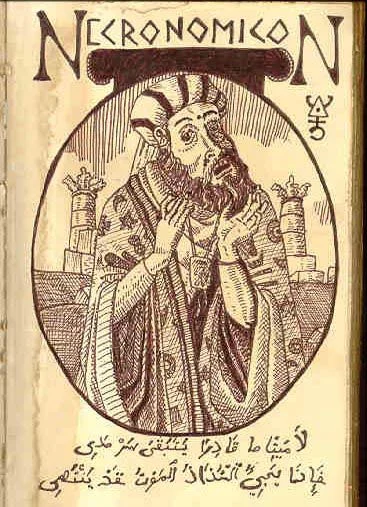
AAAbdul al-Hazred
Abdul Alhazred is a fictional character created by American horror writer H. P. Lovecraft. He is the so-called "Mad Arab" credited with authoring the imaginary book Kitab al-Azif (the Necronomicon), and as such an integral part of Cthulhu Mythos lore. Despite the existence of several hoax Necronomicons, it is clear that neither Alhazred nor his book ever existed. The name Abdul Alhazred is a pseudonym that Lovecraft created in his youth, which he took on after reading 1001 Arabian Nights at the age of about five years. The name was invented either by Lovecraft, or by Albert Baker, the Phillips family lawyer. Abdul is a common Arabic name component (but never a name by itself; additionally the ending -ul and the beginning Al- are redundant), but Alhazred may allude to Hazard, a name from Lovecraft's family tree. It might also have been a pun on "all-has-read", since Lovecraft was an avid reader in youth. Abdul Alhazred is not a real Arabic name, and seems to contain the Arabic definite...
1 poezii, 0 proze
 A
AAnvari
Anvari (1126–1189), full name Awhad ad-Din 'Ali ibn Mohammad Khavarani or Awhad ad-Din 'Ali ibn Mahmud was one of the greatest Persian poets. He was born in Abivard of (now in Turkmenistan) and died in Khurasanian Balkh, now in Afghanistan, and studied science and literature at the collegiate institute in Tun (now Firdaus, Iran), becoming a famous astronomer as well as a poet. Anvari's poems were collected in a Deewan, and contains panegyrics, eulogies, satire, and others. His elegy "Tears of Khorasan", translated into English in 1789, is considered to be one of the most beautiful poems in Persian literature. The Cambridge History of Iran calls Anvari "one of the greatest figures in Persian literature". Despite their beauty, his poems often required much help with interpretation, as they were often complex and difficult to understand. Anvari's panegyric in honour of the Seljuk sultan Sultan Sanjar (1117–1157), ruler of Khorasan, won him royal favour, and allowed him to go on to enjoy...
2 poezii, 0 proze
John Milton
1608 - 1674 One of the greatest poets of the English language, best-known for his epic poem PARADISE LOST (1667). Milton's powerful, rhetoric prose and the eloquence of his poetry had an immense influence especially on the 18th-century verse. Besides poems, Milton published pamphlets defending civil and religious rights. John Milton was born in London. His mother Sarah Jeffrey, a very religious person, was the daughter of a merchant sailor. His father, also named John, had risen to prosperity as a scrivener or law writer - he also composed music. The family was wealthy enough to afford a second house in the country. Milton's first teachers were his father, from whom he inherited love for art and music, and the writer Thomas Young, a graduate of St Andrews University. At the age of twelve Milton was admitted to St Paul's School near his home and five years later he entered Christ's College, Cambridge. During this period, while considering himself destined for the ministry, he began to...
17 poezii, 0 proze
 AS
ASAnna Sewell
Anna Sewell (30 March 1820 – 25 April 1878) was an English novelist, best known as the author of the classic novel Black Beauty. Anna Mary Sewell was born in Great Yarmouth, Norfolk, England into a devoutly Quaker family. Her father was Isaac Phillip Sewell (1793-1879), and her mother, Mary Wright Sewell (1798 - 1884) was a successful author of children's books. Anna Sewell had one sibling, a younger brother named Philip Sewell. Anna Sewell was largely educated at home. When Anna was twelve years old, the family moved to Stoke Newington, where Sewell attended school for the first time. Two years later, however, she slipped while walking home from school and severely injured both of her ankles. Her father took a job in Brighton in 1836, partly in the hope that the climate there would help to cure her. Despite this, and most likely because of mistreatment of her injury, for the rest of her life Anna was unable to stand without a crutch or to walk for any length of time. For greater...
5 poezii, 0 proze
Sonnet XXXVII
de William Shakespeare
As a decrepit father takes delight To see his active child do deeds of youth, So I, made lame by fortune\'s dearest spite, Take all my comfort of thy worth and truth. For whether beauty, birth, or...
Noapte de dragoste
de George Lână
Șemineul împrăștia pe tavan umbre hidoase ascultam bocetul de pe Wish You Were Here noapte de noapte de un deceniu răsucit în jurul trunchiului tău de culoarea și consistența alunei sfidam legile...
PARADISE LOST -- Book V
de John Milton
Book V Now Morn, her rosy steps in the eastern clime Advancing, sowed the earth with orient pearl, When Adam waked, so customed; for his sleep Was aery-light, from pure digestion bred, And temperate...
Hamlet
de William Shakespeare
HAMLET DRAMATIS PERSONAE (PAGINA 5) ACT III SCENE I A room in the castle. [Enter KING CLAUDIUS, QUEEN GERTRUDE, POLONIUS, OPHELIA, ROSENCRANTZ, and GUILDENSTERN] KING CLAUDIUS And can you, by no...
The Use and Abuse of History
de Friedrich Nietzsche
The Use and Abuse of History (1878) By Friedrich Nietzsche Forward \"Incidentally, I despise everything which merely instructs me without increasing or immediately enlivening my activity.\" These are...
Prometheus
de George Gordon Noel Byron
Titan! to whose immortal eyes The sufferings of mortality, Seen in their sad reality, Were not as things that gods despise; What was thy pity's recompense? A silent suffering, and intense; The rock,...
To Himself
de Giacomo Leopardi
Now will you rest forever, My tired heart. Dead is the last deception, That I thought eternal. Dead. Well I feel In us the sweet illusions, Nothing but ash, desire burned out. Rest forever. You have...
the despisers of the body
de Friedrich Nietzsche
4. The Despisers of the Body TO THE despisers of the body will I speak my word. I wish them neither to learn afresh, nor teach anew, but only to bid farewell to their own bodies,- and thus be dumb....
întrebare...
de ioana matei
oare ce sabie vrea să despice Iubirea în bărbat și femeie?... și oare de ce?... cuvintele?... hmm, diabolice cuvinte!... pot încerca... și chiar reușesc uneori... (fără Bărbat și fără Femeie)... mai...
Earthly
de Arseny Tarkovsky
Earthly If I\'d been destined at birth To lie in the lap of the gods, I\'d have been reared by a heavenly wet-nurse On the holy milk of the clouds. I\'d be god of a stream or a garden, Keeping watch...
Secretul împlinirilor
de Cristian Petru Balan
Luminile iubirii pot gheena s-o despice Când ele intră-n inimi, căci le prefac în rai, Dar uneori e invers, când suflete ferice Cad în amoruri negre și-n iad le-auncă, vai ! De vrea, Soarta ți-alege...
Poem
de Vasile Mihalache
Să deschizi fereastra în zori Și aerul să te despice ca fierul de plug: Este ca și cum ai citi o carte de premoniții. Semn al zilei fără izbândă, Vezi o femeie bătrână care duce norii Ca pe niște...
Poem mut
de bathori adrian
construiesc cu grija vapoare sperand ca odata ele sa despice marea... marea ta liniste.
Sinele
de razvan rachieriu
Fiecare purtăm cu noi în viață lama rece a spadei rațiunii gata să despice structura gândirii prin raționamente eronate. Izvorul suferințelor din carnea rațiunii , luciditatea, despică , taie,...
mersul de plastic
de ștefan ciobanu
ea avea de ales între războiul drept și războiul stâng voia să se despice cu orice sabie baionetă cuțit ultima ei dorință a fost iubitule adu-mi o lămâie aerul era turcoaz pe piept și pe brațe s-a...