
"Berceuse de mort" – 314 rezultate
0.03 secundeMeilisearch CM
CMCecilia Meireles
Cecília Benevides de Carvalho Meireles (1901-1964, Rio de Janeiro) was a Brazilian writer and educator, known principally as a poet. She is a canonical name of Brazilian Modernism, one of the great female poets in the Portuguese language, and is widely considered the best poetess from Brazil, though she rightly combatted the word "poetess" because of gender discrimination. She traveled in the Americas in the 1940s, on one trip visiting the U.S.A, Mexico, and on others Argentina and Uruguay, and Chile. In the summer of 1940 she gave lectures at the University of Texas, Austin. She wrote two poems about her time in the capital of Texas, and a long (800 lines) very socially-aware poem "USA 1940", which was published posthumously. As a journalist her columns (crônicas, or chronicles) focused most often on education, but also on her trips abroad in the western hemisphere, Portugal, other parts of Europe, Israel, and India (where she received an honorary doctorate). As a poet, her style was...
11 poezii, 0 proze
 LC
LCLouis-Ferdinand Celine
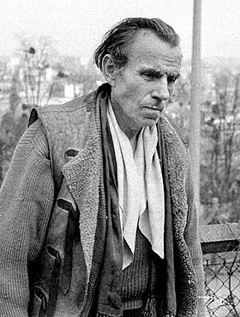
Louis-Ferdinand Céline was the pen name of French writer and doctor Louis-Ferdinand Destouches (27 May 1894 – 1 July 1961). The name "Céline" was chosen after his grandmother's first name. Céline is considered one of the most influential writers of the twentieth century, developing a new style of writing that modernized both French and World literature. He remains, however, a controversial figure because of anti-Semitic statements published in 1937 and during the Second World War. Only child of Ferdinand-Auguste Destouches and Marguerite-Louise-Céline Guilloux, he was born Louis-Ferdinand Destouches in 1894 at Courbevoie, just outside Paris in the Seine département (now Hauts-de-Seine). His father was a minor functionary in an insurance firm and his mother was a lacemaker. In 1905 he was awarded his Certificat d'études, after which he began working as an apprentice and messenger boy in various trades. Between 1908 and 1910 his parents sent him to Germany and England for a year in each...
1 poezii, 0 proze
 GC
GCGu Cheng
Gu Cheng s-a născut în anul 1956, în Beijing, China. În 1969 s-a angajat la o fermă din provincia Shandong. În 1974 s-a întors în capitală, muncind ca tâmplar, vopsitor etc. Din 1985 a devenit redactor de poezie. A publicat mai multe volume de versuri, dintre care două în colaborare cu Shu Ting și Bei Dao, în 1982 și, respectiv, 1983. Engleză Born September 24, 1956(1956-09-24) Beijing, China Died October 8, 1993 (aged 37) Auckland, New Zealand Occupation poet, essayist, novelist Nationality New Zealander (formerly Chinese) Literary movement Misty Poets, modernism Gu Cheng (顾城,1956-1993) was a famous Chinese modern poet, essayist, and novelist. He was a prominent member of the "Misty Poets", a group of Chinese modernist poets. Gu Cheng began life in privilege as the son of a prominent party member. His father was the army poet Gu Gong. At the age of twelve, his family was sent down to rural Shandong because of the Cultural Revolution(as means of re-education)...
2 poezii, 0 proze
 I
IImmortaal
I am only here because I cannot delete my account. Please, delete my account!!!
4 poezii, 0 proze
Osho
Tantra is a very revolutionary concept - the oldest and yet the newest. Tantra is one of the oldest traditions and yet untraditional, even antitraditional, because tantra says unless you are whole and one you are missing life altogether. You should not remain in a split state: you must become one. What to do to become one? You can go on thinking but that is not going to help because thinking is the technique to divide. Thinking is analytical. It divides;it splits things. Feeling unites, synthesizes, makes things one. So you can go on thinking, reading, studying, contemplating. It is not going to help unless you fall back to the feeling centre. Sex can be a very deep fulfillment, and sex can throw you back to your wholeness, to your natural, real being, for many reasons. Those reasons have to be understood. One, sex is a total act. You are thrown off your mind, off balance. That is why there is so much fear of sex. You are identified with the mind, and sex is a no-mind act. You become...
0 poezii, 0 proze
Isaac Asimov
Biographical (non-literary) How do you pronounce \"Isaac Asimov\"? \"EYE\'zik AA\'zi-mov\". The name is spelled with an \"s\" and not a \"z\" because Asimov\'s father didn\'t understand the English alphabet clearly when the family moved to the U.S. in 1923. (In Russian, the spelling was the Cyrillic equivalent of Azimov, and in Yiddish, the Hebrew letters were aleph-zayin-yod-mem-aleph-vav-vav.) One way to remember this pronunciation is the pun from The Flying Sorcerers by Larry Niven and David Gerrold: \"As a color, shade of purple-grey\", or \"As a mauve\". Asimov wrote a poem (\"The Prime of Life\") in which he rhymes his surname with \"stars above\"; someone else suggested amending the poem to rhyme it with \"mazel tov\", which he thought an improvement. Asimov\'s own suggestion, however, as to how to remember his name was to say \"Has Him Off\" and leave out the H\'s. When did Asimov die? What was the cause of his death? Where is he buried? Asimov died on April 6, 1992 of heart...
0 poezii, 0 proze
 WA
WAWerner Aspenstrom
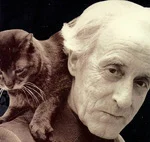
Karl Werner Aspenström (13 November 1918 – 25 January 1997) was a Swedish poet. Born at Norrbärke, he was a member of the Swedish Academy, where he held Seat 12 from 1981 to 1997. Aspenström claimed that his motivation for writing was "writing for his cat", but apparently hinted that he meant someone else with that. In 1989, together with Lars Gyllensten and Kerstin Ekman, he resigned from the Swedish Academy because of the academy’s response to the Salman Rushdie controversy, which was perceived as weak. He however claimed that this was not the sole reason for his resignation, but rather one amongst several other. He was a friend of Stig Dagerman. Works Förberedelse (1943) Oändligt är vårt äventyr (1945) Snölegend (1949) Varelser (1989) Öva Sitt Eget (2004) (posthumous, co-written with Signe Lund-Aspenström)
1 poezii, 0 proze
 MR
MRMevlana Jalaluddin Rumi
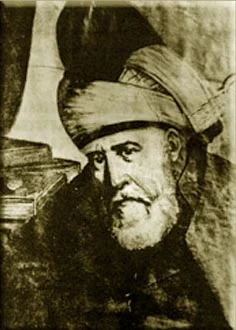
Mawlānā Jalāl ad-Dīn Muḥammad Balkhī, also known as Jalāl ad-Dīn Muḥammad Rūmī, but known to the English-speaking world simply as Rumi, (30 September 1207 – 17 December 1273), was a 13th-century Persian poet, Islamic jurist, theologian, and mystic. Rūmī is a descriptive name meaning "the Roman" since he lived most of his life in an area called Rūm because it was once ruled by the Byzantine Empire. According to tradition, Rumi was born in Balkh, Khorasan (now in Afghanistan), the hometown of his father's family. Scholars, however, argue that he was most likely born in Wakhsh, a small town located at the river Wakhsh in what is now Tajikistan. Wakhsh belonged to the larger province of Balkh, and in the year Rumi was born, his father was an appointed scholar there. Both these cities were at the time included in the Greater Persian cultural sphere of Khorasan, the easternmost province of historical Persia, and were...
162 poezii, 0 proze
Jelaluddin Rumi
RUMI Rumi is one of the most read and well known poets in the world. Jelaluddin Rumi was born in the Eastern part of the Ancient Persian Empire near Balkh (presently Afghanistan), on September 30, 1207. His first name literally means Majesty of Religion, Jalal means majesty and din means religion. Because of the threat of Mongol invasion in Persia his family fled, finally settling in Konya, Turkey. He passed away, on December 17, 1273. His shrine is in Konya. As a genius theologian, a brilliant scholar, and a pillar of Islam, he followed in his father place until his spiritual friend and teacher, Shams of Tabriz appeared in his life. Rumi underwent a spiritual transformation in 1244 after meeting Shams. With appearance of Shams, Rumi became reborn and soon started his marvelous work \"Masnavi,\" (Mathnawi) consisting of 24,000 verses at age 38. His other famous work is \"Divan-e Shams-e Tabriz\" (the collective poems of Shams of Tabriz). Rumi\'s poetry has a mystic connotation, a...
0 poezii, 0 proze
Jelaluddin Rumi
RUMI Rumi is one of the most read and well known poets in the world. Jelaluddin Rumi was born in the Eastern part of the Ancient Persian Empire near Balkh (presently Afghanistan), on September 30, 1207. His first name literally means Majesty of Religion, Jalal means majesty and din means religion. Because of the threat of Mongol invasion in Persia his family fled, finally settling in Konya, Turkey. He passed away, on December 17, 1273. His shrine is in Konya. As a genius theologian, a brilliant scholar, and a pillar of Islam, he followed in his father place until his spiritual friend and teacher, Shams of Tabriz appeared in his life. Rumi underwent a spiritual transformation in 1244 after meeting Shams. With appearance of Shams, Rumi became reborn and soon started his marvelous work \"Masnavi,\" (Mathnawi) consisting of 24,000 verses at age 38. His other famous work is \"Divan-e Shams-e Tabriz\" (the collective poems of Shams of Tabriz). Rumi\'s poetry has a mystic connotation, a...
0 poezii, 0 proze
Poezia domnului Caragiale
de Gheorghe Neagu
Poezia domnului Caragiale Puțini exegeți s-au oprit asupra poeziei marelui dramaturg. Din motive ca să nu fim neapărat de calitate, critica literară a evitat creația poetică caragialiană, simțind...
berceuse pour skaw
de Madalina STATE
vagabonzi se surpă între solzii nopții cu spovedaniile ironice ca cele ale îngerilor răsturnați lumini seci ce ling gâturile lor gleznele cu drumuri încolăcite podoabe ale posibilului des mots , rien...
Tu, bercule ai un tubercul de os tuberculosule (fragment)
de Tașcu Gheorghiu
Leșinat în dantele astrul perfect desfoliat e gongul subtilelor cavalcade de fosfor. Atunci apăru prin spaimele timpului mort Unghi, smuls de rachete, cu omoplații coagulați la 25 și sub verdea,...
I LOSE ii
de Vasile Munteanu
luni: minte-mă sincer minte-mă cu milă nu mai vreau să sufăr te-aș ruga minte-mă cu sinceritate de ce ar fi rele firele de iarbă frunzele păsările – toate se usucă în văzul lumii coastele mele de...
I lose ii
de Vasile Munteanu
luni: minte-mă sincer minte-mă cu milă nu mai vreau să sufăr te-aș ruga minte-mă cu sinceritate de ce ar fi rele firele de iarbă frunzele păsările – toate se usucă în văzul lumii coastele mele de...
Autoportret în 7 defecte
de Felix-Gelu Constantinescu
Motto: „So, yea, go ahead and tell me what your flaws are, because if I was brave enough to do it you should be too.” Seven of my Flaws, TamaHarul, YouTube video „Şi-ai să mai vezi pe cei ce-s...
Lui Albrecht Durer
de Victor Hugo
Lui Albrecht Durer În vechi păduri, în care, precum o undă largă Din negru-arin în albul mesteacăn seva-aleargă, De câte ori, așa e?, când străbăteai poiene, Pal, neprivind în urmă, cu spaimele pe...
Ti-am ridicat mingea la fileu
de Ioan-Mircea Popovici
Azi este o zi foarte specială Zmeul Rafilei s-a întins peste tot cerul Din miezul de nucă a crescut nucul în care cântă cucu Toate fericirile şi toate iubirile să le trăieşti tu Mi-a spus într-o zi...
în Peninsula Tomis
de Ioan-Mircea Popovici
stau să-mi aduc aminte ce voi face azi întelegi tu cum vine asta eu stau să-mi aduc aminte viitorul spre disperarea unora și-a altora să luăm acum inelul cu chei și după cum ne-am înțeles să dăm o...
Berceuse
de Alexandru A. Philippide
Pe crengi, aceleași cuiburi vechi de ciori, Pe care, seara, le frământă vântul! Și soarele! s-a dus de-atâtea ori, Ca astăzi, să încunjure pământul! Știi pe de rost și crengi, și vânt, și ciori....