
"thoughts in the rain" – 8050 rezultate
0.02 secundeMeilisearch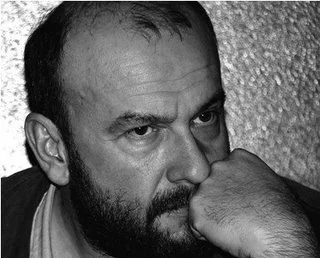 DR
DRDavide Rondoni
Poezie: La frontiera della ginestra, (The Frontier of the Broom Flower), Quinta Generazione 1985 O les invalids, N.c.e. 1988 A rialzare i capi pioventi (To Raise the Raining Heads), N.c.e., Guaraldi, 1993 Nel tempo delle cose cieche (In The Time of Blind Things), N.c.e., 1995 Il bar del tempo (The Bar of Time), Guanda, 1999, (Winner of Montale, Camaiore, Metauro, S. Domenichino, and Caput Gauri prizes) Non sei morto, amore (You Are Not Dead, Love), Quaderni del battello ebbro, 2001 Avrebbe amato chiunque (He Would Have Loved Anyone), Guanda, 2003 Antologii editate: Preghiera della Vergine (The Virgin’s Prayer), Marietti, 2003Dante Alighieri, Commedia (Comedy), Rizzoli, 2001 Il pensiero dominante: Antologia della Poesia italiana 1970-2000 (The Dominant Thought, Anthology of Italian Poetry 1970-2000), Garzanti, 2001 Leopardi, l’amore (Leopardi, Love), Garzanti, 1999 Charles Péguy, Lui è qui (He is Here), Rizzoli, 1999 Ada Negri, Mia giovinezza (My Youth), Rizzoli, 1996 La sfida...
4 poezii, 0 proze
 JA
JAJohn Ashbery
John Ashbery (born July 28, 1927) is an American poet. He has won nearly every major American award for poetry and is recognized as one of America's most important, though still controversial, poets. In an article on Elizabeth Bishop in his Selected Prose, he characterizes himself as having been described as "a harebrained, homegrown surrealist whose poetry defies even the rules and logic of Surrealism." "No figure looms so large in American poetry over the past 50 years as John Ashbery", Langdon Hammer, chairman of the English Department at Yale University, wrote in 2008. American poet has had a larger, more diverse vocabulary, not Whitman, not Pound". Stephen Burt, a poet and Harvard professor of English has compared Ashbery to T. S. Eliot, the "last figure whom half the English-language poets alive thought a great model, and the other half thought incomprehensible" Ashbery was born in Rochester, New York, and raised on a farm near Lake Ontario; his brother died when they were...
4 poezii, 0 proze
 FB
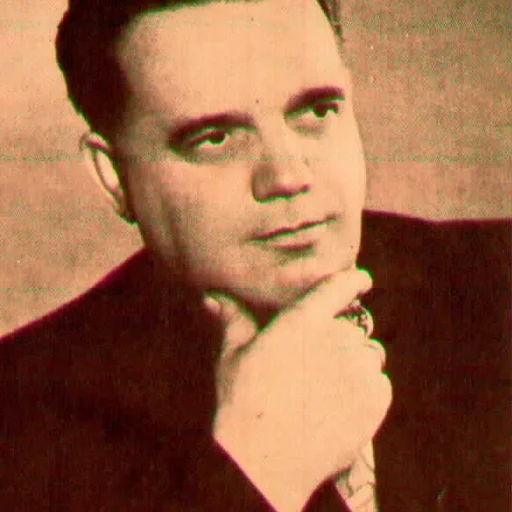
FBFranz Bardon
Franz Bardon (December 1, 1909 – July 10, 1958), born in Opava, Austrian Silesia, was both a stage magician and student and teacher of Hermetics. He was member of Czech hermetic society Universalia. During World War II Bardon was at one point held in a concentration camp for refusing to participate in Nazi Mysticism. Bardon was rescued by Russian soldiers who raided the camp. Bardon continued his work in the fields of Hermetics until 1958 when he was arrested and imprisoned in Brno Czechoslovakia. Bardon died on July 10, 1958 while in the custody of police. He is best known for his three volumes on Hermetic magic. These volumes are Initiation Into Hermetics, The Practice of Magical Evocation and The Key to the True Quabbalah. Additionally there was a fourth work attributed to him by the title of Frabato the Magician, supposed to be a disguised autobiography. Though the book lists its author as Bardon, it was actually written by his secretary, Otti Votavova. While some elements of the...
1 poezii, 0 proze
Thomas Gray
1716–71, English poet. He was educated at Eton and Peterhouse, Cambridge. In 1739 he began a grand tour of the Continent with Horace Walpole. They quarreled in Italy, and Gray returned to England in 1741. He continued his studies at Cambridge, and he remained there for most of his life, living in seclusion, studying Greek, and writing. In 1768 he was made professor of history and modern languages, but he did no real teaching. Although he was reconciled with Walpole, and formed other close relationships in his lifetime, his shy and sensitive disposition was ill adapted to the robust century in which he lived. He was offered the laureateship in 1757 but refused it. His first important poems, written in 1742, include “To Spring,” “On a Distant Prospect of Eton College,” and a sonnet on the death of his close friend Richard West. After years of revision he finished his great “Elegy Written in a Country Churchyard” (1751), a meditative poem presenting thoughts conjured up by the sight of a...
1 poezii, 0 proze
 S
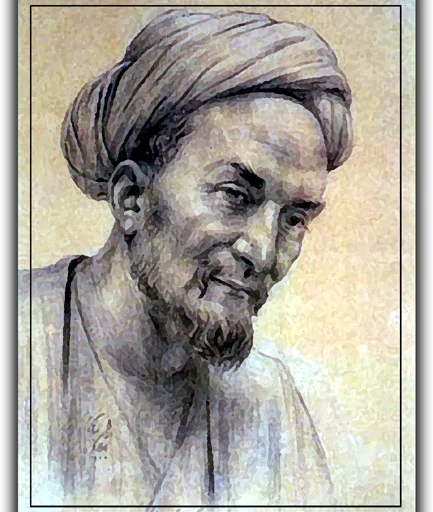
SSaadi
Abū-Muḥammad Muṣliḥ al-Dīn bin Abdallāh Shīrāzī, better known by his pen-name as Saʿdī or, simply, Saadi, was one of the major Persian poets of the medieval period. He is not only famous in Persian-speaking countries, but he has also been quoted in western sources. He is recognized for the quality of his writings, and for the depth of his social and moral thoughts. A native of Shiraz, his father died when he was an infant. Saadi experienced a youth of poverty and hardship, and left his native town at a young age for Baghdad to pursue a better education. As a young man he was inducted to study at the famous an-Nizzāmīya center of knowledge (1195–1226), where he excelled in Islamic Sciences, law, governance, history, Arabic literature and theology. The unsettled conditions following the Mongol invasion of Khwarezm and Iran led him to wander for 30 years abroad through Anatolia (he visited the Port of Adana, and near...
2 poezii, 0 proze
Hancu George
Inspiration Inspiration Sit down she said, pen me a few lines, tell me of life, love, hopes and dreams. write to me of much happier times When love ruled your heart, and life it seemed Was full of possibilities, plans and endless schemes. I took up the challenge, and began to write, Of life, of love and hopes and dreams, Words flowed like rivers, as I wrote them down, Thinking all the while of the lady I'd found To inspire my thoughts, and urge me on, To make something beautiful, maybe a song. Into the small hours, I toiled away, writing down lines, throwing them away. 'Twas then that I realised, that the happier times That she spoke of and wanted, were not of that time. For the happier times were not from long ago, But were here with me now, and now I know, That 'twas the love for this lady, that made my words flow, And to write something beautiful, for her, her alone. I wrote of life, and my living with her, Of love, her in my arms forever more, Of hopes, a future for us so bright,...
2 poezii, 0 proze
 JB
JBJean de La Bruyère
He was born in Paris, not, as was once thought, at Dourdan (in today's Essonne département) in 1645. His family was middle class, and his reference to a certain Geoffroy de La Bruyère, a crusader, is only a satirical illustration of a method of self-ennoblement common in France as in some other countries. Indeed he himself always signed the name Delabruyère in one word, as evidence of this. He could trace his family back at least as far as his great-grandfather, who had been a strong Leaguer. La Bruyère's own father was controller general of finance to the Hôtel de Ville. The son was educated by the Oratorians and at the University of Orléans; he was called to the bar, and in 1673 bought a post in the revenue department at Caen, which gave him status and an income. His predecessor in the post was a relation of Jacques Benigne Bossuet, and it is thought that the transaction was the cause of La Bruyère's introduction to the great orator Bossuet, who from the date of his own...
3 poezii, 0 proze
Daniil Harms
\'Daniil Kharms\' was the main, and subsequently the sole, pen-name of Daniil Ivanovich Yuvachov. The son of a St. Petersburg political, religious and literary figure, Daniil was to achieve limited local renown as a Leningrad avant-garde eccentric and a writer of children\'s stories in the 1920s and 30s. Among other pseudonyms, he had employed \'Daniil Dandan\' and \'Kharms-Shardam\'. The predilection for \'Kharms\' is thought to derive from appreciation of the tension between the English words \'charms\' and \'harms\' (plus the German Charme; indeed, there is an actual German surname \'Harms\'), but may also owe something to a similarity in sound to Sherlock Holmes (pronounced \'Kholms\' in Russian), a figure of fascination to Kharms.
44 poezii, 0 proze
 AZ
AZAdam Zagajewski
Adam Zagajewski (b. 21 June 1945 in Lwów, Soviet Union (now Lviv, Ukraine)) is a Polish poet, novelist, and essayist. Subsequently lyrical on meta-physical and cultural problems. He had lived in Paris since 1982. In 2002 he has moved to Kraków. His poem Try To Praise The Mutilated World, printed in The New Yorker, became famous after 9/11. He currently is a faculty member on the University of Chicago's Committee on Social Thought, and teaches two classes, one on fellow Polish poet Czes³aw Mi³osz. Poetry Tremor (1985) Canvas (1991) Mysticism for Beginners (1997) Without End: New and Selected Poems (2002) Eternal Enemies: Poems (2008) Essays Solidarity, Solitude (1990) Two Cities (1995) Poetry Komunikat. Kraków, 1972. Sklepy miêsne. Kraków, 1975. List. Oda do wieloœci. Pairs, 1983. Jechaæ do Lwowa. London, 1985. P³ótno. Paris, 1990. Ziemia ognista. Poznañ, 1994. Trzej anio³owie. Kraków, 1998. Pragnienie. Kraków, 1999. Powrót. Kraków, 2003. Anteny. Kraków 2005 Another Beauty (2000) Prose...
4 poezii, 0 proze
 MA
MAManuel Acuña
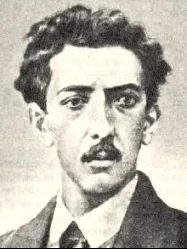
Manuel Acuña Narro (27 August 1849 – 6 December 1873) was a 19th-century Mexican writer. He focused on poetry, but also wrote some novels and plays. Even though he was famous at an early time of his life, he decided to commit suicide. It is not certain why he killed himself, but it is thought that he did so because of a woman. Acuña was born in the city of Saltillo, Coahuila, on August 27, 1849 to Francisco Acuña and Refugio Narro. He was taught how to write and read at an early age. Later he studied in the “Colegio Josefino”, in Saltillo. Around 1865 he was transferred to Mexico City to the School of San Ildefonso, where he entered as a full time student. Here he studied mathematics, Latin, French and philosophy. Acuña lived at a time at which Mexican society was dominated by philosophical-positivist intellectuality. Furthermore he was living as a romantic tendency in poetry was occurring. In January 1868, Acuña initiated his studies in medicine at the...
1 poezii, 0 proze
thoughts in the rain
de blue
a man lost in the rain is hiding under trees, he takes a nap and a pretty woman appears in his dream. the blue sky, the rainbow up, and a pretty woman to love you up. a man dreams about his love when...
THE GRIFFIN
de Alina Mihai
I took the path of silence and of black night The sunlit world was far behind me The grass swayed gently in the moonlight And trees were tall, and starry sky And yet all these I could not see. On...
Rezultatele celei de a doua ediții a concursului de haiku Sharpening the green pencil
de Corneliu Traian Atanasiu
S-au primit 394 poeme de la 199 de participanți din 5 continente și 38 de țări. Premiul I Asni AMIN Singapore, SINGAPORE letting go... the butterflies I'll never see again lăsați să plece … fluturi...
I wish
de Bogdan
I wish I could disappear In a world with no fear That my only thought To reach to infinity And my only ghost Pass to eternity Then like Phoenix to reborn Dust into diamond From the fire which burned...
Ghost
de Alin Niculae
\"...and my soul from out that shadow that lies floating on the floor shall be lifted Nevermore.\" on a sweet scented summer day with the ashes falling from the sky the ashes he once loved for they...
A lung-full
de Dragos
The drops of rain sparkle ruby and turn to blood falling down my chest, on my face, onto dirt. The same soul that once hated the eerie storm now drops down in the puddle of blood in ecstasy blending...
November
de Ovidiu Tarau
It\'s raining in the streets...and in my head, And nobody could stop the falling rain... I can\'t fight anymore with all this pain... I cannot even think - my thoughts are dead - But where in this...
Cateva poezii
de Nikita. V
Midnight,the town and the remorse. Waiting for the sleep to come Hearing the sleepy city moan Something doesn\'t seem okay Something doesn\'t appear secure Hearing the lunatics shout While trying to...
Gerontion
de T.S. Eliot
Thou hast nor youth nor age But as it were an after dinner sleep Dreaming of both. HERE I am, an old man in a dry month, Being read to by a boy, waiting for rain. I was neither at the hot gates Nor...
It rained all night the day I left
de Vlad Stangu
Cause I was sad, the night was high, the moon was purely white, your eyes were crying, couldn’t stop their storm. And it began to rain: the clouds were grey and full of sadness, their thoughts...