
"Which part of the soul" – 492 rezultate
0.06 secundeMeilisearch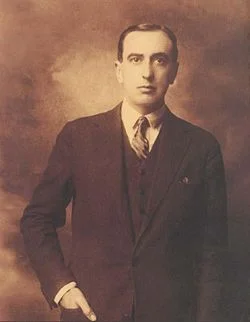 VH
VHVicente Huidobro
Vicente García-Huidobro Fernández (January 10, 1893 – January 2, 1948) was a Chilean poet born to an aristocratic family. He was an exponent of the artistic movement called Creacionismo ("Creationism"), which held that a poet should bring life to the things he or she writes about, rather than just describe them. Huidobro was born into a wealthy family in Santiago. After spending his first years in Europe, he enrolled in a Jesuit secondary school in Santiago where he was expelled for using a ring, which he claimed, was for marriage. He studied literature at the University of Chile and published Ecos del alma (Soul's Echoes) in 1911, a work with modernist tendencies. The following year he married, and started to edit the journal Musa Joven (Young Muse), where part of his later book, Canciones en la noche (Songs in the Night) appeared, as well as his first calligram, "Triángulo armónico" ("Harmonic Triangle"). In 1913, along with Carlos Díaz Loyola, he edited the three issues of the...
4 poezii, 0 proze
 AB
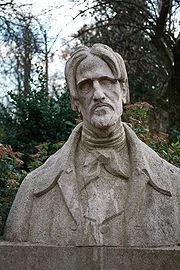
ABAloysius Bertrand
Louis-Jacques-Napoléon “Aloysius” Bertrand (20 April 1807 – 29 April 1841) was a French poet instrumental in the introduction of the prose poem into French literature and is credited with inspiring later Symbolist poets [1]. He wrote a collection of poems entitled Gaspard de la nuit, after which composer Maurice Ravel wrote a suite of the same name, based on the poems "Scarbo", "Ondine", and "Le Gibet". Bertrand was born in Ceva, Piedmont, Italy (then a part of Napoleonic France) and his family settled in Dijon in 1814. There he developed an interest in the Burgundian capital. His contributions to a local paper lead to recognition by Victor Hugo and Sainte-Beuve. He lived in Paris shortly with little success. He returned to Dijon and continued writing for local newspapers. Gaspard was sold in 1836 but it wasn't published until 1842 after his death of tuberculosis. The book was rediscovered by Charles Baudelaire and Stéphane Mallarmé. It is now considered a classic of poetic and...
8 poezii, 0 proze
Thomas Moore
Thomas Moore (1779-1852) Irish poet, friend of Lord Byron and P.B. Shelley. Moore\'s writings range from lyric to satire, from prose romance to history and biography. His popular IRISH MELODIES appeared in ten parts between 1807 and 1835. Moore was a good musician and skillful writer of songs, which he set to Irish tunes, mainly of the 18th century. \'Tis the last rose of summer, Left blooming alone; All her lovely companions Are faded and gone. (from \'The Last Rose of Summer\') } Thomas Moore was born in Dublin as the son of a grocer. His background was poor and he never varnished it. In his poem \'Epitaph on a Tuft-Hunter\' he mocked snobbery: \"Heaven grant him now some noble nook / For, rest his soul! he\'d rather be / Genteelly damn\'d beside a Duke, / Than sav\'d in vulgar company.\" Moore studied at Trinity College, Dublin and London, and published his first book, THE POETICAL WORKS OF THOMAS LITTLE, in 1801. He became in 1803 a civil officer to Bermuda, where he stayed for a...
2 poezii, 0 proze
 US
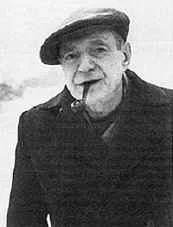
USUmberto Saba
Umberto Saba (9 March 1883 - 26 August 1957) was the pseudonym of Italian poet and novelist Umberto Poli. His creative work was hampered by a life-long struggle with mental illness. Saba was born in Trieste, then a part of the Austro-Hungarian Empire. He had Italian citizenship through his father. His mother was Jewish. His father abandoned the family before Umberto was born, and his mother employed a Slovene nanny, Peppa Sabaz, to raise him. He became very attached to her, and revered her memory in his poetry. From 1903-1904, he attended the University of Pisa, where he studied archaeology, German, and Latin. In was in this period that he began to complain of a nervous disorder, which was to become more severe with time. Quitting school, Saba worked for a time as an apprentice and was a cabin-boy on a merchant ship. From 1907-1908 he served in the military in Salerno. He married Carolina Wölfler in 1909, and they had a daughter, Lina, the following year. By 1928, Saba was suffering...
4 poezii, 0 proze
 LC
LCLuis Cernuda
Luis Cernuda (born Luis Cernuda Bidón September 21, 1902, Seville – November 5, 1963, Mexico City), was a Spanish poet and literary critic. The son of a military man, Cernuda received a strict education as a child, and then studied law at the University of Seville, where he met the poet and literature professor Pedro Salinas. In 1928, after his mother died, Cernuda left his hometown, with which he had all his life an intense love-hate relationship. He briefly moved to Madrid, where he quickly became part of the literary scene. However, his detached, timid and morose character, his search of perfection frequently made him lose friendships and popularity. His mentor and former professor Salinas arranged for him to take a lectureship for a year at the University of Toulouse. From June 1929 until 1937 Cernuda lived in Madrid and participated actively in the literary and cultural scene of the Spanish capital. Cernuda collaborated with many organisations working to support a more liberal...
22 poezii, 0 proze
 DG
DGDavid Gascoyne
David Gascoyne (October 10, 1916 - November 25, 2001) was an English poet associated with the Surrealist movement. Gascoyne was born in Harrow and grew up in England and Scotland and attended Salisbury Cathedral School and Regent Street Polytechnic in London. He spent part of the early 1930s in Paris. His first book, Roman Balcony and Other Poems, was published in 1932, when he was sixteen. A novel, Opening Day, was published the following year. However, it was Man's Life is This Meat (1936), which collected his early surrealist work and translations of French surrealists, and Hölderlin's Madness (1938) that established his reputation. These publications, together with his 1935 A Short Survey of Surrealism and his work on the 1936 London International Surrealist Exhibition, which he helped to organise, made him one of a small group of English surrealists that included Hugh Sykes Davies and Roger Roughton. Ironically, at this exhibition, Gascoyne had to rescue Salvador Dalí from the...
5 poezii, 0 proze
 IM
IMIñigo López de Mendoza
Don Íñigo López de Mendoza y de la Vega, Marquis of Santillana (August 19, 1398 - March 25, 1458) was a Castilian poet who held an important position in society and Literature during the reign of John II of Castile. He was born at Carrión de los Condes in Old Castile to a noble family which figured prominently in the arts. His grandfather, Pedro González de Mendoza, and his father, Diego Hurtado de Mendoza Admiral of Castile, were both poets with close ties to the great literary figures of the time: Chancellor Lopez de Ayala, Fernán Pérez de Guzmán and Gomez Manrique. His mother, Doña Leonor de la Vega, was a wealthy heiress belonging to the House of de la Vega. Lopez de Mendoza's father died when he was five years old, which brought his family into financial difficulties. Part of his childhood was spent living in his grandmother's household, and in the home of his uncle, the future Archbishop of Toledo. As a youth, he spent time in the court king Alfonso V of Aragón, where...
1 poezii, 0 proze
 IA
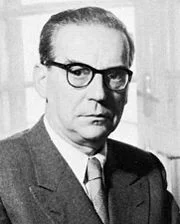
IAIvo Andriæ
Ivo Andriæ, singurul sârb laureat al premiului Nobel, a terminat gimnaziul la Sarajevo. A studiat istoria la Zagreb, Cracovia și Graz. În timpul primului război mondial a fost închis de regimul austro-ungar ca deținut politic, iar între cele două conflagrații mondiale a lucrat ca diplomat în slujba Regatului Iugoslaviei. După război s-a ocupat exclusiv de literatură. Premiul Nobel pentru literatură l-a primit în anul 1961. A murit la Belgrad, în 1975. Engleză Ivo Andric was born in the village of Dolac, near Travnik, in 1892. After spending his youth in his native Bosnia, which was at the time part of the Austro-Hungarian Empire, he studied philosophy at the Universities of Zagreb, Vienna, and Cracow. His studies were interrupted by the outbreak of the First World War, at the beginning of which he was jailed for his anti-Austrian activities. After receiving a doctorate in letters from the University of Graz in 1923, he entered the Yugoslav diplomatic service. The last diplomatic post...
1 poezii, 0 proze
 AA
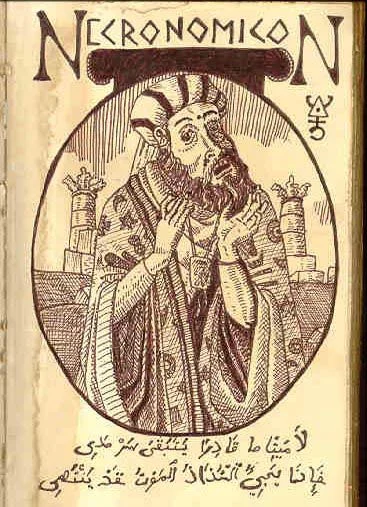
AAAbdul al-Hazred
Abdul Alhazred is a fictional character created by American horror writer H. P. Lovecraft. He is the so-called "Mad Arab" credited with authoring the imaginary book Kitab al-Azif (the Necronomicon), and as such an integral part of Cthulhu Mythos lore. Despite the existence of several hoax Necronomicons, it is clear that neither Alhazred nor his book ever existed. The name Abdul Alhazred is a pseudonym that Lovecraft created in his youth, which he took on after reading 1001 Arabian Nights at the age of about five years. The name was invented either by Lovecraft, or by Albert Baker, the Phillips family lawyer. Abdul is a common Arabic name component (but never a name by itself; additionally the ending -ul and the beginning Al- are redundant), but Alhazred may allude to Hazard, a name from Lovecraft's family tree. It might also have been a pun on "all-has-read", since Lovecraft was an avid reader in youth. Abdul Alhazred is not a real Arabic name, and seems to contain the Arabic definite...
1 poezii, 0 proze
 BC
BCBrian Chan
Brian Chan was born in Guyana in 1949. He began to establish a reputation as a poet of talent with his work in Expression in the early 1970s, part of a group that included Janice Lowe (Shinebourne) and N.D. Williams. He had poems published in Caribbean Quarterly, Artrage, and One People’s Grief and is included in the Heinemann anthology of Caribbean poetry. His first collection of poems, Thief With Leaf (1988) won the 1988 Guyana Prize. His work is challenging and experimental, exploring not only experience, but the fictions we create in making sense of experience. He moved to Canada in the 1970s and his poems explore a territory in which Guyanese memories filter into the Canadian present. He currently lives in Edmonton. His second collection of poems, Fabula Rasa, was published in 1994. He is a musician (clarinetist) and accomplished painter.
1 poezii, 0 proze
Way Of The Souls
de Octav Chivulescu
ISBN 973-0-03999-2 Noita R. Ipsni WAY OF THE SOULS * OURSELVES CIVILIZATION OF THE INS SOURCE OF LIGHT ARCHAEOLOGY OF THE FUTURE COLLECTION OF THOUGHTS CHAPTER 666 TRACES IN THE SAND Computer...
Crapulous Impression
de Aldous Leonard Huxley
(To J.S.) Still life, still life…the high-lights shine Hard and sharp on the bottles: the wine Stands firmly solid in the glasses, Smooth yellow ice, through which there passes The lamp\'s bright...
Hamlet
de William Shakespeare
HAMLET DRAMATIS PERSONAE (PAGINA 8) ACT IV SCENE VI Another room in the castle. [Enter HORATIO and a Servant] HORATIO What are they that would speak with me? Servant Sailors, sir: they say they have...
PARADISE LOST -- Book V
de John Milton
Book V Now Morn, her rosy steps in the eastern clime Advancing, sowed the earth with orient pearl, When Adam waked, so customed; for his sleep Was aery-light, from pure digestion bred, And temperate...
Prometheus
de George Gordon Noel Byron
Titan! to whose immortal eyes The sufferings of mortality, Seen in their sad reality, Were not as things that gods despise; What was thy pity's recompense? A silent suffering, and intense; The rock,...
THE ANTICHRIST
de Friedrich Nietzsche
THE ANTICHRIST by Friedrich Nietzsche Published 1895 translation by H.L. Mencken Published 1920 PREFACE This book belongs to the most rare of men. Perhaps not one of them is yet alive. It is possible...
Necronomikon
de Abdul al-Hazred
THE TESTIMONY OF MAD ARAB THIS is the testimony of all that I have seen, and all that I have learned, in those years that I have possesed the Three Seals of MASSHU. I have seen One Thousand and-One...
Chase your song
de Florea Ana-Maria
It was raining, again- it was normal and expected. Thoughts were sailing through the rain, trying not to get wet, not to be stopped by the strong,wicked clouds. It was the kind of night in which you...
The Witch of Coos
de Robert Frost
I staid the night for shelter at a farm Behind the mountains, with a mother and son, Two old-believers. They did all the talking. MOTHER Folks think a witch who has familiar spirits She could call up...
Portrait of a Lady
de T.S. Eliot
Thou hast committed— Fornication: but that was in another country, And besides, the wench is dead. The Jew of Malta. I AMONG the smoke and fog of a December afternoon You have the scene arrange...