
"To Be, or" – 6099 rezultate
0.02 secundeMeilisearch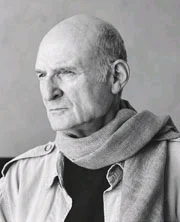 NT
NTNathaniel Tarn
Nathaniel Tarn (born 1928) is an American poet of Anglo French origin. Nathaniel Tarn was born in 1928 in Paris of a British father and a French mother with many links to the U.S.: the American side of the family were the Shuberts of Broadway (though he never met them). Tarn was brought up in France and Belgium and reached England a week before World War Two. He survived the Blitz, went up to Cambridge University early aged 18, studying History and English literature. He returned to France in 1948 to be a French poet, working in journalism and radio. He discovered anthropology and was trained at the Musee de l\'Homme, the Sorbonne and the College de France. This was followed by a Smith-Mundt-Fulbright scholarship to the University of Chicago via \"orientation\" at Yale with a year\'s research in Guatemala under Robert Redfield and a postdoctorate life at the London School of Economics. In 1959, after eighteen months\' research in Burma, he joined the School of Oriental and African...
1 poezii, 0 proze
 A
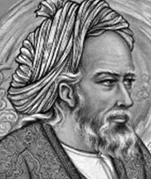
AAnvari
Anvari (1126–1189), full name Awhad ad-Din 'Ali ibn Mohammad Khavarani or Awhad ad-Din 'Ali ibn Mahmud was one of the greatest Persian poets. He was born in Abivard of (now in Turkmenistan) and died in Khurasanian Balkh, now in Afghanistan, and studied science and literature at the collegiate institute in Tun (now Firdaus, Iran), becoming a famous astronomer as well as a poet. Anvari's poems were collected in a Deewan, and contains panegyrics, eulogies, satire, and others. His elegy "Tears of Khorasan", translated into English in 1789, is considered to be one of the most beautiful poems in Persian literature. The Cambridge History of Iran calls Anvari "one of the greatest figures in Persian literature". Despite their beauty, his poems often required much help with interpretation, as they were often complex and difficult to understand. Anvari's panegyric in honour of the Seljuk sultan Sultan Sanjar (1117–1157), ruler of Khorasan, won him royal favour, and allowed him to go on to enjoy...
2 poezii, 0 proze
 NP
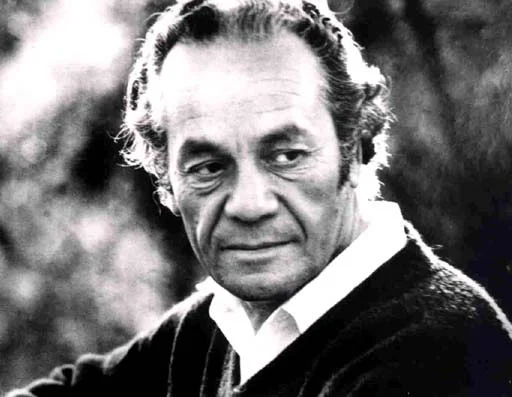
NPNicanor Parra
Nicanor Parra Sandoval (born in San Fabián de Alico, Chile on September 5, 1914) is a mathematician and poet often considered to be the most influential poet Chile has produced since Pablo Neruda.[citation needed] He describes himself as an "antipoet," due to his distaste for standard poetic pomp and function (after recitations he would exclaim Me retracto de todo lo dicho, or, "I take back everything I said"). Trying to get away from the conventions of poetry, Parra's poetic language renounces the refinement of most Latin American literature and adopts a more colloquial tone similar to prose. His first collection, "Poemas y Antipoemas" (1954) is a classic of Latin American literature, one of the most influential Spanish poetry collections of the twentieth century, and is cited as an inspiration by American Beat Writers such as Allen Ginsberg. Parra has been nominated several times for the Nobel Prize in Literature. Parra comes from the artistically prolific Chilean Parra family of...
2 poezii, 0 proze
Jiddu Krishnamurti
The core of Krishnamurti\'s teaching is contained in the statement he made in 1929 when he said: \'Truth is a pathless land\'. Man cannot come to it through any organisation, through any creed, through any dogma, priest or ritual, not through any philosophic knowledge or psychological technique. He has to find it through the mirror of relationship, through the understanding of the contents of his own mind . . . Statement by Krishnamurti in 1981. Jiddu Krishnamurti was born on 11th May 1895 in Madanapalle, a town in south India, the eighth child in a middle-class family. At an early age he was adopted by Annie Besant, then the President of the Theosophical Society, with its headquarters in Madras. She took Krishnamurti and his brother Nitya to England where she had them educated privately. On Krishnamurti\'s return to India while still in his teens, Theosophists proclaimed him to be the world teacher whose coming they had been awaiting. They built a large and rich order round him, with...
1 poezii, 0 proze
 EK
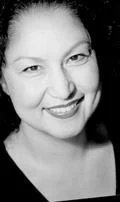
EKElizabeth Kim
Elizabeth Kim was born in Korea. Omma was killed by her brother and father ('honour killing') for the sin of sleeping with an American soldier and producing a mixed-race child, Elizabeth. There is no record of her birth or of her name. Dumped in a horrific orphanage in post-war Seoul, Kim was lucky to be adopted by a fundamentalist American family. But just as her American features doomed her in racist Korea, her Korean features served as a constant reminder that she wasn't good enough for her new all-white environment. Her mother had always told her that life was made up of ten thousand joys as well as ten thousand sorrows.
1 poezii, 0 proze
Carmen Harra
Carmen Harra in her own words: Even as a little girl growing up in Romania, I knew I was different. After a near-death experience at age five, I was able to see things others couldn\'t. Everyone who has had a near-death experience describes the sensation of \"going toward the light.” In this parallel world, extraordinary light energy surrounds you and you see an inexpressibly beautiful light. There is no negativity and no anger or sadness, only love. It is a perfect, glowing world, filled with dazzling insights and pure truth, the way our Creator meant it to be. I\'ve never forgotten the lessons this experience taught me. Why, I wondered, wasn\'t life on Earth like this? This parallel world, which I call the Invisible World, is just as real as the physical world here on Earth. It is even more real because the people there are souls unencumbered by ego, emotions, and attachment to material things. Without these negative distractions, souls exist harmoniously in love, joy, and peace. On...
8 poezii, 0 proze
 PI
PIPhaedrus Caius Iulius
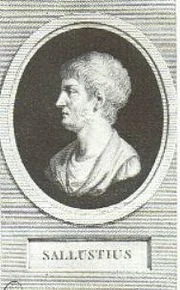
Phaedrus, Gaius Julius (c.15 BC—c. AD 50), Thracian slave who came to Rome and became a freedman in the household of Augustus, the author (in Latin) of a collection of fables in five books containing some hundred stories, published probably in the thirties of the first century AD. There is also an appendix of another thirty-two fables, probably also by Phaedrus. The collection includes fables proper, a number of anecdotes (e.g. about Aesop, Socrates, and Menander), and defences of the author against detractors. The fables are based on those of Aesop and on beast-stories from other sources which had come to be attributed to Aesop. They are written in verse, in iambic senarii (see METRE, LATIN 2), and their object is two-fold, to give advice and to entertain. They are generally serious or satirical, dealing with the injustices of life and social and political evils, but occasionally they are light and amusing. In general they express patient resignation. Phaedrus observed in the...
1 poezii, 0 proze
 LN
LNLassi Nummi
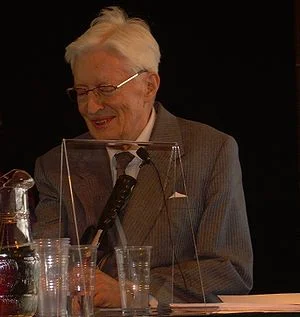
Lassi Nummi (born 1928) considers himself a prose-writer who has strayed into poetry. In a career spanning almost half a century and 25 collections of poetry, his preoccupations, and his central metaphors, have remained constant: landscape, trees, bushes, blades of grass. Interview by Tarja Roinila; poems translated by Herbert Lomas and Anselm Hollo 'During my "social period" I was on the board of the Writers' Union, and its chairman from 1969 to 1972; after that I worked for the Uusi Suomi newspaper and for the PEN Club, whose chairman I was from 1983 to 1988. I was a member of the Bible translation committee for the entire period of its existence, 17 years. A completely different choice would have been to become either a Buddhist or a Christian monk, or then to be a really convinced down-and-out- that might have been the most elegant solution. One could have regulated one's liquid intake, but the freedom of movement would have been pleasant. At the moment I am working out how much...
2 poezii, 0 proze
 JR
JRJames Whitcomb Riley
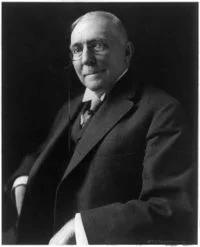
Born October 7, 1849, Greenfield,Indiana, US Died July 22, 1916 (aged 66)Indianapolis, Indiana, US James Whitcomb Riley (October 7, 1849 – July 22, 1916) was an American writer and poet. Known as the "Hoosier Poet", "National Poet" and the "Children's Poet," [2] he started his career during 1875 writing newspaper verse in Indiana dialect for the Indianapolis Journal. His verse tended to be humorous or sentimental, and of the approximately one-thousand poems that Riley published, over half are in dialect. Claiming that “simple sentiments that come direct from the heart”[1] were the reason for his success, Riley vended verse about ordinary topics that were "heart high. "Riley was a bestselling author during the early 1900s and earned a steady income from royalties; he also traveled and gave public readings of his poetry. His favorite authors were Robert Burns and Charles Dickens, and Riley himself befriended bestselling Indiana authors such as Booth Tarkington, George Ade and Meredith...
0 poezii, 0 proze
 RD
RDRobert Duncan
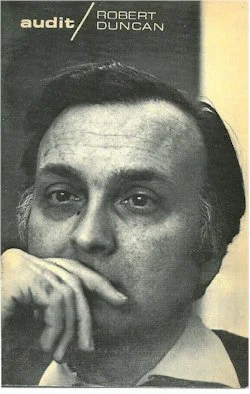
Robert Duncan (January 7, 1919 – February 3, 1988) was an American poet and a student of H.D. and the Western esoteric tradition who spent most of his career in and around San Francisco. Though associated with any number of literary traditions and schools, Duncan is often identified with the New American Poetry and Black Mountain poets. Duncan's mature work emerged in the 1950s from within the literary context of Beat culture and today he is also identified as a key figure in the San Francisco Renaissance. During the 1960s, Duncan achieved considerable artistic and critical success with three books; The Opening of the Field (1960), Roots and Branches (1964), and Bending the Bow (1968). These are generally considered to be his most significant works. His poetry is modernist in its preference for the impersonal, mythic, and hieratic, but Romantic in its privileging of the organic, the irrational and primordial, the not-yet-articulate blindly making its way into language like salmon...
1 poezii, 0 proze
To Be, or
de Alexandru Mărchidan
cuvintele își disputau un suflet care se întâmpla să fie al meu, își probau virtuțile retorice încercând să mă convingă că aripa morții și perna mea sunt sinonime parțiale.
to be or not to be
de Florentin Cristian
Cred că acel celebru to be or not to be Este ceva de genul to be 8n busines Sau pe la noi a te afla în treabă Mă refer la faptul cà Shakespeare În momentul în care a scriso ca și alții Era considerat...
To be or not to be?
de Anca Casciaro
Sunt zambet stins In ideal oniric Si ma agat in disperare De lacrima-mi ce doare. Ingenunchez cu flori pe frunte In cimitirul azilului de soare. Adorm pe-al meu mormant, Tacere,lipsita de culoare......
To Be or Not to Be
de Eugen Constantinescu
“ – Zborul spre Eden va avea loc preț de o bătaie de aripă ! Pasagerii sunt rugați să se prezinte la Poarta Petru! Ne scuzați, la poarta patru! ” ………………………………. Te-am înconjurat ca de-obicei cu...
To be or...
de Radmila Popovici
De ce nu te prefaci, dar, în monstrul meu la noapte să-nfigi secreta gheară în pieptul compromis? Să mi-l sugrumi și colții să zgârie răni coapte de anii ce prin vene cu tine i-am înscris De ce nu-mi...
To be or not to be...uman
de Balan Cristina
TO BE OR NOT TO BE…UMAN. Fiecare persoana are un cod individual pentru a fi perceput de cei din jur. La prima vedere este simplu, conteaza cum vorbeste, cum se imbraca, daca respecta bunele maniere...
To be or not to be
de Cătălin Al DOAMNEI
s-a cutremurat satul când m-am născut mama era–n dureri și nu putea să mă nască stră-străbunica din deal i-a spus stră-străbunicii de pe dealul albastru de pe malul albastru care i-a spus bunicii din...
To be or not
de Simion Cozmescu
Întreaga lume locuiește în mine planetele cu dinozaurii lor particulari mogâldețele celea de quasari prăfuiți accentul meu de non british e pe acolo și el on this land or univers forfota de sub...
To be or not to be
de Roman Natasa
Ziua asta îmi amintește de ruleta rusească Niște litere mici se întind pe foaia albă Și îmi desenează numele de parcă destinul ar fi proiectat pe retina mea Întrebările-mi sunt niște cadâne...
right not to be
de Daniela Luminita Teleoaca
când ai strâns toate suvenirele îți agăți în cuiere ruginite orele le spui să facă orice altceva știu în afară de a trece înainte... înapoi... înapoi... înainte... voi, ceasornice, reprofilați-vă!...