
"To A Young Beauty" – 5764 rezultate
0.03 secundeMeilisearchJoseph Louis Vance
Louis Joseph Vance was born on September 19, 1879 in New York, New York (although some sources say Washington, DC). He was an American fiction writer of short stories, novels and screenplays. Vance was the son of Wilson and Lillie Beall Vance. Originally, Vance wanted to become an artist and illustrator and attended the Art Students League and Brooklyn Polytechnic Institute. Vance married Nance Elizabeth Hodges in 1898. They had one son, Wilson Beall Vance who was born the following year. Vance was 26 years old when his first book,Terence O\'Rourke,Gentlema Adventurer was published in 1905. Vance was a \"hack\" writer for many years producing hundreds of short stories and some adventure novels until he published a group of three mystery novels which promoted him to best-selling author status. The novels were: The Brass Bowl (1907) about a beautiful young girl, who in order to help her grieving father,becomes a burglar and meets a professional burglar who resembles the identical twin...
5 poezii, 0 proze
 JH
JHJames Leigh Hunt
James Leigh Hunt was born on 19th October, 1784 in Southgate, Middlesex. His father, a clergyman, got into financial difficulties and ended up in a debtor's prison. As a young man, Hunt developed an interest in politics and poetry. Leigh Hunt became friends with other young writers who favoured political reform including Percy Bysshe Shelley, William Hazlitt, Henry Brougham, Lord Byron,Thomas Barnes and Charles Lamb. As well as writing poetry and articles on politics, Leigh Hunt worked as a drama critic for the News. In 1808 Leigh Hunt helped his brother, John Hunt, to start a political journal called the Examiner. The journal gave support to radicals in Parliament such as Henry Brougham and Sir Francis Burdett and the political ideas of people like Robert Owen and Jeremy Bentham. Leigh Hunt upset the authorities by pointing out on the front page of every edition of the Examiner that half the cost of the price was the result of the government's "tax on knowledge". In 1812 Leigh and...
1 poezii, 0 proze
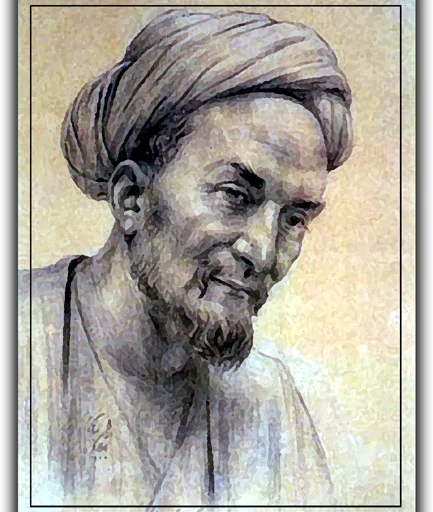 S
SSaadi
Abū-Muḥammad Muṣliḥ al-Dīn bin Abdallāh Shīrāzī, better known by his pen-name as Saʿdī or, simply, Saadi, was one of the major Persian poets of the medieval period. He is not only famous in Persian-speaking countries, but he has also been quoted in western sources. He is recognized for the quality of his writings, and for the depth of his social and moral thoughts. A native of Shiraz, his father died when he was an infant. Saadi experienced a youth of poverty and hardship, and left his native town at a young age for Baghdad to pursue a better education. As a young man he was inducted to study at the famous an-Nizzāmīya center of knowledge (1195–1226), where he excelled in Islamic Sciences, law, governance, history, Arabic literature and theology. The unsettled conditions following the Mongol invasion of Khwarezm and Iran led him to wander for 30 years abroad through Anatolia (he visited the Port of Adana, and near...
2 poezii, 0 proze
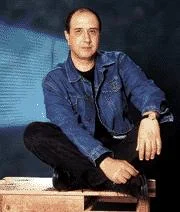 RS
RSRonny Someck
[[eng]] Ronny Someck Ronny Someck was born in Baghdad in 1951 and came to Israel as a young child. With Bachelor of Arts in Hebrew Literature and Jewish Philosophy, he worked as a counselor with street gangs. Now teaching literature, and currently leads writing workshops. Books: Exile (1976); Solo (1980); Asphalt (1984); Seven Lines on the Wonder of the Yarkon (1987); Panther (1989); Bloody Mary (1994); Rice Paradise (1996); The Revolution Drummer (2001). For children: The Laughter Button with Shirly Someck (1998). In Arabic: Jasmine (1994 Israel); The poem is a gangster's girl (1996 Paris). In French: Nes a Bagdad with A. k. El Janabi (1998 Paris). In Catalan: En paper de vidre (2000 Barcelona). In Albanian: The Sign of the Bite (2001 Tirane). In English: The Fire Stays in Red. In Italian: The Red Catalogue of the Word Sunset. In Macedonian: Wheat (2003 Skopje). Translations to his poems have appeared in Anthologies and Poetry Magazines in 22 languages. Prizes: Acum (Society of...
38 poezii, 0 proze
 JL
JLJosé Lezama Lima
José Lezama Lima (19 decembrie, 1910 în Havana, Cuba - 8 august, 1976 în Havana, Cuba) a fost un romancier ți poet cubanez. Born in the Columbia Military Encampment close to Havana in the city of Marianao where his father was a colonel, Lezama lived through the most turbulent times of Cuba's history, fighting first against the Machado dictatorship, and later surviving the Castro regime. A gay man himself,[1] his literary output includes the semi-autobiographical, baroque novel Paradiso (1966), the story of a young man and his struggles with his mysterious illness, the death of his father, and his developing homosexuality and poetic sensibilities. Lima also edited several anthologies of Cuban poetry and the magazines Verbum and Orígenes, presiding as the patriarch of Cuban letters for most of his later years. In addition to his poems and novels, Lezama wrote many essays on figures of world literature like Mallarmé, Valéry, Góngora and Rimbaud as well as on Latin American baroque...
3 poezii, 0 proze
 EI
EIemilia ivancu
EMILIA IVANCU este critic literar, poet și traducator. Predă limba și literatura română în Poznan, Polonia și deține o catedră rezervată la Departamentul de Filologie al Universității din Alba Iulia. A obținut titlul de Doctor în Filologie cu o teză despre literatura postcolonială britanică. Publicațiile ei includ : Travels with Steinbeck in Search of America (2005), Dicționarul personajelor din teatrul lui Lucian Blaga (co-autor) (2005) The Birth of Trystan and Other Poems/Nașterea lui Tristan și alte poeme (traducător și co-autor),(Editura Reintregirea 2010) Dicționarul polon-român/român-polon, Editura Nowela (co-autor) (2012). Jocul de a nu fi mai mult decât sunt/Gra w to, aby nie byæ wiêcej ni¿ jestem - volum de poezii bilingv, Editura Eikon, 2012, Traducere în limba polonă de Tomasz Klimkowski, Prefață de Georgeta Orian. A Young Sun/Un soare tânăr, volum de poeme multilingv de Diarmuid Johnson, traducere în limba română și studiu introductiv de Emilia Ivancu, Editura Eikon, 2012....
43 poezii, 0 proze
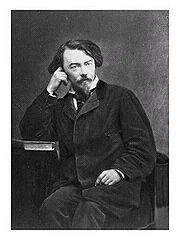 VL
VLVilliers de l'Isle-Adam
Jean-Marie-Mathias-Philippe-Auguste, comte de Villiers de l'Isle-Adam (7 November 1838 – 19 August 1889) was a French symbolist writer. Villiers de l'Isle-Adam was born in Saint-Brieuc, Brittany, to a distinguished aristocratic family. His parents, Marquis Joseph-Toussaint and Marie-Francoise (née Le Nepvou de Carfort) were not rich, however, and were financially supported by Marie's aunt, Mademoiselle de Kerinou. His father became obsessed with the idea he could restore the family fortune by finding the lost treasure of the Knights of Malta (Philippe Villiers de L'Isle-Adam, 16th century Grand Master of the Knights Hospitaller, was his ancestor), which had reputedly been buried near Quintin during the French Revolution. Consequently, he spent large sums of money buying land, excavating it and then selling it at a loss when he failed to find anything of value. The young Villiers' education was troubled (he attended over half a dozen different schools) but from an early age his family...
1 poezii, 0 proze
 KG
KGKhalil Gibran
Khalil Gibran (born Gubran Khalil Gubran bin Mikhā'īl bin Sa'ad; January 3, 1883 – April 10, 1931) also known as Kahlil Gibran, was a Lebanese American artist, poet, and writer. Born in the town of Bsharri in modern-day Lebanon (then part of the Ottoman Mount Lebanon mutasarrifate), as a young man he immigrated with his family to the United States where he studied art and began his literary career. He is chiefly known in the English speaking world for his 1923 book The Prophet, a series of philosophical essays written in English prose. An early example of Inspirational fiction, the book sold well despite a cool critical reception, and became extremely popular in the 1960s counterculture. Gibran is the third best-selling poet of all time, behind Shakespeare and Lao-Tzu. In English, prior to his death: • The Madman (1918) Twenty Drawings (1919) • The Forerunner (1920) • The Prophet, (1923) • Sand and Foam (1926) • Kingdom of the Imagination (1927) • Jesus, The Son of Man...
47 poezii, 0 proze
 WS
WSWallace Stevens
Stevens was born in Reading, Pennsylvania on October 2, 1879, and died at the age of seventy-six in Hartford, Connecticut on August 2, 1955. He attended Harvard as a special student from 1897 to 1900 but did not graduate; he graduated from New York law school in 1903 and was admitted to the New York bar in 1904, the year he met Elsie Kachel, a young woman from Reading, whom he married in 1909. They had one daughter, Holly Bight, born in 1924, conceived on a leisurely ocean voyage California via the Panama Canal that they took to celebrate the publication of his first book. Stevens became interested in verse-writing at Harvard, submitting material to the Harvard Advocate, but he would be 36 before his first work was published in 1915. He soon was contributing to Poetry (Chicago), and his first book Harmonium was published in 1923 by the distinguished firm of Alfred A. Knopf. Though he was always much admired by his contemporaries ("There is a man whose work," Hart Crane wrote of him in...
19 poezii, 0 proze
Wallace Stevens
Stevens was born in Reading, Pennsylvania on October 2, 1879, and died at the age of seventy-six in Hartford, Connecticut on August 2, 1955. He attended Harvard as a special student from 1897 to 1900 but did not graduate; he graduated from New York law school in 1903 and was admitted to the New York bar in 1904, the year he met Elsie Kachel, a young woman from Reading, whom he married in 1909. They had one daughter, Holly Bight, born in 1924, conceived on a leisurely ocean voyage California via the Panama Canal that they took to celebrate the publication of his first book. Stevens became interested in verse-writing at Harvard, submitting material to the Harvard Advocate, but he would be 36 before his first work was published in 1915. He soon was contributing to Poetry (Chicago), and his first book Harmonium was published in 1923 by the distinguished firm of Alfred A. Knopf. Though he was always much admired by his contemporaries (\"There is a man whose work,\" Hart Crane wrote of him...
0 poezii, 0 proze
To A Young Beauty
de William Butler Yeats
DEAR fellow-artist, why so free With every sort of company, With every Jack and Jill? Choose your companions from the best; Who draws a bucket with the rest Soon topples down the hill. You may, that...
The Passionate Pilgrim
de William Shakespeare
I. WHEN my love swears that she is made of truth, I do believe her, though I know she lies, That she might think me some untutor\'d youth, Unskilful in the world\'s false forgeries. Thus vainly...
Billie Jean
de Michael Jackson
She was more like a beauty queen from a movie scene I said don\'t mind, but what do you mean I am the one Who will dance on the floor in the round She said I am the one, who will dance on the floor...
Sonnet LXX
de William Shakespeare
That thou art blamed shall not be thy defect, For slander\'s mark was ever yet the fair; The ornament of beauty is suspect, A crow that flies in heaven\'s sweetest air. So thou be good, slander doth...
Scrisoarea IV - vers Engleza
de Mihai Eminescu
See the tall and lonely castle mirrored in the placid lake, \'Neath those waters does its shadow through the ages never wake, Silently above the pine-tress rise its ancient rampart stark, Throwing...
Dracula
de Bram Stoker
Chapter 6 - Mina Murray\'s Journal 24 July. Whitby.- Lucy met me at the station, looking sweeter and lovelier than ever, and we drove up to the house at the Crescent in which they have rooms. This is...
The Sphinx
de Oscar Wilde
In a dim corner of my room for longer than my fancy thinks A beautiful and silent Sphinx has watched me through the shifting gloom. Inviolate and immobile she does not rise she does not stir For...
No cause (ilustrată)
de Adela Setti
Live fast, die young and leave a beautiful corpse mai am două spații deja mușc din penultimul ușor ca un mic dejun de vară cu perdele bombate de vânt și terasă întinsă asupra lumii ca un parc de...
logical song
de Andrei Badea
„When I was young, it seemed that life was so wonderful, a miracle, oh it was beautiful, magical.” Îmi amintesc, uneori, locul de unde am plecat. Asta se întâmplă în special vara, când mă întâlnesc...
The Poems of Sappho, Part III
de Sappho
The Poems of Sappho, Part III 44 Ge\'llws paidofilwte\'ra. More fond of children than Gello. Zenobius, about A.D. 130, quotes this as a proverb. The ghost of Gello was said by the Lesbians to pursue...