
"Thoughts and Feelings" – 8062 rezultate
0.01 secundeMeilisearch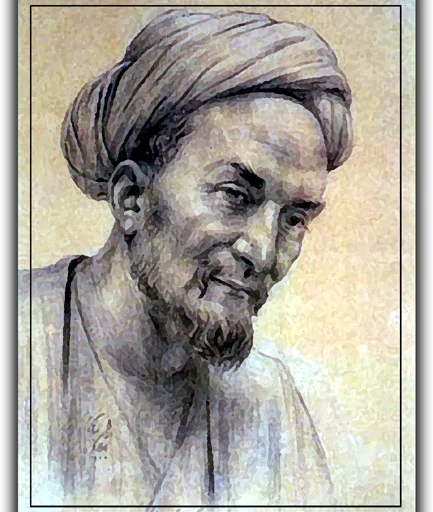 S
SSaadi
Abū-Muḥammad Muṣliḥ al-Dīn bin Abdallāh Shīrāzī, better known by his pen-name as Saʿdī or, simply, Saadi, was one of the major Persian poets of the medieval period. He is not only famous in Persian-speaking countries, but he has also been quoted in western sources. He is recognized for the quality of his writings, and for the depth of his social and moral thoughts. A native of Shiraz, his father died when he was an infant. Saadi experienced a youth of poverty and hardship, and left his native town at a young age for Baghdad to pursue a better education. As a young man he was inducted to study at the famous an-Nizzāmīya center of knowledge (1195–1226), where he excelled in Islamic Sciences, law, governance, history, Arabic literature and theology. The unsettled conditions following the Mongol invasion of Khwarezm and Iran led him to wander for 30 years abroad through Anatolia (he visited the Port of Adana, and near...
2 poezii, 0 proze
Hancu George
Inspiration Inspiration Sit down she said, pen me a few lines, tell me of life, love, hopes and dreams. write to me of much happier times When love ruled your heart, and life it seemed Was full of possibilities, plans and endless schemes. I took up the challenge, and began to write, Of life, of love and hopes and dreams, Words flowed like rivers, as I wrote them down, Thinking all the while of the lady I'd found To inspire my thoughts, and urge me on, To make something beautiful, maybe a song. Into the small hours, I toiled away, writing down lines, throwing them away. 'Twas then that I realised, that the happier times That she spoke of and wanted, were not of that time. For the happier times were not from long ago, But were here with me now, and now I know, That 'twas the love for this lady, that made my words flow, And to write something beautiful, for her, her alone. I wrote of life, and my living with her, Of love, her in my arms forever more, Of hopes, a future for us so bright,...
2 poezii, 0 proze
Thomas Gray
1716–71, English poet. He was educated at Eton and Peterhouse, Cambridge. In 1739 he began a grand tour of the Continent with Horace Walpole. They quarreled in Italy, and Gray returned to England in 1741. He continued his studies at Cambridge, and he remained there for most of his life, living in seclusion, studying Greek, and writing. In 1768 he was made professor of history and modern languages, but he did no real teaching. Although he was reconciled with Walpole, and formed other close relationships in his lifetime, his shy and sensitive disposition was ill adapted to the robust century in which he lived. He was offered the laureateship in 1757 but refused it. His first important poems, written in 1742, include “To Spring,” “On a Distant Prospect of Eton College,” and a sonnet on the death of his close friend Richard West. After years of revision he finished his great “Elegy Written in a Country Churchyard” (1751), a meditative poem presenting thoughts conjured up by the sight of a...
1 poezii, 0 proze
 ÉG
ÉGÉdouard Glissant
Edouard Glissant (born in Sainte-Marie, Martinique in 1928) is a French writer, poet and literary critic. He is widely recognised as being one of the most influential figures in Caribbean thought and cultural commentary. He studied at the Lycée Schoelcher, named after the abolitionist Victor Schoelcher, where the poet Aimé Césaire had studied and had come back to as a teacher. Césaire had met Léon Damas there; later in Paris they would join with Léopold Senghor, a poet and the future first president of Senegal, to formulate and promote the conecpt of négritude. Césaire did not teach Glissant, but did serve as an inspiration to him; another student at the school at that time was Franz Fanon. Glissant left Martinique in 1946 for Paris, where he received his PhD, having studied ethnography at the Musée de l'Homme and History and philosophy at the Sorbonne. He established, with Paul Niger, the separatist Front Antillo-Guyanais pour l'Autonomie party in 1959, as a result of which Charles...
16 poezii, 0 proze
Daniil Harms
\'Daniil Kharms\' was the main, and subsequently the sole, pen-name of Daniil Ivanovich Yuvachov. The son of a St. Petersburg political, religious and literary figure, Daniil was to achieve limited local renown as a Leningrad avant-garde eccentric and a writer of children\'s stories in the 1920s and 30s. Among other pseudonyms, he had employed \'Daniil Dandan\' and \'Kharms-Shardam\'. The predilection for \'Kharms\' is thought to derive from appreciation of the tension between the English words \'charms\' and \'harms\' (plus the German Charme; indeed, there is an actual German surname \'Harms\'), but may also owe something to a similarity in sound to Sherlock Holmes (pronounced \'Kholms\' in Russian), a figure of fascination to Kharms.
44 poezii, 0 proze
 JB
JBJean de La Bruyère
He was born in Paris, not, as was once thought, at Dourdan (in today's Essonne département) in 1645. His family was middle class, and his reference to a certain Geoffroy de La Bruyère, a crusader, is only a satirical illustration of a method of self-ennoblement common in France as in some other countries. Indeed he himself always signed the name Delabruyère in one word, as evidence of this. He could trace his family back at least as far as his great-grandfather, who had been a strong Leaguer. La Bruyère's own father was controller general of finance to the Hôtel de Ville. The son was educated by the Oratorians and at the University of Orléans; he was called to the bar, and in 1673 bought a post in the revenue department at Caen, which gave him status and an income. His predecessor in the post was a relation of Jacques Benigne Bossuet, and it is thought that the transaction was the cause of La Bruyère's introduction to the great orator Bossuet, who from the date of his own...
3 poezii, 0 proze
Isaac Asimov
Biographical (non-literary) How do you pronounce \"Isaac Asimov\"? \"EYE\'zik AA\'zi-mov\". The name is spelled with an \"s\" and not a \"z\" because Asimov\'s father didn\'t understand the English alphabet clearly when the family moved to the U.S. in 1923. (In Russian, the spelling was the Cyrillic equivalent of Azimov, and in Yiddish, the Hebrew letters were aleph-zayin-yod-mem-aleph-vav-vav.) One way to remember this pronunciation is the pun from The Flying Sorcerers by Larry Niven and David Gerrold: \"As a color, shade of purple-grey\", or \"As a mauve\". Asimov wrote a poem (\"The Prime of Life\") in which he rhymes his surname with \"stars above\"; someone else suggested amending the poem to rhyme it with \"mazel tov\", which he thought an improvement. Asimov\'s own suggestion, however, as to how to remember his name was to say \"Has Him Off\" and leave out the H\'s. When did Asimov die? What was the cause of his death? Where is he buried? Asimov died on April 6, 1992 of heart...
0 poezii, 0 proze
 RD
RDRené Descartes
René Descartes (1596-1650) is one of the most important Western philosophers of the past few centuries. During his lifetime, Descartes was just as famous as an original physicist, physiologist and mathematician. But it is as a highly original philosopher that he is most frequently read today. He attempted to restart philosophy in a fresh direction. For example, his philosophy refused to accept the Aristotelian and Scholastic traditions that had dominated philosophical thought throughout the Medieval period; it attempted to fully integrate philosophy with the 'new' sciences; and Descartes changed the relationship between philosophy and theology. Such new directions for philosophy made Descartes into a revolutionary figure. The two most widely known of Descartes' philosophical ideas are those of a method of hyperbolic doubt, and the argument that, though he may doubt, he cannot doubt that he exists. The first of these comprises a key aspect of Descartes' philosophical method. As noted...
2 poezii, 0 proze
René Descartes
René Descartes (1596-1650) is one of the most important Western philosophers of the past few centuries. During his lifetime, Descartes was just as famous as an original physicist, physiologist and mathematician. But it is as a highly original philosopher that he is most frequently read today. He attempted to restart philosophy in a fresh direction. For example, his philosophy refused to accept the Aristotelian and Scholastic traditions that had dominated philosophical thought throughout the Medieval period; it attempted to fully integrate philosophy with the \'new\' sciences; and Descartes changed the relationship between philosophy and theology. Such new directions for philosophy made Descartes into a revolutionary figure. The two most widely known of Descartes\' philosophical ideas are those of a method of hyperbolic doubt, and the argument that, though he may doubt, he cannot doubt that he exists. The first of these comprises a key aspect of Descartes\' philosophical method. As...
0 poezii, 0 proze
 AZ
AZAdam Zagajewski
Adam Zagajewski (b. 21 June 1945 in Lwów, Soviet Union (now Lviv, Ukraine)) is a Polish poet, novelist, and essayist. Subsequently lyrical on meta-physical and cultural problems. He had lived in Paris since 1982. In 2002 he has moved to Kraków. His poem Try To Praise The Mutilated World, printed in The New Yorker, became famous after 9/11. He currently is a faculty member on the University of Chicago's Committee on Social Thought, and teaches two classes, one on fellow Polish poet Czes³aw Mi³osz. Poetry Tremor (1985) Canvas (1991) Mysticism for Beginners (1997) Without End: New and Selected Poems (2002) Eternal Enemies: Poems (2008) Essays Solidarity, Solitude (1990) Two Cities (1995) Poetry Komunikat. Kraków, 1972. Sklepy miêsne. Kraków, 1975. List. Oda do wieloœci. Pairs, 1983. Jechaæ do Lwowa. London, 1985. P³ótno. Paris, 1990. Ziemia ognista. Poznañ, 1994. Trzej anio³owie. Kraków, 1998. Pragnienie. Kraków, 1999. Powrót. Kraków, 2003. Anteny. Kraków 2005 Another Beauty (2000) Prose...
4 poezii, 0 proze
the despisers of the body
de Friedrich Nietzsche
4. The Despisers of the Body TO THE despisers of the body will I speak my word. I wish them neither to learn afresh, nor teach anew, but only to bid farewell to their own bodies,- and thus be dumb....
Silence
de oana stanescu
I seem to have forgotten that Tomorrow is just another yesterday And that my tears Have already dried out My cry Seems so useless Like begging mercy To a cruel tyrant Who will have his way Anyway And...
Reguli pentru a scrie haiku
de Corneliu Traian Atanasiu
Regulile de mai jos se referă la un haiku mai liberalizat, la cel care e practicat în lumea anglo-saxonă. Unele sînt în opoziție cu cele ale haiku-ului clasic, dar o oarecare relaxare există și în...
FEELINGS
de petra carmela claudia mihai
FEELINGS Stearing at my soul’s dead body I touch my shadowing shapes And I open my eyes Into illusion... Crawling my thoughts in my brain I scratch my name on the old wooden table But it’s not...
Moarte/ death
de Radu Macovei
Moarte Intuneric imprejur O lacrima ce se scurge pe obraz Corpul suspendat peste vid Mainile si picioarele legate pe vecie Frica inauntru - durere sfasietoare Sentimente negere te acopera... Ganduri...
To Silvia
de Giacomo Leopardi
Silvia, do you remember the moments, in your mortal life, when beauty still shone in your sidelong, laughing eyes, and you, light and thoughtful, went beyond girlhood’s limits? The quiet rooms and...
@To live is to suffer
de Marinescu Victor
cei mai mulți se feresc de poezie în poezie și au tot felul de explicații pentru asta cînd ar trebui să fie simplu. _ @the abyss also looks into you cînd am înțeles că de fapt carnea am închis ochii...
A lung-full
de Dragos
The drops of rain sparkle ruby and turn to blood falling down my chest, on my face, onto dirt. The same soul that once hated the eerie storm now drops down in the puddle of blood in ecstasy blending...
Anathema
de Dragos
Forgive me father for I have sinned, the end of my last confession was a world away, when u cast me out into the blades of this rotting reality that cut my soul so thin my own feelings would not...
playing God
de Alina
An introduction to what I’m saying now..? `I’ve missed you` , it’s probably the closest to my feelings and then ..,there’s this picture (from which you , very convenient , cut out somebody ‘ s face )...