
"There was a time" – 1562 rezultate
0.04 secundeMeilisearch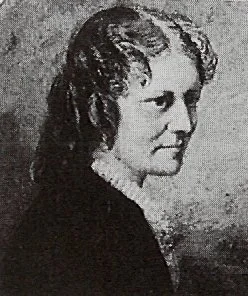 AS
ASAnna Sewell
Anna Sewell (30 March 1820 – 25 April 1878) was an English novelist, best known as the author of the classic novel Black Beauty. Anna Mary Sewell was born in Great Yarmouth, Norfolk, England into a devoutly Quaker family. Her father was Isaac Phillip Sewell (1793-1879), and her mother, Mary Wright Sewell (1798 - 1884) was a successful author of children's books. Anna Sewell had one sibling, a younger brother named Philip Sewell. Anna Sewell was largely educated at home. When Anna was twelve years old, the family moved to Stoke Newington, where Sewell attended school for the first time. Two years later, however, she slipped while walking home from school and severely injured both of her ankles. Her father took a job in Brighton in 1836, partly in the hope that the climate there would help to cure her. Despite this, and most likely because of mistreatment of her injury, for the rest of her life Anna was unable to stand without a crutch or to walk for any length of time. For greater...
5 poezii, 0 proze
 MR
MRMevlana Jalaluddin Rumi
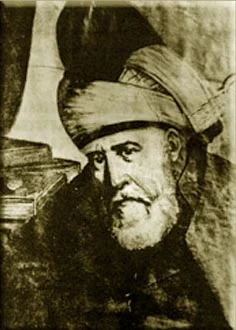
Mawlānā Jalāl ad-Dīn Muḥammad Balkhī, also known as Jalāl ad-Dīn Muḥammad Rūmī, but known to the English-speaking world simply as Rumi, (30 September 1207 – 17 December 1273), was a 13th-century Persian poet, Islamic jurist, theologian, and mystic. Rūmī is a descriptive name meaning "the Roman" since he lived most of his life in an area called Rūm because it was once ruled by the Byzantine Empire. According to tradition, Rumi was born in Balkh, Khorasan (now in Afghanistan), the hometown of his father's family. Scholars, however, argue that he was most likely born in Wakhsh, a small town located at the river Wakhsh in what is now Tajikistan. Wakhsh belonged to the larger province of Balkh, and in the year Rumi was born, his father was an appointed scholar there. Both these cities were at the time included in the Greater Persian cultural sphere of Khorasan, the easternmost province of historical Persia, and were...
162 poezii, 0 proze
 JR
JRJalal ad-Dīn Muhammad Rumi
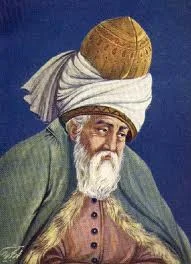
Jalāl ad-Dīn Muḥammad Balkhī, also known as Jalāl ad-Dīn Muḥammad Rūmī, and popularly known as Mowlānā but known to the English-speaking world simply as Rumi (30 September 1207 – 17 December 1273), was a 13th-century Persian (Tajik) Muslim poet, jurist, theologian, and Sufi mystic. Rūmī is a descriptive name meaning "the Roman" since he lived most of his life in an area called Rūm because it was once ruled by the Eastern Roman Empire. It is likely that he was born in the village of Wakhsh, a small town located at the river Wakhsh in what is now Tajikistan. Wakhsh belonged to the larger province of Balkh, and in the year Rumi was born, his father was an appointed scholar there. Both these cities were at the time included in the greater Persian cultural sphere of Khorasan, the easternmost province of Persia, and were part of the Khwarezmian Empire. Image of the Rumi on an old book in the Mevlâna museum; Konya,...
0 poezii, 0 proze
paulo coelho
Paulo Coelho was born in 1947 into a middle-class family, the son of Pedro, an engineer, and Lygia, a housewife. At seven, he entered the Jesuit school of San Ignacio in Rio de Janeiro. Paulo came to detest the obligatory nature of religious practice. However, although he hated praying and going to mass, there were compensations. In the school\'s austere corridors, Paulo discovered his true vocation: to be a writer. He won his first literary prize in a school poetry competition, and his sister, Sonia, recounts how she won an essay prize by entering something that Paulo had discarded in the wastepaper bin. \"Paulo Coelho is not only one of the most widely read, but also one the most influential authors writing today,\" wrote the Bambi awards in Germany. \"His books have had a life-enhancing impact on millions of people\" wrote The Times in UK. To date a sum of 280 translations in 59 languages have been published with sales totalling almost 56 million copies in 150 countries. For 15...
0 poezii, 0 proze
Albert Einstein
Albert Einstein was born at Ulm, in Württemberg, Germany, on March 14, 1879. Six weeks later the family moved to Munich and he began his schooling there at the Luitpold Gymnasium. Later, they moved to Italy and Albert continued his education at Aarau, Switzerland and in 1896 he entered the Swiss Federal Polytechnic School in Zurich to be trained as a teacher in physics and mathematics. In 1901, the year he gained his diploma, he acquired Swiss citizenship and, as he was unable to find a teaching post, he accepted a position as technical assistant in the Swiss Patent Office. In 1905 he obtained his doctor\'s degree. During his stay at the Patent Office, and in his spare time, he produced much of his remarkable work and in 1908 he was appointed Privatdozent in Berne. In 1909 he became Professor Extraordinary at Zurich, in 1911 Professor of Theoretical Physics at Prague, returning to Zurich in the following year to fill a similar post. In 1914 he was appointed Director of the Kaiser...
2 poezii, 0 proze
 AF
AFAnatole France
Anatole France, pseudonym for Jacques Anatole Thibault (1844-1924), was the son of a Paris book dealer. He received a thorough classical education at the Collège Stanislas, a boys\' school in Paris, and for a while he studied at the École des Chartes. For about twenty years he held diverse positions, but he always had enough time for his own writings, especially during his period as assistant librarian at the Senate from 1876 to 1890. His literary output is vast, and though he is chiefly known as a novelist and storyteller, there is hardly a literary genre that he did not touch upon at one time or another. France is a writer in the mainstream of French classicism. His style, modelled on Voltaire and Fénélon, as well as his urbane scepticism and enlightened hedonism, continue the tradition of the French eighteenth century. This outlook on life, which appears in all his works, is explicitly expressed in collection of aphorisms, Le Jardin d\'Épicure (1895) [The Garden of...
6 poezii, 0 proze
 ÉG
ÉGÉdouard Glissant
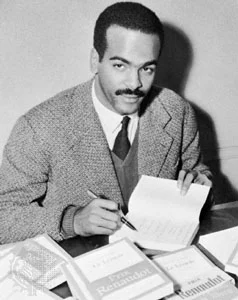
Edouard Glissant (born in Sainte-Marie, Martinique in 1928) is a French writer, poet and literary critic. He is widely recognised as being one of the most influential figures in Caribbean thought and cultural commentary. He studied at the Lycée Schoelcher, named after the abolitionist Victor Schoelcher, where the poet Aimé Césaire had studied and had come back to as a teacher. Césaire had met Léon Damas there; later in Paris they would join with Léopold Senghor, a poet and the future first president of Senegal, to formulate and promote the conecpt of négritude. Césaire did not teach Glissant, but did serve as an inspiration to him; another student at the school at that time was Franz Fanon. Glissant left Martinique in 1946 for Paris, where he received his PhD, having studied ethnography at the Musée de l'Homme and History and philosophy at the Sorbonne. He established, with Paul Niger, the separatist Front Antillo-Guyanais pour l'Autonomie party in 1959, as a result of which Charles...
16 poezii, 0 proze
 IM
IMIohann Mayer
An emissary of the Queen Christina of Sweden to the khan of the Tartars Islam Giray the 3rd, Iohann Mayer made a journey through Moldavia during May 1651. He was sent to accompany the Tartar messenger who had brought to the queen the letter of the khan that contained proposals of common operation against Poland and he was to hand over to the khan the answer of the queen as well. He passed through The White Citadel for the first time in December 1650 on his way towards Crimea. Now, in the summer of the next year, he was coming back on the same route and was finding again the same boatmen he had used six months earlier, on leaving. One cannot be aware of any other details of his winter journey towards Crimea, no other details about his itinerary through Moldavia he is most likely to have used to make his way to the khan` s court. His journey diary is preceded with the words: These are those that happened and occurred during my journey to Bakhchisaray and during the period I spent there,...
1 poezii, 0 proze
lewis carroll
Lewis Carroll [pseudonym of Charles Lutwidge Dodgson] (1832-1898), English author, mathematician, and Anglican clergyman wrote Alice’s Adventures in Wonderland (1865); Either the well was very deep, or she fell very slowly, for she had plenty of time as she went down to look about her and to wonder what was going to happen next….then she looked at the sides of the well, and noticed that they were filled with cupboards and book-shelves; here and there she saw maps and pictures hung upon pegs. She took down a jar from one of the shelves as she passed; it was labelled ‘ORANGE MARMALADE’, but to her great disappointment it was empty: (Ch. 1) And thus begins Alice’s fantastical adventures that have endured in their popularity for over a century, influencing contemporary authors, artists, musicians and inspiring adaptations to the stage and screen. Carroll’s particular mix of creativity, fantasy, word play, satire, nonsense, and dry wit have gained him iconic status in popular culture with...
6 poezii, 0 proze
 AS
ASAlan Seeger
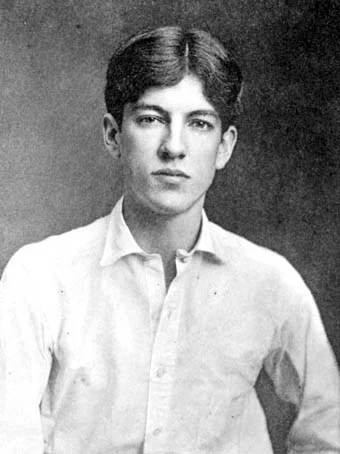
Alan Seeger, born on June 22, 1888 and died July 4, 1916, was an American poet who also fought in World War I. Born in New York, Seeger moved with his family to Staten Island at the age of one and remained there until the age of ten. In 1900, his family moved to Mexico for two years, which influenced the imagery of some of his poetry. His brother Charles Seeger, a noted musicologist, was the father of the American folk singer, Pete Seeger. Seeger entered Harvard in 1906 after attending several elite preparatory schools, including Hackley School. At Harvard, he edited and wrote for the Harvard Monthly. After graduating in 1910, he moved to Greenwich Village for two years, where he wrote poetry and enjoyed the life of a young bohemian. During that time, he attended soirées at the Mlles. Petitpas\' boardinghouse (319 West 29th Street), where the presiding genius was the artist and sage John Butler Yeats, father of the poet.[1] Having moved to the Latin Quarter of Paris to continue his...
20 poezii, 0 proze
There was a time
de Nicusor Porumboium
There was a time, and I'm ashamed When I felt love, and happiness I thought, I'll never feel the pain In our little, secret, universe. I gave you all and even more Until I couldn't offer something...
It was a time of triumph for the morons
de Alexandru Paleologu
Mr. Paleologu, to begin with, let us say that this talk is the result of certain hostile attitudes, especially in the Western media, concerning Mircea Eliade and what we call here “Generation ’27”. I...
On Truth and Lies in a Nonmoral Sense
de Friedrich Nietzsche
On Truth and Lies in a Nonmoral Sense (1873) By Friedrich Nietzsche Once upon a time, in some out of the way corner of that universe which is dispersed into numberless twinkling solar systems, there...
The Nightingale and the Rose
de Chiru Anda
And the walls were closing in, Taking me there, deep within, I was screaming “Help me now!” Hope You’ll be there By my side So You’ll take me Through the night! Save me now Take me there In your arms...
THE GRIFFIN
de Alina Mihai
I took the path of silence and of black night The sunlit world was far behind me The grass swayed gently in the moonlight And trees were tall, and starry sky And yet all these I could not see. On...
Ceai de ierburi acrișoare
de Lavinia Micula
te voi întreba dacă ai băut lemongrass, fulgi de cocos, soc, mere, hibiscus în ultimii x ani dacă ai auzit vreo femeie să-ți spună că punctul g se află direct în inima ta dacă ți-a legat liniile din...
Dracula
de Bram Stoker
Chapter 21 - Dr. Seward\'s Diary 3 October. Let me put down with exactness all that happened, as well as I can remember it, since last I made an entry. Not a detail that I can recall must be...
The Rime of the Ancient Mariner
de Samuel Taylor Coleridge
PART THE FIRST. It is an ancient Mariner, And he stoppeth one of three. “By thy long grey beard and glittering eye, Now wherefore stopp’st thou me?” “The Bridegroom’s doors are opened wide, And I am...
The Last Question
de Isaac Asimov
The last question was asked for the first time, half in jest, on May 21, 2061, at a time when humanity first stepped into the light. The question came about as a result of a five-dollar bet over...
Loneliness is a Promise
de oana stanescu
I was so wrong..so unafraid so happy..so hopeful..so far I was.. Why do I even bother to hope? Why was there a smile on my face? Why this hell? I thought I had something I thought I was dreaming...