
"The Use and Abuse of History" – 11463 rezultate
0.01 secundeMeilisearch JF
JFJames Elroy Flecker
James Elroy Flecker (5 November 1884 - 3 January 1915) was an English poet, novelist and playwright. As a poet he was most influenced by the Parnassian poets. He was born in London, and baptised Herman Elroy Flecker, later choosing to use the first name "James", either because he disliked the name "Herman" or to avoid confusion with his father. "Roy", as he was known to his family, was educated at Dean Close School, Cheltenham, where his father was headmaster, and Uppingham School. He studied at Trinity College, Oxford, and Caius College, Cambridge. While at Oxford he was greatly influenced by the last flowering of the Aesthetic movement there, under John Addington Symonds. From 1910 he was in the consular service, in the Eastern Mediterranean. He met Helle Skiadaressi on a ship to Athens, and married her in 1911. His most widely known poem is "To a poet a thousand years hence". The most enduring testimony to his work is perhaps an excerpt from "The Golden Journey to Samarkand"...
1 poezii, 0 proze
 KV
KVKatri Vala
( 1901 – 1944 ) One of the Finnish poets who brought a free verse style of writing poetry into the mainstream of Finnish literature. Her work is full of the ecstasy of life, longing for distant places, and a use of vocabulary glutted in color, into which are woven a general radical quality, which affects her late works especially. She is considered a late proponent of the ideals of the Carriers of the Flame. Her earlier works show her dedicated to light and its power. Her output is not extensive. Mention should be made of: Kaukainen puutarha (The Distant Garden) (1924) Sininen ovi (The Blue Door) (1926) Maan laiturilla (On the Land Wharf) (1930) In some later works, there is a more serious, darker tone, represented by: Paluu (The Return) (1934) Pesäpuu palaa (The Nest Tree Burns) (1942) Her life’s program was: Oh! If life could be better than death! Katri Vala died of tuberculosis at the end of WW II, while under treatment in Sweden. Even so, her poetry remained more life-positive...
1 poezii, 0 proze
 FR
FRFilip Ruxandra
Adresa mea de mail: yvory_ender@yahoo.com Adresa de yahoo messenger: yvory_ender Data nasterii 15 dec '84 AMV-uri create de mine: http://www.youtube.com/user/yvoryender http://www.youtube.com/user/inuyashatokagome2 In prezent - Proiect de Cercetare in Japonia - Tokyo Of what use is the draught of immortality to me? Now that we shell never see each other again, And I spend my days shedding enough tears to float upon their wake. Ma proclam rege al strangatorilor. Sunt o veriga de legatura dar functionez ca un intreg. Imi ridic privirea spre teluri inalte si dau lovituri ferme si sigure. Viata imi este o calatorie presarata de bucurii. Fiecare cautare trebuie sa sfarseasca intr-o noua expeditie. Sunt progres, exploatare si intuitie. Sunt pantecul unde germineaza actiunea. EDUCATION - Aprilie 2009 - Tokyo, Japan - Research Student - Oct.-Nov. 2009 – Meiji Daigaku 50th Anniversary Symposium – Innovation within Square Enix Corporation - Sept. 2008- Mart. 2009 Esslingen Hochschule -...
76 poezii, 0 proze
 GH
GHGerard Manley Hopkins
Gerard Manley Hopkins, S.J. (28 July 1844 – 8 June 1889), was an English poet, Roman Catholic convert, and Jesuit priest, whose 20th-century fame established him posthumously among the leading Victorian poets. His experimental explorations in prosody (especially sprung rhythm) and his use of imagery established him as a daring innovator in a period of largely traditional verse. He was educated at Highgate School and then Balliol College, Oxford, where he studied classics. Hopkins was an unusually sensitive student and poet, as witnessed by his class-notes and early poetic pieces. It was at Oxford that he forged a friendship with Robert Bridges (eventual Poet Laureate of England) which would be of importance in his development as a poet, and his posthumous acclaim. Hopkins began his time in Oxford as a keen socialite and prolific poet, but he seemed to have alarmed himself with the changes in his behaviour that resulted, and he became more studious and began recording his sins in his...
1 poezii, 0 proze
 SV
SVsilviu vasile
Attopoet Jurist, inginer si scriitor. The greatest weapon anyone can use against us is our own mind. By preying on the doubts and uncertainties that already lurk there. Are we true to to ourselves? Or do we live for the expectations of others? And if we are open and honest, can we ever truly be loved? Can we find the courage to release our deepest secrets, or in the end are we all unknowable... even to ourselves.
27 poezii, 0 proze
 CS
CSClaude Simon
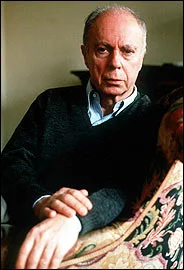
Claude Simon (10 October 1913, — 6 July 2005) was a French novelist and the 1985 Nobel Laureate in Literature. He was born in Antananarivo, Madagascar, and died in Paris, France. Simon is often identified with the nouveau roman movement exemplified in the works of Alain Robbe-Grillet and Michel Butor, and while his fragmented narratives certainly contain some of the formal disruption characteristic of that movement (in particular Triptyque from 1973), he nevertheless retains a strong sense of narrative and character. In fact, Simon arguably has much more in common with his Modernist predecessors than with his contemporaries; in particular, the works of Marcel Proust and William Faulkner are a clear influence. Simon's use of self-consciously long sentences (often stretching across many pages and with parentheses sometimes interrupting a clause which is only completed pages later) can be seen to reference Proust's own style, and Simon morever makes use of certain Proustian settings (in...
0 poezii, 0 proze
 JJ
JJJames JOYCE
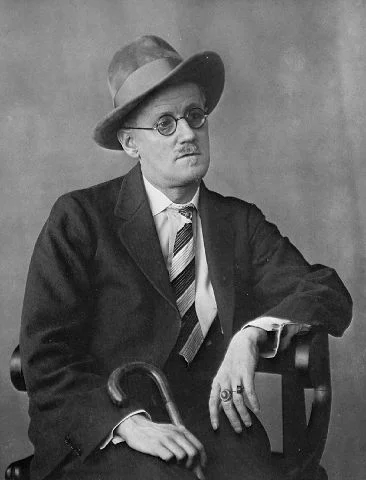
James Joyce (1882-1941), Irish novelist, noted for his experimental use of language in such works as Ulysses (1922) and Finneganns Wake (1939). Joyce\'s technical innovations in the art of the novel include an extensive use of interior monologue; he used a complex network of symbolic parallels drawn from the mythology, history, and literature, and created a unique language of invented words, puns, and allusions. James Joyce was born in Dublin, on February 2, 1882, as the son of John Stanislaus Joyce, an impoverished gentleman, who had failed in a distillery business and tried all kinds of professions, including politics and tax collecting. Joyce\'s mother, Mary Jane Murray, was ten years younger than her husband. She was an accomplished pianist, whose life was dominated by the Roman Catholic Church. In spite of their poverty, the family struggled to maintain a solid middle-class facade. From the age of six Joyce, was educated by Jesuits at Clongowes Wood College, at Clane, and then at...
17 poezii, 0 proze
Phoebe Pratten
Phoebe Pratten was born in Canberra Australia in 1975. At the age of three, she was diagnosed with Peripheral Neuropathy. By 14 she was not able to walk anymore, as the disease affected the muscles. At the same time she couldn\'t make use of her hands or her arms, so she needed to find different ways of holding the pen. Her interests include art, alternative health and writing poetry. The first collection of poetry \"Layers of Silence\" was published in 1999.
1 poezii, 0 proze
John Willy Kopperud
It\'s All Over Now, Baby Blue Bob Dylan You must leave now, take what you need, you think will last. But whatever you wish to keep, you better grab it fast. Yonder stands your orphan with his gun, Crying like a fire in the sun. Look out the saints are comin\' through And it\'s all over now, Baby Blue. The highway is for gamblers, better use your sense. Take what you have gathered from coincidence. The empty-handed painter from your streets Is drawing crazy patterns on your sheets. This sky, too, is folding under you And it\'s all over now, Baby Blue. All your seasick sailors, they are rowing home. All your reindeer armies, are all going home. The lover who just walked out your door Has taken all his blankets from the floor. The carpet, too, is moving under you And it\'s all over now, Baby Blue. Leave your stepping stones behind, something calls for you. Forget the dead you\'ve left, they will not follow you. The vagabond who\'s rapping at your door Is standing in the clothes that you...
0 poezii, 0 proze
the crow
un spectru bantuie Europa
4 poezii, 0 proze
The Use and Abuse of History
de Friedrich Nietzsche
The Use and Abuse of History (1878) By Friedrich Nietzsche Forward \"Incidentally, I despise everything which merely instructs me without increasing or immediately enlivening my activity.\" These are...
Sonnet IV
de William Shakespeare
Unthrifty loveliness, why dost thou spend Upon thyself thy beauty\'s legacy? Nature\'s bequest gives nothing but doth lend, And being frank she lends to those are free. Then, beauteous niggard, why...
Sonet CXXXIV de William Shakespeare
de Cristian Vasiliu
Mărturisesc: e-al tău și eu de-asemeni Chezașa ție mi-am lăsat voința. Mi-aș renega cuvântul de-ai să semeni Iertarea-n jur și-aș re\'ntregi ființa. Nici poarta nu-i deschizi, nici el nu pleacă,...
Sonet CXXXIV
de William Shakespeare
Mărturisesc: e-al tău și eu de-asemeni Chezașa ție mi-am lăsat voința. Mi-aș renega cuvântul de-ai să semeni Iertarea-n jur și-aș re\'ntregi ființa. Nici poarta nu-i deschizi, nici el nu pleacă,...
Sonet IV
de William Shakespeare
De ce-ai cărat, risipitoare undă, O moștenire-a frumuseții-n spate? Când a naturii lege se afundă În inimi dezgolite și curate: De ce-abuzezi, zgârcenie nebună, De bogația ce n-ai dat-o încă? De ce,...
Sonet IV
de Cristian Vasiliu
Sonet IV (traducere/adaptare după W. Shakespeare) Varianta I (2016) Copil nesocotit, de ce-n iubirea De sine-ți cheltui darul frumuseții? Nu-ți dă nimic, ci-ți împrumută Firea Vremelnic doar din...
Sonnet LXXXII
de William Shakespeare
I grant thou wert not married to my Muse And therefore mayst without attaint o\'erlook The dedicated words which writers use Of their fair subject, blessing every book Thou art as fair in knowledge...
The Poems of Sappho, Part IV
de Sappho
The Poems of Sappho, Part IV 110 H?mitu\'bion stala\'sson. A napkin dripping. From the Scholiast on the Plutus of Aristophanes to show the meaning of h?mitu\'bion. This was a piece of soft linen for...
Sonnet LXXVIII
de William Shakespeare
So oft have I invoked thee for my Muse And found such fair assistance in my verse As every alien pen hath got my use And under thee their poesy disperse. Thine eyes that taught the dumb on high to...
Silet
de Ezra Pound
When I behold how black, immortal ink Drips from my deathless pen - ah, well-away! Why should we stop at all for what I think? There is enough in what I chance to say. It is enough that we once came...