
"The Edge" – 11458 rezultate
0.01 secundeMeilisearch KK
KKKenneth Koch
Poetul, romancierul și scenaristul Kenneth Jay Koch s-a născut la 27 februarie 1925 în Cincinnati, Ohio, USA. După ce își face stagiul militar, în 1943, își începe studiile la Universitatea Harward, continuându-le la Columbia University. Timp de trei ani e rezident în Franța și Italia. În anii 1968 și 1969, Kenneth Koch inițiază un curs experimental în cadrul căruia încearcă să-i învețe pe copii să scrie poezie, inițiativă care se bucură de mult succes. Dintre volumele sale amintim: Days and Nights (1982) From the Air (1979) Ko: or, A Season on Earth (1959) On the Edge (1986) On the Great Atlantic Rainway: Selected Poems 1950–1988 (1994) One Train (1994) Permanently (1961) Poems (1953) Bertha, & other plays (1966) Poems from 1952 and 1953 (1968) Seasons on Earth (1987) Sleeping with Women (1969) Straits (1998) Thank You and Other Poems (1962) The Art of Love (1975) The Burning Mystery of Anna in 1951 (1979) The Duplications (1977) The Pleasures of Peace and Other Poems (1969) When the...
2 poezii, 0 proze
 ES
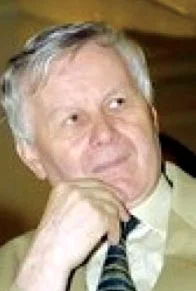
ESEugen Simion
Ioan Eugen Simion (n. 25 mai 1933, Chiojdeanca, Prahova) este un critic literar, editor, eseist, filolog, profesor universitar român, membru al Academiei Române și președinte al acestui for din 1998 până în aprilie 2006. Volume Proza lui Eminescu, 1964 Orientări în literatura contemporană, 1965 Eugen Lovinescu, scepticul mântuit - (Eugen Lovinescu, the Redeemed Skeptic), 1971 (ediția a doua, 1994) Scriitori români de azi, I, 1974 (ediția a doua, 1978) Scriitori români de azi, II, 1977 Timpul trăirii, timpul mărturisirii. Jurnal parizian, 1977, (a doua ediție, 1979, a treia ediție, 1986), 1983 - ediția în limba maghiară Dimineața poeților, 1980, (a doua ediție, 1995, a treia ediție, 1998). Întoarcerea autorului, 1981, (a doua ediție, 1993) Scriitori români de azi, III, 1983 Sfidarea retoricii, 1986 Scriitori români de azi, IV, 1989 Moartea lui Mercutio, 1993 Convorbiri cu Petru Dumitriu, 1994 Mircea Eliade, un spirit al amplitudinii, 1995 Fragmente critice, I, Scriitura publică,...
1 poezii, 0 proze
 MC
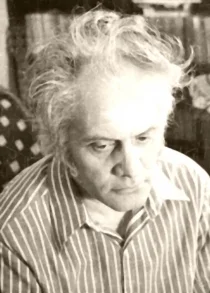
MCMihail Crama
(pseudonimul lui Eugen Enăchescu Pasad) s-a născut la 01 ianuarie 1923 s-a stins din viață la data de 16 aprilie 1994 Mihail Crama (1923-1994) este cunoscutul premiant al Fundatiilor Regale (Decor penitent, 1947) si al Academiei Romane, Premiul Mihai Eminescu pentru antologia Imparatia de seara, 1979, care include volumele de versuri aparute anterior: Decor penitent, 1947, Dincolo de cuvinte, 1967, Determinari, 1970, Codice, 1974, Ianuarii, 1976 si ciclul inedit Decor penitent II, volum reeditat si in editie bilingva (The realm of dusk, 1984). Publica, de asemenea, volumele de versuri: Trecerea, 1981, Dogma, 1984 (Premiul Asociatiei Scriitorilor din Bucuresti, 1985), Intrarea in legenda, 1990. Postum, ii apar volumele Copil la Curtile Romane, in anul 1995, si Cina cea mare, in 1998. Poetul a fost si autor al unor romane de inspiratie autobiografica, Singuratatea din urma, 1986, si Calator spre portile asfintitului, scris intre 8 aprilie 1988 si 4 decembrie 1991, ramas pina astazi...
8 poezii, 0 proze
G.K. Chesterton
Gilbert Keith Chesterton was born in London, England on the 29th of May, 1874. Though he considered himself a mere \"rollicking journalist,\" he was actually a prolific and gifted writer in virtually every area of literature. A man of strong opinions and enormously talented at defending them, his exuberant personality nevertheless allowed him to maintain warm friendships with people-- such as George Bernard Shaw and H. G. Wells--with whom he vehemently disagreed. Chesterton had no difficulty standing up for what he believed. He was one of the few journalists to oppose the Boer War. His 1922 Eugenics and Other Evils attacked what was at that time the most progressive of all ideas, the idea that the human race could and should breed a superior version of itself. In the Nazi experience, history demonstrated the wisdom of his once \"reactionary\" views. His poetry runs the gamut from the comic The Logical Vegetarian to dark and serious ballads. During the dark days of 1940, when Britain...
2 poezii, 0 proze
 WA
WAWerner Aspenstrom
Karl Werner Aspenström (13 November 1918 – 25 January 1997) was a Swedish poet. Born at Norrbärke, he was a member of the Swedish Academy, where he held Seat 12 from 1981 to 1997. Aspenström claimed that his motivation for writing was "writing for his cat", but apparently hinted that he meant someone else with that. In 1989, together with Lars Gyllensten and Kerstin Ekman, he resigned from the Swedish Academy because of the academy’s response to the Salman Rushdie controversy, which was perceived as weak. He however claimed that this was not the sole reason for his resignation, but rather one amongst several other. He was a friend of Stig Dagerman. Works Förberedelse (1943) Oändligt är vårt äventyr (1945) Snölegend (1949) Varelser (1989) Öva Sitt Eget (2004) (posthumous, co-written with Signe Lund-Aspenström)
1 poezii, 0 proze
Rachel Carlson
Carson, Rachel Louise (1907-1964) Biologist, Writer: Born on May 27, 1907 in western Pennsylvania, Carson became interested in wildlife as a child. An avid reader and eager writer, she wrote poetry while studying zoology at the Pennsylvania College for Women and Johns Hopkins. During the summers, she studied at the Woods Hole Marine Biological laboratory, and went on to teach at Johns Hopkins and the University of Maryland. In 1935, Carson\'s father died, and she began working as an aquatic biologist for the U.S. Bureau of Fisheries, later called the U.S. Fish and Wildlife Service. Meanwhile, she wrote scripts called \"Seven Minute Fish Tales\" for a radio series. In 1961, Carson published The Sea Around Us, for which she won the National Book Award. In addition, a documentary made from the book won an Academy Award. As a result of the commercial success of her book, she was able to quit her job at the Bureau of Fisheries and return a Guggenheim Fellowship to the foundation. Her best...
0 poezii, 0 proze
Kurt Weill
Biography Early Years Kurt Weill was born on 2 March 1900 in Dessau, Germany. The son of a cantor, Weill displayed musical talent early on. By the time he was twelve, he was composing and mounting concerts and dramatic works in the hall above his family\'s quarters in the Gemeindehaus. During the First World War, the teenage Weill was conscripted as a substitute accompanist at the Dessau Court Theater. After studying theory and composition with Albert Bing, Kapellmeister of the Theater, Weill enrolled at the Berlin Hochschule für Musik, but found the conservative training and the infrequent lessons with Engelbert Humperdinck too stifling. After a season as conductor of the newly formed municipal theater in Lüdenscheid, he returned to Berlin and was accepted into Ferruccio Busoni\'s master class in composition. He supported himself through a wide range of musical occupations, from playing organ in a synagogue to piano in a Bierkeller, by tutoring students (including Claudio Arrau and...
1 poezii, 0 proze
 WH
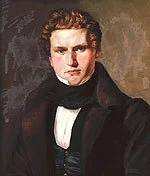
WHWilhelm Hauff
Wilhelm Hauff (November 29, 1802 – November 18, 1827) was a German poet and novelist. Wilhelm Hauff was born in Stuttgart, the son of August Friedrich Hauff, a secretary in the ministry of foreign affairs, and Hedwig Wilhelmine Elsaesser Hauff. He was the second of four children. Young Hauff lost his father when he was seven years old, and his early education was practically self-gained in the library of his maternal grandfather at Tübingen, where his mother had moved after the death of her husband. In 1818 he was sent to the Klosterschule at Blaubeuren, and in 1820 began to study at the University of Tübingen. In four years he completed his philosophical and theological studies at the Tübinger Stift. On leaving the university, Hauff became tutor to the children of the famous Württemberg minister of war, General Baron Ernst Eugen von Hugel (1774-1849), and for them wrote his Märchen (fairy tales), which he published in his Märchen almanach auf das Jahr 1826 (Fairytale Almanac of...
1 poezii, 0 proze
Tudor Damian
My name is Tudor Damian, but friends call me Tudy. I was born April 12, 1984, in Bistrita, Romania. I have been living in Cluj-Napoca since 2003. A few things about me: I work in System Administration for a hosting company in the US, and I’m interested in technology, web standards and systems and network security. I also like anything that has to do with astronomy & astrology, photography, chess, logic puzzles, new-age music and oriental philosophy. As far as my literary preferences go, I like "classic" Sci-Fi (Isaac Asimov, Frank Herbert, Arthur C. Clarke, Douglas Adams) and English poetry (William Blake, Edgar Allan Poe). Over the years, I won a few prizes at local and national poetry and prose contests, and had my texts published in a few magazines. You can find more info about me, and some of the texts I've written on my personal web page (www.tudy.ro).
6 poezii, 0 proze
 FC
FCFred Cogswell
Născut în 1917, în East Contreville, provincia Brunswick, Canada. Poet și critic literar. Studii la Universitatea din New Brunswick (Canada) și Edinburg (Anglia). Profesor de literatură engeză la Universitatea New Brunswick. Redactor șef al revistei literare "The Fiddlehead", una dintre cele mai apreciate ale continentului american. Opere: "The Haloed Tree" (1956); "Lost Dimension" (1960); "Star People" (1968); "Light Bird of Life - Selected Poems (1974). *** Fred Cogswell, CM (November 8, 1917- June 20, 2004) was a Canadian poet. Born in East Centreville, New Brunswick he served overseas in the Canadian Army during the Second World War. A teacher at the age of sixteen, Cogswell gained a BA(Hons) and MA at the University of New Brunswick and received a PhD from Edinburgh University. He later became a professor of English at the University of New Brunswick, a position he held from 1952 to 1983. In 1958, Cogswell and a group of students and faculty from the University of New Brunswick...
1 poezii, 0 proze
The Edge of Darkness
de Alexandru Red
I\'ve looked into the heart of darkness Where the blood red journey ends When you\'ve faced the heart of darkness Even your soul begins to bend . Am privit in inima intunericului Acolo unde drumul...
on the edge
de alice drogoreanu
ca de obicei apare la timp pe când nu e nici vară nici iarnă nici târziu nici devreme în contratimp nu ești încă tu nu ești încă ea nu aștepți și nu te grăbești te prefer o ironie corect decupată pe...
at the edge of the paradox
de Larisa Runceanu
desprind din mine o parte și o arunc la gunoi înțelesul cuvintelor nu mai are sens îmbătrânim amândoi sub semnul paradoxului și tot ce rămâne în urmă e praf dezbrac cu privirea femeia stearpă e nulul...
on the edge
de Anca Zubascu
mai ieri s-a sfârșit lumea la mine sub geam nu se știe ce a dat-o gata dintr-o singură înghițitură fereastra mea e deasupra muchiei pervazul atârnă de după geam îmi admir falsul naufragiu e destul de...
Living on the Edge
de Adela Setti
eram transparenți oase de pasăre îmbinate frumos și cusute corect sub mătase nu sângeram niciodată ne împiedicam des în ghetele noastre mai mari cu un număr și pline de frunze uscate și resturi de...
The magic in our words
de Andrei Dumitrescu
The magic in our words sells us to our stories tonight, As the sharpest swords share destinies untold by the dripping blood, hanging by the edge of the dark blades deceiving timeless snakes Wild and...
The End
de Jim Morrison
This is the end Beautiful friend This is the end My only friend, the end Of our elaborate plans, the end Of everything that stands, the end No safety or surprise, the end I\'ll never look into your...
the end
de Jim Morrison
This is the end, beautiful friend This is the end, my only friend The end of our elaborate plans The end of ev\'rything that stands The end No safety or surprise The end I\'ll never look into your...
Life On The Speedball
de Laura Sylvia Dragomir
Life on the speedball Is like driving your race-car Out into space. Survival is not essential, Though the stars in your head Push you forward. What matters if this Is the edge of destruction? You...
I’m getting sentimental over you
de carstea anca-cristina
I said god what’s with my fingerprints sweating tenderness on the edge of the senses? cause you see: somehow, there’s no one in sight and not many tears are to dry. but then it all just flew through...