
"THE MARCH OF GAIA" – 11458 rezultate
0.02 secundeMeilisearch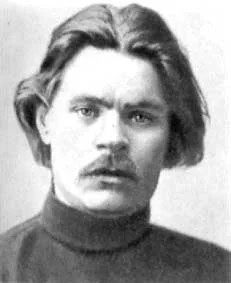 MG
MGMaxim Gorki
[[en]] * Born: 16 March 1868 * Birthplace: Nizhny Novgorod (now Gorky), Russia * Death: June 1936 * Best Known As: Russian writer known for his socialist realism Name at birth: Aleksey Maksimovich Peshkov Maxim Gorky (also spelled Maksim Gorki) is one of the giants of 20th century Russian literature and theater, known for his realistic depictions of how terrible it is to be poor and oppressed. Gorky himself grew up in rough times and was a lifelong spokesperson for the underclass. His political activism led to several years of exile, in spite of his popularity with Russian readers. By 1900 Gorky was a famous literary figure, thanks in part to help from Anton Chekhov. His short stories and his first novel, Foma Gordeyev (1902) gave him notoriety as well as critical success, but his outspoken opposition to the rule of Nicholas II led to his exile to the island of Capri (1907-13). After the 1917 revolution Gorky's criticism of his friend V. I. Lenin and the Bolsheviks led to another...
2 poezii, 0 proze
Albert Einstein
Albert Einstein was born at Ulm, in Württemberg, Germany, on March 14, 1879. Six weeks later the family moved to Munich and he began his schooling there at the Luitpold Gymnasium. Later, they moved to Italy and Albert continued his education at Aarau, Switzerland and in 1896 he entered the Swiss Federal Polytechnic School in Zurich to be trained as a teacher in physics and mathematics. In 1901, the year he gained his diploma, he acquired Swiss citizenship and, as he was unable to find a teaching post, he accepted a position as technical assistant in the Swiss Patent Office. In 1905 he obtained his doctor\'s degree. During his stay at the Patent Office, and in his spare time, he produced much of his remarkable work and in 1908 he was appointed Privatdozent in Berne. In 1909 he became Professor Extraordinary at Zurich, in 1911 Professor of Theoretical Physics at Prague, returning to Zurich in the following year to fill a similar post. In 1914 he was appointed Director of the Kaiser...
2 poezii, 0 proze
 AA
AAAlphonse Allais
Alphonse Allais (October 20, 1854 - October 28, 1905) was a French writer and humorist born in Honfleur, Calvados. He is the author of many collections of whimsical writings. A poet as much as a humorist, he in particular cultivated the verse form known as holorhyme, i.e. made up entirely of homophonous verses, where entire lines rhyme. For example: par les bois du djinn où s'entasse de l'effroi, parle et bois du gin ou cent tasses de lait froid. Allais is also credited with the earliest known example of a completely silent musical composition. Composed in 1897, his Funeral March for the Obsequies of a Deaf Man -- consisting of nine blank measures -- predates comparable works by John Cage and Erwin Schulhoff by a considerable margin. His piece "Story for Sara" was translated and illustrated by Edward Gorey. Allais participated in humorous exhibitions, particularly in those of the Salon des Arts Incohérents of 1883 and 1884, held at the Galerie Vivienne. At these Allais exhibited...
1 poezii, 0 proze
 US
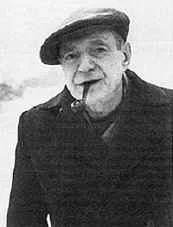
USUmberto Saba
Umberto Saba (9 March 1883 - 26 August 1957) was the pseudonym of Italian poet and novelist Umberto Poli. His creative work was hampered by a life-long struggle with mental illness. Saba was born in Trieste, then a part of the Austro-Hungarian Empire. He had Italian citizenship through his father. His mother was Jewish. His father abandoned the family before Umberto was born, and his mother employed a Slovene nanny, Peppa Sabaz, to raise him. He became very attached to her, and revered her memory in his poetry. From 1903-1904, he attended the University of Pisa, where he studied archaeology, German, and Latin. In was in this period that he began to complain of a nervous disorder, which was to become more severe with time. Quitting school, Saba worked for a time as an apprentice and was a cabin-boy on a merchant ship. From 1907-1908 he served in the military in Salerno. He married Carolina Wölfler in 1909, and they had a daughter, Lina, the following year. By 1928, Saba was suffering...
4 poezii, 0 proze
 EB
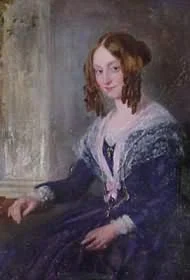
EBElizabeth Barrett Browning
Elizabeth Barrett Browning (6 March 1806 – 29 June 1861) was one of the most prominent poets of the Victorian era. Her poetry was widely popular in both England and the United States during her lifetime.[1] A collection of her last poems was published by her husband, Robert Browning, shortly after her death. Works/Collections 1820: The Battle of Marathon: A Poem. Privately printed 1826: A Essay On Mind, with Other Poems. London: James Duncan 1833: Prometheus Bound, Translated from the Greek of Aeschylus,and Miscellaneous Poems. London: A.J. Valpy 1838: The Seraphim, and Other Poems. London: Saunders and Otley 1844: Poems (UK) / A Drama of Exile, and other Poems (US). London: Edward Moxon. New York: Henry G. Langley 1850: Poems ("New Edition", 2 vols.) Revision of 1844 edition adding Sonnets from the Portuguese and others. London: Chapman & Hall 1851: Casa Guidi Windows. London: Chapman & Hall 1853: Poems (3d ed.). London: Chapman & Hall 1854: Two Poems: "A Plea for the Ragged Schools...
1 poezii, 0 proze
 CF
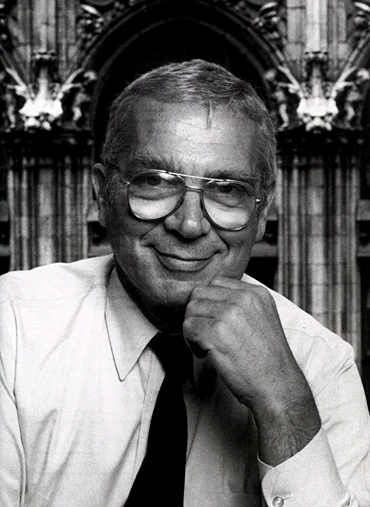
CFColin Forbes
Colin Forbes was the principal pseudonym of British novelist Raymond Harold Sawkins (born in Hampstead, London on 14 July 1923, died on 23 August 2006). Sawkins wrote over 40 books, mostly as Colin Forbes. He was most famous for his long-running series of thriller novels in which the principal character is Tweed, Deputy Director of the Secret Intelligence Service. Sawkins attended The Lower School of John Lyon in Harrow, London. At the age of 16 he started work as a sub-editor with a magazine and book publishing company. He served with the British Army in North Africa and the Middle East during World War II. Before his demobilisation he was attached to the Army Newspaper Unit in Rome. On his return to civilian life he joined a publishing and printing company, commuting to London for 20 years, until he became successful enough to be a full-time novelist. Sawkins was married to a Scots-Canadian, Jane Robertson (born March 31, 1925, died 1993). Together they had one daughter, Janet....
3 poezii, 0 proze
 SL
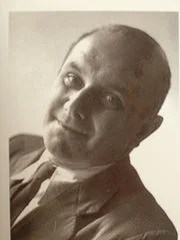
SLStanis³aw Jerzy Lec
Stanis³aw Jerzy Lec (6 March 1909 – 7 May 1966) (born Baron Stanis³aw Jerzy de Tusch-Letz) was a Polish poet and aphorist of Polish and Jewish noble origin. Often mentioned among the greatest writers of post-WW2 Poland, he was one of the most influential aphorists on the 20th century. Lyrical poetry, sceptical philosophical-moral aphorisms, often with a political subtext. He was born on March 6, 1909 in Lviv (then Lemberg, Austro-Hungarian Empire), the son of the Baron Benon de Tusch-Letz and Adela Safrin. The family moved to Vienna at the onset of First World War, and Lec' early education was received there. After the war the family returned to Lviv-Lemberg to continue his schooling at the Lemberg Evangelical School. In 1927 he matriculated at the Lviv's Jan Kazimir University in jurisprudence and Polish. As a result of his political activities — writing articles for socialist revolutionary periodicals, making speeches in the Technological Institute’s Yellow Hall — Lec had to leave...
1 poezii, 0 proze
 AS
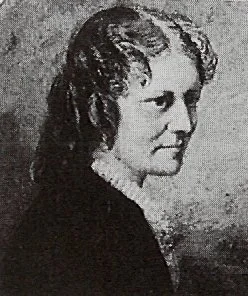
ASAnna Sewell
Anna Sewell (30 March 1820 – 25 April 1878) was an English novelist, best known as the author of the classic novel Black Beauty. Anna Mary Sewell was born in Great Yarmouth, Norfolk, England into a devoutly Quaker family. Her father was Isaac Phillip Sewell (1793-1879), and her mother, Mary Wright Sewell (1798 - 1884) was a successful author of children's books. Anna Sewell had one sibling, a younger brother named Philip Sewell. Anna Sewell was largely educated at home. When Anna was twelve years old, the family moved to Stoke Newington, where Sewell attended school for the first time. Two years later, however, she slipped while walking home from school and severely injured both of her ankles. Her father took a job in Brighton in 1836, partly in the hope that the climate there would help to cure her. Despite this, and most likely because of mistreatment of her injury, for the rest of her life Anna was unable to stand without a crutch or to walk for any length of time. For greater...
5 poezii, 0 proze
 JS
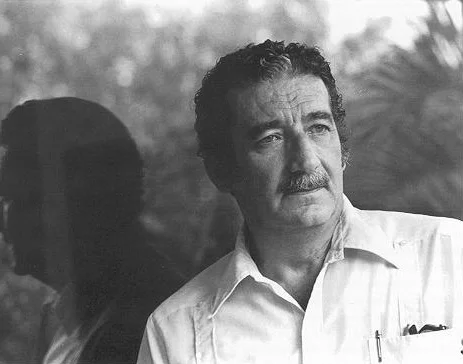
JSJaime Sabines
Jaime Sabines Gutiérrez (March 25, 1926 - March 19, 1999) is arguably Mexico's most influential contemporary poet. Known as “the sniper of Literature” as he formed part of a group that transformed literature into reality, he wrote ten volumes of poetry, and his work has been translated into more than twelve languages. His writings chronicle the experience of everyday people in places such as the street, hospital, and playground. Sabines was also a politician. Jaime Sabines was born on March 25, 1926 in Tuxtla Gutiérrez, Chiapas. Before he devoted himself to the study of literature, he spent three years studying medicine before moving on to his real vocation: Spanish and literature, studying at the Universidad Nacional Autónoma de México (UNAM), and obtaining a postgraduate degree. Sabines was an outstanding student at the Mexican Writers Centre from 1964 to 1965 and part of the jury for the Casa de las Americas prize. In addition to his literary activity, he participated in politics...
8 poezii, 0 proze
 RL
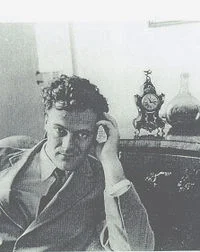
RLRobert Lowell
Robert Traill Spence Lowell IV (March 1, 1917 – September 12, 1977) was an American poet, considered the founder of the confessional poetry movement. He was appointed the sixth Poet Laureate Consultant in Poetry to the Library of Congress in 1946. Lowell was born in Boston, Massachusetts to a Boston Brahmin family that included the poets Amy Lowell and James Russell Lowell. His mother, Charlotte Winslow, was a descendant of William Samuel Johnson, a signer of the United States Constitution, Jonathan Edwards, the famed Calvinist theologian, Anne Hutchinson, the Puritan preacher and healer, Robert Livingston the Elder, Thomas Dudley, the second governor of Massachusetts, and Mayflower passengers James Chilton and his daughter Mary Chilton. He was at St. Mark's School, a prominent prep-school in Southborough, Massachusetts, before attending Harvard College for two years and transferring to Kenyon College in Gambier, Ohio, to study under John Crowe Ransom. Land of Unlikeness (1944) Lord...
1 poezii, 0 proze
ANTHEM
de Leonard Cohen
The birds they sang at the break of day Start again I heard them say Don’t dwell on what has passed away Or what is yet to be. The wars they will be fought again The holy dove be caught again Bought...
Magdalen Walks
de Oscar Wilde
The little white clouds are racing over the sky, And the fields are strewn with the gold of the flower of March, The daffodil breaks under foot, and the tasselled larch Sways and swings as the thrush...
Shhhh...
de Corina Gina Papouis
“Yes - but you would have to be half-mad to dream me up.“ – The Mad Hatter aici nu ne atinge nimeni, iepuroiul meu alb cu ceas și joben mă poți striga în limba lui Nietzsche ori picta în culorile lui...
PARADISE LOST -- Book VI
de John Milton
Book VI All night the dreadless Angel, unpursued, Through Heaven\'s wide champain held his way; till Morn, Waked by the circling Hours, with rosy hand Unbarred the gates of light. There is a cave...
Saul Bellow (laureat al Premiului Nobel, decedat la 5 aprilie 2005) și veriga românească din biografia lui
de marlena braester
Până pe 4 aprilie acest evreu-american era considerat cel mai mare scriitor american în viață. Poziția lui de dupa al doilea război mondial poate fi comparată doar cu poziția lui Hemingway sau a lui...
At the mother's cross A face of an angel of childhood
de Laurențiu Nelu Rădoi
- - - - - - - - - - - - - - - - - - - - - - - - - Under the acacias bathed in dead winter's frost, Driven in the wheel of life by a windy March, The moon rises warm, but it's so far away The too...
The Grey Monk
de William Blake
`I die, I die!\' the Mother said, `My children die for lack of bread. What more has the merciless tyrant said?\' The Monk sat down on the stony bed. The blood red ran from the Grey Monk\'s side, His...
Heresy
de Dragos Angelescu
We walk this path of beaten stone For ever feeling more alone Under the eyes of gods we march In step, Following a thousand hearts of rithm Slaves of a will We've never been aware of. We march, our...
Hamlet
de William Shakespeare
HAMLET DRAMATIS PERSONAE (PAGINA 1) CLAUDIUS king of Denmark. (KING CLAUDIUS:) HAMLET son to the late, and nephew to the present king. POLONIUS lord chamberlain. (LORD POLONIUS:) HORATIO friend to...
Earth\'s Immortalities
de Robert Browning
FAME. See, as the prettiest graves will do in time, Our poet\'s wants the freshness of its prime; Spite of the sexton\'s browsing horse, the sods Have struggled through its binding osier rods;...