
"Sonnet LI" – 4095 rezultate
0.02 secundeMeilisearch WW
WWWilliam Wordsworth
William Wordsworth was born on April 17, 1770 in Cockermouth, Cumberland, in the Lake District. His father was John Wordsworth, Sir James Lowther\'s attorney. The magnificent landscape deeply affected Wordsworth\'s imagination and gave him a love of nature. He lost his mother when he was eight and five years later his father. The domestic problems separated Wordsworth from his beloved and neurotic sister Dorothy, who was a very important person in his life. With the help of his two uncles, Wordsworth entered a local school and continued his studies at Cambridge University. Wordsworth made his debut as a writer in 1787, when he published a sonnet in The European Magazine . In that same year he entered St. John\'s College, Cambridge, from where he took his B.A. in 1791. During a summer vacation in 1790 Wordsworth went on a walking tour through revolutionary France and also traveled in Switzerland. On his second journey in France, Wordsworth had an affair with a French girl, Annette...
16 poezii, 0 proze
 GN
GNGermain Nouveau
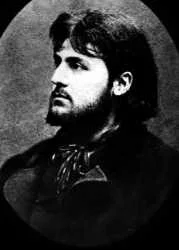
Germain Nouveau est l'aîné des 4 enfants de Félicien Nouveau (1826-1884) et de Marie Silvy (1832-1858). Germain Nouveau perd sa mère alors qu'il n'a que sept ans. Il est élevé par son grand-père. Après une enfance à Aix-en-Provence et des études qu'il effectue au petit séminaire, pensant même à embrasser la prêtrise, et après une année d’enseignement au lycée de Marseille en 1871-1872, Nouveau s'installe à Paris à l’automne 1872. Il publie son premier poème, "Sonnet d’été", dans La Renaissance artistique et littéraire, revue d’Émile Blémont et fait connaissance de Mallarmé, de Jean Richepin et les « Vivants » (Ponchon…) qui se réunissent au café Tabourey. Il fréquente aussi les zutistes, fait la connaissance de Charles Cros avec lequel il collabore à la rédaction des Dixains réalistes qui tournent en dérision les parnassiens. Il découvre dans l’Album zutique les poèmes laissés par Rimbaud et Verlaine, qui ont quitté la capitale depuis juillet 1872. Arthur Rimbaud, Paul Verlaine,...
7 poezii, 0 proze
Thomas Gray
1716–71, English poet. He was educated at Eton and Peterhouse, Cambridge. In 1739 he began a grand tour of the Continent with Horace Walpole. They quarreled in Italy, and Gray returned to England in 1741. He continued his studies at Cambridge, and he remained there for most of his life, living in seclusion, studying Greek, and writing. In 1768 he was made professor of history and modern languages, but he did no real teaching. Although he was reconciled with Walpole, and formed other close relationships in his lifetime, his shy and sensitive disposition was ill adapted to the robust century in which he lived. He was offered the laureateship in 1757 but refused it. His first important poems, written in 1742, include “To Spring,” “On a Distant Prospect of Eton College,” and a sonnet on the death of his close friend Richard West. After years of revision he finished his great “Elegy Written in a Country Churchyard” (1751), a meditative poem presenting thoughts conjured up by the sight of a...
1 poezii, 0 proze
 ML
MLMarc de Papillon de Lasphrise
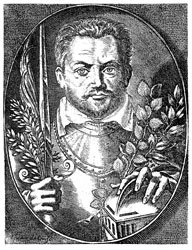
Marc Papillon, seigneur de Lasphrise, dit aussi le Capitaine Lasphrise et parfois nommé Marc de Papillon, né près d'Amboise vers 1555 et mort vers 1599, est un poète baroque satirique et érotique français. Biographie Issu d'une famille méridionale appauvrie par les guerres, orphelin de père, il s'engagé très jeune dans les armées catholiques. Il fait de nombreux séjours à la Cour avant de se retirer à Lasphrise, près de Tours, vers 1587. Amoureux peu soucieux des tabous et des conventions, il reste le poète des Amours de Théophile, composées en l'honneur d'une religieuse [1], et de L'Amour passionnée de Noémie, composé pour une cousine, Noémie-la-Tourangelle, remarquables par leur ton libertin. Il y montre un souci de recherches formelles, ainsi qu'un goût prononcé pour le jeu avec la langue, comme ce sonnet « en langage enfançon » et cet autre « en langue inconnue » qui commence ainsi : Cerdis Zerom deronty toulpinye, Pursis harlins linor orifieux... Il est aussi l'auteur d'une...
1 poezii, 0 proze
 TB
TBTed Berrigan
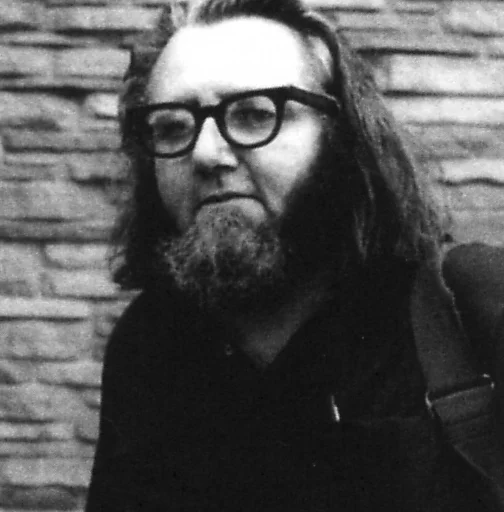
A fost unul dintre cei mai importanți poeți ai generației lui, faimos nu numai pentru scrisul său invocator din The Sonnets (1964) dar și pentru poeziile sale lirice ulterioare. A fost un profesor și un model pentru mulți poeți, în diferite universități, cât și în casa lui din Manhattan s Lower East Side. A murit la 4 iulie 1983. *** Ted Berrigan (15 November 1934 – 4 July 1983) was an American poet. Berrigan was born in Providence, Rhode Island, on November 15, 1934. After high school, he spent a year at Providence College before joining the U.S. Army in 1954 to serve in the Korean War. After three years in the Army, he finished his college studies at the University of Tulsa in Oklahoma, where he received a B.A. in English in 1959. He received his M.A. from Tulsa in 1962. Berrigan was married to Sandy Berrigan, also a poet, and they had two children, David Berrigan and Kate Berrigan. He and his second wife the poet Alice Notley were active in the poetry scene in Chicago for several...
3 poezii, 0 proze
Richard Von Schaukal
1892-1897 studiaza dreptul in Viena; in 1998 promoveaza examenul de licenta; face parte din categoria poetilor simbolisti din Viena; primul volum de poezii il scoate la varsta de 19 ani, sub influenta puternica a lui Hugo von Hofmannsthal. Opere: Poems (Dresden 1893); Verses 1892-96 (Bruenn 1896); My gardens. Lonely verses (Berlin 1897); Tristia. New poems from the years 1897-98 (Leipzig 1898); Days and dreams. New verses (Leipzig 1899; 2 1902 erw. Expenditure.); Longing. New verses (Munich 1900); Pierrot and Combine or the song of the marriage (Leipzig 1902); Previous evening. An act in verses (Leipzig 1902); Selected poems (Leipzig 1904); Book of the soul. New poems (Munich 1908); Child poems (Munich 1913); Autumn. Poems 1912-14 (Munich 1914); Eherne of sonnets 1914 (Munich 1915); Homeland of the soul. Poems 1914-16 (Munich 1916); War songs from Austria (Vienna 1917); Jahresringe. New poems 1918-21 (Braunschweig 1922); Autumn height. New poems 1921-33 (Paderborn 1933); Music of the...
2 poezii, 0 proze
 JT
JTJacques Tahureau
Jacques Tahureau Écrivain français (Le Mans 1527 – v. 1555). Il prit part aux guerres d\'Italie ; de retour en France, il se lia d\'amitié avec J.-A. de Baïf et se familiarisa, grâce à ce dernier, avec la doctrine et la pratique de la jeune école de la Pléiade. Il mourut l\'année même de son mariage, en 1555. Il avait, en 1554, édité un recueil de poèmes pétrarquisants, les Sonnets, Odes et Mignardises amoureuses de l\'Admirée. Mais ce sont les Dialogues, publiés après sa mort en 1565, qui constituent la part de son œuvre la plus originale. S\'inspirant du philosophe grec Démocrite, il s\'y livre, au nom de la raison, à une critique systématique et impitoyable de toutes les « folies » humaines : après celle de l\'amour (à quoi est consacrée la plus grande partie du Premier Dialogue) vient celle des diverses impostures dont se sont rendus coupables au cours de l\'Histoire les nobles, les hommes de loi, les médecins, les astrologues, les alchimistes, et, pour finir, ceux qu\'il appelle...
1 poezii, 0 proze
 EB
EBElizabeth Barrett Browning
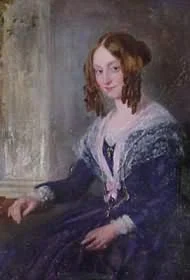
Elizabeth Barrett Browning (6 March 1806 – 29 June 1861) was one of the most prominent poets of the Victorian era. Her poetry was widely popular in both England and the United States during her lifetime.[1] A collection of her last poems was published by her husband, Robert Browning, shortly after her death. Works/Collections 1820: The Battle of Marathon: A Poem. Privately printed 1826: A Essay On Mind, with Other Poems. London: James Duncan 1833: Prometheus Bound, Translated from the Greek of Aeschylus,and Miscellaneous Poems. London: A.J. Valpy 1838: The Seraphim, and Other Poems. London: Saunders and Otley 1844: Poems (UK) / A Drama of Exile, and other Poems (US). London: Edward Moxon. New York: Henry G. Langley 1850: Poems ("New Edition", 2 vols.) Revision of 1844 edition adding Sonnets from the Portuguese and others. London: Chapman & Hall 1851: Casa Guidi Windows. London: Chapman & Hall 1853: Poems (3d ed.). London: Chapman & Hall 1854: Two Poems: "A Plea for the Ragged Schools...
1 poezii, 0 proze
 MC
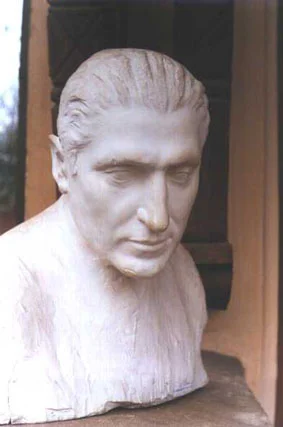
MCMihai Codreanu
Mihai Codreanu (n. 25 iulie 1876, Iași - d. 23 octombrie 1957, Iași) a fost un poet român, membru corespondent al Academiei Române (1942). A fost director la Teatrul Național din Iași (1919-1923); profesor și rector (1933-1939) al Conservatorului de Artă Dramatică din Iași; director la revista "Însemnări ieșene". Debutează în lumea literară cu versuri în "Lumea ilustrată" (1891). Volumele sale de poezii sunt: "Diafane" (1901), "Din când în când" (1903), "Statui" (1914), "Cântecul deșertăciunii" (1921), "Turnul din fildeș" (1929), "Statui. Sonete și evadări din sonet" (1939). Este cel mai prolific sonetist român.
24 poezii, 0 proze
 RV
RVRenée Vivien
Renée Vivien, born Pauline Mary Tarn (11 June 1877 - 18 November 1909) was a British poet who wrote in the French language.[1][2] She took to heart all the mannerisms of Symbolism, as one of the last poets to claim allegiance to the school. Her compositions include sonnets, hendecasyllabic verse, and prose poetry. Vivien was born in London, England to a wealthy British father and an American mother from Jackson, Michigan. She grew up in Paris and London. Upon inheriting her father's fortune at 21, she emigrated permanently to France. In Paris, Vivien's dress and lifestyle were as notorious among the bohemian set as was her verse. She lived lavishly, as an open lesbian, and carried on a well-known affair with American heiress and writer Natalie Clifford Barney. She also harbored a lifelong obsession with her closest childhood friend and neighbor, Violet Shillito – a relationship that remained unconsummated. In 1900 Vivien abandoned this chaste love, when the great romance with Natalie...
17 poezii, 0 proze
Sonnet LI
de William Shakespeare
Thus can my love excuse the slow offence Of my dull bearer when from thee I speed: From where thou art why should I haste me thence? Till I return, of posting is no need. O, what excuse will my poor...
Sonnet LII
de William Shakespeare
So am I as the rich, whose blessed key Can bring him to his sweet up-locked treasure, The which he will not every hour survey, For blunting the fine point of seldom pleasure. Therefore are feasts so...
Sonnet LIII
de William Shakespeare
What is your substance, whereof are you made, That millions of strange shadows on you tend? Since every one hath, every one, one shade, And you, but one, can every shadow lend. Describe Adonis, and...
Sonnet LIV
de William Shakespeare
O, how much more doth beauty beauteous seem By that sweet ornament which truth doth give! The rose looks fair, but fairer we it deem For that sweet odour which doth in it live. The canker-blooms have...
Sonnet LIX
de William Shakespeare
If there be nothing new, but that which is Hath been before, how are our brains beguiled, Which, labouring for invention, bear amiss The second burden of a former child! O, that record could with a...
Sonnet LX
de William Shakespeare
Like as the waves make towards the pebbled shore, So do our minutes hasten to their end; Each changing place with that which goes before, In sequent toil all forwards do contend. Nativity, once in...
Sonnet XLI
de William Shakespeare
Those petty wrongs that liberty commits, When I am sometime absent from thy heart, Thy beauty and thy years full well befits, For still temptation follows where thou art. Gentle thou art and...
Sonnet LXXXI
de William Shakespeare
Or I shall live your epitaph to make, Or you survive when I in earth am rotten; From hence your memory death cannot take, Although in me each part will be forgotten. Your name from hence immortal...
Sonnet XV
de William Shakespeare
When I consider every thing that grows Holds in perfection but a little moment, That this huge stage presenteth nought but shows Whereon the stars in secret influence comment; When I perceive that...
Sonnet XIX
de William Shakespeare
Devouring Time, blunt thou the lion\'s paws, And make the earth devour her own sweet brood; Pluck the keen teeth from the fierce tiger\'s jaws, And burn the long-lived phoenix in her blood; Make glad...