
"Second Hand" – 1673 rezultate
0.01 secundeMeilisearch IS
ISIon Spânu
ionspanu@gmail.com VOLUME: - "Puterea cuvîntului" - versuri - "Elita second-hand" - eseuri - "Taraba cu idei" - eseuri - "Asasinarea lui Eminescu" - eseu - "Elodia" - anchetă - "Heidegger și Liiceanu" - eseu - "Meșterul Ființei" - eseu - "Istoria clipei" - antologie
31 poezii, 0 proze
 RB
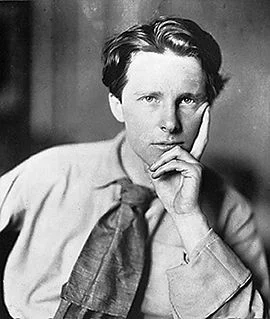
RBRupert Chawner Brooke
Rupert Chawner Brooke (middle name sometimes given as Chaucer)(3 August 1887–23 April 1915) was an English poet known for his idealistic war sonnets written during the First World War (especially The Soldier); however, he never experienced combat at first hand. He was also known for his boyish good looks, which prompted the Irish poet William Butler Yeats to describe him as \"the handsomest young man in England\". English poet Brooke was born at 5 Hillmorton Road in Rugby, Warwickshire, the second of the three sons of William Parker Brooke, a Rugby schoolmaster, and Ruth Mary Brooke, née Cotterill. He attended Hillbrow Prep School before being educated at Rugby School. While travelling in Europe, he prepared a thesis entitled \"John Webster and the Elizabethan Drama\", which won him a scholarship to King\'s College, Cambridge, where he became a member of the Cambridge Apostles, helped found the Marlowe Society drama club and acted in plays including the Cambridge Greek Play. Brooke...
7 poezii, 0 proze
 SC
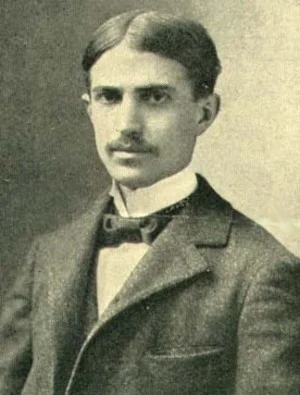
SCStephen Crane
Stephen Crane (1871-1900), American author, whose second novel, The Red Badge Of Courage (1895), brought him international fame. The Red Badge of Courage depicted the American Civil War from the point of view of an ordinary soldier. It has been called the first modern war novel. Crane was born in Newark, New Jersey, on November1, 1871, as the 14th child of a Methodist minister. He started to write stories at the age of eight and at 16 he was writing articles for the New York Tribune. Crane studied at Lafayette College and Syracuse University. After his mother's death in 1890 - his father had died earlier - Crane moved to New York, where he lived a bohemian life, and worked as a free-lance writer and journalist. While supporting himself by his writings, he lived among the poor in the Bowery slums to research his first novel. Crane's first novel, Maggie: A Girl Of The Streets(1893) was a milestone in the development of literary naturalism. Crane had to print the book at his own expense,...
11 poezii, 0 proze
John Milton
1608 - 1674 One of the greatest poets of the English language, best-known for his epic poem PARADISE LOST (1667). Milton's powerful, rhetoric prose and the eloquence of his poetry had an immense influence especially on the 18th-century verse. Besides poems, Milton published pamphlets defending civil and religious rights. John Milton was born in London. His mother Sarah Jeffrey, a very religious person, was the daughter of a merchant sailor. His father, also named John, had risen to prosperity as a scrivener or law writer - he also composed music. The family was wealthy enough to afford a second house in the country. Milton's first teachers were his father, from whom he inherited love for art and music, and the writer Thomas Young, a graduate of St Andrews University. At the age of twelve Milton was admitted to St Paul's School near his home and five years later he entered Christ's College, Cambridge. During this period, while considering himself destined for the ministry, he began to...
17 poezii, 0 proze
 OG
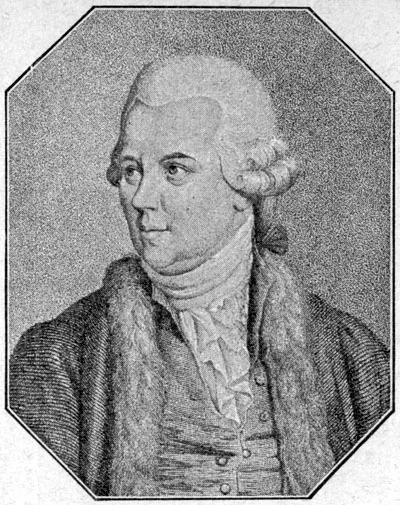
OGOliver Goldsmith
Irish poet, dramatist and essayist, Oliver Goldsmith was born either in Pallas, County Longford or Elphin, Roscommon. He was the second son of an Anglican clergyman, and spent much of his childhood at Lissoy which he drew on when writing The Deserted Village. He had a severe attack of smallpox at the age of eight which left him badly disfigured for life. In 1744 he went as a sizar to Trinity College, Dublin, ran away in 1746, but returned to graduate with a Bachelor of Arts degree in 1749. After several false starts in choosing a career, a generous uncle sent him in 1752 to Edinburgh University to study medicine. Instead of taking a degree he travelled throughout Europe, from which travels he drew on in The Vicar of Wakefield (1766). In 1756 he returned destitute to London,and practised as a physician in Southwark and as an usher in Peckham. He corrected proofs for Samuel Richardson and drifted into the profession of hack writer for Ralph Griffiths proprietor of the Monthly Review. In...
6 poezii, 0 proze
Radu Contes
The beginning of my childhood was profoundly marked by one of my grandfather’s passions – literature. For him reading, living, the writings of so many did not seem to be enough, so he began writing his own stories that still echo in my memory and in my heart. I remember that one day I went to him and asked “What are you writing about?”. Looking at me for only a second and returning his eyes at the ink stained notebook he answered: “My life”. Regretful, I confess that that was the last dialogue we had. After that I began reading, reading everything he was writing. Two years after his death, I had met someone who changed everything. I stopped reading and began writing myself. It was such a new feeling. It seemed to be never ending. It still feels. Since the first time, you may think I am exaggerating, but it really was the first time I saw her when I felt this sudden urge of writing. Words like “Thank you” seem meaningless compared to the things that you have done for me.
2 poezii, 0 proze
 WH
WHWilhelm Hauff
Wilhelm Hauff (November 29, 1802 – November 18, 1827) was a German poet and novelist. Wilhelm Hauff was born in Stuttgart, the son of August Friedrich Hauff, a secretary in the ministry of foreign affairs, and Hedwig Wilhelmine Elsaesser Hauff. He was the second of four children. Young Hauff lost his father when he was seven years old, and his early education was practically self-gained in the library of his maternal grandfather at Tübingen, where his mother had moved after the death of her husband. In 1818 he was sent to the Klosterschule at Blaubeuren, and in 1820 began to study at the University of Tübingen. In four years he completed his philosophical and theological studies at the Tübinger Stift. On leaving the university, Hauff became tutor to the children of the famous Württemberg minister of war, General Baron Ernst Eugen von Hugel (1774-1849), and for them wrote his Märchen (fairy tales), which he published in his Märchen almanach auf das Jahr 1826 (Fairytale Almanac of...
1 poezii, 0 proze
 BC
BCBrian Chan
Brian Chan was born in Guyana in 1949. He began to establish a reputation as a poet of talent with his work in Expression in the early 1970s, part of a group that included Janice Lowe (Shinebourne) and N.D. Williams. He had poems published in Caribbean Quarterly, Artrage, and One People’s Grief and is included in the Heinemann anthology of Caribbean poetry. His first collection of poems, Thief With Leaf (1988) won the 1988 Guyana Prize. His work is challenging and experimental, exploring not only experience, but the fictions we create in making sense of experience. He moved to Canada in the 1970s and his poems explore a territory in which Guyanese memories filter into the Canadian present. He currently lives in Edmonton. His second collection of poems, Fabula Rasa, was published in 1994. He is a musician (clarinetist) and accomplished painter.
1 poezii, 0 proze
 ED
EDEmilia Dina
Emilia Dina, was born in 1977 in Slatina, a small town, capital, Olt country, southern Romania. The town of Slatina is mentioned for the first time in an official document issued by Vladislav I Vlaicu on January 20th, 1386. The name's origin is Slavic "Slam-tina", which means "salted land" or "salty water", although a small minority promote a politicized misconception that the term originates in the Latin "Salatina". In this city is located one of the biggest factories producing Aluminum in southeastern Europe ("ALRO"). She was the second child of the family and the most mature one, taking care of the youngest and in the same time being very preoccupied of her studies. In 1995 she received her bachelor degree and left to Capital Bucharest following her dream: to become teacher. After she entered to University Of Foreign Languages, she started to look for job because her family had some financial difficulties and the other sister became also student in the same time. So she started to...
12 poezii, 0 proze
 WW
WWWilliam Wordsworth
William Wordsworth was born on April 17, 1770 in Cockermouth, Cumberland, in the Lake District. His father was John Wordsworth, Sir James Lowther\'s attorney. The magnificent landscape deeply affected Wordsworth\'s imagination and gave him a love of nature. He lost his mother when he was eight and five years later his father. The domestic problems separated Wordsworth from his beloved and neurotic sister Dorothy, who was a very important person in his life. With the help of his two uncles, Wordsworth entered a local school and continued his studies at Cambridge University. Wordsworth made his debut as a writer in 1787, when he published a sonnet in The European Magazine . In that same year he entered St. John\'s College, Cambridge, from where he took his B.A. in 1791. During a summer vacation in 1790 Wordsworth went on a walking tour through revolutionary France and also traveled in Switzerland. On his second journey in France, Wordsworth had an affair with a French girl, Annette...
16 poezii, 0 proze
Second Hand
de Cassandra Dima
ai vrut să vezi timpul pe care trebuie să-l trăiesc urcat pe treptele orelor te-ai întins peste porțile închise să vezi până unde se întinde existența mea căutai un loc prin care să poți sări bătând...
Second Hand
de Grigore Popovici
Prin târguri și orașe mari Sunt firme înălțate Înființate de samsari, Cu haine vechi purtate Toflogi, ciubote și botini, Bulendre nespălate, Se grămădesc, bieții români, Pe viață și pe moarte....
Second hand
de Podovei Andra Ioana
Am aflat că am murit într-o toamnă aurie înconjurată de vise și castane Am aflat că ți s-a rupt brățara mea și că ai schimbat-o cu una de la second hand Am aflat că ți-ai cumpărat Shakespeare, iar pe...
second hand
de Mihaela Popa
de la o vreme umbra mea stă atât de cuminte încât nu mai vrea să mă însoțească spune că mă descurc și singură mă uit peste umăr poate s-a răzgândit ultima dată am văzut-o în vitrină făcea reclamă la...
second hand
de Macovei Costel
un oraș de mâna a doua un liceu de mâna a doua un elev de mâna a doua egoul îmi șoptește, eu, eu, eu și tu lume care mă privești împreună respiram același aer și plângem aceleași ploi de toamnă ca să...
Trotuarul second-hand
de Andrei-Gabriel Batog
Un trotuar pierdut in multime. Un batranel amabil care-si vinde vechiturile. Un candelabru, o chitara cu trei corzi, doua cani si o pereche de pantofi. O comoara acoperita cu o folie de nylon. Ploua....
Ființa second-hand
de Irina Lazar
Sunt o ființă second-hand Fără speranță de scăpare În fiecare zi, un orb dement Îmi spune câte-o ghicitoare. Pe fonduri gri mă desenez Lipită-n veci de trotuare Aș vrea să plec, aș vrea să ma salvez...
Cuvinte second hand
de Bianca Goean
Cuvintele se întorc lovite, arse pe-alocuri cu țigara sau înroșite de vânt, mi se așază la picioare zdrențuite, cu palmele lipsă și ochii scoși. Tac. Aș fi preferat să urle Urlați o dată le strig,...
Bucurii second-hand și tristeți de primă clasă
de Liliana Armasu
Bucurii second-hand și tristeți de primă clasă 1. Bucurii, de cînd m-am născut, se întîmplă să am puține. Și nici una măcar nu e a mea, a mea. Sînt bucuriile altora: una s-a măritat, altul a...
Cetățeni second-hand
de Mihai Miro
Cei sechestrați de \"prieteni\", (Știți care-i beleaua?) Sunt și ei tot cetățeni, Dar de mâna-doua.