
"Ruti Bron violonista de la Iași" – 6676 rezultate
0.03 secundeMeilisearchJelaluddin Rumi
RUMI Rumi is one of the most read and well known poets in the world. Jelaluddin Rumi was born in the Eastern part of the Ancient Persian Empire near Balkh (presently Afghanistan), on September 30, 1207. His first name literally means Majesty of Religion, Jalal means majesty and din means religion. Because of the threat of Mongol invasion in Persia his family fled, finally settling in Konya, Turkey. He passed away, on December 17, 1273. His shrine is in Konya. As a genius theologian, a brilliant scholar, and a pillar of Islam, he followed in his father place until his spiritual friend and teacher, Shams of Tabriz appeared in his life. Rumi underwent a spiritual transformation in 1244 after meeting Shams. With appearance of Shams, Rumi became reborn and soon started his marvelous work \"Masnavi,\" (Mathnawi) consisting of 24,000 verses at age 38. His other famous work is \"Divan-e Shams-e Tabriz\" (the collective poems of Shams of Tabriz). Rumi\'s poetry has a mystic connotation, a...
0 poezii, 0 proze
Jelaluddin Rumi
RUMI Rumi is one of the most read and well known poets in the world. Jelaluddin Rumi was born in the Eastern part of the Ancient Persian Empire near Balkh (presently Afghanistan), on September 30, 1207. His first name literally means Majesty of Religion, Jalal means majesty and din means religion. Because of the threat of Mongol invasion in Persia his family fled, finally settling in Konya, Turkey. He passed away, on December 17, 1273. His shrine is in Konya. As a genius theologian, a brilliant scholar, and a pillar of Islam, he followed in his father place until his spiritual friend and teacher, Shams of Tabriz appeared in his life. Rumi underwent a spiritual transformation in 1244 after meeting Shams. With appearance of Shams, Rumi became reborn and soon started his marvelous work \"Masnavi,\" (Mathnawi) consisting of 24,000 verses at age 38. His other famous work is \"Divan-e Shams-e Tabriz\" (the collective poems of Shams of Tabriz). Rumi\'s poetry has a mystic connotation, a...
0 poezii, 0 proze
 JR
JRJelaluddin Rumi
RUMI Rumi is one of the most read and well known poets in the world. Jelaluddin Rumi was born in the Eastern part of the Ancient Persian Empire near Balkh (presently Afghanistan), on September 30, 1207. His first name literally means Majesty of Religion, Jalal means majesty and din means religion. Because of the threat of Mongol invasion in Persia his family fled, finally settling in Konya, Turkey. He passed away, on December 17, 1273. His shrine is in Konya. As a genius theologian, a brilliant scholar, and a pillar of Islam, he followed in his father place until his spiritual friend and teacher, Shams of Tabriz appeared in his life. Rumi underwent a spiritual transformation in 1244 after meeting Shams. With appearance of Shams, Rumi became reborn and soon started his marvelous work \"Masnavi,\" (Mathnawi) consisting of 24,000 verses at age 38. His other famous work is \"Divan-e Shams-e Tabriz\" (the collective poems of Shams of Tabriz). Rumi\'s poetry has a mystic connotation, a...
13 poezii, 0 proze
 MR
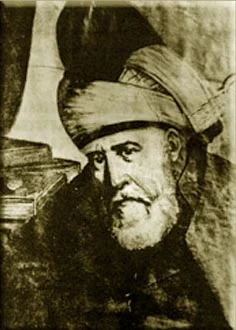
MRMevlana Jalaluddin Rumi
Mawlānā Jalāl ad-Dīn Muḥammad Balkhī, also known as Jalāl ad-Dīn Muḥammad Rūmī, but known to the English-speaking world simply as Rumi, (30 September 1207 – 17 December 1273), was a 13th-century Persian poet, Islamic jurist, theologian, and mystic. Rūmī is a descriptive name meaning "the Roman" since he lived most of his life in an area called Rūm because it was once ruled by the Byzantine Empire. According to tradition, Rumi was born in Balkh, Khorasan (now in Afghanistan), the hometown of his father's family. Scholars, however, argue that he was most likely born in Wakhsh, a small town located at the river Wakhsh in what is now Tajikistan. Wakhsh belonged to the larger province of Balkh, and in the year Rumi was born, his father was an appointed scholar there. Both these cities were at the time included in the Greater Persian cultural sphere of Khorasan, the easternmost province of historical Persia, and were...
162 poezii, 0 proze
 JR
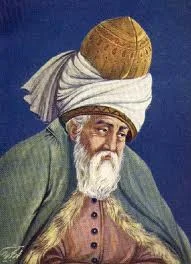
JRJalal ad-Dīn Muhammad Rumi
Jalāl ad-Dīn Muḥammad Balkhī, also known as Jalāl ad-Dīn Muḥammad Rūmī, and popularly known as Mowlānā but known to the English-speaking world simply as Rumi (30 September 1207 – 17 December 1273), was a 13th-century Persian (Tajik) Muslim poet, jurist, theologian, and Sufi mystic. Rūmī is a descriptive name meaning "the Roman" since he lived most of his life in an area called Rūm because it was once ruled by the Eastern Roman Empire. It is likely that he was born in the village of Wakhsh, a small town located at the river Wakhsh in what is now Tajikistan. Wakhsh belonged to the larger province of Balkh, and in the year Rumi was born, his father was an appointed scholar there. Both these cities were at the time included in the greater Persian cultural sphere of Khorasan, the easternmost province of Persia, and were part of the Khwarezmian Empire. Image of the Rumi on an old book in the Mevlâna museum; Konya,...
0 poezii, 0 proze
 GS
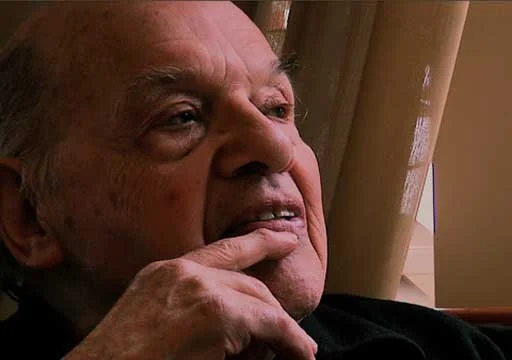
GSGerald Stern
Gerald Stern (born February 22, 1925) is an American poet. Born in Pittsburgh, Pennsylvania, U.S. to Harry and Ida Barach Stern, he was educated in the Pittsburgh Public Schools. Stern earned his B.A. at the University of Pittsburgh in 1947 and an M.A. at Columbia University in 1949. He did post-graduate study at the University of Paris in 1949-50. He married Patricia Miller in 1952 (divorced); they have two children: Rachael and David. His work has been widely recognized after the 1977 publication of Lucky Life and a series of essays on writing poetry in American Poetry Review. He has been given many prestigious awards for his writing, including the 1996 Ruth Lilly Poetry Prize and a National Book Award for poetry in 1998 for his book, This Time: New and Selected Poems. He was Poet Laureate of New Jersey from 2000 to 2002 [1] [2], and received the Wallace Stevens Award from the Academy of American Poets in 2005. Stern has taught at Temple University and Indiana University of...
0 poezii, 0 proze
 KR
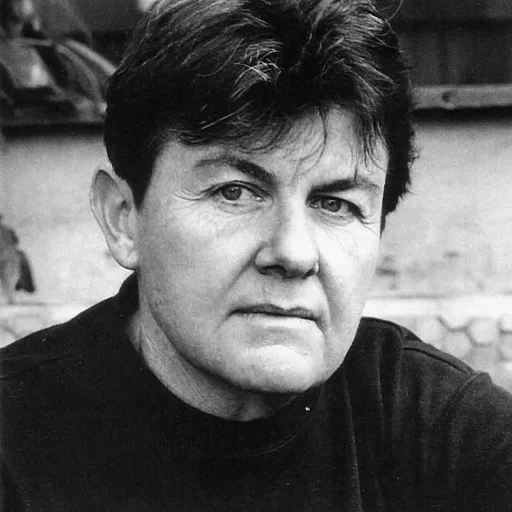
KRKay Ryan
Kay Ryan was born in California in 1945 and grew up in the small towns of the San Joaquin Valley and the Mojave Desert. She received both a bachelor\'s and master\'s degree from UCLA. Ryan has published several collections of poetry, including The Niagara River (Grove Press, 2005); Say Uncle (2000); Elephant Rocks (1996); Flamingo Watching (1994), which was a finalist for both the Lamont Poetry Selection and the Lenore Marshall Prize; Strangely Marked Metal (1985); and Dragon Acts to Dragon Ends (1983). About her work, J. D. McClatchy has said: \"Her poems are compact, exhilarating, strange affairs, like Erik Satie miniatures or Joseph Cornell boxes. She is an anomaly in today\'s literary culture: as intense and elliptical as Dickinson, as buoyant and rueful as Frost.\" Ryan\'s awards include the Ruth Lilly Poetry Prize, a Guggenheim fellowship, an Ingram Merrill Award, a fellowship from the National Endowment for the Arts, the Union League Poetry Prize, the Maurice English Poetry...
6 poezii, 0 proze
 RB
RBRupert Chawner Brooke
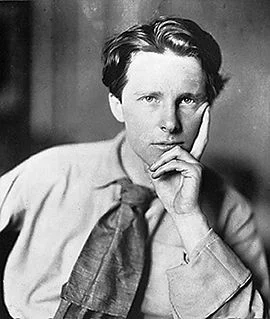
Rupert Chawner Brooke (middle name sometimes given as Chaucer)(3 August 1887–23 April 1915) was an English poet known for his idealistic war sonnets written during the First World War (especially The Soldier); however, he never experienced combat at first hand. He was also known for his boyish good looks, which prompted the Irish poet William Butler Yeats to describe him as \"the handsomest young man in England\". English poet Brooke was born at 5 Hillmorton Road in Rugby, Warwickshire, the second of the three sons of William Parker Brooke, a Rugby schoolmaster, and Ruth Mary Brooke, née Cotterill. He attended Hillbrow Prep School before being educated at Rugby School. While travelling in Europe, he prepared a thesis entitled \"John Webster and the Elizabethan Drama\", which won him a scholarship to King\'s College, Cambridge, where he became a member of the Cambridge Apostles, helped found the Marlowe Society drama club and acted in plays including the Cambridge Greek Play. Brooke...
7 poezii, 0 proze
ruxi zotta
1 poezii, 0 proze
 RC
RCReti Liviu Crinel
60 poezii, 0 proze
Ruti Bron violonista de la Iași
de bianca marcovici
Am asistat la un concert de cameră la Sala "Hecht" din Mercaz HaCarmel, Haifa. De multe ori concertele de la televiziune, postul Mezzo unde urmaresc marele concerte care au loc in lume, opere, balete...
Bravo, Haifei!
de bianca marcovici
Gilles Apap, un violonist complex a fost oaspetele orchestrei simfonice din Haifa. A interpretat concertul meu favorit, Felix Mendelssohn-Bartholdy, concertul pentru vioară în mi minor. După cum cred...
Scrisori întredeschise
de Ada Orleanu
12. IX.1984 București Dragă Domnule Turtureanu, Împrejurările au făcut să amîn expedierea volumului pentru domnul Holban. Așteptam cîteva rînduri de la dumneata, în ce privește articolul din...
Afra – a 2-a variantă
de Georg Trakl
Copil cu părul brun. Blând frig de seară Se-ntunecă de rugi și-amin, și-n ramă De floarea-soarelui, un roșu-n ceară, Surâsul Afrei, sur zăduf și teamă. Monah cu rasă-albastră în acele Vitralii o...
Sir de zile
de ion toma ionescu
Șir de umbre lustruind rugina spinării de bronz a bătrânului cavaler Răni oblojite zile firbinți în tufișuri cu rugi de măceși Durerea vie se scurge prelung ca lumina unui opaiț Se lasă noaptea sub...
brain salad surgery revisited (trepa-nation interventionists international anthem/ imnul internațional al trepanatorilor intervenționiști)
de Bogdan Geana
dacă pământul nu ar fi rotund și nu s-ar roti în continuu, toate râurile care se scurg chiar acum în mare ar da pe dinafară, s-ar produce subit o mare inundație, peștii, care sunt mai mulți decât...
Pe Junta de Andaluzia, spre Caminos de Cómpeta
de Irinel Georgescu
Azi Ovidiu i-a pus lui Pablo Picasso din bronz, la Málaga, țigara sa între buze, pozându-se amândoi pe bancă, un blond c-un negru, tot azi m-a scăpat microbuzul de Málaga, afară, nefiind pe lista...
Introspecție
de George Petrone
Conform unei lucrări pe care-a scos-o Acum un secol și ceva Lambroso, Coroborat cu studii mai recente Ale lui Brown, Giulio Vicente, Savanții ruși Markov, Kasparian Și chiar românul Romulus Baban,...
Nesfârșit de-o iarnă
de Daniel Aurelian Rădulescu
Urme-adânci înfundate-n înnouratul, pudratul de puf, Peste câmpu-n scaieți rari, brun-strâmbii și rupți, Se acoperă-n treacăt de viforul plin de năduf De-un ianuarie crud, repetat nesfârșit, ani de...
Toamna
de Mariana Ichim
O, tu, toamna, de ce plangi? Plangi si-n verde, plangi si-n brun... Plangi si-n ochiul meu nebun... Sufletul mi-l spargi, mi-l frangi... O, tu, toamna, cum mai plangi! Crengile le strangi in pumn......