
"RETOURNER AUX PREMIERS MOTS" – 90 rezultate
0.02 secundeMeilisearch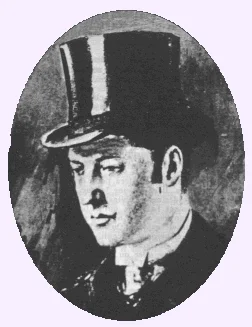 JL
JLJules Laforgue
1860 Naissance, le 16 août, de Jules Laforgue, à Montevideo (Uruguay). Son père, Charles Laforgue, travaille pour une banque française. Il est originaire de Tarbes. Sa mère, née Pauline Lacolley, vient du Havre. Jules est le second fils de la famille. 1866 Mme Laforgue et ses enfants quittent l'Uruguay et s'installent à Tarbes. Em 1867, Mme Laforgue retourne en Amérique du Sud, laissant deux de ses fils, Jules et Émile, aux soins d'un de ses cousins. Les années suivantes sont, pour Jules, occupées par des études médiocres au lycée de Tarbes. 1875 Les parents de Jules viennent s'installer définitivement en France. En 1876, la famille quitte Tarbes et vient habiter Paris. 1877 La mère de Jules Laforgue meurt d'une pneumonie. 1880 Laforgue fait la connaissance de Gustave Kahn, l'un des premiers adeptes du vers libre. C'est l'époque où Laforgue compose ses «poèmes philosophiques», dont quelques-uns sont repris ici dans la section des Premiers poèmes. 1881 Laforgue vit, plutôt mal, de...
7 poezii, 0 proze
Jaime Sabines
Je te veux à aux dix heures du matin Je te veux à aux dix heures du matin, et aux onze, et aux douze du jour. Je te veux avec toute mon âme et avec tout mon corps, parfois, dans les après-midi de pluie. Mais à aux deux heures de l\'après-midi, ou aux trois, quand je me mettes à penser nous deux, et tu penses le repas ou au travail quotidien, ou dans les divertissements que tu n\'as pas, je me mets a te haiser sourdement, avec la moitié de la haine que je garde pour moi. Je retourne ensuite à t’aimer, quand nous nous coucherons et consigne que tu es faite pour moi, d\'une certaine manière me le dissent ton genou et ton ventre, que mes mains me convainquent de cela, et qui il n\'y a pas un autre lieu où je viens, où je vais, mieux que ton corps. Tu viens toute complète à ma rencontre, et les deux nous disparaissons un moment, nous nous mettons dans la bouche de Dieu, jusqu\'à ce que je te dise que j\'ai faim ou sommeil. Tous les jours je te veux et je te haïs irrémédiablement. Et il y a...
0 poezii, 0 proze
 RG
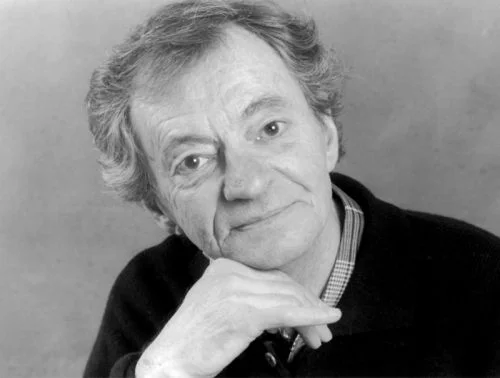
RGRoland Giguère
Né à Montréal en 1929, Roland Giguère étudie la typographie, la gravure et la lithographie à l'École des Arts graphiques de Montréal puis à Paris. Animé par l'amour du livre, il fonde, en 1949, les Éditions Erta, d'où naîtront plusieurs dizaines de beaux ouvrages faits de mots et d'images. Il retourne plusieurs années à Paris puis revient au Québec où il sera maquettiste et professeur en arts graphiques. Au cours de ces années, Roland Giguère publie plusieurs recueils de poèmes. La publication, en 1965, d'une rétrospective de ses poèmes, L'Âge de la parole (1949-1960), marque une étape majeure dans la poésie québécoise, cristallisant les mouvements sourds puis l'effervescence qui animent la société d'alors. Roland Giguère prend place aux côtés de Gaston Miron, de Paul-Marie Lapointe et des poètes de l'Hexagone. Giguère est lu, étudié, célébré; son œuvre est couronnée de nombreux prix. Mais la force créatrice de Roland Giguère se déploie autant dans la dimension de son œuvre dessinée,...
25 poezii, 0 proze
Khalil Gibran
1883 - 1931 Khalil Gibran est né en 1883, à Bécharré, au Liban, dans une très ancienne famille chrétienne; son grand-père maternel était prêtre du rite maronite. En 1894, il émigre avec sa mère à Boston; mais en 1897, il retourne, seul, au Liban, pour faire ses études à l\'École de la Sagesse, à Beyrouth. En 1901, il visite la Grèce, l\'Italie, l\'Espagne puis s\'installe à Paris pour étudier la peinture. C\'est à cet époque qu\'il écrit Les Esprits Rebelles, livre qui fût brûlé sur la place public de Beyrouth, par ordre des autorités turques, et qui fût condamné comme hérétique par l\'évêque maronite. En 1903, Gibran est rappelé en Amérique au chevet de sa mère mourante. Il reste à Boston , où il s\'exerce principalement à la peinture. En 1908, il retourne à Paris, où il travaille à l\'Académie Julien et à l\'École des Beaux-Arts; il fréquente Rodin, Debussy, Maeterlink, Edmond Rostand, etc. En 1910, il s\'installe définitivement à New-York où il se consacre à la peinture et à la...
6 poezii, 0 proze
 KV
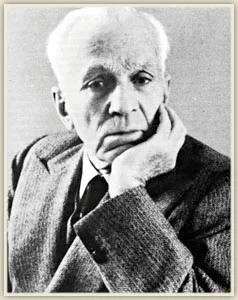
KVKostas Varnalis
Kostas Varnalis (1884-1974) a fost romancier și poet grec. Opera sa include: Lumina care arde (1922) Poemele scalvilor asediați (1927) Adevarata apologie a lui Socrate (1933)(o lucrare în proză) Engleză Kostas Varnalis was a Greece writer and poet of the 20th Century. Varnalis was born on February 14, 1884, in Pyrgos, Eastern Rumelia (now Burgas, Bulgaria). He was educated in Philippoupolis (now Plovdiv) and received a scholarship from the Greek community of Eastern Rumelia to study literature in Athens. In 1909, Varnalis was appointed to a teaching post in Greece. He received a scholarship in 1919 for post-graduate studies in Paris, France. The two years he spent in France changed him radically as a person: Varnalis was deeply moved by the suffering of common people during World War I and greatly influenced by the October Revolution in Russia. He returned to Greece and acquired the label "leftist" which led to dismissal from his teaching post during the Pangalos dictatorship in 1925....
1 poezii, 0 proze
 AB
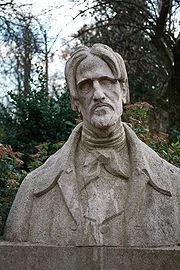
ABAloysius Bertrand
Louis-Jacques-Napoléon “Aloysius” Bertrand (20 April 1807 – 29 April 1841) was a French poet instrumental in the introduction of the prose poem into French literature and is credited with inspiring later Symbolist poets [1]. He wrote a collection of poems entitled Gaspard de la nuit, after which composer Maurice Ravel wrote a suite of the same name, based on the poems "Scarbo", "Ondine", and "Le Gibet". Bertrand was born in Ceva, Piedmont, Italy (then a part of Napoleonic France) and his family settled in Dijon in 1814. There he developed an interest in the Burgundian capital. His contributions to a local paper lead to recognition by Victor Hugo and Sainte-Beuve. He lived in Paris shortly with little success. He returned to Dijon and continued writing for local newspapers. Gaspard was sold in 1836 but it wasn't published until 1842 after his death of tuberculosis. The book was rediscovered by Charles Baudelaire and Stéphane Mallarmé. It is now considered a classic of poetic and...
8 poezii, 0 proze
Thomas Gray
1716–71, English poet. He was educated at Eton and Peterhouse, Cambridge. In 1739 he began a grand tour of the Continent with Horace Walpole. They quarreled in Italy, and Gray returned to England in 1741. He continued his studies at Cambridge, and he remained there for most of his life, living in seclusion, studying Greek, and writing. In 1768 he was made professor of history and modern languages, but he did no real teaching. Although he was reconciled with Walpole, and formed other close relationships in his lifetime, his shy and sensitive disposition was ill adapted to the robust century in which he lived. He was offered the laureateship in 1757 but refused it. His first important poems, written in 1742, include “To Spring,” “On a Distant Prospect of Eton College,” and a sonnet on the death of his close friend Richard West. After years of revision he finished his great “Elegy Written in a Country Churchyard” (1751), a meditative poem presenting thoughts conjured up by the sight of a...
1 poezii, 0 proze
James Joyce
Joyce was born in Dublin, where his father was a rates collector. He was educated at a Jesuit school and University College, Dublin where he studied philosophy and language. When he was still an undergraduate, in 1900, his long review of Ibsen’s last play was published in the Fortnightly Review. At this time he also began writing his poems which were later collected in Chamber Music, published in 1907. In 1902 Joyce left Dublin for Paris, but returned the following year as his mother was dying. From 1904 he lived with Nora Barnacle, whom he married in 1931 (the year his father died), a son was born in 1905, and a daughter in 1918. Their home from 1905 to 1915 was Trieste, where Joyce taught English at the Berlitz school. In 1909 and 1912 he made his final trips to Ireland, attempting to arrange the publication of his first book Dubliners, which finally appeared in England in 1914. It was during this time that he was contacted by Ezra Pound, a leading champion of modernist writers who...
0 poezii, 0 proze
Kurt Weill
Biography Early Years Kurt Weill was born on 2 March 1900 in Dessau, Germany. The son of a cantor, Weill displayed musical talent early on. By the time he was twelve, he was composing and mounting concerts and dramatic works in the hall above his family\'s quarters in the Gemeindehaus. During the First World War, the teenage Weill was conscripted as a substitute accompanist at the Dessau Court Theater. After studying theory and composition with Albert Bing, Kapellmeister of the Theater, Weill enrolled at the Berlin Hochschule für Musik, but found the conservative training and the infrequent lessons with Engelbert Humperdinck too stifling. After a season as conductor of the newly formed municipal theater in Lüdenscheid, he returned to Berlin and was accepted into Ferruccio Busoni\'s master class in composition. He supported himself through a wide range of musical occupations, from playing organ in a synagogue to piano in a Bierkeller, by tutoring students (including Claudio Arrau and...
1 poezii, 0 proze
John Steinbeck
John Steinbeck (1902-1968), born in Salinas, California, came from a family of moderate means. He worked his way through college at Stanford University but never graduated. In 1925 he went to New York, where he tried for a few years to establish himself as a free-lance writer, but he failed and returned to California. After publishing some novels and short stories, Steinbeck first became widely known with Tortilla Flat (1935), a series of humorous stories about Monterey paisanos. Steinbeck's novels can all be classified as social novels dealing with the economic problems of rural labour, but there is also a streak of worship of the soil in his books, which does not always agree with his matter-of-fact sociological approach. After the rough and earthy humour of Tortilla Flat, he moved on to more serious fiction, often aggressive in its social criticism, to In Dubious Battle (1936), which deals with the strikes of the migratory fruit pickers on California plantations. This was followed...
4 poezii, 0 proze
Fragments du chanson de Roland
de Ambasada Frantzei
1.Qu\'en douce France s\'en retourne le roi. Son arriere-garde laissera derriere soi. En sera son neveu, le comte Roland, je crois, Et Olivier, le preux et le courtoix. 2.Ami Roland, sonnez de votre...
Adresa dintr-un vis franțuzesc
de Luna Tudor
Je ne veux plus te retourner le cœur spun jocurile de lumină simplă și albă, visează fasciculele din noi povestite-n cuvinte crează lumi desuete adormite-n pahare din vinul ce gol pe piele îți...
JAMAIS
de Claudiu Virgil Banu
Te surprindeam de cele mai multe ori vorbind despre el și între pauze sorbeai din cafea, câte o gură doar, Cât să nu te țină trează cofeina Să nu mai uiți de cuvintele despre el ! De parcă somnul iți...
Chapelle ruinee
de Emile Nelligan
Et je retourne encor frileux, au jet des bruines, Par les délabrements du parc d\'octobre. Au bout De l\'allée où se voit ce grand Jésus debout, Se massent des soupçons de chapelle en ruines. Je...
Le chat fatal
de Emile Nelligan
Un soir que je fouillais maint tome Y recherchant quelque symptôme De morne idée, un chat fantôme Soudain sur moi sauta, Sauta sur moi de façon telle Que j\'eus depuis en clientèle Des spasmes...
amiciție scumpă
de dumitru cioaca-genuneanu
lui Mahmoud Djamal de la care am împrumutat (și nici gând să i-o mai returnez) ideea la salut al meu amic nu-mi răspunde de trei ani fiindcă-s un om de nimic! (l-am împrumutat cu bani.) morala: c-un...
Nebuni , dar îndrăgostiți
de anda chis
Arunci spre mine idealuri (ești de o impertinență minunată) în schimb eu îti returnez doar vise la sufletul dintâi (sunt de o generozitate infantilă) și-n joaca asta matură dacă ne urcăm pe aceeași...
Sur les Lagunes. Lamento.
de Théophile Gautier
My dear love is dead: I will cry forever; Into the grave she carries My soul and my love. To heaven, without waiting for me She\'s returned; The angel that carried her Did not want to take me. How...
anunț
de Gabriel MOROSANU
anunț ce-am cerut eu și ce-am primit mi s-a livrat una bucată viață fără instrucțiuni de folosire ce dracu’ să fac cu ea mă plictisesc de moarte la figurat vorbind mă duc s-o sinucid la naiba nici...
Fishermen Know Better
de Poietul Gării de Vest
Last nigh I was surrounded by a bluish hue How will the morning look? ...that was the riddle But as the day returned (you seem surprised it's true) The red slashed through the blue.. right in the...