
"Not the first pact" – 2197 rezultate
0.03 secundeMeilisearch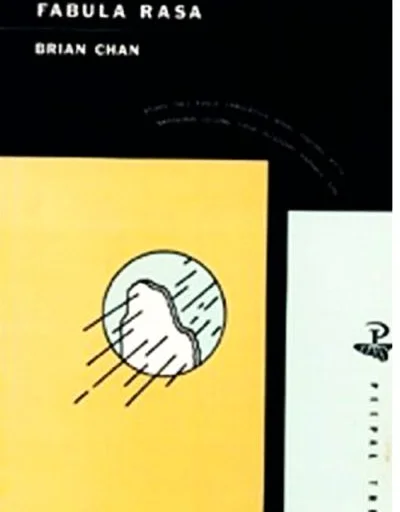 BC
BCBrian Chan
Brian Chan was born in Guyana in 1949. He began to establish a reputation as a poet of talent with his work in Expression in the early 1970s, part of a group that included Janice Lowe (Shinebourne) and N.D. Williams. He had poems published in Caribbean Quarterly, Artrage, and One People’s Grief and is included in the Heinemann anthology of Caribbean poetry. His first collection of poems, Thief With Leaf (1988) won the 1988 Guyana Prize. His work is challenging and experimental, exploring not only experience, but the fictions we create in making sense of experience. He moved to Canada in the 1970s and his poems explore a territory in which Guyanese memories filter into the Canadian present. He currently lives in Edmonton. His second collection of poems, Fabula Rasa, was published in 1994. He is a musician (clarinetist) and accomplished painter.
1 poezii, 0 proze
Radu Contes
The beginning of my childhood was profoundly marked by one of my grandfather’s passions – literature. For him reading, living, the writings of so many did not seem to be enough, so he began writing his own stories that still echo in my memory and in my heart. I remember that one day I went to him and asked “What are you writing about?”. Looking at me for only a second and returning his eyes at the ink stained notebook he answered: “My life”. Regretful, I confess that that was the last dialogue we had. After that I began reading, reading everything he was writing. Two years after his death, I had met someone who changed everything. I stopped reading and began writing myself. It was such a new feeling. It seemed to be never ending. It still feels. Since the first time, you may think I am exaggerating, but it really was the first time I saw her when I felt this sudden urge of writing. Words like “Thank you” seem meaningless compared to the things that you have done for me.
2 poezii, 0 proze
Phoebe Pratten
Phoebe Pratten was born in Canberra Australia in 1975. At the age of three, she was diagnosed with Peripheral Neuropathy. By 14 she was not able to walk anymore, as the disease affected the muscles. At the same time she couldn\'t make use of her hands or her arms, so she needed to find different ways of holding the pen. Her interests include art, alternative health and writing poetry. The first collection of poetry \"Layers of Silence\" was published in 1999.
1 poezii, 0 proze
 EM
EMEdwin Morgan
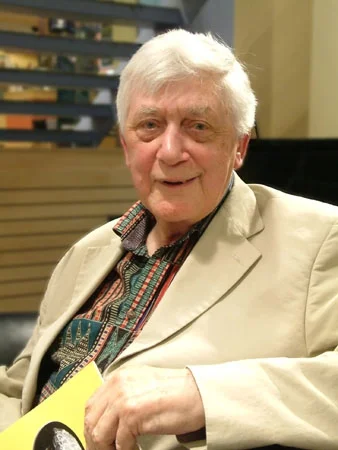
Edwin George Morgan OBE (born 27 April 1920) is a Scottish poet and translator who is associated with the Scottish Renaissance. He is widely recognised as one of the foremost Scottish poets of the 20th century. In 1999, Morgan was made the first Glasgow Poet Laureate. In 2004, he was named as the first Scottish national poet: The Scots Makar. Morgan was born in Glasgow and grew up in Rutherglen. He entered the University of Glasgow in 1937 and, after interrupting his studies to serve in World War II as a non-combatant conscientious objector with the Royal Army Medical Corps, graduated in 1947 and became a lecturer at the University. He worked there until his retirement in 1980. He came out as gay in Nothing Not Giving Messages: Reflections on his Work and Life , but explored his sexuality in many previous works.[1] He had written many famous love poems, among them "Strawberries" and "The Unspoken", in which the love object was not gendered; this was partly because of legal problems at...
1 poezii, 0 proze
 ÉG
ÉGÉdouard Glissant
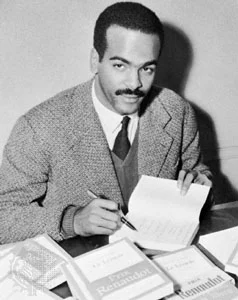
Edouard Glissant (born in Sainte-Marie, Martinique in 1928) is a French writer, poet and literary critic. He is widely recognised as being one of the most influential figures in Caribbean thought and cultural commentary. He studied at the Lycée Schoelcher, named after the abolitionist Victor Schoelcher, where the poet Aimé Césaire had studied and had come back to as a teacher. Césaire had met Léon Damas there; later in Paris they would join with Léopold Senghor, a poet and the future first president of Senegal, to formulate and promote the conecpt of négritude. Césaire did not teach Glissant, but did serve as an inspiration to him; another student at the school at that time was Franz Fanon. Glissant left Martinique in 1946 for Paris, where he received his PhD, having studied ethnography at the Musée de l'Homme and History and philosophy at the Sorbonne. He established, with Paul Niger, the separatist Front Antillo-Guyanais pour l'Autonomie party in 1959, as a result of which Charles...
16 poezii, 0 proze
 AA
AAAnda Amir-Pinkerfeld
Scriitoare din Israel - născută 1902 - decedată 1981 Anda Pinkerfeld-Amir was born to an anti-Zionist family in Poland but became a committed Zionist who immigrated to Israel as a member of Ha-Shomer ha-Za'ir, abandoning her goal of writing in Polish to become instead a beloved writer of Hebrew poetry and children's literature. Anda Pinkerfeld was born in Rzeszow, Poland on June 26, 1902. Her father Joel Pinkerfeld, who served as an officer in the Polish army, was an architect who designed buildings in Galicia. Her family was assimilated and cultured; as anti-Zionists, they did not believe in the necessity of Hebrew or Jewish education. Anda wrote her first work in Polish, a prayer for the emancipation of Poland, when she was seven years old and published her first volume of Polish poetry (Pie’sni Zycia, Song of Life, 1921) when she was eighteen. In the wake of antisemitic pogroms in Lvov, Anda came under the sway of Ha-Shomer ha-Za’ir while a student at a Polish gymnasia and switched...
0 poezii, 0 proze
 YY
YYYevgeny Yevtushenko
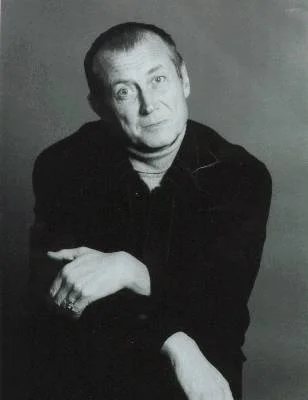
Yevgeny Yevtushenko Best known poet of the post-Stalin generation of Russian poets, Yevtushenko\'s early poems show the influence of Mayakovsky and loyalty to communism, but with such works as The Third Snow (1955) Yevtushenko become a spokesman for the young post-Stalin generation and travelled abroad widely throughout the Khrushchev and the Brezhnev periods. Yevtushenko was born in Zima in Irkutsk (July 18, 1933) as a fourth-generation descendant of Ukrainians exiled to Siberia. He moved to Moscow in 1944, where he studied at the Gorky Institute of Literature from 1951 to 1954. In 1948 he accompanied his father on geological expeditions to Kazakhstan and to Altai in 1950. His first important narrative poem Zima Junction was published in 1956 but gained international fame in 1961 with Babi Yar, in which he denounced Nazi and Russian anti-Semitism. The poem was not published in Russia until 1984, althoug it was frequently recited in both Russia and abroad. The Heirs of Stalin (1961),...
0 poezii, 0 proze
paulo coelho
Paulo Coelho was born in 1947 into a middle-class family, the son of Pedro, an engineer, and Lygia, a housewife. At seven, he entered the Jesuit school of San Ignacio in Rio de Janeiro. Paulo came to detest the obligatory nature of religious practice. However, although he hated praying and going to mass, there were compensations. In the school\'s austere corridors, Paulo discovered his true vocation: to be a writer. He won his first literary prize in a school poetry competition, and his sister, Sonia, recounts how she won an essay prize by entering something that Paulo had discarded in the wastepaper bin. \"Paulo Coelho is not only one of the most widely read, but also one the most influential authors writing today,\" wrote the Bambi awards in Germany. \"His books have had a life-enhancing impact on millions of people\" wrote The Times in UK. To date a sum of 280 translations in 59 languages have been published with sales totalling almost 56 million copies in 150 countries. For 15...
0 poezii, 0 proze
 SM
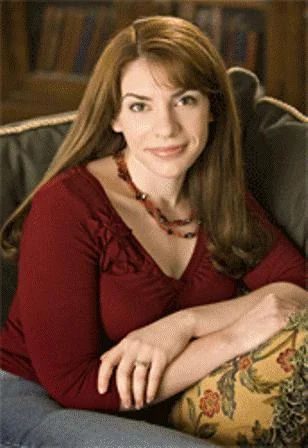
SMStephenie Meyer
Stephenie Meyer\'s life changed dramatically on June 2, 2003. The stay-at-home mother of three young sons woke up from a dream featuring seemingly real characters that she could not get out of her head. \"Though I had a million things to do, I stayed in bed, thinking about the dream. Unwillingly, I eventually got up and did the immediate necessities, and then put everything that I possibly could on the back burner and sat down at the computer to write—something I hadn\'t done in so long that I wondered why I was bothering.\" Meyer invented the plot during the day through swim lessons and potty training, and wrote it out late at night when the house was quiet. Three months later she finished her first novel, Twilight. With encouragement from her older sister (the only other person who knew she had written a book), Meyer submitted her manuscript to various literary agencies. Twilight was picked out of a slush pile at Writer\'s House and eventually made its way to the publishing...
12 poezii, 0 proze
 WD
WDWilliam Diehl
William Diehl (December 4, 1924 – November 24, 2006) was an American novelist and photojournalist. Diehl was fifty years old and already a successful photographer and journalist when he decided he had not heeded his life calling. The day after his 50th birthday he began his first novel, Sharky's Machine, which was made into a movie directed by and starring Burt Reynolds. Diehl later completed eight more novels, including Primal Fear, which became a movie by the same name starring Richard Gere and Edward Norton. Diehl died at Emory University Hospital in Atlanta, Georgia on November 24, 2006, of an aortic aneurism. He was a resident of Woodstock, Georgia at the time of his death and was working on his tenth novel. Bibliography Sharky's Machine (1978) Chameleon (1981) Hooligans (1984) Thai Horse (1987) 27 (1990) The Hunt [aka 27] (1990) Primal Fear (1992)† Show Of Evil (1995)† Reign in Hell (1997)† Eureka (2002)
3 poezii, 0 proze
Not the first pact
de Traian Rotărescu
„Poate e din păr de șinșilă” O, da, în definitiv ce știu eu? Trecând de la finul material croșetat care înfășoară (mai degrabă expune) nuditatea unei poze erotice, Din anul al cărui sfârșit se...
la camera de gardă (3)
de Petru Teodor
Scriu la granița de după. Fără putință de-a te ascunde într-o carcasă, fără putință de tăgadă... Pielea ta e un blestem, neputințele tale sunt un blestem, moartea este înscrisă între dalele de...
The Last Question
de Isaac Asimov
The last question was asked for the first time, half in jest, on May 21, 2061, at a time when humanity first stepped into the light. The question came about as a result of a five-dollar bet over...
The Apocalyptic Subculture of a Woman\'s Man
de Ohm
Where can I begin? Where will it end? Well, either in the year 2003 or the year 2006, most likely the latter. The remaining timeline grows thinner as the world grows fatter. It doesn\'t matter,...
The Poems of Sappho Part I
de Sappho
The Poetry of Sappho: Introduction By J.B Hare Imagine that two millenia or so in the future, literary experts attempt to collect the glories of our literature. Most of our paper writings have...
PARADISE LOST -- Book I
de John Milton
Book I Of Man\'s first disobedience, and the fruit Of that forbidden tree whose mortal taste Brought death into the World, and all our woe, With loss of Eden, till one greater Man Restore us, and...
Ash Wednesday
de T.S. Eliot
I Because I do not hope to turn again Because I do not hope Because I do not hope to turn Desiring this man\'s gift and that man\'s scope I no longer strive to strive towards such things (Why should...
Dialogue Between a Priest and a Dying Man (1782)
de Donatien Alphonse François, marquis de Sade
PRIEST - Come to this the fatal hour when at last from the eyes of deluded man the scales must fall away, and be shown the cruel picture of his errors and his vices - say, my son, do you not repent...
Interview with Enrique Iglesias
de A.M. Rika
Enrique Iglesias reaches for the stars with his feet on the ground Enrique Iglesias is the boy next door, someone who grew up doing things quietly, but effectively. Dreaming of becoming a pop star...
Davinci
de bataus cati georgiana
Leonardo da Vinci (1452 - 1519) Leonardo da Vinci was the embodiment of the Renaissance ideal of the universal man, the first artist to attain complete mastery over all branches of art. He was a...