
"March 8th" – 6073 rezultate
0.01 secundeMeilisearch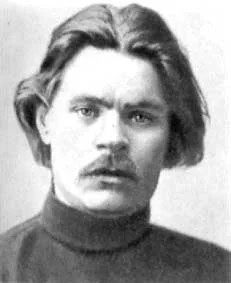 MG
MGMaxim Gorki
[[en]] * Born: 16 March 1868 * Birthplace: Nizhny Novgorod (now Gorky), Russia * Death: June 1936 * Best Known As: Russian writer known for his socialist realism Name at birth: Aleksey Maksimovich Peshkov Maxim Gorky (also spelled Maksim Gorki) is one of the giants of 20th century Russian literature and theater, known for his realistic depictions of how terrible it is to be poor and oppressed. Gorky himself grew up in rough times and was a lifelong spokesperson for the underclass. His political activism led to several years of exile, in spite of his popularity with Russian readers. By 1900 Gorky was a famous literary figure, thanks in part to help from Anton Chekhov. His short stories and his first novel, Foma Gordeyev (1902) gave him notoriety as well as critical success, but his outspoken opposition to the rule of Nicholas II led to his exile to the island of Capri (1907-13). After the 1917 revolution Gorky's criticism of his friend V. I. Lenin and the Bolsheviks led to another...
2 poezii, 0 proze
 MA
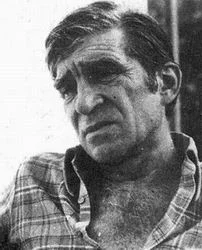
MAMiroslav Antici
Miroslav "Mika" Antiæ (March 14, 1932 – June 24, 1986) was a Serbian poet, journalist and painter. Antiæ was born in Mokrin, Vojvodina, Serbia (then Yugoslavia). He wrote poems, articles, dramas, movie and TV scripts and documentaries. Mika also acted in several movies, and was an amateur painter. His best known poem is "Srem", in which he mourns for dead in World War II and describes the beauty of Srem using "beæarac" song form. He is well known as a bohemian. Mika Antiæ is best known as a children and youth poet, a master of delicate and gentle sentiments. His bohemian, hard-drinking lifestyle is best illustrated by a barely translatable pun about him: "Èika Jova deci, èika Mika Antiæ dva deci" "Èika Jova deci" meaning "Mister Jova to the children", referring to Jovan Jovanoviæ Zmaj, a known children's poet. "Èika Mika Antiæ dva deci" means "Mister Mika Antiæ two deciliters", referring to drinking from a glass, likely of alcohol.
1 poezii, 0 proze
 JS
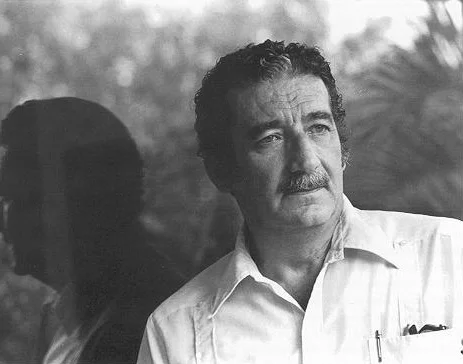
JSJaime Sabines
Jaime Sabines Gutiérrez (March 25, 1926 - March 19, 1999) is arguably Mexico's most influential contemporary poet. Known as “the sniper of Literature” as he formed part of a group that transformed literature into reality, he wrote ten volumes of poetry, and his work has been translated into more than twelve languages. His writings chronicle the experience of everyday people in places such as the street, hospital, and playground. Sabines was also a politician. Jaime Sabines was born on March 25, 1926 in Tuxtla Gutiérrez, Chiapas. Before he devoted himself to the study of literature, he spent three years studying medicine before moving on to his real vocation: Spanish and literature, studying at the Universidad Nacional Autónoma de México (UNAM), and obtaining a postgraduate degree. Sabines was an outstanding student at the Mexican Writers Centre from 1964 to 1965 and part of the jury for the Casa de las Americas prize. In addition to his literary activity, he participated in politics...
8 poezii, 0 proze
 GS
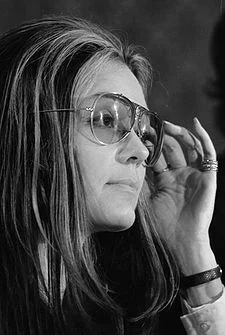
GSGloria Steinem
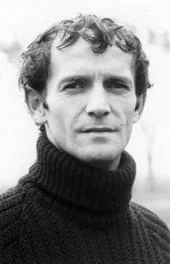
Gloria Marie Steinem (born March 25, 1934) is an American feminist icon, journalist, and social and political activist. Rising to national prominence as a feminist leader in 1969, Steinem was a founder of New York magazine in the 1960s and broke ground in 1963 with an investigative report of how the women of Playboy were treated. In the 1970s she became a leading political leader and one of the most important heads of the second-wave feminism, the women's rights movement of the 1960s and 1970s. In 1971, Steinem, along with other feminist leaders (including Betty Friedan, Fannie Lou Hamer, Myrlie Evers, and U.S. Representatives Shirley Chisholm and Bella Abzug) founded the National Women's Political Caucus. An influential co-convener of the Caucus, she delivered her memorable "Address to the Women of America." The next year Steinem became the founding editor and publisher of Ms. magazine, which brought feminist issues to the forefront and became the movement's most influential...
2 poezii, 0 proze
 GD
GDGeorges Dor
Georges Dor (March 10, 1931 - July 24, 2001) (born Georges-Henri Dore) was a Québécois author, composer, playwright, singer, poet, translator, and theatrical producer and director. Born in Drummondville, Dor undertook a career in radio as a disk jockey and news director. He worked for Radio-Canada, the national Canadian broadcaster, where he became a director for the Evening News. He wrote poems for many years, but in 1964 he was encouraged by friends to compete in an amateur singing competition. He began singing professionally in early 1965, and released his first album in 1966. One of the songs from this album, his composition "La Manic", whose lyrics were a love letter written by a construction worker on the Manicouagan power project, became the most successful record ever by a Quebec chansonnier. He continued to perform as a singer until 1972, and to record until 1978. After that he worked mainly in the theatre and in television, producing and writing plays and téléromans. He also...
3 poezii, 0 proze
 US
USUmberto Saba
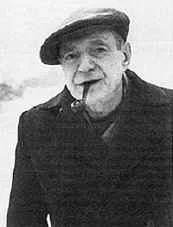
Umberto Saba (9 March 1883 - 26 August 1957) was the pseudonym of Italian poet and novelist Umberto Poli. His creative work was hampered by a life-long struggle with mental illness. Saba was born in Trieste, then a part of the Austro-Hungarian Empire. He had Italian citizenship through his father. His mother was Jewish. His father abandoned the family before Umberto was born, and his mother employed a Slovene nanny, Peppa Sabaz, to raise him. He became very attached to her, and revered her memory in his poetry. From 1903-1904, he attended the University of Pisa, where he studied archaeology, German, and Latin. In was in this period that he began to complain of a nervous disorder, which was to become more severe with time. Quitting school, Saba worked for a time as an apprentice and was a cabin-boy on a merchant ship. From 1907-1908 he served in the military in Salerno. He married Carolina Wölfler in 1909, and they had a daughter, Lina, the following year. By 1928, Saba was suffering...
4 poezii, 0 proze
 SL
SLStanis³aw Jerzy Lec
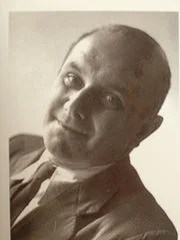
Stanis³aw Jerzy Lec (6 March 1909 – 7 May 1966) (born Baron Stanis³aw Jerzy de Tusch-Letz) was a Polish poet and aphorist of Polish and Jewish noble origin. Often mentioned among the greatest writers of post-WW2 Poland, he was one of the most influential aphorists on the 20th century. Lyrical poetry, sceptical philosophical-moral aphorisms, often with a political subtext. He was born on March 6, 1909 in Lviv (then Lemberg, Austro-Hungarian Empire), the son of the Baron Benon de Tusch-Letz and Adela Safrin. The family moved to Vienna at the onset of First World War, and Lec' early education was received there. After the war the family returned to Lviv-Lemberg to continue his schooling at the Lemberg Evangelical School. In 1927 he matriculated at the Lviv's Jan Kazimir University in jurisprudence and Polish. As a result of his political activities — writing articles for socialist revolutionary periodicals, making speeches in the Technological Institute’s Yellow Hall — Lec had to leave...
1 poezii, 0 proze
 AS
ASAnna Sewell
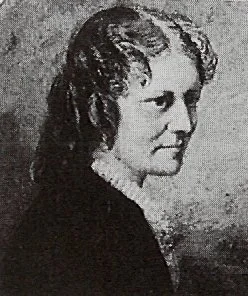
Anna Sewell (30 March 1820 – 25 April 1878) was an English novelist, best known as the author of the classic novel Black Beauty. Anna Mary Sewell was born in Great Yarmouth, Norfolk, England into a devoutly Quaker family. Her father was Isaac Phillip Sewell (1793-1879), and her mother, Mary Wright Sewell (1798 - 1884) was a successful author of children's books. Anna Sewell had one sibling, a younger brother named Philip Sewell. Anna Sewell was largely educated at home. When Anna was twelve years old, the family moved to Stoke Newington, where Sewell attended school for the first time. Two years later, however, she slipped while walking home from school and severely injured both of her ankles. Her father took a job in Brighton in 1836, partly in the hope that the climate there would help to cure her. Despite this, and most likely because of mistreatment of her injury, for the rest of her life Anna was unable to stand without a crutch or to walk for any length of time. For greater...
5 poezii, 0 proze
 EB
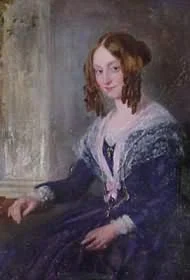
EBElizabeth Barrett Browning
Elizabeth Barrett Browning (6 March 1806 – 29 June 1861) was one of the most prominent poets of the Victorian era. Her poetry was widely popular in both England and the United States during her lifetime.[1] A collection of her last poems was published by her husband, Robert Browning, shortly after her death. Works/Collections 1820: The Battle of Marathon: A Poem. Privately printed 1826: A Essay On Mind, with Other Poems. London: James Duncan 1833: Prometheus Bound, Translated from the Greek of Aeschylus,and Miscellaneous Poems. London: A.J. Valpy 1838: The Seraphim, and Other Poems. London: Saunders and Otley 1844: Poems (UK) / A Drama of Exile, and other Poems (US). London: Edward Moxon. New York: Henry G. Langley 1850: Poems ("New Edition", 2 vols.) Revision of 1844 edition adding Sonnets from the Portuguese and others. London: Chapman & Hall 1851: Casa Guidi Windows. London: Chapman & Hall 1853: Poems (3d ed.). London: Chapman & Hall 1854: Two Poems: "A Plea for the Ragged Schools...
1 poezii, 0 proze
 GA
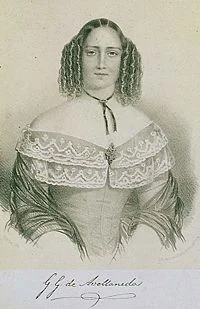
GAGertrudis Gómez de Avellaneda
Gertrudis Gómez de Avellaneda y Arteaga (March 23, 1814-February 1, 1873) was a Cuban writer of the 19th century. Born: March 23, 1814 Puerto Príncipe (modern day Camaguey), Cuba Died: February 1, 1873; Madrid, Spain Nationality Cuban Gertrudis Gómez de Avellaneda y Arteaga, widely known as la Avellaneda, was born in Puerto Príncipe (modern day Camaguey), Cuba. She came from a noble background; her father, Manuel Gomez de Avellaneda, was a descendent of the royal family of Navarre and aristocracy of Vizcaya of Spain, and also a commander of the Spanish navy in charge of the central regions of Cuba. Her mother, Francisca de Arteaga y Betancourt, was also from a wealthy Spanish family that had lived in Puerto Príncipe. It is said that her mother’s family is the one that inspired the family in her first novel, Sab. As a child la Avellaneda was not interested in feminine materials. She was given a tutor and soon became engulfed in the books she was given to read. Her mother tried...
0 poezii, 0 proze
death in march
de Leonard Ancuta
uneori simt că dragostea noastră îngheață ca lumina lunii pe firele de iarbă cînd încă nu s-a așezat primăvara cînd viața încă se ascunde în muguri cînd există o libertate mai puternică decît moartea...
Heresy
de Dragos Angelescu
We walk this path of beaten stone For ever feeling more alone Under the eyes of gods we march In step, Following a thousand hearts of rithm Slaves of a will We've never been aware of. We march, our...
Magdalen Walks
de Oscar Wilde
The little white clouds are racing over the sky, And the fields are strewn with the gold of the flower of March, The daffodil breaks under foot, and the tasselled larch Sways and swings as the thrush...
Zăpadă în buzunare
de Serban Codrin
Vă aduc iată umplute cu zăpadă buzunarele Vă aduc iată umplute cu zăpadă buzunarele – clinchetul poleiului în plopii încremeniți Clinchetul poleiului în plopii încremeniți – cel dintâi crivăț - din...
At the mother's cross A face of an angel of childhood
de Laurențiu Nelu Rădoi
- - - - - - - - - - - - - - - - - - - - - - - - - Under the acacias bathed in dead winter's frost, Driven in the wheel of life by a windy March, The moon rises warm, but it's so far away The too...
1/10
de alex bâcu
încă mai păstram în cerul gurii degradeuri gustative ale apelor saline cu scoici și cafea la mitocanu’ un fel de eclipse parțiale ale papilarului tu le botezai vulgar lacrimi, eu n-aveam nici un chef...
Poetul José Hierro – un Lucian Blaga al provinciei Cantabria (Spania)
de Andrei Langa
Cantabrian prin adopție, José Hierro s-a născut în anul 1922 la Madrid și a avut un dublu debut literar, consemnat în 1947, cu plachetele de versuri „Tierra de nosotros” și „Alegria”, pentru ultimul...
ANTHEM
de Leonard Cohen
The birds they sang at the break of day Start again I heard them say Don’t dwell on what has passed away Or what is yet to be. The wars they will be fought again The holy dove be caught again Bought...
Earth\'s Immortalities
de Robert Browning
FAME. See, as the prettiest graves will do in time, Our poet\'s wants the freshness of its prime; Spite of the sexton\'s browsing horse, the sods Have struggled through its binding osier rods;...
double trouble sunday jazz
de Ela Victoria Luca
aș spune că eram o arhitectură sonoră instrumente bizare și dezacorduri în mintea dominată de îndoieli până când seara s-a retras în aerul dintre noi și sângele a inundat scena cu dezamăgire nu de...