
"First Party at Ken Kasey\'s with Hell\'s Angels" – 690 rezultate
0.02 secundeMeilisearch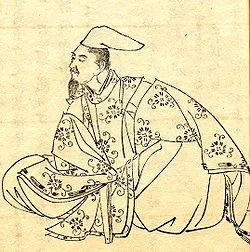 KT
KTKi No Tsurayuki
Poet (waka) japonez din era Heian. A trăit (probabil) între anii 872 și 945. *** Ki no Tsurayuki (872-945) was a Japanese author, poet and courtier of the Heian period. Tsurayuki was a son of Ki no Mochiyuki. He became a waka poet in the 890s. In 905, under the order of Emperor Daigo, he was one of four poets selected to compile the Kokin Wakashū, an anthology of poetry. After holding a few offices in Kyoto, he was appointed the provincial governor of Tosa province and stayed there from 930 until 935. Later he was presumably appointed the provincial governor of Suo province, since it was recorded that he held a waka party (Utaai) at his home in Suo. He is well-known for his waka and is counted as one of the Thirty-six Poetry Immortals selected by Fujiwara no Kinto. He was also known as one of the editors of the Kokin Wakashū. Tsurayuki wrote one of two prefaces to Kokin Wakashū; the other is in Chinese. His preface was the first critical essay on waka. He wrote of its...
1 poezii, 0 proze
 KI
KIKeiko Imaoka
Beginner\'s Mind (Keiko Imaoka - Tucson, Arizona) I cannot be sure when I first became aware of haiku and tanka in my childhood in Japan. They seemed to have existed for a long time in the perimeter of my awareness, undifferentiated from proverbs, mottoes, aphorisms, and song lyrics that were phrased in similar forms. Sometime during my grade school years, \"Ogura Hyakunin-Isshu\" (\"Ogura Collection of One Hundred Tanka\", edited by Teika Fujiwara around 1235) became known to me as a New Year\'s card game, in which players compete to capture shimonoku cards (100 cards on each of which the last half of a verse is printed, spread out on the floor in front of the players) that finish the verses being read aloud. At abacus school, where we played this game at every new year\'s party, my prowess in the game improved dramatically when I was in the sixth grade, after I had memorized all the poems with my tenth-grade sister who was required to do so in her archaic grammar course in school. I...
1 poezii, 0 proze
 ÉG
ÉGÉdouard Glissant
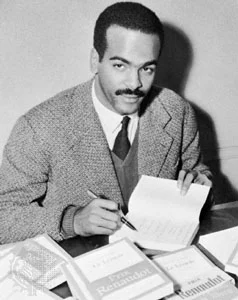
Edouard Glissant (born in Sainte-Marie, Martinique in 1928) is a French writer, poet and literary critic. He is widely recognised as being one of the most influential figures in Caribbean thought and cultural commentary. He studied at the Lycée Schoelcher, named after the abolitionist Victor Schoelcher, where the poet Aimé Césaire had studied and had come back to as a teacher. Césaire had met Léon Damas there; later in Paris they would join with Léopold Senghor, a poet and the future first president of Senegal, to formulate and promote the conecpt of négritude. Césaire did not teach Glissant, but did serve as an inspiration to him; another student at the school at that time was Franz Fanon. Glissant left Martinique in 1946 for Paris, where he received his PhD, having studied ethnography at the Musée de l'Homme and History and philosophy at the Sorbonne. He established, with Paul Niger, the separatist Front Antillo-Guyanais pour l'Autonomie party in 1959, as a result of which Charles...
16 poezii, 0 proze
 MG
MGMaxim Gorki
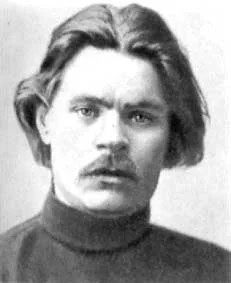
[[en]] * Born: 16 March 1868 * Birthplace: Nizhny Novgorod (now Gorky), Russia * Death: June 1936 * Best Known As: Russian writer known for his socialist realism Name at birth: Aleksey Maksimovich Peshkov Maxim Gorky (also spelled Maksim Gorki) is one of the giants of 20th century Russian literature and theater, known for his realistic depictions of how terrible it is to be poor and oppressed. Gorky himself grew up in rough times and was a lifelong spokesperson for the underclass. His political activism led to several years of exile, in spite of his popularity with Russian readers. By 1900 Gorky was a famous literary figure, thanks in part to help from Anton Chekhov. His short stories and his first novel, Foma Gordeyev (1902) gave him notoriety as well as critical success, but his outspoken opposition to the rule of Nicholas II led to his exile to the island of Capri (1907-13). After the 1917 revolution Gorky's criticism of his friend V. I. Lenin and the Bolsheviks led to another...
2 poezii, 0 proze
Jelaluddin Rumi
RUMI Rumi is one of the most read and well known poets in the world. Jelaluddin Rumi was born in the Eastern part of the Ancient Persian Empire near Balkh (presently Afghanistan), on September 30, 1207. His first name literally means Majesty of Religion, Jalal means majesty and din means religion. Because of the threat of Mongol invasion in Persia his family fled, finally settling in Konya, Turkey. He passed away, on December 17, 1273. His shrine is in Konya. As a genius theologian, a brilliant scholar, and a pillar of Islam, he followed in his father place until his spiritual friend and teacher, Shams of Tabriz appeared in his life. Rumi underwent a spiritual transformation in 1244 after meeting Shams. With appearance of Shams, Rumi became reborn and soon started his marvelous work \"Masnavi,\" (Mathnawi) consisting of 24,000 verses at age 38. His other famous work is \"Divan-e Shams-e Tabriz\" (the collective poems of Shams of Tabriz). Rumi\'s poetry has a mystic connotation, a...
0 poezii, 0 proze
Jelaluddin Rumi
RUMI Rumi is one of the most read and well known poets in the world. Jelaluddin Rumi was born in the Eastern part of the Ancient Persian Empire near Balkh (presently Afghanistan), on September 30, 1207. His first name literally means Majesty of Religion, Jalal means majesty and din means religion. Because of the threat of Mongol invasion in Persia his family fled, finally settling in Konya, Turkey. He passed away, on December 17, 1273. His shrine is in Konya. As a genius theologian, a brilliant scholar, and a pillar of Islam, he followed in his father place until his spiritual friend and teacher, Shams of Tabriz appeared in his life. Rumi underwent a spiritual transformation in 1244 after meeting Shams. With appearance of Shams, Rumi became reborn and soon started his marvelous work \"Masnavi,\" (Mathnawi) consisting of 24,000 verses at age 38. His other famous work is \"Divan-e Shams-e Tabriz\" (the collective poems of Shams of Tabriz). Rumi\'s poetry has a mystic connotation, a...
0 poezii, 0 proze
 JR
JRJelaluddin Rumi
RUMI Rumi is one of the most read and well known poets in the world. Jelaluddin Rumi was born in the Eastern part of the Ancient Persian Empire near Balkh (presently Afghanistan), on September 30, 1207. His first name literally means Majesty of Religion, Jalal means majesty and din means religion. Because of the threat of Mongol invasion in Persia his family fled, finally settling in Konya, Turkey. He passed away, on December 17, 1273. His shrine is in Konya. As a genius theologian, a brilliant scholar, and a pillar of Islam, he followed in his father place until his spiritual friend and teacher, Shams of Tabriz appeared in his life. Rumi underwent a spiritual transformation in 1244 after meeting Shams. With appearance of Shams, Rumi became reborn and soon started his marvelous work \"Masnavi,\" (Mathnawi) consisting of 24,000 verses at age 38. His other famous work is \"Divan-e Shams-e Tabriz\" (the collective poems of Shams of Tabriz). Rumi\'s poetry has a mystic connotation, a...
13 poezii, 0 proze
 VH
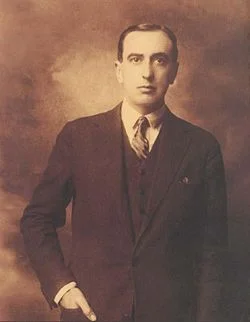
VHVicente Huidobro
Vicente García-Huidobro Fernández (January 10, 1893 – January 2, 1948) was a Chilean poet born to an aristocratic family. He was an exponent of the artistic movement called Creacionismo ("Creationism"), which held that a poet should bring life to the things he or she writes about, rather than just describe them. Huidobro was born into a wealthy family in Santiago. After spending his first years in Europe, he enrolled in a Jesuit secondary school in Santiago where he was expelled for using a ring, which he claimed, was for marriage. He studied literature at the University of Chile and published Ecos del alma (Soul's Echoes) in 1911, a work with modernist tendencies. The following year he married, and started to edit the journal Musa Joven (Young Muse), where part of his later book, Canciones en la noche (Songs in the Night) appeared, as well as his first calligram, "Triángulo armónico" ("Harmonic Triangle"). In 1913, along with Carlos Díaz Loyola, he edited the three issues of the...
4 poezii, 0 proze
 EM
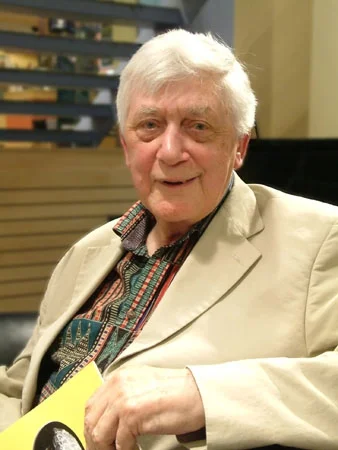
EMEdwin Morgan
Edwin George Morgan OBE (born 27 April 1920) is a Scottish poet and translator who is associated with the Scottish Renaissance. He is widely recognised as one of the foremost Scottish poets of the 20th century. In 1999, Morgan was made the first Glasgow Poet Laureate. In 2004, he was named as the first Scottish national poet: The Scots Makar. Morgan was born in Glasgow and grew up in Rutherglen. He entered the University of Glasgow in 1937 and, after interrupting his studies to serve in World War II as a non-combatant conscientious objector with the Royal Army Medical Corps, graduated in 1947 and became a lecturer at the University. He worked there until his retirement in 1980. He came out as gay in Nothing Not Giving Messages: Reflections on his Work and Life , but explored his sexuality in many previous works.[1] He had written many famous love poems, among them "Strawberries" and "The Unspoken", in which the love object was not gendered; this was partly because of legal problems at...
1 poezii, 0 proze
 AS
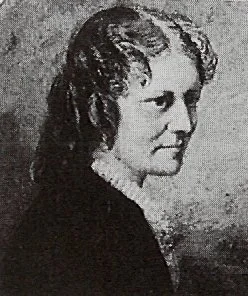
ASAnna Sewell
Anna Sewell (30 March 1820 – 25 April 1878) was an English novelist, best known as the author of the classic novel Black Beauty. Anna Mary Sewell was born in Great Yarmouth, Norfolk, England into a devoutly Quaker family. Her father was Isaac Phillip Sewell (1793-1879), and her mother, Mary Wright Sewell (1798 - 1884) was a successful author of children's books. Anna Sewell had one sibling, a younger brother named Philip Sewell. Anna Sewell was largely educated at home. When Anna was twelve years old, the family moved to Stoke Newington, where Sewell attended school for the first time. Two years later, however, she slipped while walking home from school and severely injured both of her ankles. Her father took a job in Brighton in 1836, partly in the hope that the climate there would help to cure her. Despite this, and most likely because of mistreatment of her injury, for the rest of her life Anna was unable to stand without a crutch or to walk for any length of time. For greater...
5 poezii, 0 proze
The Rime of the Ancient Mariner
de Samuel Taylor Coleridge
PART THE FIRST. It is an ancient Mariner, And he stoppeth one of three. “By thy long grey beard and glittering eye, Now wherefore stopp’st thou me?” “The Bridegroom’s doors are opened wide, And I am...
Legs
de Maria Lazar
Surreal legs that kept me upright and got me as far as here, How have I unconsidered your pains and fears. Walking surely was the easiest, but the unknown charted places like the very first party...
Hamlet
de William Shakespeare
HAMLET DRAMATIS PERSONAE (PAGINA 4) ACT II SCENE I A room in POLONIUS\' house. [Enter POLONIUS and REYNALDO] LORD POLONIUS Give him this money and these notes, Reynaldo. REYNALDO I will, my lord....
Simpozionul internațional despre avangardă: București-Zurich-Paris-Tel Aviv: Romanian and Jewish Avant-gardists in the Romanian Cultural Milieu; București, 26-27 mai
de marlena braester
Ca urmare a succesului simpozionului \"Avangarda românească între București, Paris și Tel Aviv\" care a avut loc la Tel Aviv în luna decembrie 2010 (www.agonia.ro/index.php/press/13963144/simpozionul_...
The Poems of Sappho Part I
de Sappho
The Poetry of Sappho: Introduction By J.B Hare Imagine that two millenia or so in the future, literary experts attempt to collect the glories of our literature. Most of our paper writings have...
The Poems of Sappho, Part III
de Sappho
The Poems of Sappho, Part III 44 Ge\'llws paidofilwte\'ra. More fond of children than Gello. Zenobius, about A.D. 130, quotes this as a proverb. The ghost of Gello was said by the Lesbians to pursue...
The Last Question
de Isaac Asimov
The last question was asked for the first time, half in jest, on May 21, 2061, at a time when humanity first stepped into the light. The question came about as a result of a five-dollar bet over...
Totul despre clopote
de Ovidiu Oana
Clopotele din Lumea Nouă (FOTO) Clopoței Maya-El Salvador Clopoței de origine aztecă A. - Marile clopote ale Nordului american (21) Iată lista acelor mari clopote care au fost turnate și puse în...
Way Of The Souls
de Octav Chivulescu
ISBN 973-0-03999-2 Noita R. Ipsni WAY OF THE SOULS * OURSELVES CIVILIZATION OF THE INS SOURCE OF LIGHT ARCHAEOLOGY OF THE FUTURE COLLECTION OF THOUGHTS CHAPTER 666 TRACES IN THE SAND Computer...
Dracula
de Bram Stoker
Chapter 21 - Dr. Seward\'s Diary 3 October. Let me put down with exactness all that happened, as well as I can remember it, since last I made an entry. Not a detail that I can recall must be...