
"DESPISTES Y FRANQUEZAS" – 90 rezultate
0.01 secundeMeilisearch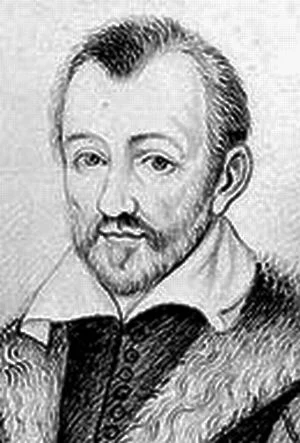 PD
PDPhilippe Desportes
Philippe Desportes, né à Chartres en 1546 et mort à l'Abbaye Notre-Dame de Bonport le 5 octobre 1606, est un poète baroque français. Surnommé le « Tibulle français » pour la douceur et la facilité de ses vers, il fut abbé de Tiron, lecteur de la chambre du Roi et conseiller d'État. Sa vie D’une famille de riches négociants de Chartres, Philippe Desportes, entre dans les ordres après de solides études classiques. Il suit l'évêque du Puy dont il est devenu le secrétaire à Rome où il découvre la poésie de Pétrarque, qui influença profondément son œuvre. Il était l'oncle du poète Mathurin Régnier. À son retour en France en 1567, il gagne les bonnes grâces de personnages haut placés, dont le duc d’Anjou, le futur Henri III, qu'il suit en Pologne. Lorsque celui-ci revient occuper le trône de France, il en reçoit plusieurs abbayes qui lui procurent un revenu de 10 000 écus. Préférant sa poésie plus maniérée, plus conventionnelle, plus formelle et moins inspirée que celle des poètes de la...
1 poezii, 0 proze
 KG
KGKhalil Gibran
Khalil Gibran (born Gubran Khalil Gubran bin Mikhā'īl bin Sa'ad; January 3, 1883 – April 10, 1931) also known as Kahlil Gibran, was a Lebanese American artist, poet, and writer. Born in the town of Bsharri in modern-day Lebanon (then part of the Ottoman Mount Lebanon mutasarrifate), as a young man he immigrated with his family to the United States where he studied art and began his literary career. He is chiefly known in the English speaking world for his 1923 book The Prophet, a series of philosophical essays written in English prose. An early example of Inspirational fiction, the book sold well despite a cool critical reception, and became extremely popular in the 1960s counterculture. Gibran is the third best-selling poet of all time, behind Shakespeare and Lao-Tzu. In English, prior to his death: • The Madman (1918) Twenty Drawings (1919) • The Forerunner (1920) • The Prophet, (1923) • Sand and Foam (1926) • Kingdom of the Imagination (1927) • Jesus, The Son of Man...
47 poezii, 0 proze
 AA
AAAbdul al-Hazred
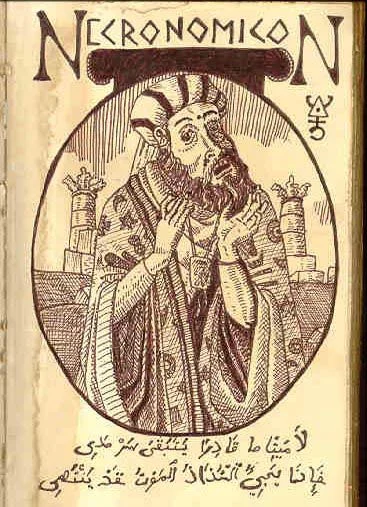
Abdul Alhazred is a fictional character created by American horror writer H. P. Lovecraft. He is the so-called "Mad Arab" credited with authoring the imaginary book Kitab al-Azif (the Necronomicon), and as such an integral part of Cthulhu Mythos lore. Despite the existence of several hoax Necronomicons, it is clear that neither Alhazred nor his book ever existed. The name Abdul Alhazred is a pseudonym that Lovecraft created in his youth, which he took on after reading 1001 Arabian Nights at the age of about five years. The name was invented either by Lovecraft, or by Albert Baker, the Phillips family lawyer. Abdul is a common Arabic name component (but never a name by itself; additionally the ending -ul and the beginning Al- are redundant), but Alhazred may allude to Hazard, a name from Lovecraft's family tree. It might also have been a pun on "all-has-read", since Lovecraft was an avid reader in youth. Abdul Alhazred is not a real Arabic name, and seems to contain the Arabic definite...
1 poezii, 0 proze
 A
AAnvari
Anvari (1126–1189), full name Awhad ad-Din 'Ali ibn Mohammad Khavarani or Awhad ad-Din 'Ali ibn Mahmud was one of the greatest Persian poets. He was born in Abivard of (now in Turkmenistan) and died in Khurasanian Balkh, now in Afghanistan, and studied science and literature at the collegiate institute in Tun (now Firdaus, Iran), becoming a famous astronomer as well as a poet. Anvari's poems were collected in a Deewan, and contains panegyrics, eulogies, satire, and others. His elegy "Tears of Khorasan", translated into English in 1789, is considered to be one of the most beautiful poems in Persian literature. The Cambridge History of Iran calls Anvari "one of the greatest figures in Persian literature". Despite their beauty, his poems often required much help with interpretation, as they were often complex and difficult to understand. Anvari's panegyric in honour of the Seljuk sultan Sultan Sanjar (1117–1157), ruler of Khorasan, won him royal favour, and allowed him to go on to enjoy...
2 poezii, 0 proze
 AS
ASAnna Sewell
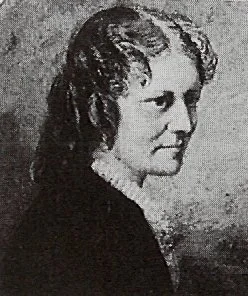
Anna Sewell (30 March 1820 – 25 April 1878) was an English novelist, best known as the author of the classic novel Black Beauty. Anna Mary Sewell was born in Great Yarmouth, Norfolk, England into a devoutly Quaker family. Her father was Isaac Phillip Sewell (1793-1879), and her mother, Mary Wright Sewell (1798 - 1884) was a successful author of children's books. Anna Sewell had one sibling, a younger brother named Philip Sewell. Anna Sewell was largely educated at home. When Anna was twelve years old, the family moved to Stoke Newington, where Sewell attended school for the first time. Two years later, however, she slipped while walking home from school and severely injured both of her ankles. Her father took a job in Brighton in 1836, partly in the hope that the climate there would help to cure her. Despite this, and most likely because of mistreatment of her injury, for the rest of her life Anna was unable to stand without a crutch or to walk for any length of time. For greater...
5 poezii, 0 proze
the despisers of the body
de Friedrich Nietzsche
4. The Despisers of the Body TO THE despisers of the body will I speak my word. I wish them neither to learn afresh, nor teach anew, but only to bid farewell to their own bodies,- and thus be dumb....
Trage-mi-o!, în stilul lui Virginie Despentes
de Fluerașu Petre
O carte șocantă, incorectă politic, un roman care îi oferă cititorului o mostră rafinată de brutalitate. Virginie Despentes prezintă o lume a tenebrelor, un univers în care violența este factorul...
The Use and Abuse of History
de Friedrich Nietzsche
The Use and Abuse of History (1878) By Friedrich Nietzsche Forward \"Incidentally, I despise everything which merely instructs me without increasing or immediately enlivening my activity.\" These are...
Prometheus
de George Gordon Noel Byron
Titan! to whose immortal eyes The sufferings of mortality, Seen in their sad reality, Were not as things that gods despise; What was thy pity's recompense? A silent suffering, and intense; The rock,...
Sonnet XLIV
de William Shakespeare
If the dull substance of my flesh were thought, Injurious distance should not stop my way; For then despite of space I would be brought, From limits far remote where thou dost stay. No matter then...
În ciuda tranziției
de George Lână
Iubitoare și înțeleaptă cum ești bucură-te în ciuda tranziției am realizat împreună două fete două teracote și o carte de versuri Affectionate and wise as you are be happy despite the transition...
Dar’ar… cunoștințele-n conștiințele lor să dea!
de Dragoș Vișan
Aș vrea să fiu un fiu loial mai pragmatic, vindecabil, însă mereu depistez că pot ajunge și pe gratis în locul fără niciun repaus ce vreau să-l transpun... pe-un zid de la parterul universului-cocină...
prefigurare
de Madalina STATE
tu în fotoliu cum originea călătoriei conturul ei languros apariția ta direct pe retina orașului și fotoliul jocurile își deschid ochii caste de libertini parcurs alambicat poate virginie despentes...
Pisica Pătrată
de petre bucinschi
Am prins din zbor o idee ca o gazelă speriată șubrezindu-mi granița dintre realitate și verdict și am căzut pradă fanteziilor din care s-a născut o pisică pătrată. Pisica asta umblă pe coridoarele...
fiecare meserie își are geniile ei!
de dumitru cioaca-genuneanu
motto: \"Exprimând imperativul înțelepciunii - nu te lăsa mințit!\" (Sfat foarte bun -dar așa de greu de urmat - lansat de domnul Zabet Mihai in eseul \"Fabularea, frustarea și minciuna\") uneori pot...
Sonnet III
de William Shakespeare
Look in thy glass, and tell the face thou viewest Now is the time that face should form another; Whose fresh repair if now thou not renewest, Thou dost beguile the world, unbless some mother. For...
Sonnet XIX
de William Shakespeare
Devouring Time, blunt thou the lion\'s paws, And make the earth devour her own sweet brood; Pluck the keen teeth from the fierce tiger\'s jaws, And burn the long-lived phoenix in her blood; Make glad...
Sonnet XXXVII
de William Shakespeare
As a decrepit father takes delight To see his active child do deeds of youth, So I, made lame by fortune\'s dearest spite, Take all my comfort of thy worth and truth. For whether beauty, birth, or...
Sonnet LX
de William Shakespeare
Like as the waves make towards the pebbled shore, So do our minutes hasten to their end; Each changing place with that which goes before, In sequent toil all forwards do contend. Nativity, once in...
Noapte de dragoste
de George Lână
Șemineul împrăștia pe tavan umbre hidoase ascultam bocetul de pe Wish You Were Here noapte de noapte de un deceniu răsucit în jurul trunchiului tău de culoarea și consistența alunei sfidam legile...