
"Between Two Worlds" – 270 rezultate
0.02 secundeMeilisearchCarlo M. Cipolla
CARLO M. CIPOLLA (1922–2000), reputat istoric italian, pasionat de economie, a studiat la Sorbona şi la London School of Economics. Pe parcursul îndelungatei sale cariere academice, a predat istoria economiei la University of California, Berkeley, la Institutul European din Florenţa şi la Scuola Normale din Pisa. A mai publicat, printre altele: Storia dell'economia italiana (1959), Economic History of World Population (1962), The Economic Decline of Empires (1970), The Technology of Man: A Visual History (1980), Allegro ma non troppo (1988), Between Two Cultures: An Introduction to Economic History (1992). Sursa: Editura Humanitas
0 poezii, 0 proze
 RD
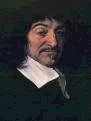
RDRené Descartes
René Descartes (1596-1650) is one of the most important Western philosophers of the past few centuries. During his lifetime, Descartes was just as famous as an original physicist, physiologist and mathematician. But it is as a highly original philosopher that he is most frequently read today. He attempted to restart philosophy in a fresh direction. For example, his philosophy refused to accept the Aristotelian and Scholastic traditions that had dominated philosophical thought throughout the Medieval period; it attempted to fully integrate philosophy with the 'new' sciences; and Descartes changed the relationship between philosophy and theology. Such new directions for philosophy made Descartes into a revolutionary figure. The two most widely known of Descartes' philosophical ideas are those of a method of hyperbolic doubt, and the argument that, though he may doubt, he cannot doubt that he exists. The first of these comprises a key aspect of Descartes' philosophical method. As noted...
2 poezii, 0 proze
René Descartes
René Descartes (1596-1650) is one of the most important Western philosophers of the past few centuries. During his lifetime, Descartes was just as famous as an original physicist, physiologist and mathematician. But it is as a highly original philosopher that he is most frequently read today. He attempted to restart philosophy in a fresh direction. For example, his philosophy refused to accept the Aristotelian and Scholastic traditions that had dominated philosophical thought throughout the Medieval period; it attempted to fully integrate philosophy with the \'new\' sciences; and Descartes changed the relationship between philosophy and theology. Such new directions for philosophy made Descartes into a revolutionary figure. The two most widely known of Descartes\' philosophical ideas are those of a method of hyperbolic doubt, and the argument that, though he may doubt, he cannot doubt that he exists. The first of these comprises a key aspect of Descartes\' philosophical method. As...
0 poezii, 0 proze
 MB
MBMaria Bungău
Nsscuta pe 6 martie 1987. In prezent studenta in anul I la Facultatea de Litere din Brasov. Si cum zice Fernando Pessoa "If, after I die, they should want to write my biography, There's nothing simpler. I've just two dates - of my birth, and of my death. In between the one thing and the other all the days are mine. "
1 poezii, 0 proze
 PP
PPPaul Paduret
Lost somewhere between music and poetry.
2 poezii, 0 proze
 HH
HHHidenori Hiruta
Hidenori Hiruta was born in Akita in 1942, Japan. Between 1965 and 2009 he taught English at High School. In 2009 became Secretary-General at the Akita International Haiku Network. http://akitahaiku.blogspot.com/
12 poezii, 0 proze
Dylan Thomas
Dylan Marlais Thomas was born on October 27, 1914 in Swansea, Glamorganshire (Wales). He was educated at Swansea Grammar School and became well-known for his obscure poetry and amusing plays and prose. Before the publishing of Thomas' first book in 1934, he worked as a reporter for The South Wales Daily Post, in Swansea, (1931-1932) and as a free-lance writer from 1933. "18 Poems", Thomas' first book, was published as the result of a prize. Thomas was only 19 when this volume of poetry was released. He wrote nearly 30 poems in late 1933 and early 1934, of which 13 were published in this volume. Between May and October 1934, he completed another five for inclusion in the book. The Thomas' poems first appeared in the Sunday Referee in 1933 in a feature column called the "Poets' Corner," edited by Victor Neuburg and Runia Sheila MacLeod. Neuburg began to award prizes to poets whose work was judged to be the finest printed in the column over a period of six months. The prize was that the...
28 poezii, 0 proze
Daniil Harms
\'Daniil Kharms\' was the main, and subsequently the sole, pen-name of Daniil Ivanovich Yuvachov. The son of a St. Petersburg political, religious and literary figure, Daniil was to achieve limited local renown as a Leningrad avant-garde eccentric and a writer of children\'s stories in the 1920s and 30s. Among other pseudonyms, he had employed \'Daniil Dandan\' and \'Kharms-Shardam\'. The predilection for \'Kharms\' is thought to derive from appreciation of the tension between the English words \'charms\' and \'harms\' (plus the German Charme; indeed, there is an actual German surname \'Harms\'), but may also owe something to a similarity in sound to Sherlock Holmes (pronounced \'Kholms\' in Russian), a figure of fascination to Kharms.
44 poezii, 0 proze
 PV
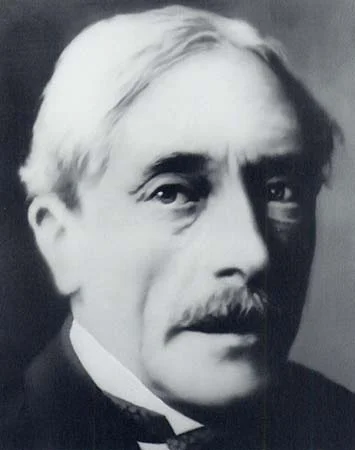
PVPaul Valéry
Paul Valéry (1871-1945) - in full Ambroise-Paul-Touissaint-Jules Valéry French poet, essayist, and critic, who ceased writing verse for twenty years to pursue scientific experiments. Valéry was a member of the 19th-century poetic school of Symbolism, and its last great representative. Throughout his life Valéry filled his private notebooks with observations on creative process and his own methods of inquiry. He insisted that the mental process of creation was alone important - the poems were a by-product of the effort. "Enthusiasm is not an artist's state of mind", stated Valéry. T.S. Eliot has compared Valéry's analytical attitude to a scientist who works in a laboratory "weighing out or testing the drugs of which is compounded some medicine with an impressive name." "Poetry is simply literature reduced to the essence of its active principle. It is purged of idols of every kind, of realistic illusions, of any conceivable equivocation between the language of "truth" and the language...
15 poezii, 0 proze
Robert Browning
Robert Browning was born on May 7, 1812 in Camberwell, which is south of London. His birthday falls within a couple of months of the births of Dickens and Thackeray. He was the eldest of 2 children, born to Robert and Sarah Anna Browning. His father was a bank clerk. He attended London University for a short while in 1828, but received most of his education by readinghis from his father\'s library. His first poem, Pauline, was published when he was 21. It was soon followed by Paracelsus (1835) and Sordello (1840). A year later, Pippa Passes, the first in a series entitled Bells and Pomegranates was published; the remaining seven parts appeared between 1841-46. In 1846, Browning eloped with Elizabeth Barrett and lived with her in Italy until his death in 1861. Various difficulties made the poet\'s requested burial in Florence impossible, and his body was returned to England to be interred in Westminster Abbey. The they left you for their pleasure: till in due time, one by one, Some...
12 poezii, 0 proze
The Bear
de Robert Frost
The bear puts both arms around the tree above her And draws it down as if it were a lover And its choke cherries lips to kiss good-bye, Then lets it snap back upright in the sky. Her next step rocks...
The Grey Monk
de William Blake
`I die, I die!\' the Mother said, `My children die for lack of bread. What more has the merciless tyrant said?\' The Monk sat down on the stony bed. The blood red ran from the Grey Monk\'s side, His...
Dialogue Between a Priest and a Dying Man (1782)
de Donatien Alphonse François, marquis de Sade
PRIEST - Come to this the fatal hour when at last from the eyes of deluded man the scales must fall away, and be shown the cruel picture of his errors and his vices - say, my son, do you not repent...
The Discourse of History
de Roland Barthes
The formal description of sets of words beyond the level of the sentence (what we call for convenience discourse) is not a modern development: from Gorgias to the nineteenth century, it was the...
Sonet 154
de Cristian Vasiliu
Her ankle softly torment on the chest Released my wings so sharpen and so thin Into the breath of spring from east to west And the enchanted world that lies within. Two flowers blink and misty rivers...
Ghost
de Alin Niculae
\"...and my soul from out that shadow that lies floating on the floor shall be lifted Nevermore.\" on a sweet scented summer day with the ashes falling from the sky the ashes he once loved for they...
Architectural Thinking and Some Aspects of Technical Creativity
de Manolescu Gorun
[A first extended version of this text was published in North-Holland “Human System Management” 4 (1984) © 1984, Elsevier Science Publishers B.V. (North-Holland)] We are largely surrounded in...
Birds
de Saint-John Perse
A man at sea, feeling noon in the air, lifts his head at this wonder: a white gull opened on the sky, like a woman\'s hand before the flame of a lamp, elevating in daylight the pink translucence of a...
An everlasting love
de Filip Ruxandra
It was the middle of the night when he first saw me. I was no bigger then 5 centimeters and I was looking into the mirror, dressed in my new little white dress. I didn’t realize till late that I was...
Dracula
de Bram Stoker
Chapter 21 - Dr. Seward\'s Diary 3 October. Let me put down with exactness all that happened, as well as I can remember it, since last I made an entry. Not a detail that I can recall must be...