
"persigno" – 121 rezultate
0.02 secundeMeilisearchpersinaru mihai
14 poezii, 0 proze
Mihai Persinaru
4 poezii, 0 proze
Jelaluddin Rumi
RUMI Rumi is one of the most read and well known poets in the world. Jelaluddin Rumi was born in the Eastern part of the Ancient Persian Empire near Balkh (presently Afghanistan), on September 30, 1207. His first name literally means Majesty of Religion, Jalal means majesty and din means religion. Because of the threat of Mongol invasion in Persia his family fled, finally settling in Konya, Turkey. He passed away, on December 17, 1273. His shrine is in Konya. As a genius theologian, a brilliant scholar, and a pillar of Islam, he followed in his father place until his spiritual friend and teacher, Shams of Tabriz appeared in his life. Rumi underwent a spiritual transformation in 1244 after meeting Shams. With appearance of Shams, Rumi became reborn and soon started his marvelous work \"Masnavi,\" (Mathnawi) consisting of 24,000 verses at age 38. His other famous work is \"Divan-e Shams-e Tabriz\" (the collective poems of Shams of Tabriz). Rumi\'s poetry has a mystic connotation, a...
0 poezii, 0 proze
Jelaluddin Rumi
RUMI Rumi is one of the most read and well known poets in the world. Jelaluddin Rumi was born in the Eastern part of the Ancient Persian Empire near Balkh (presently Afghanistan), on September 30, 1207. His first name literally means Majesty of Religion, Jalal means majesty and din means religion. Because of the threat of Mongol invasion in Persia his family fled, finally settling in Konya, Turkey. He passed away, on December 17, 1273. His shrine is in Konya. As a genius theologian, a brilliant scholar, and a pillar of Islam, he followed in his father place until his spiritual friend and teacher, Shams of Tabriz appeared in his life. Rumi underwent a spiritual transformation in 1244 after meeting Shams. With appearance of Shams, Rumi became reborn and soon started his marvelous work \"Masnavi,\" (Mathnawi) consisting of 24,000 verses at age 38. His other famous work is \"Divan-e Shams-e Tabriz\" (the collective poems of Shams of Tabriz). Rumi\'s poetry has a mystic connotation, a...
0 poezii, 0 proze
 JR
JRJelaluddin Rumi
RUMI Rumi is one of the most read and well known poets in the world. Jelaluddin Rumi was born in the Eastern part of the Ancient Persian Empire near Balkh (presently Afghanistan), on September 30, 1207. His first name literally means Majesty of Religion, Jalal means majesty and din means religion. Because of the threat of Mongol invasion in Persia his family fled, finally settling in Konya, Turkey. He passed away, on December 17, 1273. His shrine is in Konya. As a genius theologian, a brilliant scholar, and a pillar of Islam, he followed in his father place until his spiritual friend and teacher, Shams of Tabriz appeared in his life. Rumi underwent a spiritual transformation in 1244 after meeting Shams. With appearance of Shams, Rumi became reborn and soon started his marvelous work \"Masnavi,\" (Mathnawi) consisting of 24,000 verses at age 38. His other famous work is \"Divan-e Shams-e Tabriz\" (the collective poems of Shams of Tabriz). Rumi\'s poetry has a mystic connotation, a...
13 poezii, 0 proze
 A
AAnvari
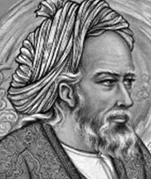
Anvari (1126–1189), full name Awhad ad-Din 'Ali ibn Mohammad Khavarani or Awhad ad-Din 'Ali ibn Mahmud was one of the greatest Persian poets. He was born in Abivard of (now in Turkmenistan) and died in Khurasanian Balkh, now in Afghanistan, and studied science and literature at the collegiate institute in Tun (now Firdaus, Iran), becoming a famous astronomer as well as a poet. Anvari's poems were collected in a Deewan, and contains panegyrics, eulogies, satire, and others. His elegy "Tears of Khorasan", translated into English in 1789, is considered to be one of the most beautiful poems in Persian literature. The Cambridge History of Iran calls Anvari "one of the greatest figures in Persian literature". Despite their beauty, his poems often required much help with interpretation, as they were often complex and difficult to understand. Anvari's panegyric in honour of the Seljuk sultan Sultan Sanjar (1117–1157), ruler of Khorasan, won him royal favour, and allowed him to go on to enjoy...
2 poezii, 0 proze
 S
SSaadi
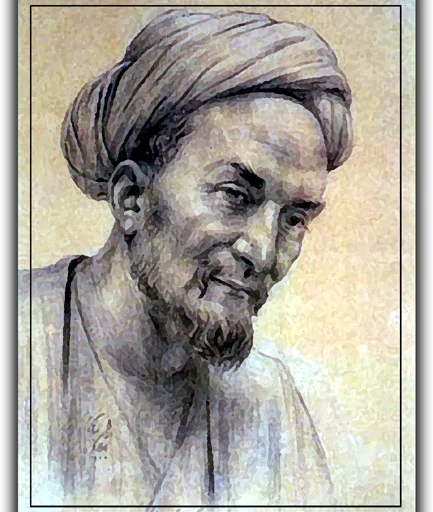
Abū-Muḥammad Muṣliḥ al-Dīn bin Abdallāh Shīrāzī, better known by his pen-name as Saʿdī or, simply, Saadi, was one of the major Persian poets of the medieval period. He is not only famous in Persian-speaking countries, but he has also been quoted in western sources. He is recognized for the quality of his writings, and for the depth of his social and moral thoughts. A native of Shiraz, his father died when he was an infant. Saadi experienced a youth of poverty and hardship, and left his native town at a young age for Baghdad to pursue a better education. As a young man he was inducted to study at the famous an-Nizzāmīya center of knowledge (1195–1226), where he excelled in Islamic Sciences, law, governance, history, Arabic literature and theology. The unsettled conditions following the Mongol invasion of Khwarezm and Iran led him to wander for 30 years abroad through Anatolia (he visited the Port of Adana, and near...
2 poezii, 0 proze
 MR
MRMevlana Jalaluddin Rumi
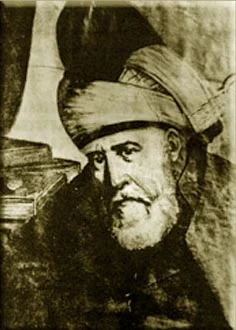
Mawlānā Jalāl ad-Dīn Muḥammad Balkhī, also known as Jalāl ad-Dīn Muḥammad Rūmī, but known to the English-speaking world simply as Rumi, (30 September 1207 – 17 December 1273), was a 13th-century Persian poet, Islamic jurist, theologian, and mystic. Rūmī is a descriptive name meaning "the Roman" since he lived most of his life in an area called Rūm because it was once ruled by the Byzantine Empire. According to tradition, Rumi was born in Balkh, Khorasan (now in Afghanistan), the hometown of his father's family. Scholars, however, argue that he was most likely born in Wakhsh, a small town located at the river Wakhsh in what is now Tajikistan. Wakhsh belonged to the larger province of Balkh, and in the year Rumi was born, his father was an appointed scholar there. Both these cities were at the time included in the Greater Persian cultural sphere of Khorasan, the easternmost province of historical Persia, and were...
162 poezii, 0 proze
 LD
LDLucia Daramus
Curriculum Vitae Lucia Dărămuș Work Experience -Latin and Greek teacher since 1999 -Culture editor for Renasterea Radio Station Cluj –Napoca, 2003-2005 - Culture editor for the Pro Saeculum magazine, 2005 Education 1994-1998 – BBU Cluj-Napoca, Faculty of Letters, BA in Ancient Greek and Latin 2000-2002 – BBU Cluj-Napoca, Faculty of Letters, MA in Integrated Linguistics - BBU Cluj-Napoca, The Institute of Jewish Studies, attendant of lectures on Jewish Culture and Civilization Achievements ( Symposiums, Conferences, Contests) April 1994 –2nd Prize for A Philological Study on St. Paul’s Letters, under the guidance of Elena Popescu, Lecturer April 1996 – 2nd Prize for A Comparative Study on religious elements in The Persions and the Old Testament, under the guidance of Professor Michail Nasta, Ph.D. April 1997 – 3nd Prize for A Philological Study on the Books of the New Testament, under the guidance of Vasile Rus, Lecturer Oct 1999 ( The National Student Symposium Lucian Blaga) – Special...
33 poezii, 0 proze
 LL
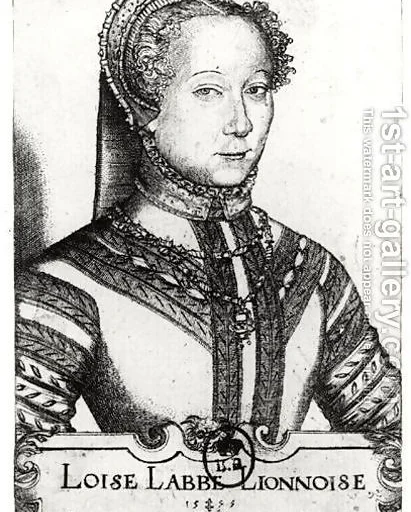
LLLouise Labé
Louise Labé, (c. 1520 or 1522, Lyon - April 25, 1566, Parcieux-en-Dombes), also identified as La Belle Cordière, was a female French poet of the Renaissance, born at Lyon, the daughter of a rich ropemaker, Pierre Charly, and his second wife, Etiennette Roybet. A recent book has argued that the poetry asscribed to her was a feminist creation of a number of French male poets of the Renaissance (see below). Both her father and her stepmother Antoinette Taillard (whom Pierre Charly married following Etiennette Roybet's death in 1523) were illiterate, but Labé received an education in Latin, Italian and music, perhaps in a convent school. At the siege of Perpignan, or in a tournament there, she is said to have dressed in male clothing and fought on horseback in the ranks of the Dauphin, afterwards Henry II. Between 1543 and 1545 she married Ennemond Perrin, a ropemaker. She became active in a circle of Lyonnais poets and humanists grouped around the figure of Maurice Scève. Her Œuvres were...
0 poezii, 0 proze
persigno
de Ghita Ana-Maria
Când eram copilă și mereu julită în coate, țineam cu tot dinadinsul să fiu lider. Nu știam ce înseamnă dar voiam al dracu de tare. Voiam să fiu șefa clasei, să bat băieții la \"milioane\" (joc foarte...
Trei din cramă
de Gigi Burlacu - Pietreanul
T 1. Păstorel: definiție-ghicitoare Având floreta cea mai tare – Trotil, dar și boem al cramei ‒ Din el sorbim cu încântare… Dom Pérignon-ul epigramei. Inspirație euforică din astral În somn...
reverberații
de Mondea Adrian
sentimentele sunt purtătoare de energie, agrafe de birou scufundate întro baie de fotoni, prima lumină din turn cu a sa forță gravitațională de respingere. deschid fără chef o sticlă de Dom Perignon....
Urare
de Alexandru Manta
Concetățeni fiți vigilenți în noaptea asta ceci n'est pas un pipe adică salata de boeuf e de fapt de cochon zâmbiți chiar dacă purtați pantofii de ocazie cumpărați la ocazie și ciocniți paharul de...
rape
de Ligia Pârvulescu
“poor is the man whose pleasures depend on the permission of another” (Madonna) [thirst] ești cel mai mare deșert necunoscut. trupul tău e un cort de piele arsă întins între coapsele mele. plutesc pe...
conturul unui vis
de Ioan Grigoraș
seara gustă din lacrimile sufletului fiecare strop prelins din petala trupului tău impregnat cu nonșalanță venusiană în lenjeria intimă a unui vis dezbrăcat uneori vreau să mângâi noaptea pe coamă și...
mărul
de Bogdan Geana
a venit depresia ca factura de curent, o așteptam și nu o așteptam, contractasem însă lunetist și cu o noapte înainte l-am otrăvit, din ciclul eu te-am numit, eu te omor, nu știu ce era în capul meu,...
Mic tratat de pierdut și recâștigat mințile
de Radu Tudor Ciornei
Prefață: cititorii pot adăuga capitolelor de mai jos cuvinte și expresii din fondul comun și special de cuvinte al limbii române și a oricărei limbi de circulație internațională și locală. Nu se...
ursoaica
de enea gela
în copilărie am trăit cu frica teribilă de ursoaică mănâncă-ți supa că te ia ursoaica/ dormi că vine ursoaica mergi la grădiniță (exista și pentru mersul la grădiniță o ursoaică) animalele-astea...
Adoris si Kromia(44)
de Viorel Darie
Adoris si Kromia(44) În tabăra perșilor întunericul și toropeala somnului apăsau chinuitor firile leneșe ale străjilor ca și ale dobitoacelor. Doar ici-colo câte un cal priponit, trezit din somn,...