
"it is late for the owner of seven I once was" – 4374 rezultate
0.03 secundeMeilisearchDon Miguel de Cervantes y Saavedra
It is not known for certain the exact date of his birth, but since according to Spanish tradition the Christening was carried through very closely after the birth, there is no doubt that his birthday was in 1547. The actual date of the Christening was October 9th, 1547 at the city of Alcala de Henares. Since then, little is known of his childhood, other than he lived with his family in Valladolid, Madrid, and other Andalusian cities. Finally, they settled in Madrid, and afterwards, he became the attendant to the Cardinal Acquaviva in Italy in 1569 . Later on, Cervantes enlisted in to armed forces for the naval Battle of Lepanto (it took place on the 7th of December of 1571) where he was injured. This meant the handicap of his left hand, but he still continued as a soldier, on his voyage returning to Spain 1575 in the galley Sun, he fell prisoner of the Turks when it was over powered. The next five years, Cervantes is a prisoner of war in Algiers, from where he tried to escape four...
1 poezii, 0 proze
 AB
ABAloysius Bertrand
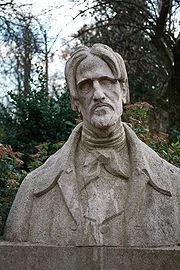
Louis-Jacques-Napoléon “Aloysius” Bertrand (20 April 1807 – 29 April 1841) was a French poet instrumental in the introduction of the prose poem into French literature and is credited with inspiring later Symbolist poets [1]. He wrote a collection of poems entitled Gaspard de la nuit, after which composer Maurice Ravel wrote a suite of the same name, based on the poems "Scarbo", "Ondine", and "Le Gibet". Bertrand was born in Ceva, Piedmont, Italy (then a part of Napoleonic France) and his family settled in Dijon in 1814. There he developed an interest in the Burgundian capital. His contributions to a local paper lead to recognition by Victor Hugo and Sainte-Beuve. He lived in Paris shortly with little success. He returned to Dijon and continued writing for local newspapers. Gaspard was sold in 1836 but it wasn't published until 1842 after his death of tuberculosis. The book was rediscovered by Charles Baudelaire and Stéphane Mallarmé. It is now considered a classic of poetic and...
8 poezii, 0 proze
Robert Browning
Robert Browning was born on May 7, 1812 in Camberwell, which is south of London. His birthday falls within a couple of months of the births of Dickens and Thackeray. He was the eldest of 2 children, born to Robert and Sarah Anna Browning. His father was a bank clerk. He attended London University for a short while in 1828, but received most of his education by readinghis from his father\'s library. His first poem, Pauline, was published when he was 21. It was soon followed by Paracelsus (1835) and Sordello (1840). A year later, Pippa Passes, the first in a series entitled Bells and Pomegranates was published; the remaining seven parts appeared between 1841-46. In 1846, Browning eloped with Elizabeth Barrett and lived with her in Italy until his death in 1861. Various difficulties made the poet\'s requested burial in Florence impossible, and his body was returned to England to be interred in Westminster Abbey. The they left you for their pleasure: till in due time, one by one, Some...
12 poezii, 0 proze
 TS
TSTaneda Santôka
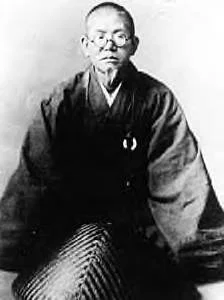
Taneda Santōka, birth name: Taneda Shōichi; 3 December 1882 - 11 October 1940) was the pen-name of a Japanese author and haiku poet. He is known for his free verse haiku. Santoka, an ordained Zen priest, after spending most of his life wandering all over the country as a begging monk, chose to settle in Matsuyama only to die 10 months later. The humble cottage where he dwelt -- Isso-an (A Blade of Grass Hermitage) is preserved north of Ehime University. His books and documents are also preserved in Shiki Memorial Museum. "In February of 1929 I received ordination as a monk and became resident priest at Mitori Kannon-do in the countryside of Kumamoto Prefecture. It was truly a solitary forest life (sanrin dokuju); as for quietness it was quiet, as for loneliness it was lonely -- such a life it was." (Taneda Santoka - from "Sômokutô") The Zen he was ultimately to practice, however, though traditional, was unusual. It was the Zen of solitary walking. The open road was to become...
2 poezii, 0 proze
 KT
KTKi No Tsurayuki
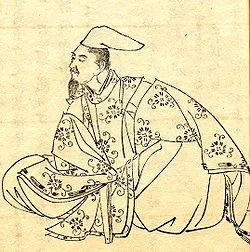
Poet (waka) japonez din era Heian. A trăit (probabil) între anii 872 și 945. *** Ki no Tsurayuki (872-945) was a Japanese author, poet and courtier of the Heian period. Tsurayuki was a son of Ki no Mochiyuki. He became a waka poet in the 890s. In 905, under the order of Emperor Daigo, he was one of four poets selected to compile the Kokin Wakashū, an anthology of poetry. After holding a few offices in Kyoto, he was appointed the provincial governor of Tosa province and stayed there from 930 until 935. Later he was presumably appointed the provincial governor of Suo province, since it was recorded that he held a waka party (Utaai) at his home in Suo. He is well-known for his waka and is counted as one of the Thirty-six Poetry Immortals selected by Fujiwara no Kinto. He was also known as one of the editors of the Kokin Wakashū. Tsurayuki wrote one of two prefaces to Kokin Wakashū; the other is in Chinese. His preface was the first critical essay on waka. He wrote of its...
1 poezii, 0 proze
 MA
MAManuel Acuña
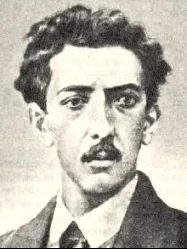
Manuel Acuña Narro (27 August 1849 – 6 December 1873) was a 19th-century Mexican writer. He focused on poetry, but also wrote some novels and plays. Even though he was famous at an early time of his life, he decided to commit suicide. It is not certain why he killed himself, but it is thought that he did so because of a woman. Acuña was born in the city of Saltillo, Coahuila, on August 27, 1849 to Francisco Acuña and Refugio Narro. He was taught how to write and read at an early age. Later he studied in the “Colegio Josefino”, in Saltillo. Around 1865 he was transferred to Mexico City to the School of San Ildefonso, where he entered as a full time student. Here he studied mathematics, Latin, French and philosophy. Acuña lived at a time at which Mexican society was dominated by philosophical-positivist intellectuality. Furthermore he was living as a romantic tendency in poetry was occurring. In January 1868, Acuña initiated his studies in medicine at the...
1 poezii, 0 proze
Osho
Tantra is a very revolutionary concept - the oldest and yet the newest. Tantra is one of the oldest traditions and yet untraditional, even antitraditional, because tantra says unless you are whole and one you are missing life altogether. You should not remain in a split state: you must become one. What to do to become one? You can go on thinking but that is not going to help because thinking is the technique to divide. Thinking is analytical. It divides;it splits things. Feeling unites, synthesizes, makes things one. So you can go on thinking, reading, studying, contemplating. It is not going to help unless you fall back to the feeling centre. Sex can be a very deep fulfillment, and sex can throw you back to your wholeness, to your natural, real being, for many reasons. Those reasons have to be understood. One, sex is a total act. You are thrown off your mind, off balance. That is why there is so much fear of sex. You are identified with the mind, and sex is a no-mind act. You become...
0 poezii, 0 proze
 AA
AAAbdul al-Hazred
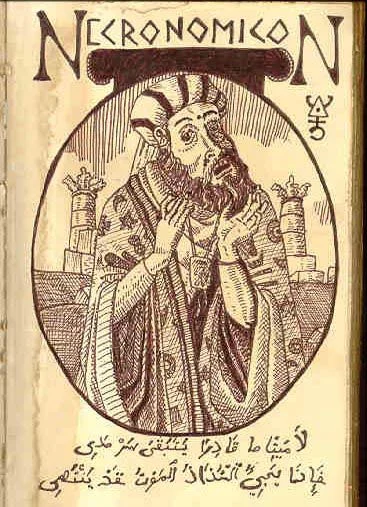
Abdul Alhazred is a fictional character created by American horror writer H. P. Lovecraft. He is the so-called "Mad Arab" credited with authoring the imaginary book Kitab al-Azif (the Necronomicon), and as such an integral part of Cthulhu Mythos lore. Despite the existence of several hoax Necronomicons, it is clear that neither Alhazred nor his book ever existed. The name Abdul Alhazred is a pseudonym that Lovecraft created in his youth, which he took on after reading 1001 Arabian Nights at the age of about five years. The name was invented either by Lovecraft, or by Albert Baker, the Phillips family lawyer. Abdul is a common Arabic name component (but never a name by itself; additionally the ending -ul and the beginning Al- are redundant), but Alhazred may allude to Hazard, a name from Lovecraft's family tree. It might also have been a pun on "all-has-read", since Lovecraft was an avid reader in youth. Abdul Alhazred is not a real Arabic name, and seems to contain the Arabic definite...
1 poezii, 0 proze
 RD
RDRené Descartes
René Descartes (1596-1650) is one of the most important Western philosophers of the past few centuries. During his lifetime, Descartes was just as famous as an original physicist, physiologist and mathematician. But it is as a highly original philosopher that he is most frequently read today. He attempted to restart philosophy in a fresh direction. For example, his philosophy refused to accept the Aristotelian and Scholastic traditions that had dominated philosophical thought throughout the Medieval period; it attempted to fully integrate philosophy with the 'new' sciences; and Descartes changed the relationship between philosophy and theology. Such new directions for philosophy made Descartes into a revolutionary figure. The two most widely known of Descartes' philosophical ideas are those of a method of hyperbolic doubt, and the argument that, though he may doubt, he cannot doubt that he exists. The first of these comprises a key aspect of Descartes' philosophical method. As noted...
2 poezii, 0 proze
René Descartes
René Descartes (1596-1650) is one of the most important Western philosophers of the past few centuries. During his lifetime, Descartes was just as famous as an original physicist, physiologist and mathematician. But it is as a highly original philosopher that he is most frequently read today. He attempted to restart philosophy in a fresh direction. For example, his philosophy refused to accept the Aristotelian and Scholastic traditions that had dominated philosophical thought throughout the Medieval period; it attempted to fully integrate philosophy with the \'new\' sciences; and Descartes changed the relationship between philosophy and theology. Such new directions for philosophy made Descartes into a revolutionary figure. The two most widely known of Descartes\' philosophical ideas are those of a method of hyperbolic doubt, and the argument that, though he may doubt, he cannot doubt that he exists. The first of these comprises a key aspect of Descartes\' philosophical method. As...
0 poezii, 0 proze
The Rape of Lucrece
de William Shakespeare
To the Right Honourable Henry Wriothesly, EARL OF SOUTHAMPTON AND BARON OF TICHFIELD. THE love I dedicate to your lordship is without end; whereof this pamphlet, without beginning, is but a...
Gerontion
de T.S. Eliot
Thou hast nor youth nor age But as it were an after dinner sleep Dreaming of both. HERE I am, an old man in a dry month, Being read to by a boy, waiting for rain. I was neither at the hot gates Nor...
Dracula
de Bram Stoker
Chapter 13 - Dr. Seward\'s Diary The funeral was arranged for the next succeeding day, so that Lucy and her mother might be buried together. I attended to all the ghastly formalities, and the urbane...
Lightening my mind
de Munteanu Adina
Lightening my mind Is late in the night and I read about wonders And worlds I never believed that exist, Outside is so dark and poring with rain My heart is so happy but so full of pain When...
The Poems of Sappho Part I
de Sappho
The Poetry of Sappho: Introduction By J.B Hare Imagine that two millenia or so in the future, literary experts attempt to collect the glories of our literature. Most of our paper writings have...
THE GRIFFIN
de Alina Mihai
I took the path of silence and of black night The sunlit world was far behind me The grass swayed gently in the moonlight And trees were tall, and starry sky And yet all these I could not see. On...
Cyber Lesson Learned
de Ohm
A letter is being written for you. 10/26 Written in draft form, why? Because I know not what else to do? It is as cold here, in draft, as it is in my heart. My body chilled, by your absence. My mind...
A singer must die
de Leonard Cohen
Now the courtroom is quiet, but who will confess. Is it true you betrayed us? The answer is Yes. Then read me the list of the crimes that are mine, I will ask for the mercy that you love to decline....
Christabel
de Samuel Taylor Coleridge
PART I \'Tis the middle of night by the castle clock, And the owls have awakened the crowing cock ; Tu--whit !-- -- Tu--whoo ! And hark, again ! the crowing cock, How drowsily it crew. Sir Leoline,...
Portrait of a Lady
de T.S. Eliot
Thou hast committed— Fornication: but that was in another country, And besides, the wench is dead. The Jew of Malta. I AMONG the smoke and fog of a December afternoon You have the scene arrange...