
"death in march" – 622 rezultate
0.02 secundeMeilisearch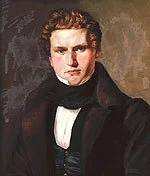 WH
WHWilhelm Hauff
Wilhelm Hauff (November 29, 1802 – November 18, 1827) was a German poet and novelist. Wilhelm Hauff was born in Stuttgart, the son of August Friedrich Hauff, a secretary in the ministry of foreign affairs, and Hedwig Wilhelmine Elsaesser Hauff. He was the second of four children. Young Hauff lost his father when he was seven years old, and his early education was practically self-gained in the library of his maternal grandfather at Tübingen, where his mother had moved after the death of her husband. In 1818 he was sent to the Klosterschule at Blaubeuren, and in 1820 began to study at the University of Tübingen. In four years he completed his philosophical and theological studies at the Tübinger Stift. On leaving the university, Hauff became tutor to the children of the famous Württemberg minister of war, General Baron Ernst Eugen von Hugel (1774-1849), and for them wrote his Märchen (fairy tales), which he published in his Märchen almanach auf das Jahr 1826 (Fairytale Almanac of...
1 poezii, 0 proze
 MG
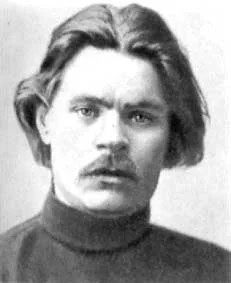
MGMaxim Gorki
[[en]] * Born: 16 March 1868 * Birthplace: Nizhny Novgorod (now Gorky), Russia * Death: June 1936 * Best Known As: Russian writer known for his socialist realism Name at birth: Aleksey Maksimovich Peshkov Maxim Gorky (also spelled Maksim Gorki) is one of the giants of 20th century Russian literature and theater, known for his realistic depictions of how terrible it is to be poor and oppressed. Gorky himself grew up in rough times and was a lifelong spokesperson for the underclass. His political activism led to several years of exile, in spite of his popularity with Russian readers. By 1900 Gorky was a famous literary figure, thanks in part to help from Anton Chekhov. His short stories and his first novel, Foma Gordeyev (1902) gave him notoriety as well as critical success, but his outspoken opposition to the rule of Nicholas II led to his exile to the island of Capri (1907-13). After the 1917 revolution Gorky's criticism of his friend V. I. Lenin and the Bolsheviks led to another...
2 poezii, 0 proze
 EB
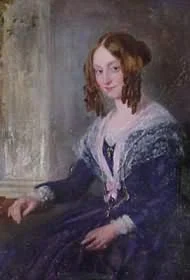
EBElizabeth Barrett Browning
Elizabeth Barrett Browning (6 March 1806 – 29 June 1861) was one of the most prominent poets of the Victorian era. Her poetry was widely popular in both England and the United States during her lifetime.[1] A collection of her last poems was published by her husband, Robert Browning, shortly after her death. Works/Collections 1820: The Battle of Marathon: A Poem. Privately printed 1826: A Essay On Mind, with Other Poems. London: James Duncan 1833: Prometheus Bound, Translated from the Greek of Aeschylus,and Miscellaneous Poems. London: A.J. Valpy 1838: The Seraphim, and Other Poems. London: Saunders and Otley 1844: Poems (UK) / A Drama of Exile, and other Poems (US). London: Edward Moxon. New York: Henry G. Langley 1850: Poems ("New Edition", 2 vols.) Revision of 1844 edition adding Sonnets from the Portuguese and others. London: Chapman & Hall 1851: Casa Guidi Windows. London: Chapman & Hall 1853: Poems (3d ed.). London: Chapman & Hall 1854: Two Poems: "A Plea for the Ragged Schools...
1 poezii, 0 proze
 HF
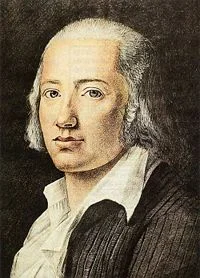
HFHÖLDERLIN, Friedrich
Johann Christian Friedrich Hölderlin (20 March 1770 – 6 June 1843) was a major German lyric poet. His work bridges the Classical and Romantic schools. Having spent most of his life tormented by mental illness, he suffered great loneliness, and often spent his time playing the piano, drawing, reading, writing, and enjoyed travelling when he had the chance. The poetry of Hölderlin, widely recognized today as one of the highest points of German literature, was little known or understood during his lifetime and slipped into obscurity shortly after his death; his illness and reclusion made him fade from his contemporaries' consciousness – and, even though selections of his work were being published by his friends already during his lifetime, it was largely ignored for the rest of the 19th century. In fact, Hölderlin was a man of his time, an early supporter of the French Revolution – in his youth at the Seminary of Tübingen, he and some colleagues from a "republican club" planted a "Tree...
22 poezii, 0 proze
 JL
JLJosé Lezama Lima
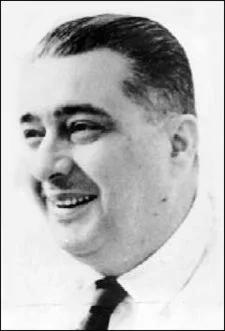
José Lezama Lima (19 decembrie, 1910 în Havana, Cuba - 8 august, 1976 în Havana, Cuba) a fost un romancier ți poet cubanez. Born in the Columbia Military Encampment close to Havana in the city of Marianao where his father was a colonel, Lezama lived through the most turbulent times of Cuba's history, fighting first against the Machado dictatorship, and later surviving the Castro regime. A gay man himself,[1] his literary output includes the semi-autobiographical, baroque novel Paradiso (1966), the story of a young man and his struggles with his mysterious illness, the death of his father, and his developing homosexuality and poetic sensibilities. Lima also edited several anthologies of Cuban poetry and the magazines Verbum and Orígenes, presiding as the patriarch of Cuban letters for most of his later years. In addition to his poems and novels, Lezama wrote many essays on figures of world literature like Mallarmé, Valéry, Góngora and Rimbaud as well as on Latin American baroque...
3 poezii, 0 proze
 WD
WDWilliam Diehl
William Diehl (December 4, 1924 – November 24, 2006) was an American novelist and photojournalist. Diehl was fifty years old and already a successful photographer and journalist when he decided he had not heeded his life calling. The day after his 50th birthday he began his first novel, Sharky's Machine, which was made into a movie directed by and starring Burt Reynolds. Diehl later completed eight more novels, including Primal Fear, which became a movie by the same name starring Richard Gere and Edward Norton. Diehl died at Emory University Hospital in Atlanta, Georgia on November 24, 2006, of an aortic aneurism. He was a resident of Woodstock, Georgia at the time of his death and was working on his tenth novel. Bibliography Sharky's Machine (1978) Chameleon (1981) Hooligans (1984) Thai Horse (1987) 27 (1990) The Hunt [aka 27] (1990) Primal Fear (1992)† Show Of Evil (1995)† Reign in Hell (1997)† Eureka (2002)
3 poezii, 0 proze
 SB
SBSimone de Beauvoir
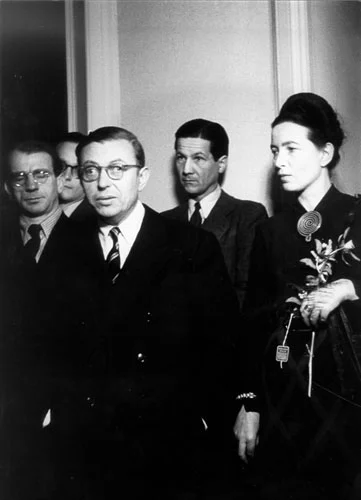
French Existentialist, Writer, and Social Essayist Born and educated in Paris, Simone de Beauvoir was among the first women permitted to complete a program of study at the École Normale Supérieure. Through her lifelong friendship with Sartre, she contributed significantly to the development and expression of existentialist philosophy. Jean-Paul Sartre and De beauvoir met after her studies in the Sorbonne, the beginning of a friendship which lasted until his death in 1980. This period began what she described as a \'moral\' phase of life; the culmination of which was her most important philosophical work, The Ethics of Ambiguity(1948). She began the phase with an essay entitled Pyrrhus et Cineas(1944), and the earlier novel called L\'Envitee(1943). No doubt born of the confusion and madness of WWII, De Beauvoir included in her Ethics Sartre\'s ontology of being-for-itself and being-in-itself. She also draws heavily on his conception of human beings as creatures who are free. Freedom of...
2 poezii, 0 proze
Robert Browning
Robert Browning was born on May 7, 1812 in Camberwell, which is south of London. His birthday falls within a couple of months of the births of Dickens and Thackeray. He was the eldest of 2 children, born to Robert and Sarah Anna Browning. His father was a bank clerk. He attended London University for a short while in 1828, but received most of his education by readinghis from his father\'s library. His first poem, Pauline, was published when he was 21. It was soon followed by Paracelsus (1835) and Sordello (1840). A year later, Pippa Passes, the first in a series entitled Bells and Pomegranates was published; the remaining seven parts appeared between 1841-46. In 1846, Browning eloped with Elizabeth Barrett and lived with her in Italy until his death in 1861. Various difficulties made the poet\'s requested burial in Florence impossible, and his body was returned to England to be interred in Westminster Abbey. The they left you for their pleasure: till in due time, one by one, Some...
12 poezii, 0 proze
 SC
SCStephen Crane
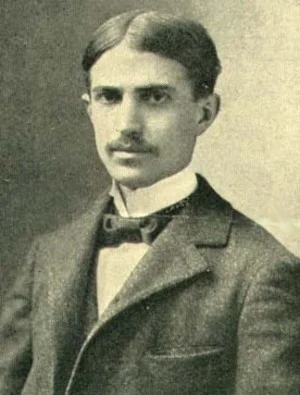
Stephen Crane (1871-1900), American author, whose second novel, The Red Badge Of Courage (1895), brought him international fame. The Red Badge of Courage depicted the American Civil War from the point of view of an ordinary soldier. It has been called the first modern war novel. Crane was born in Newark, New Jersey, on November1, 1871, as the 14th child of a Methodist minister. He started to write stories at the age of eight and at 16 he was writing articles for the New York Tribune. Crane studied at Lafayette College and Syracuse University. After his mother's death in 1890 - his father had died earlier - Crane moved to New York, where he lived a bohemian life, and worked as a free-lance writer and journalist. While supporting himself by his writings, he lived among the poor in the Bowery slums to research his first novel. Crane's first novel, Maggie: A Girl Of The Streets(1893) was a milestone in the development of literary naturalism. Crane had to print the book at his own expense,...
11 poezii, 0 proze
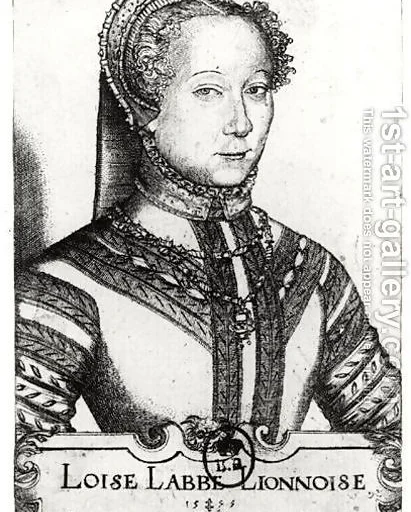 LL
LLLouise Labé
Louise Labé, (c. 1520 or 1522, Lyon - April 25, 1566, Parcieux-en-Dombes), also identified as La Belle Cordière, was a female French poet of the Renaissance, born at Lyon, the daughter of a rich ropemaker, Pierre Charly, and his second wife, Etiennette Roybet. A recent book has argued that the poetry asscribed to her was a feminist creation of a number of French male poets of the Renaissance (see below). Both her father and her stepmother Antoinette Taillard (whom Pierre Charly married following Etiennette Roybet's death in 1523) were illiterate, but Labé received an education in Latin, Italian and music, perhaps in a convent school. At the siege of Perpignan, or in a tournament there, she is said to have dressed in male clothing and fought on horseback in the ranks of the Dauphin, afterwards Henry II. Between 1543 and 1545 she married Ennemond Perrin, a ropemaker. She became active in a circle of Lyonnais poets and humanists grouped around the figure of Maurice Scève. Her Œuvres were...
0 poezii, 0 proze
death in march
de Leonard Ancuta
uneori simt că dragostea noastră îngheață ca lumina lunii pe firele de iarbă cînd încă nu s-a așezat primăvara cînd viața încă se ascunde în muguri cînd există o libertate mai puternică decît moartea...
At the mother's cross A face of an angel of childhood
de Laurențiu Nelu Rădoi
- - - - - - - - - - - - - - - - - - - - - - - - - Under the acacias bathed in dead winter's frost, Driven in the wheel of life by a windy March, The moon rises warm, but it's so far away The too...
Heresy
de Dragos Angelescu
We walk this path of beaten stone For ever feeling more alone Under the eyes of gods we march In step, Following a thousand hearts of rithm Slaves of a will We've never been aware of. We march, our...
life, life
de Arseny Tarkovsky
1 I don\'t believe in omens or fear Forebodings. I flee from neither slander Nor from poison. Death does not exist. Everyone\'s immortal. Everything is too. No point in fearing death at seventeen, Or...
An Epitaph On The Marchioness Of Winchester
de John Milton
This rich Marble doth enterr The honour\'d Wife of Winchester, A Vicounts daughter, an Earls heir, Besides what her vertues fair Added to her noble birth, More then she could own from Earth. Summers...
Epilogue
de Robert Browning
At the midnight in the silence of the sleep-time, When you set your fancies free, Will they pass to where--by death, fools think, imprisoned-- Low he lies who once so loved you, whom you loved so,...
Hamlet
de William Shakespeare
HAMLET DRAMATIS PERSONAE (PAGINA 7) ACT IV SCENE II Another room in the castle. [Enter HAMLET] HAMLET Safely stowed. ROSENCRANTZ: | | [Within] Hamlet! Lord Hamlet! GUILDENSTERN: | HAMLET What noise?...
Dark
de Andrei Dumitrescu
Under my skin crawling the demons struggle within my blood,my veins,my flesh my hate and my sorrow, dieing in my death in the name of Him, the unholy one the eternal dark one, in the graviest days of...
a feast of friends
de Jim Morrison
Wow, I�m sick of doubt Live in the light of certain South Cruel bindings The servants have the power Dog men and their mean women Pulling poor blankets over our sailors I�m sick of dour...
Epitaph
de Samuel Taylor Coleridge
Stop, Christian passer-by : Stop, child of God, And read, with gentle breast. Beneath this sod A poet lies, or that which once seem\'d he- O, lift one thought in prayer for S. T. C.- That he who many...