
"a song for you" – 24012 rezultate
0.01 secundeMeilisearcha-b-c
Doua entitati diferite printr-o singura lege
de jkloungsuh

ora-de-televizor
agenția de monitorizare a presei Agonia
de Radu Herinean

imaginea_conventiei
O fenomenologie a imaginii si a eului
de sophie polansky
critica-singura
"mă-nclin la traista-nflorată și goală a bunicii și la cățelul meu vechi fac o eschivă și tac când lovesc." – Cosmin Perța
de Raul Huluban
Nikki Giovanni
Pe numele adevarat Yolande Cornelia Giovanni, a urmat cursurile Universitatii Fisk. E membru activ in The Black Arts Movement, o comunitate de intelectuali de culoare din SUA, care activeaza pentru respectarea drepturilor negrilor si egalitate rasiala. Opera majora: Black Feeling, Black Talk (1968). Black Judgement (1968). Night Comes Softly (1970). Poem of Angela Yvonne Davis (1970). Illustrated by Charles Bible. Re: Creation (1970). Gemini: An Extended Autobiographical Statement on My First Twenty-Five Years of Being a Black Poet (1971). Spin a Soft Black Song: Poems for Children (1971). Illustrated by Charles Bible. In My House (1972). Dialogue (1973). Foreword by Ida Lewis; Afterword by Orde Coombs. Conversations with James Baldwin. My House, Ego-Tripping and Other Poems for Young People (1973). A Poetic Equation: Conversations between Nikki Giovanni and Margaret Walker (1974). The Women Gather (1975). Broadside. The Women and the Men (1975). Cotton Candy on a Rainy Day (1978)....
1 poezii, 0 proze
Hancu George
Inspiration Inspiration Sit down she said, pen me a few lines, tell me of life, love, hopes and dreams. write to me of much happier times When love ruled your heart, and life it seemed Was full of possibilities, plans and endless schemes. I took up the challenge, and began to write, Of life, of love and hopes and dreams, Words flowed like rivers, as I wrote them down, Thinking all the while of the lady I'd found To inspire my thoughts, and urge me on, To make something beautiful, maybe a song. Into the small hours, I toiled away, writing down lines, throwing them away. 'Twas then that I realised, that the happier times That she spoke of and wanted, were not of that time. For the happier times were not from long ago, But were here with me now, and now I know, That 'twas the love for this lady, that made my words flow, And to write something beautiful, for her, her alone. I wrote of life, and my living with her, Of love, her in my arms forever more, Of hopes, a future for us so bright,...
2 poezii, 0 proze
 DM
DMdan marius
"Well, I've been a disclaimer for twenty-four years Poor mother drowned in a pillow of tears Im well known in story, famous in song The black sheep, the blemish, the one who went wrong The black sheep, the blemish, the one who went wrong My crime is discomfort, my mind ill at ease Old crow on my shoulder, my favorite disease My siblings, my rivals might tend to my wake Grieve me not brothers, I was mother's mistake Grieve me not brothers, I was mother's mistake And all the grand expectations of an epic of wealth Leave me long to crawl back to the womb Well, I've tasted your grace, placed it back on the shelf Drag your pedigree wives to your tomb Drag your pedigree wives to your tomb Well, I came from this city, a victim of peace But I've grown far too filthy to attend to the feast So I'll take to the hills to live savage and free I don't need nobody, nobody needs me I don't need nobody, nobody needs me" http://www.obliothedagger.blogspot.com/
289 poezii, 0 proze
 MA
MAMiroslav Antici
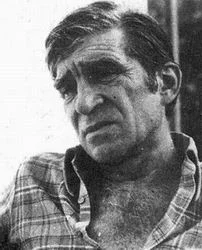
Miroslav "Mika" Antiæ (March 14, 1932 – June 24, 1986) was a Serbian poet, journalist and painter. Antiæ was born in Mokrin, Vojvodina, Serbia (then Yugoslavia). He wrote poems, articles, dramas, movie and TV scripts and documentaries. Mika also acted in several movies, and was an amateur painter. His best known poem is "Srem", in which he mourns for dead in World War II and describes the beauty of Srem using "beæarac" song form. He is well known as a bohemian. Mika Antiæ is best known as a children and youth poet, a master of delicate and gentle sentiments. His bohemian, hard-drinking lifestyle is best illustrated by a barely translatable pun about him: "Èika Jova deci, èika Mika Antiæ dva deci" "Èika Jova deci" meaning "Mister Jova to the children", referring to Jovan Jovanoviæ Zmaj, a known children's poet. "Èika Mika Antiæ dva deci" means "Mister Mika Antiæ two deciliters", referring to drinking from a glass, likely of alcohol.
1 poezii, 0 proze
 JT
JTJan Twardowski
Jan Jakub Twardowski (June 1, 1915 – January 18, 2006) was a famous Polish poet, but, as he said of himself, he was a priest (of the Catholic Church) first of all. He was a chief Polish representative of contemporary religious lyrics. He wrote short, simple poems, humorous, sometimes with colloquialisms. He joins observation of nature with philosophical reflexion. Twardowski received many awards and medals for his output. Jan Twardowski was born on June 1, 1915 in Warsaw, Congress Poland, Russian Empire as a son of Jan Twardowski and Aniela Maria Konderska. Several weeks later his family was forced to move to Russia (it was World War I). After 3 years the family moved back to Warsaw. In 1927, after finishing a primary school, he started his education in mathematical and environmental gymnasium. He finished it in 1935. In 1932 he began working with the gymnasium youth newspaper called KuŸnia M³odych. He had his own column there, he wrote poems, short stories, interviews with writers,...
1 poezii, 0 proze
 WH
WHWilliam Ernest Henley
William Ernest Henley (23 August 1849 – 11 July 1903) was an English poet, critic and editor. Born 23 August 1849 Gloucester, England Died 11 July 1903 (aged 53) Occupation Poet, critic and editor Nationality English Education The Crypt School, Gloucester Writing period c. 1870–1903 Henley was born at Gloucester and was the eldest of a family of six, five sons and a daughter. His father, William, was a bookseller and stationer who died in 1868 leaving young children and creditors. His mother, Mary Morgan, was descended from the poet and critic, Joseph Warton. From 1861-67 Henley was a pupil at the Crypt Grammar School (founded 1539). A Commission had recently attempted to revive the school by securing the brilliant and academically distinguished T. E. Brown (1830-1897) as headmaster. Brown's appointment was short-lived (c.1857-63) but was a 'revelation' for Henley because it introduced him to a poet and 'man of genius - the first I'd ever seen'. This was the start of a lifelong...
1 poezii, 0 proze
 JJ
JJJames JOYCE
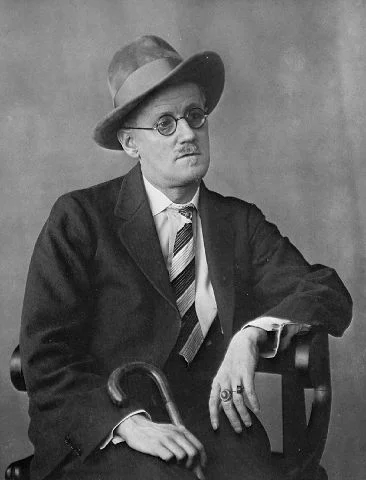
James Joyce (1882-1941), Irish novelist, noted for his experimental use of language in such works as Ulysses (1922) and Finneganns Wake (1939). Joyce\'s technical innovations in the art of the novel include an extensive use of interior monologue; he used a complex network of symbolic parallels drawn from the mythology, history, and literature, and created a unique language of invented words, puns, and allusions. James Joyce was born in Dublin, on February 2, 1882, as the son of John Stanislaus Joyce, an impoverished gentleman, who had failed in a distillery business and tried all kinds of professions, including politics and tax collecting. Joyce\'s mother, Mary Jane Murray, was ten years younger than her husband. She was an accomplished pianist, whose life was dominated by the Roman Catholic Church. In spite of their poverty, the family struggled to maintain a solid middle-class facade. From the age of six Joyce, was educated by Jesuits at Clongowes Wood College, at Clane, and then at...
17 poezii, 0 proze
 RB
RBRupert Chawner Brooke
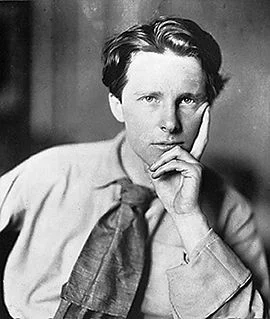
Rupert Chawner Brooke (middle name sometimes given as Chaucer)(3 August 1887–23 April 1915) was an English poet known for his idealistic war sonnets written during the First World War (especially The Soldier); however, he never experienced combat at first hand. He was also known for his boyish good looks, which prompted the Irish poet William Butler Yeats to describe him as \"the handsomest young man in England\". English poet Brooke was born at 5 Hillmorton Road in Rugby, Warwickshire, the second of the three sons of William Parker Brooke, a Rugby schoolmaster, and Ruth Mary Brooke, née Cotterill. He attended Hillbrow Prep School before being educated at Rugby School. While travelling in Europe, he prepared a thesis entitled \"John Webster and the Elizabethan Drama\", which won him a scholarship to King\'s College, Cambridge, where he became a member of the Cambridge Apostles, helped found the Marlowe Society drama club and acted in plays including the Cambridge Greek Play. Brooke...
7 poezii, 0 proze
 WH
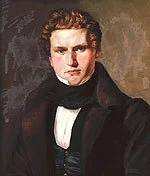
WHWilhelm Hauff
Wilhelm Hauff (November 29, 1802 – November 18, 1827) was a German poet and novelist. Wilhelm Hauff was born in Stuttgart, the son of August Friedrich Hauff, a secretary in the ministry of foreign affairs, and Hedwig Wilhelmine Elsaesser Hauff. He was the second of four children. Young Hauff lost his father when he was seven years old, and his early education was practically self-gained in the library of his maternal grandfather at Tübingen, where his mother had moved after the death of her husband. In 1818 he was sent to the Klosterschule at Blaubeuren, and in 1820 began to study at the University of Tübingen. In four years he completed his philosophical and theological studies at the Tübinger Stift. On leaving the university, Hauff became tutor to the children of the famous Württemberg minister of war, General Baron Ernst Eugen von Hugel (1774-1849), and for them wrote his Märchen (fairy tales), which he published in his Märchen almanach auf das Jahr 1826 (Fairytale Almanac of...
1 poezii, 0 proze
 VH
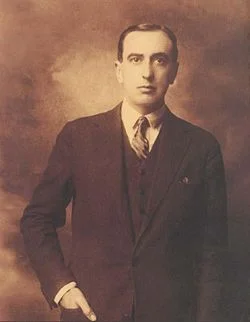
VHVicente Huidobro
Vicente García-Huidobro Fernández (January 10, 1893 – January 2, 1948) was a Chilean poet born to an aristocratic family. He was an exponent of the artistic movement called Creacionismo ("Creationism"), which held that a poet should bring life to the things he or she writes about, rather than just describe them. Huidobro was born into a wealthy family in Santiago. After spending his first years in Europe, he enrolled in a Jesuit secondary school in Santiago where he was expelled for using a ring, which he claimed, was for marriage. He studied literature at the University of Chile and published Ecos del alma (Soul's Echoes) in 1911, a work with modernist tendencies. The following year he married, and started to edit the journal Musa Joven (Young Muse), where part of his later book, Canciones en la noche (Songs in the Night) appeared, as well as his first calligram, "Triángulo armónico" ("Harmonic Triangle"). In 1913, along with Carlos Díaz Loyola, he edited the three issues of the...
4 poezii, 0 proze
a song for you
de dan petrut camui
sufăr cu inima, mecanic, nu mă pot îndrăgosti de oricine, precum un orb caut ieșirea din trupul tău țese. pentru că eu trebuia să, pentru că tu trebuia să, pentru că noi trebuiam tuturor am închis...
For you Prince Vlad McDragon in love
de Dragoș Vișan
Puternice cinstite spirit de lumină îți lasă întunericul să cadă-n gol și din mantie pune-ți peste noi ultimii fotoni nimicitori Răsfirându-ți gheața vino-n spirit treaz hoinarule nemort ești pentru...
Silence
de oana stanescu
I seem to have forgotten that Tomorrow is just another yesterday And that my tears Have already dried out My cry Seems so useless Like begging mercy To a cruel tyrant Who will have his way Anyway And...
just a song I like right now
de Alina
It could be all so simple but you'd rather make it hard loving you is like a battle and we both end up with scars Tell me who I have to be to get some reciprocity no one loves you more than me and no...
the last song for janis
de emilian valeriu pal
you look at other people trough your tears they know nothing of sorrow, of saddness or fear it\'s sad so sad to be alone doar zgomotul apei care fierbe în ibric și două ouă puse la fiert ciocnindu-se...
Chase your song
de Florea Ana-Maria
It was raining, again- it was normal and expected. Thoughts were sailing through the rain, trying not to get wet, not to be stopped by the strong,wicked clouds. It was the kind of night in which you...