
"With one condition only" – 2314 rezultate
0.03 secundeMeilisearch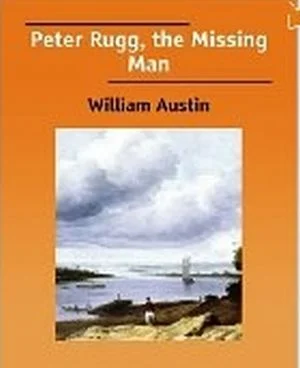 WA
WAWilliam Austin
William Austin (1778–1841) was an American author and lawyer, most notable as the creator of the Peter Rugg stories published in the New England Galaxy in 1824–1827. Austin's stories, constructed as long letters signed with the name Jonathan Dunwell, presented the Rugg story as a long-standing New England legend, about a strong and obstinate man who got lost in a thunderstorm in 1770 and wandered the roads ever afterwards. Austin was born in 1778 in Lunenburg, Massachusetts, where his family had fled after the British burned down their Charlestown house during the Battle of Bunker Hill. He was educated at Harvard College and Lincoln's Inn, London. He married twice, fought one duel with pistols, and had fourteen children. As a young man he served as Unitarian chaplain aboard the USS Constitution. After the Constitution captured a French ship, the salvage proceedings brought Austin $200 and the acquaintance of Alexander Hamilton, who helped the young man begin his legal studies in...
1 poezii, 0 proze
 RD
RDRené Descartes
René Descartes (1596-1650) is one of the most important Western philosophers of the past few centuries. During his lifetime, Descartes was just as famous as an original physicist, physiologist and mathematician. But it is as a highly original philosopher that he is most frequently read today. He attempted to restart philosophy in a fresh direction. For example, his philosophy refused to accept the Aristotelian and Scholastic traditions that had dominated philosophical thought throughout the Medieval period; it attempted to fully integrate philosophy with the 'new' sciences; and Descartes changed the relationship between philosophy and theology. Such new directions for philosophy made Descartes into a revolutionary figure. The two most widely known of Descartes' philosophical ideas are those of a method of hyperbolic doubt, and the argument that, though he may doubt, he cannot doubt that he exists. The first of these comprises a key aspect of Descartes' philosophical method. As noted...
2 poezii, 0 proze
René Descartes
René Descartes (1596-1650) is one of the most important Western philosophers of the past few centuries. During his lifetime, Descartes was just as famous as an original physicist, physiologist and mathematician. But it is as a highly original philosopher that he is most frequently read today. He attempted to restart philosophy in a fresh direction. For example, his philosophy refused to accept the Aristotelian and Scholastic traditions that had dominated philosophical thought throughout the Medieval period; it attempted to fully integrate philosophy with the \'new\' sciences; and Descartes changed the relationship between philosophy and theology. Such new directions for philosophy made Descartes into a revolutionary figure. The two most widely known of Descartes\' philosophical ideas are those of a method of hyperbolic doubt, and the argument that, though he may doubt, he cannot doubt that he exists. The first of these comprises a key aspect of Descartes\' philosophical method. As...
0 poezii, 0 proze
Jelaluddin Rumi
RUMI Rumi is one of the most read and well known poets in the world. Jelaluddin Rumi was born in the Eastern part of the Ancient Persian Empire near Balkh (presently Afghanistan), on September 30, 1207. His first name literally means Majesty of Religion, Jalal means majesty and din means religion. Because of the threat of Mongol invasion in Persia his family fled, finally settling in Konya, Turkey. He passed away, on December 17, 1273. His shrine is in Konya. As a genius theologian, a brilliant scholar, and a pillar of Islam, he followed in his father place until his spiritual friend and teacher, Shams of Tabriz appeared in his life. Rumi underwent a spiritual transformation in 1244 after meeting Shams. With appearance of Shams, Rumi became reborn and soon started his marvelous work \"Masnavi,\" (Mathnawi) consisting of 24,000 verses at age 38. His other famous work is \"Divan-e Shams-e Tabriz\" (the collective poems of Shams of Tabriz). Rumi\'s poetry has a mystic connotation, a...
0 poezii, 0 proze
Jelaluddin Rumi
RUMI Rumi is one of the most read and well known poets in the world. Jelaluddin Rumi was born in the Eastern part of the Ancient Persian Empire near Balkh (presently Afghanistan), on September 30, 1207. His first name literally means Majesty of Religion, Jalal means majesty and din means religion. Because of the threat of Mongol invasion in Persia his family fled, finally settling in Konya, Turkey. He passed away, on December 17, 1273. His shrine is in Konya. As a genius theologian, a brilliant scholar, and a pillar of Islam, he followed in his father place until his spiritual friend and teacher, Shams of Tabriz appeared in his life. Rumi underwent a spiritual transformation in 1244 after meeting Shams. With appearance of Shams, Rumi became reborn and soon started his marvelous work \"Masnavi,\" (Mathnawi) consisting of 24,000 verses at age 38. His other famous work is \"Divan-e Shams-e Tabriz\" (the collective poems of Shams of Tabriz). Rumi\'s poetry has a mystic connotation, a...
0 poezii, 0 proze
 JR
JRJelaluddin Rumi
RUMI Rumi is one of the most read and well known poets in the world. Jelaluddin Rumi was born in the Eastern part of the Ancient Persian Empire near Balkh (presently Afghanistan), on September 30, 1207. His first name literally means Majesty of Religion, Jalal means majesty and din means religion. Because of the threat of Mongol invasion in Persia his family fled, finally settling in Konya, Turkey. He passed away, on December 17, 1273. His shrine is in Konya. As a genius theologian, a brilliant scholar, and a pillar of Islam, he followed in his father place until his spiritual friend and teacher, Shams of Tabriz appeared in his life. Rumi underwent a spiritual transformation in 1244 after meeting Shams. With appearance of Shams, Rumi became reborn and soon started his marvelous work \"Masnavi,\" (Mathnawi) consisting of 24,000 verses at age 38. His other famous work is \"Divan-e Shams-e Tabriz\" (the collective poems of Shams of Tabriz). Rumi\'s poetry has a mystic connotation, a...
13 poezii, 0 proze
 EB
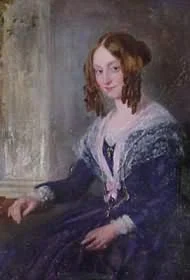
EBElizabeth Barrett Browning
Elizabeth Barrett Browning (6 March 1806 – 29 June 1861) was one of the most prominent poets of the Victorian era. Her poetry was widely popular in both England and the United States during her lifetime.[1] A collection of her last poems was published by her husband, Robert Browning, shortly after her death. Works/Collections 1820: The Battle of Marathon: A Poem. Privately printed 1826: A Essay On Mind, with Other Poems. London: James Duncan 1833: Prometheus Bound, Translated from the Greek of Aeschylus,and Miscellaneous Poems. London: A.J. Valpy 1838: The Seraphim, and Other Poems. London: Saunders and Otley 1844: Poems (UK) / A Drama of Exile, and other Poems (US). London: Edward Moxon. New York: Henry G. Langley 1850: Poems ("New Edition", 2 vols.) Revision of 1844 edition adding Sonnets from the Portuguese and others. London: Chapman & Hall 1851: Casa Guidi Windows. London: Chapman & Hall 1853: Poems (3d ed.). London: Chapman & Hall 1854: Two Poems: "A Plea for the Ragged Schools...
1 poezii, 0 proze
 EM
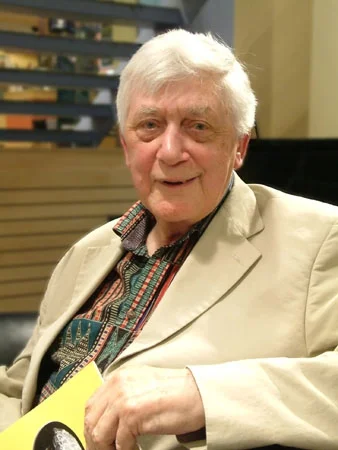
EMEdwin Morgan
Edwin George Morgan OBE (born 27 April 1920) is a Scottish poet and translator who is associated with the Scottish Renaissance. He is widely recognised as one of the foremost Scottish poets of the 20th century. In 1999, Morgan was made the first Glasgow Poet Laureate. In 2004, he was named as the first Scottish national poet: The Scots Makar. Morgan was born in Glasgow and grew up in Rutherglen. He entered the University of Glasgow in 1937 and, after interrupting his studies to serve in World War II as a non-combatant conscientious objector with the Royal Army Medical Corps, graduated in 1947 and became a lecturer at the University. He worked there until his retirement in 1980. He came out as gay in Nothing Not Giving Messages: Reflections on his Work and Life , but explored his sexuality in many previous works.[1] He had written many famous love poems, among them "Strawberries" and "The Unspoken", in which the love object was not gendered; this was partly because of legal problems at...
1 poezii, 0 proze
 AJ
AJadrian jigăranu
25 iunie 1985 Are you a child of the free to be you and me generation And are you in tune with the world around you I am a child of the free to be you and me generation And I am with you in being in tune We shall bring change to this place Listen to the whistle of the planet twirlin through space Singin la la la la la la to the human race (she says) I believe I am the flower of life, the earth And the ocean oh oh I believe I feel the power of light, vibrate All around me oh oh I believe you are the children of the one great spirit, oh oh Are you a child of the free to be you and me generation And are you confused with the world around you I am a child of the free to be you and me generation And I am with you in being confused Children children can you hear it Listen to the riddle in the melody by great spirit Singin la la la la la la theres nothin to it (he says) I believe I am the flower of life, the air And the sunshine oh oh I believe I am the power of light, the motive For the...
117 poezii, 0 proze
 IL
ILIvan V. Laliæ
Ivan V. Laliæ (born June 8, 1931 - died July 28, 1996) was a Serbian poet with a reputation as one of the finest European poets of his time. Laliæ was born into a cultured family in Belgrade; his father, Vlajko, was a journalist, and his grandfather Isidor Bajiæ was a celebrated composer. As a child he experienced the trauma of seeing many of his school-friends perish in an air-raid. Laliæ said that "my childhood and boyhood in the war marked everything I ever wrote as a poem or poetry". Laliæ lived in both Zagreb and Belgrade, and spent the summers with his family in the Istrian town of Rovinj. He was survived by his Croatian wife, Branka, and his younger son. Laliæ was awarded with the most prestigious literary prizes in Yugoslavia. He was admired abroad and books of his poems have been translated into six languages (English, French, Italian, Polish, Hungarian and Macedonian). Individual poems have appeared in more than 20 languages. In her obituary of him, Celia Hawkesworth spoke...
1 poezii, 0 proze
THE ANTICHRIST
de Friedrich Nietzsche
THE ANTICHRIST by Friedrich Nietzsche Published 1895 translation by H.L. Mencken Published 1920 PREFACE This book belongs to the most rare of men. Perhaps not one of them is yet alive. It is possible...
Ah, vocabularul!(do you take sugar with that?)
de Nicoleta Stefanescu
sau cum se poate aplica (yeah!) legea pruteanu în sens invers și în traduceri libere de tot (like, you know, “Revenge of the Nerds”) Avem oră de “dirigenție”: directorul răcnește din toți rărunchii...
Despre Visual Poetry
de Meda Bittermann
Despre Visual Poetry In cele ce urmeaza va voi supune atentiei doua pareri (a mea si a unei creatoare deja faimoasa -m-am decis sa o citez pe aceasta in original, deci in engleza) in legatura cu ceea...
The Discourse of History
de Roland Barthes
The formal description of sets of words beyond the level of the sentence (what we call for convenience discourse) is not a modern development: from Gorgias to the nineteenth century, it was the...
Portret 9
de Adrian Firica
Facerea lumii 1 1.La început, Dumnezeu a făcut cerurile și pământul. Lumina 2.Pământul era pustiu și gol; peste fața adâncului de ape era întunerec și Duhul lui Dumnezeu se mișca pe deasupran apelor....
PARADISE LOST --Book XI
de John Milton
Book XI Undoubtedly he will relent, and turn From his displeasure; in whose look serene, When angry most he seemed and most severe, What else but favour, grace, and mercy, shone? So spake our father...
Mental versus Analitic
de Manolescu Gorun
0. Mentalul (filosofia „mentalului” - Husserl, Maurice Merleau-Ponty, Heidegger [1] - continuată, azi, de o puzderie de „fenomenologi”), prin Heidegger, spune: „De ce este ființa [conștiința,...
The Tuft of Flowers
de Robert Frost
I went to turn the grass once after one Who mowed it in the dew before the sun. The dew was gone that made his blade so keen Before I came to view the levelled scene. I looked for him behind an isle...
The Star-Splitter
de Robert Frost
`You know Orion always comes up sideways. Throwing a leg up over our fence of mountains, And rising on his hands, he looks in on me Busy outdoors by lantern-light with something I should have done by...
The Witch of Coos
de Robert Frost
I staid the night for shelter at a farm Behind the mountains, with a mother and son, Two old-believers. They did all the talking. MOTHER Folks think a witch who has familiar spirits She could call up...