
"Uncle Bens" – 16993 rezultate
0.03 secundeMeilisearch GS
GSGrig Salvan
Nascut în Nimigea de Sus, Bistrita-Nasaud, Transilvania, Romania, liceul "George Coșbuc din Nasaud, Facultatea de filosofie-istorie, Universitatea din Bucuresti, actualmente profesor de filosofie la liceul Grigore Moisil din Bistrita, scriu poezie, proza, eseu filosofic inca din adolescenta, am publicat sporadic prin diverse reviste literare si neliterare,am cistigat unele concursuri literare nereprezentative, n-am publicat nici un volum, inca...dar - poate - inca nu-i prea tirziu... în paralel, creator de muzica instrumentala pe sintetizator... dincolodestele@yahoo.com My music: https://www.youtube.com/watch?v=RVxwytnmR70 Grig Salvan – Just for You https://www.youtube.com/watch?v=PMViOwure9s Grig salvan – Goodbye https://www.youtube.com/watch?v=RSI4xk6aGYE Grig Salvan – Far from You https://www.youtube.com/watch?v=XMPh7ZJVYpY Grig Salvan – My Morning Star https://www.youtube.com/watch?v=ZcE-T3znFsI Grig Salvan – Dreaming of You...
339 poezii, 0 proze
 II
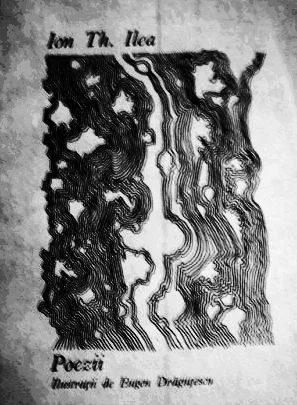
IIIon Th. Ilea
Ion Th. Ilea (n. 17 iunie 1908, Bistricioara/Bistrița Bârgâului - d. 1983, Bistricioara) a fost un poet, prozator și memorialist român, unul dintre cei mai cunoscuți reprezentanți ai așa-zisului grup de "tineri poeți ardeleni" (din care mai fac parte Emil Giurgiuca, George Boldea, Mihai Beniuc ș.a.) care se remarcă printr-o lirică la limita dintre tradiționalism și modernism. Ca și la Beniuc sau Giurgiuca, Ion Th. Ilea, mai ales în "Gloata", are unele accente sociale în maniera lui Aron Cotruș. Poetul a fost caracterizat ca "...făcând parte din rândul poeților care se definesc prin sforțarea de a se elibera de didacticismul coșbucian prin violența specifică a expresiei, prin asprimea versului, spre a fi în ton cu problemele europene ale liricii” (G. Călinescu - Istoria literaturii). E născut din părinți țărani - descendenți din familia lui Ilea de Borgo (nobili), rămâne orfan de tată la vârstă fragedă. E nevoit să-și câștige existența ca simplu muncitor în diferite branșe, dar absolvă...
1 poezii, 0 proze
 EM
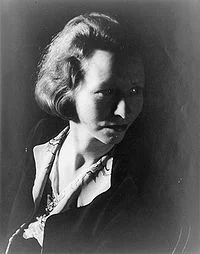
EMEdna St. Vincent Millay
Edna St. Vincent Millay (February 22, 1892 – October 19, 1950) was an American lyrical poet and playwright and the first woman to receive the Pulitzer Prize for Poetry. She was also known for her unconventional, bohemian lifestyle and her many love affairs. She used the pseudonym Nancy Boyd for her prose work. Millay was born in Rockland, Maine to Cora Lounella, a nurse, and Henry Tollman Millay, a schoolteacher who would later become superintendent of schools. Her middle name derives from St. Vincent's Hospital in New York, where her uncle's life had been saved just prior to her birth. In 1904 Cora officially divorced Millay's father for financial irresponsibility, but they had been separated for some years prior. Struggling financially, Cora and her three daughters — Edna (who would later insist on being called "Vincent"), Norma, and Kathleen — moved from town to town, counting on the kindness of friends and relatives. Though poor, Cora never traveled without her trunk full of...
4 poezii, 0 proze
 OG
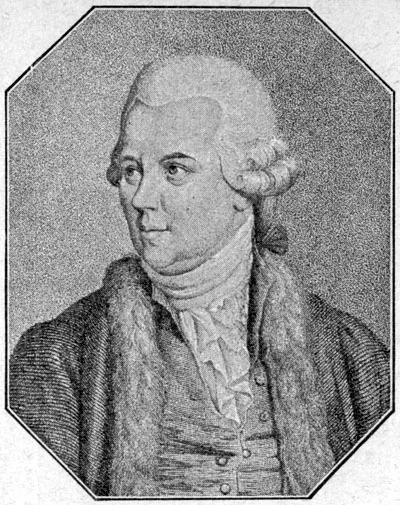
OGOliver Goldsmith
Irish poet, dramatist and essayist, Oliver Goldsmith was born either in Pallas, County Longford or Elphin, Roscommon. He was the second son of an Anglican clergyman, and spent much of his childhood at Lissoy which he drew on when writing The Deserted Village. He had a severe attack of smallpox at the age of eight which left him badly disfigured for life. In 1744 he went as a sizar to Trinity College, Dublin, ran away in 1746, but returned to graduate with a Bachelor of Arts degree in 1749. After several false starts in choosing a career, a generous uncle sent him in 1752 to Edinburgh University to study medicine. Instead of taking a degree he travelled throughout Europe, from which travels he drew on in The Vicar of Wakefield (1766). In 1756 he returned destitute to London,and practised as a physician in Southwark and as an usher in Peckham. He corrected proofs for Samuel Richardson and drifted into the profession of hack writer for Ralph Griffiths proprietor of the Monthly Review. In...
6 poezii, 0 proze
 KR
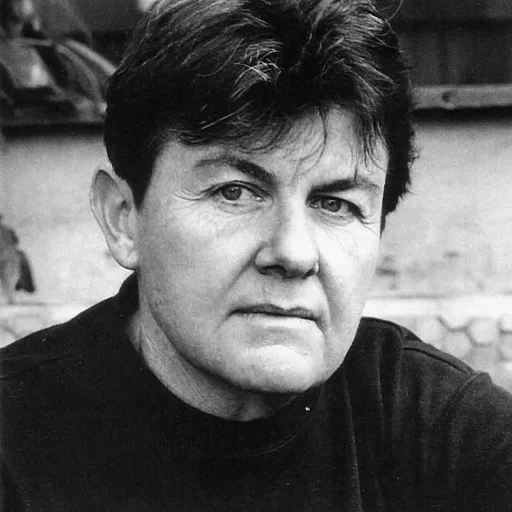
KRKay Ryan
Kay Ryan was born in California in 1945 and grew up in the small towns of the San Joaquin Valley and the Mojave Desert. She received both a bachelor\'s and master\'s degree from UCLA. Ryan has published several collections of poetry, including The Niagara River (Grove Press, 2005); Say Uncle (2000); Elephant Rocks (1996); Flamingo Watching (1994), which was a finalist for both the Lamont Poetry Selection and the Lenore Marshall Prize; Strangely Marked Metal (1985); and Dragon Acts to Dragon Ends (1983). About her work, J. D. McClatchy has said: \"Her poems are compact, exhilarating, strange affairs, like Erik Satie miniatures or Joseph Cornell boxes. She is an anomaly in today\'s literary culture: as intense and elliptical as Dickinson, as buoyant and rueful as Frost.\" Ryan\'s awards include the Ruth Lilly Poetry Prize, a Guggenheim fellowship, an Ingram Merrill Award, a fellowship from the National Endowment for the Arts, the Union League Poetry Prize, the Maurice English Poetry...
6 poezii, 0 proze
 MS
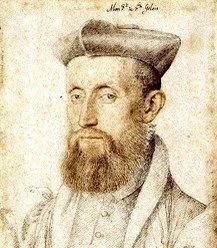
MSMellin de Saint-Gelais
Mellin de Saint-Gelais (1490-1558), poet francez renascentist. *** Mellin de Saint-Gelais (or Melin de Saint-Gelays or Sainct-Gelais; c. 1491 – October, 1558) was a French poet of the Renaissance and Poet Laureate of Francis I of France. He was born at Angoulême, most likely the natural son of Jean de Saint-Gelais, marquis de Montlieu, a member of the Angoumois gentry. His forename was the French-Norman malapropism of the British wizard Merlin featured in Arthurian legends. He was close to his uncle Octavien de Saint-Gelais (1466-1502), bishop of Angoulême since 1494, himself a poet who had translated the Aeneid into French. Mellin, who had studied at Bologna and Padua, had the reputation of being doctor, astrologer and musician as well as poet. He returned to France around 1523, and soon gained favour at the court of the art-loving Valois ruler Francis I by his skill in light verse. He was made almoner to the Dauphin, abbot of Reclus in the diocese of Troyes and librarian...
1 poezii, 0 proze
 GG
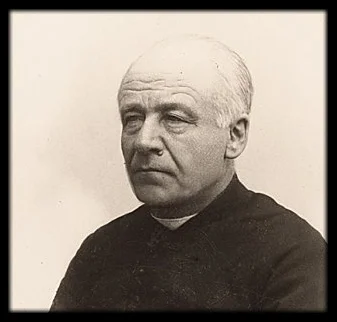
GGGuido Gezelle
Guido Gezelle (1 mai, 1830 - 27 noiembrie, 1899) a fost un scriitor flamand. Bibliografie Kerkhofblommen (1858) Vlaemsche Dichtoefeningen (1858) Kleengedichtjes (1860) Gedichten, Gezangen en Gebeden (1862) Tijdkrans (1893) Rijmsnoer (1897) Laatste Verzen (1901) *** Guido Pieter Theodorus Josephus Gezelle (May 1, 1830 - November 27, 1899) was an influential Dutch language writer and poet and a Roman Catholic priest from Belgium. He was born in Bruges in the province of West Flanders, where he also spent most of his life. He was ordained a priest in 1854, and worked as a teacher and priest in Roeselare. He was always interested in all things in English and was given the prestigious right of being the priest for the 'English Convent' in Bruges. He died there in a small room, where it is still forbidden to enter. He was the son of Monica Devrieze and Pieter Jan Gezelle, a Flemish gardener in Bruges. Gezelle was the uncle of Flemish writer Stijn Streuvels (Frank Lateur). There is a museum...
1 poezii, 0 proze
 IM
IMIñigo López de Mendoza
Don Íñigo López de Mendoza y de la Vega, Marquis of Santillana (August 19, 1398 - March 25, 1458) was a Castilian poet who held an important position in society and Literature during the reign of John II of Castile. He was born at Carrión de los Condes in Old Castile to a noble family which figured prominently in the arts. His grandfather, Pedro González de Mendoza, and his father, Diego Hurtado de Mendoza Admiral of Castile, were both poets with close ties to the great literary figures of the time: Chancellor Lopez de Ayala, Fernán Pérez de Guzmán and Gomez Manrique. His mother, Doña Leonor de la Vega, was a wealthy heiress belonging to the House of de la Vega. Lopez de Mendoza's father died when he was five years old, which brought his family into financial difficulties. Part of his childhood was spent living in his grandmother's household, and in the home of his uncle, the future Archbishop of Toledo. As a youth, he spent time in the court king Alfonso V of Aragón, where...
1 poezii, 0 proze
 CS
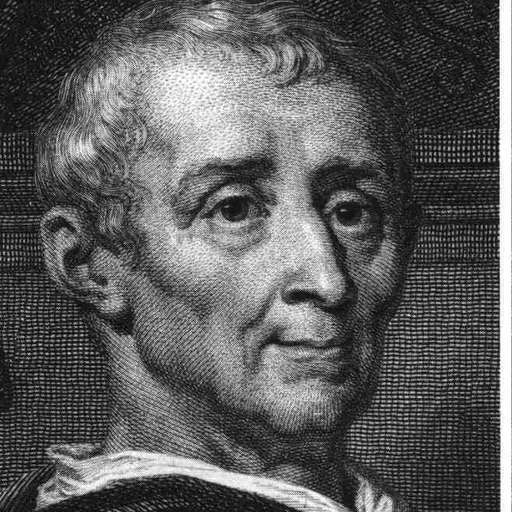
CSCharles Louis de Secondad
Charles-Louis de Secondat, baron de La Brède et de Montesquieu (English pronunciation: /ˈmɒntɨskjuː/; 18 January 1689, La Brède, Gironde – 10 February 1755), was a French social commentator and political thinker who lived during the Era of the Enlightenment. He is famous for his articulation of the theory of separation of powers, taken for granted in modern discussions of government and implemented in many constitutions throughout the world. He was largely responsible for the popularization of the terms feudalism and Byzantine Empire. After having studied at the Catholic College of Juilly, Charles-Louis de Secondat married. His wife, Jeanne de Lartigue, a Protestant, brought him a substantial dowry when he was 26. The next year, he inherited a fortune upon the death of his uncle, as well as the title Baron de Montesquieu and Président à Mortier in the Parliament of Bordeaux. By that time, England had declared itself a constitutional monarchy in the...
2 poezii, 0 proze
Maria bumbacila
unele persoane apar pe neasteptate in viata ta si pleaca la fel cum au venit dar isi lasa pentru totdeauna amprenta asupra existentei tale..
7 poezii, 0 proze
Uncle Bens
de hose pablo
eram copil ca toti prostii plateam impozite sa raman cu pene in plete si plamanii fara tutun ceilalti stateau ascunsi dupa un container ruginit pe care scria ceva despre metafore si telefonie mobila...
Rama
de hose pablo
and absolut toate gândurile care pornesc din tine sunt niște imposibilități pentru weekend în patul tău doar un corp care te ridică deasupra tuturor prohabul descheiat / de ce nu-ți vine să crezi că...
Boema lui Ben Corlaciu - sfidarea poeticului
de Dragoș Vișan
Boema lui Ben Corlaciu – sfidarea poeticului Poetul român cu cel mai imflamat egotism liric, Ben Corlaciu, pe fondul crizei modernității în perioada celui de-al doilea război mondial, a scris versuri...
Hușiul copilăriei
de Shalom Ben_Gal
Hușiul copilăriei Era prin 1947 și numai bine mă făcusem mare - sase ani bătuți pe muchie. În Huși îmi petreceam verile. Mai bine zis, parte din ele. Mătușa acolo locuia. \"Respiră mult și stai la...
O zi, vai de mama ei! 8 Martie
de florian abel
De regulă, sărbătorile au aceeași conotație în fiecare an. Situațiile deosebite (conflagrații, cataclisme și, mai nou, criza belșugului de supraproducție prea multă) care duc la sărăcirea bruscă a...
Cărarea salvatoare
de Viorel Darie
Cărarea salvatoare Întins și sălbatic este districtul Kostroma din nordul Rusiei. Dar mai sălbatice și mai neumblate sunt unele sate de la marginea acestui ținut, cu cât ne apropiem de câmpiile fără...
Nihilismul – o filosofie luciferică
de Alexandru Mărchidan
Dacă ar trebui să găsim un singur termen prin care să caracterizăm postmodernismul și chiar unele manifestări destructurante ale modernismului, atunci acel termen este relativizare, iar esența sa...
Spre necunoscut. Capitolul X
de nicolae tomescu
A coborât din tren în halta Hașagului. Avea la el doar un mic geamantan și o umbrelă mare, neagră, ce o purta agățată de brațul stâng. A luat-o, parcă ar fi fost un cunoscător al locurilor, pe Sub...
Penitenta discursului lui Mihail Crama
de Dragoș Vișan
Penitența discursivă a lui Mihail Crama Dragoș Vișan Mesajele protestatare încap bine și pe sticluța microscopului – pentru că, din numai câteva versuri, Mihail Crama aruncă, de-a lungul genocidului...
poem african
de Blesneag Stefan Ionut
[notă: În mitologiile vest-africane un „ogbanje” este un spirit care se încarnează în mod repetat în oameni (de obicei copii) doar pentru a muri deliberat și a cauza suferință persoanelor care i-au...