
"Today, for the last time" – 266 rezultate
0.04 secundeMeilisearch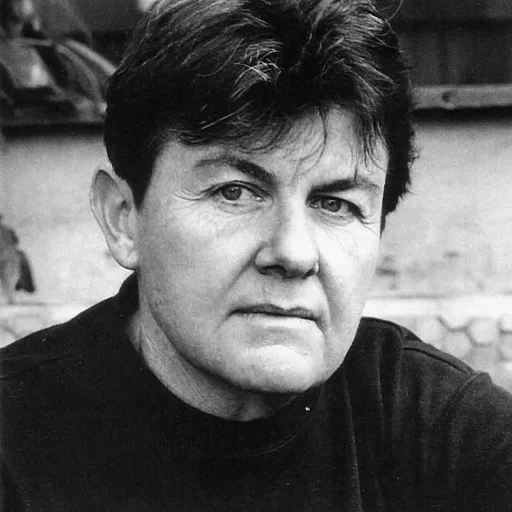 KR
KRKay Ryan
Kay Ryan was born in California in 1945 and grew up in the small towns of the San Joaquin Valley and the Mojave Desert. She received both a bachelor\'s and master\'s degree from UCLA. Ryan has published several collections of poetry, including The Niagara River (Grove Press, 2005); Say Uncle (2000); Elephant Rocks (1996); Flamingo Watching (1994), which was a finalist for both the Lamont Poetry Selection and the Lenore Marshall Prize; Strangely Marked Metal (1985); and Dragon Acts to Dragon Ends (1983). About her work, J. D. McClatchy has said: \"Her poems are compact, exhilarating, strange affairs, like Erik Satie miniatures or Joseph Cornell boxes. She is an anomaly in today\'s literary culture: as intense and elliptical as Dickinson, as buoyant and rueful as Frost.\" Ryan\'s awards include the Ruth Lilly Poetry Prize, a Guggenheim fellowship, an Ingram Merrill Award, a fellowship from the National Endowment for the Arts, the Union League Poetry Prize, the Maurice English Poetry...
6 poezii, 0 proze
 HF
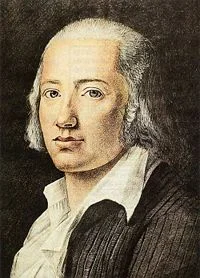
HFHÖLDERLIN, Friedrich
Johann Christian Friedrich Hölderlin (20 March 1770 – 6 June 1843) was a major German lyric poet. His work bridges the Classical and Romantic schools. Having spent most of his life tormented by mental illness, he suffered great loneliness, and often spent his time playing the piano, drawing, reading, writing, and enjoyed travelling when he had the chance. The poetry of Hölderlin, widely recognized today as one of the highest points of German literature, was little known or understood during his lifetime and slipped into obscurity shortly after his death; his illness and reclusion made him fade from his contemporaries' consciousness – and, even though selections of his work were being published by his friends already during his lifetime, it was largely ignored for the rest of the 19th century. In fact, Hölderlin was a man of his time, an early supporter of the French Revolution – in his youth at the Seminary of Tübingen, he and some colleagues from a "republican club" planted a "Tree...
22 poezii, 0 proze
 RD
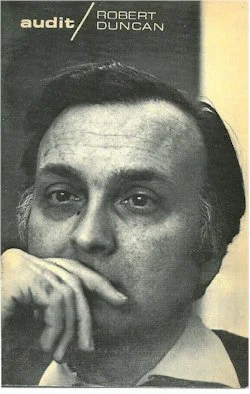
RDRobert Duncan
Robert Duncan (January 7, 1919 – February 3, 1988) was an American poet and a student of H.D. and the Western esoteric tradition who spent most of his career in and around San Francisco. Though associated with any number of literary traditions and schools, Duncan is often identified with the New American Poetry and Black Mountain poets. Duncan's mature work emerged in the 1950s from within the literary context of Beat culture and today he is also identified as a key figure in the San Francisco Renaissance. During the 1960s, Duncan achieved considerable artistic and critical success with three books; The Opening of the Field (1960), Roots and Branches (1964), and Bending the Bow (1968). These are generally considered to be his most significant works. His poetry is modernist in its preference for the impersonal, mythic, and hieratic, but Romantic in its privileging of the organic, the irrational and primordial, the not-yet-articulate blindly making its way into language like salmon...
1 poezii, 0 proze
 RD
RDRené Descartes
René Descartes (1596-1650) is one of the most important Western philosophers of the past few centuries. During his lifetime, Descartes was just as famous as an original physicist, physiologist and mathematician. But it is as a highly original philosopher that he is most frequently read today. He attempted to restart philosophy in a fresh direction. For example, his philosophy refused to accept the Aristotelian and Scholastic traditions that had dominated philosophical thought throughout the Medieval period; it attempted to fully integrate philosophy with the 'new' sciences; and Descartes changed the relationship between philosophy and theology. Such new directions for philosophy made Descartes into a revolutionary figure. The two most widely known of Descartes' philosophical ideas are those of a method of hyperbolic doubt, and the argument that, though he may doubt, he cannot doubt that he exists. The first of these comprises a key aspect of Descartes' philosophical method. As noted...
2 poezii, 0 proze
René Descartes
René Descartes (1596-1650) is one of the most important Western philosophers of the past few centuries. During his lifetime, Descartes was just as famous as an original physicist, physiologist and mathematician. But it is as a highly original philosopher that he is most frequently read today. He attempted to restart philosophy in a fresh direction. For example, his philosophy refused to accept the Aristotelian and Scholastic traditions that had dominated philosophical thought throughout the Medieval period; it attempted to fully integrate philosophy with the \'new\' sciences; and Descartes changed the relationship between philosophy and theology. Such new directions for philosophy made Descartes into a revolutionary figure. The two most widely known of Descartes\' philosophical ideas are those of a method of hyperbolic doubt, and the argument that, though he may doubt, he cannot doubt that he exists. The first of these comprises a key aspect of Descartes\' philosophical method. As...
0 poezii, 0 proze
paulo coelho
Paulo Coelho was born in 1947 into a middle-class family, the son of Pedro, an engineer, and Lygia, a housewife. At seven, he entered the Jesuit school of San Ignacio in Rio de Janeiro. Paulo came to detest the obligatory nature of religious practice. However, although he hated praying and going to mass, there were compensations. In the school\'s austere corridors, Paulo discovered his true vocation: to be a writer. He won his first literary prize in a school poetry competition, and his sister, Sonia, recounts how she won an essay prize by entering something that Paulo had discarded in the wastepaper bin. \"Paulo Coelho is not only one of the most widely read, but also one the most influential authors writing today,\" wrote the Bambi awards in Germany. \"His books have had a life-enhancing impact on millions of people\" wrote The Times in UK. To date a sum of 280 translations in 59 languages have been published with sales totalling almost 56 million copies in 150 countries. For 15...
0 poezii, 0 proze
 EL
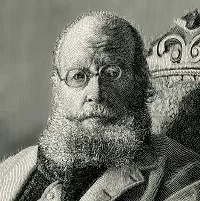
ELEdward Lear
Edward Lear (12 May 1812 – 29 January 1888) was an English artist, illustrator, author, and poet, renowned today primarily for his literary nonsense, in poetry and prose, and especially his limericks, a form that he popularised. Lear was born into a middle-class family in the village of Holloway, the 21st child of Ann and Jeremiah Lear. He was raised by his eldest sister, also named Ann, 21 years his senior. Ann doted on Lear and continued to mother him until her death, when Lear was almost 50 years of age. Due to the family's failing financial fortune, at age four he and his sister had to leave the family home and set up house together. Largely educated by himself, Lear has been described as idiosyncratic yet brilliantly talented[citation needed]. Lear also suffered from health issues. From the age of six he suffered frequent grand mal epileptic seizures, and bronchitis, asthma, and in later life, partial blindness. Lear experienced his first seizure at a fair near Highgate with his...
2 poezii, 0 proze
 JB
JBJean de La Bruyère
He was born in Paris, not, as was once thought, at Dourdan (in today's Essonne département) in 1645. His family was middle class, and his reference to a certain Geoffroy de La Bruyère, a crusader, is only a satirical illustration of a method of self-ennoblement common in France as in some other countries. Indeed he himself always signed the name Delabruyère in one word, as evidence of this. He could trace his family back at least as far as his great-grandfather, who had been a strong Leaguer. La Bruyère's own father was controller general of finance to the Hôtel de Ville. The son was educated by the Oratorians and at the University of Orléans; he was called to the bar, and in 1673 bought a post in the revenue department at Caen, which gave him status and an income. His predecessor in the post was a relation of Jacques Benigne Bossuet, and it is thought that the transaction was the cause of La Bruyère's introduction to the great orator Bossuet, who from the date of his own...
3 poezii, 0 proze
andra picincu
I started to develop my skills relevant to the business field and PR when I worked as a virtual assistant and, later, as a journalist. My studies on public relations in marketing, advertising techniques and guidelines on various issues have been promoted by well known publications worldwide, including USA Today and HealthCare.com. I have degrees in human resources management, business communication, PR, Banking and Finances, business administration and certificates in trauma and stress management. I speak four languages and I’m motivated to do my best. I have the drive and motivation to do my very best every day. I dedicated my time to improve my skills and knowledge, achieving several degrees in business and communication, although I am very young. I have the best qualifications, being responsible, friendly, having good communication and interpersonal skills. I can handle people with high temper satisfactorily and I can work under pressure.
2 poezii, 0 proze
 KI
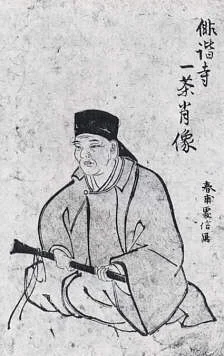
KIKobayashi Issa
Kobayashi Issa (1763-1828) a fost un poet japonez. *** Kobayashi Issa (1763-1827) - original name Kobayashi Nobuyki - Also called Kobayashi Yataro, born in some sources on May 5, 1763 Kobayashi Issa was born in Kashiwabara, Shinano province (now part of Shinano Town, Nagano Prefecture), a son of a farmer. His father was widowed a few years after Issa was born. Issa was looked after by his grandmother until his father remarried. During this period, he started to study haiku under a local poet, Shimpo. Issa's troubles with his stepmother started when she gave birth to a son. Later Issa complainen that he was beaten "a hundred times a day." In 1777, at the age of fourteen, he was sent by his father to Edo (Tokyo today), where he studied haiku under the poets Mizoguchi Sogan and Norokuan Chikua (died 1790). Possibly Issa also worked as a clerk at a Buddhist temple. Issa's works gained the attention Seibi Natsume, who became his patron. Although his poems became more and more known, he was...
2 poezii, 0 proze
..::Red Lace::..
de Sopov Joana
stiu ca nu e in romana dar mi-a venit sa scriu in engleza so... ..::Red Lace::.. Entering the room with the swiftest of grace wearing the dress made of cheap red lace made by the angonising exploit...
The Use and Abuse of History
de Friedrich Nietzsche
The Use and Abuse of History (1878) By Friedrich Nietzsche Forward \"Incidentally, I despise everything which merely instructs me without increasing or immediately enlivening my activity.\" These are...
Haiku și tanka
de Marian Nicolae TOMI
* ceaiul dă în foc - the tea is boiling - cu ochii pierduți pe câmp the eyes lost on the field închizând geamul closing the window * privind un lemn uscat – looking at a dry log - înflorind fără...
Somewhere in the DARK ... It was a holy man
de Luca Tiberiu
Somewhere in the DARK ... It was a holy man For bein' dead so many lost live Wonder how long before the soul dies, Today I heard you cry for the firs time, It was the worst time The way I heard you...
Ghost
de Alin Niculae
\"...and my soul from out that shadow that lies floating on the floor shall be lifted Nevermore.\" on a sweet scented summer day with the ashes falling from the sky the ashes he once loved for they...
Hamlet
de William Shakespeare
HAMLET DRAMATIS PERSONAE (PAGINA 2) ACT I SCENE II A room of state in the castle. [Enter KING CLAUDIUS, QUEEN GERTRUDE, HAMLET, POLONIUS, LAERTES, VOLTIMAND, CORNELIUS, Lords, and Attendants] KING...
West Running Brook
de Robert Frost
\'Fred, where is north?\' \'North? North is there, my love. The brook runs west.\' \'West-running Brook then call it.\' (West-Running Brook men call it to this day.) \'What does it think k\'s doing...
The Solitary Reaper
de William Wordsworth
Behold her, single in the field, Yon solitary Highland Lass! Reaping and singing by herself; Stop here, or gently pass! Alone she cuts and binds the grain, And sings a melancholy strain; O listen!...
Taming of the Shrew
de William Shakespeare
Induction, Scene I SCENE I. Before an alehouse on a heath. Enter Hostess and SLY SLY I\'ll pheeze you, in faith. Hostess A pair of stocks, you rogue! SLY Ye are a baggage: the Slys are no rogues;...
A dangerous working place
de Adrian Arvunescu
My brother is a war journalist. He corresponds for Reality TV from places all over the world where conflagrations take place. This year, he went to Iraq to question Saddam, but unfortunately, the...