
"The first death of the cat" – 11464 rezultate
0.02 secundeMeilisearchPercy Bisshe Shelley
Percy Bysshe Shelley was born August 4, 1792, the first of seven children born to Timothy Shelley, a country squire who became a baronet in 1815 upon the death of his father, Sir Bysshe Shelley. Percy attended Sion House Academy from 1802-4 and then Eton, where the young intellectual and idealist encountered the public school system of \"fagging,\" in which upperclass boys tyrannized their juniors, who ran errands and acted as servants. Afterwards Shelley equated school with prison. Although University College, Oxford, where he enrolled in 1810, came as something of a relief, within a few months he was expelled along with his friend Thomas Jefferson Hogg for refusing to acknowledge or deny authorship of a pamphlet entitled The Necessity of Atheism. His father visited him in London after his expulsion, insisting that he renounce his friend Hogg and his beliefs, which included atheism, vegetarianism, free love, and political radicalism; Shelley refused. The resulting estrangement from...
22 poezii, 0 proze
Percy Bisshe Shelley
Percy Bysshe Shelley was born August 4, 1792, the first of seven children born to Timothy Shelley, a country squire who became a baronet in 1815 upon the death of his father, Sir Bysshe Shelley. Percy attended Sion House Academy from 1802-4 and then Eton, where the young intellectual and idealist encountered the public school system of \"fagging,\" in which upperclass boys tyrannized their juniors, who ran errands and acted as servants. Afterwards Shelley equated school with prison. Although University College, Oxford, where he enrolled in 1810, came as something of a relief, within a few months he was expelled along with his friend Thomas Jefferson Hogg for refusing to acknowledge or deny authorship of a pamphlet entitled The Necessity of Atheism. His father visited him in London after his expulsion, insisting that he renounce his friend Hogg and his beliefs, which included atheism, vegetarianism, free love, and political radicalism; Shelley refused. The resulting estrangement from...
0 poezii, 0 proze
 SB
SBSimone de Beauvoir
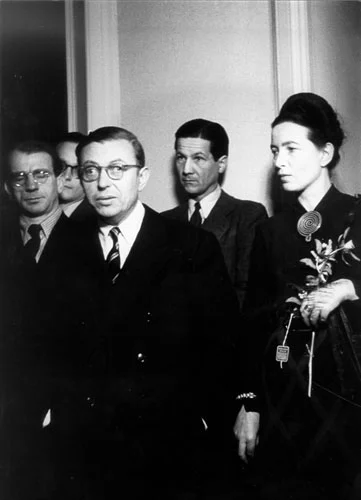
French Existentialist, Writer, and Social Essayist Born and educated in Paris, Simone de Beauvoir was among the first women permitted to complete a program of study at the École Normale Supérieure. Through her lifelong friendship with Sartre, she contributed significantly to the development and expression of existentialist philosophy. Jean-Paul Sartre and De beauvoir met after her studies in the Sorbonne, the beginning of a friendship which lasted until his death in 1980. This period began what she described as a \'moral\' phase of life; the culmination of which was her most important philosophical work, The Ethics of Ambiguity(1948). She began the phase with an essay entitled Pyrrhus et Cineas(1944), and the earlier novel called L\'Envitee(1943). No doubt born of the confusion and madness of WWII, De Beauvoir included in her Ethics Sartre\'s ontology of being-for-itself and being-in-itself. She also draws heavily on his conception of human beings as creatures who are free. Freedom of...
2 poezii, 0 proze
 SC
SCStephen Crane
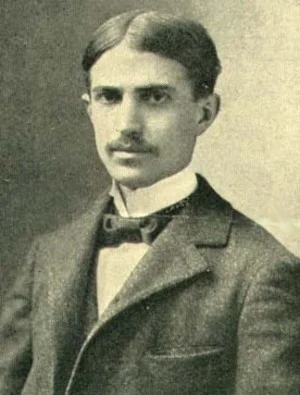
Stephen Crane (1871-1900), American author, whose second novel, The Red Badge Of Courage (1895), brought him international fame. The Red Badge of Courage depicted the American Civil War from the point of view of an ordinary soldier. It has been called the first modern war novel. Crane was born in Newark, New Jersey, on November1, 1871, as the 14th child of a Methodist minister. He started to write stories at the age of eight and at 16 he was writing articles for the New York Tribune. Crane studied at Lafayette College and Syracuse University. After his mother's death in 1890 - his father had died earlier - Crane moved to New York, where he lived a bohemian life, and worked as a free-lance writer and journalist. While supporting himself by his writings, he lived among the poor in the Bowery slums to research his first novel. Crane's first novel, Maggie: A Girl Of The Streets(1893) was a milestone in the development of literary naturalism. Crane had to print the book at his own expense,...
11 poezii, 0 proze
 PL
PLPhilip Larkin
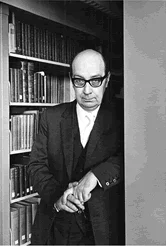
Philip Arthur Larkin, CH, CBE, FRSL (9 August 1922 – 2 December 1985) is commonly regarded as one of the greatest English poets of the latter half of the twentieth century. He was also a novelist and a jazz critic. He spent almost all of his working life as a university librarian. He first came to prominence with the publication in 1955 of his second collection of poems, The Less Deceived, which was followed by The Whitsun Weddings in 1964 and High Windows in 1974. He was offered the Poet Laureateship following the death of John Betjeman in 1984, but he declined the honour. Larkin was born in the city of Coventry. From 1930 to 1940 he was educated at King Henry VIII School in Coventry and, in October 1940, in the midst of the Second World War, he went up to St John's College, Oxford, to read English language and literature. Having been rejected for military service because of his poor eyesight, he was able, unlike many of his contemporaries, to follow the traditional full-length...
1 poezii, 0 proze
Thomas Gray
1716–71, English poet. He was educated at Eton and Peterhouse, Cambridge. In 1739 he began a grand tour of the Continent with Horace Walpole. They quarreled in Italy, and Gray returned to England in 1741. He continued his studies at Cambridge, and he remained there for most of his life, living in seclusion, studying Greek, and writing. In 1768 he was made professor of history and modern languages, but he did no real teaching. Although he was reconciled with Walpole, and formed other close relationships in his lifetime, his shy and sensitive disposition was ill adapted to the robust century in which he lived. He was offered the laureateship in 1757 but refused it. His first important poems, written in 1742, include “To Spring,” “On a Distant Prospect of Eton College,” and a sonnet on the death of his close friend Richard West. After years of revision he finished his great “Elegy Written in a Country Churchyard” (1751), a meditative poem presenting thoughts conjured up by the sight of a...
1 poezii, 0 proze
Robert Browning
Robert Browning was born on May 7, 1812 in Camberwell, which is south of London. His birthday falls within a couple of months of the births of Dickens and Thackeray. He was the eldest of 2 children, born to Robert and Sarah Anna Browning. His father was a bank clerk. He attended London University for a short while in 1828, but received most of his education by readinghis from his father\'s library. His first poem, Pauline, was published when he was 21. It was soon followed by Paracelsus (1835) and Sordello (1840). A year later, Pippa Passes, the first in a series entitled Bells and Pomegranates was published; the remaining seven parts appeared between 1841-46. In 1846, Browning eloped with Elizabeth Barrett and lived with her in Italy until his death in 1861. Various difficulties made the poet\'s requested burial in Florence impossible, and his body was returned to England to be interred in Westminster Abbey. The they left you for their pleasure: till in due time, one by one, Some...
12 poezii, 0 proze
 N
NNostradamus
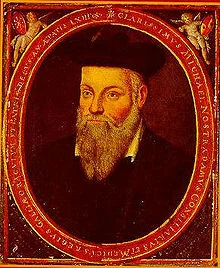
Michel de Nostredame[1] (14 or 21 December 1503[2] – 2 July 1566), usually Latinised to Nostradamus, was a French apothecary and reputed seer who published collections of prophecies that have since become famous worldwide. He is best known for his book Les Propheties (The Prophecies), the first edition of which appeared in 1555. Since the publication of this book, which has rarely been out of print since his death, Nostradamus has attracted a following that, along with the popular press, credits him with predicting many major world events. Most academic sources maintain that the associations made between world events and Nostradamus's quatrains are largely the result of misinterpretations or mistranslations (sometimes deliberate) or else are so tenuous as to render them useless as evidence of any genuine predictive power.[3] Moreover, none of the sources listed offers any evidence that anyone has ever interpreted any of Nostradamus's quatrains specifically enough to allow a clear...
1 poezii, 0 proze
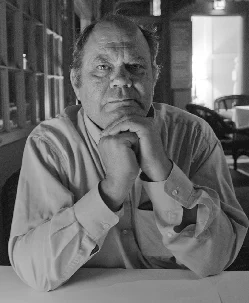 DC
DCDavid Chadwick
(n. 1945, Texas) a studiat gândirea zen cu Shunryu Suzuki, din 1966. În 1971, cu puțin timp înainte de moartea lui Suzuki, a devenit preot budist. A participat mai mulți ani la activitățile desfășurate de San Francisco Zen Center. Printre cărțile pe care le-a scris se numără Crooked Cucumber: The Life and Zen Teaching of Shunryu Suzuki (1999), o biografie a maestrului său, și To Shine One Corner of the World: Moments with Shunryu Suzuki (2001), reeditată în 2007 sub titlul Zen Is Right Here : Teaching Stories and Anecdotes of Shunryu Suzuki, Author of Zen Mind, Beginner`s Mind. *** David Chadwick (born 1945) grew up in Fort Worth Texas, dropped out of college the first year, did civil rights work, hitchhiked around, went to Mexico for a year, moved to California and began to study Zen as a student of Shunryu Suzuki in 1966. He was ordained as a Buddhist priest in 1971, shortly before Suzuki's death. He continued his Zen study with Richard Baker and assisted in the operation of the San...
2 poezii, 0 proze
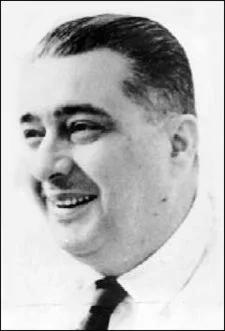 JL
JLJosé Lezama Lima
José Lezama Lima (19 decembrie, 1910 în Havana, Cuba - 8 august, 1976 în Havana, Cuba) a fost un romancier ți poet cubanez. Born in the Columbia Military Encampment close to Havana in the city of Marianao where his father was a colonel, Lezama lived through the most turbulent times of Cuba's history, fighting first against the Machado dictatorship, and later surviving the Castro regime. A gay man himself,[1] his literary output includes the semi-autobiographical, baroque novel Paradiso (1966), the story of a young man and his struggles with his mysterious illness, the death of his father, and his developing homosexuality and poetic sensibilities. Lima also edited several anthologies of Cuban poetry and the magazines Verbum and Orígenes, presiding as the patriarch of Cuban letters for most of his later years. In addition to his poems and novels, Lezama wrote many essays on figures of world literature like Mallarmé, Valéry, Góngora and Rimbaud as well as on Latin American baroque...
3 poezii, 0 proze
Hamlet
de William Shakespeare
HAMLET DRAMATIS PERSONAE (PAGINA 7) ACT IV SCENE II Another room in the castle. [Enter HAMLET] HAMLET Safely stowed. ROSENCRANTZ: | | [Within] Hamlet! Lord Hamlet! GUILDENSTERN: | HAMLET What noise?...
Shakespeare 2016
de tea nicolescu
Shakespeare 2016 Motto: “ “This above all: to thine own self be true.”(Hamlet) Nu-mi propusesem să scriu despre Shakespeare în acest aprilie iernatic, dar am citit ieri la BBC un...
The Self-Seeker
de Robert Frost
Willis, I didn\'t want you here to-day: The lawyer\'s coming for the company. I\'m going to sell my soul, or, rather, feet. Five hundred dollars for the pair, you know.\" \"With you the feet have...
Laura
de Paul Valéry
Since dawn she has been with me, Laura, alone in a private sphere. Solitude I name this closed system where all things are alive. At this first hour I bank neither with my days nor with my nights,...
Hamlet
de William Shakespeare
HAMLET DRAMATIS PERSONAE (PAGINA 2) ACT I SCENE II A room of state in the castle. [Enter KING CLAUDIUS, QUEEN GERTRUDE, HAMLET, POLONIUS, LAERTES, VOLTIMAND, CORNELIUS, Lords, and Attendants] KING...
Ash Wednesday
de T.S. Eliot
I Because I do not hope to turn again Because I do not hope Because I do not hope to turn Desiring this man\'s gift and that man\'s scope I no longer strive to strive towards such things (Why should...
The Rime of the Ancient Mariner
de Samuel Taylor Coleridge
PART THE FIRST. It is an ancient Mariner, And he stoppeth one of three. “By thy long grey beard and glittering eye, Now wherefore stopp’st thou me?” “The Bridegroom’s doors are opened wide, And I am...
The Apocalyptic Subculture of a Woman\'s Man
de Ohm
Where can I begin? Where will it end? Well, either in the year 2003 or the year 2006, most likely the latter. The remaining timeline grows thinner as the world grows fatter. It doesn\'t matter,...
The Poems of Sappho Part I
de Sappho
The Poetry of Sappho: Introduction By J.B Hare Imagine that two millenia or so in the future, literary experts attempt to collect the glories of our literature. Most of our paper writings have...
PARADISE LOST -- Book I
de John Milton
Book I Of Man\'s first disobedience, and the fruit Of that forbidden tree whose mortal taste Brought death into the World, and all our woe, With loss of Eden, till one greater Man Restore us, and...