
"Sonnets (I)" – 134 rezultate
0.00 secundeMeilisearch DF
DFDesăvârșita Domniță Florentină
Compiuta Donzella Fiorentina este pseudonimul unei poete din secolul XIII. Existența ei, îndelung contestată, este astăzi în general acceptată de către critică. Contemporană cu Nina Siciliana, iubita lui Dante da Maiano *** La) Compiuta Donzella, called either di Firenze or Fiorentina, was the earliest poetess of the Italian language. Three of her sonnets survive in a single manuscript, and one is half of a tenzone. Compiuta may be her given name, but more probably a senhal (code name). Her full name translates "the accomplished young lady from Florence". Her existence was once in doubt and she was considered a construct of the poets, but this view has been discarded. In A la stagion che 'l mondo foglia e fiora ("In the season when the world sends forth leaves and flowers"), Compiuta complains of her father's choice of a husband for her. She is miserable at sprintime, when other lovers are rejoicing. In Lasciar voria lo mondo e Dio servire ("I would like to leave the world to serve...
1 poezii, 0 proze
 RB
RBRupert Chawner Brooke
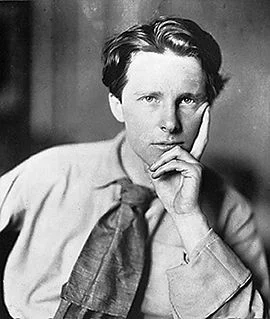
Rupert Chawner Brooke (middle name sometimes given as Chaucer)(3 August 1887–23 April 1915) was an English poet known for his idealistic war sonnets written during the First World War (especially The Soldier); however, he never experienced combat at first hand. He was also known for his boyish good looks, which prompted the Irish poet William Butler Yeats to describe him as \"the handsomest young man in England\". English poet Brooke was born at 5 Hillmorton Road in Rugby, Warwickshire, the second of the three sons of William Parker Brooke, a Rugby schoolmaster, and Ruth Mary Brooke, née Cotterill. He attended Hillbrow Prep School before being educated at Rugby School. While travelling in Europe, he prepared a thesis entitled \"John Webster and the Elizabethan Drama\", which won him a scholarship to King\'s College, Cambridge, where he became a member of the Cambridge Apostles, helped found the Marlowe Society drama club and acted in plays including the Cambridge Greek Play. Brooke...
7 poezii, 0 proze
 TB
TBTed Berrigan
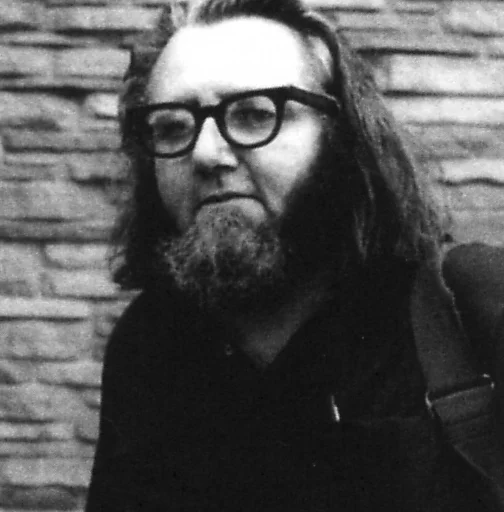
A fost unul dintre cei mai importanți poeți ai generației lui, faimos nu numai pentru scrisul său invocator din The Sonnets (1964) dar și pentru poeziile sale lirice ulterioare. A fost un profesor și un model pentru mulți poeți, în diferite universități, cât și în casa lui din Manhattan s Lower East Side. A murit la 4 iulie 1983. *** Ted Berrigan (15 November 1934 – 4 July 1983) was an American poet. Berrigan was born in Providence, Rhode Island, on November 15, 1934. After high school, he spent a year at Providence College before joining the U.S. Army in 1954 to serve in the Korean War. After three years in the Army, he finished his college studies at the University of Tulsa in Oklahoma, where he received a B.A. in English in 1959. He received his M.A. from Tulsa in 1962. Berrigan was married to Sandy Berrigan, also a poet, and they had two children, David Berrigan and Kate Berrigan. He and his second wife the poet Alice Notley were active in the poetry scene in Chicago for several...
3 poezii, 0 proze
 EB
EBElizabeth Barret Browning
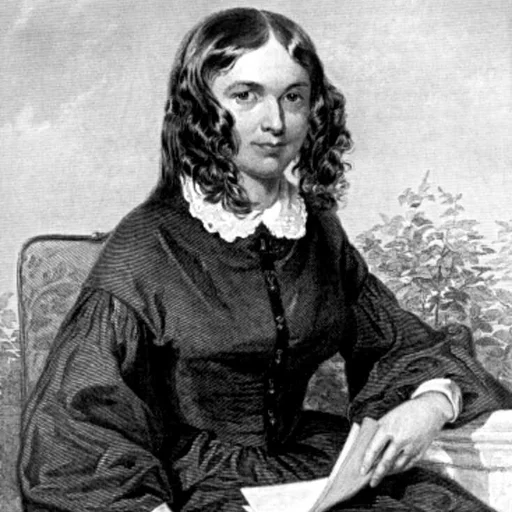
Naștere – 6 martie 1806 Kelloe, lângă Durham, Anglia Deces – 29 iunie 1861 (la 55 de ani) Florența, Italia Elizabeth Barrett Browning (n. 6 martie 1806 - d. 29 iunie 1861) a fost o poetă engleză. A scris versuri de o deosebită sensibilitate dedicate soțului ei, poetul Robert Browning. Opera 1847: Sonete din parte portughezei ("Sonnets from the Portuguese"); 1851: Ferestrele casei Guidi ("Casa Guidi Window"); 1860: Poeme înainte de Congres ("Poems Before Congress"); 1857: Aurora Leigh ("Aurora Leigh").
1 poezii, 0 proze
 RV
RVRenée Vivien
Renée Vivien, born Pauline Mary Tarn (11 June 1877 - 18 November 1909) was a British poet who wrote in the French language.[1][2] She took to heart all the mannerisms of Symbolism, as one of the last poets to claim allegiance to the school. Her compositions include sonnets, hendecasyllabic verse, and prose poetry. Vivien was born in London, England to a wealthy British father and an American mother from Jackson, Michigan. She grew up in Paris and London. Upon inheriting her father's fortune at 21, she emigrated permanently to France. In Paris, Vivien's dress and lifestyle were as notorious among the bohemian set as was her verse. She lived lavishly, as an open lesbian, and carried on a well-known affair with American heiress and writer Natalie Clifford Barney. She also harbored a lifelong obsession with her closest childhood friend and neighbor, Violet Shillito – a relationship that remained unconsummated. In 1900 Vivien abandoned this chaste love, when the great romance with Natalie...
17 poezii, 0 proze
 JT
JTJacques Tahureau
Jacques Tahureau Écrivain français (Le Mans 1527 – v. 1555). Il prit part aux guerres d\'Italie ; de retour en France, il se lia d\'amitié avec J.-A. de Baïf et se familiarisa, grâce à ce dernier, avec la doctrine et la pratique de la jeune école de la Pléiade. Il mourut l\'année même de son mariage, en 1555. Il avait, en 1554, édité un recueil de poèmes pétrarquisants, les Sonnets, Odes et Mignardises amoureuses de l\'Admirée. Mais ce sont les Dialogues, publiés après sa mort en 1565, qui constituent la part de son œuvre la plus originale. S\'inspirant du philosophe grec Démocrite, il s\'y livre, au nom de la raison, à une critique systématique et impitoyable de toutes les « folies » humaines : après celle de l\'amour (à quoi est consacrée la plus grande partie du Premier Dialogue) vient celle des diverses impostures dont se sont rendus coupables au cours de l\'Histoire les nobles, les hommes de loi, les médecins, les astrologues, les alchimistes, et, pour finir, ceux qu\'il appelle...
1 poezii, 0 proze
 EB
EBElizabeth Barrett Browning
Elizabeth Barrett Browning (6 March 1806 – 29 June 1861) was one of the most prominent poets of the Victorian era. Her poetry was widely popular in both England and the United States during her lifetime.[1] A collection of her last poems was published by her husband, Robert Browning, shortly after her death. Works/Collections 1820: The Battle of Marathon: A Poem. Privately printed 1826: A Essay On Mind, with Other Poems. London: James Duncan 1833: Prometheus Bound, Translated from the Greek of Aeschylus,and Miscellaneous Poems. London: A.J. Valpy 1838: The Seraphim, and Other Poems. London: Saunders and Otley 1844: Poems (UK) / A Drama of Exile, and other Poems (US). London: Edward Moxon. New York: Henry G. Langley 1850: Poems ("New Edition", 2 vols.) Revision of 1844 edition adding Sonnets from the Portuguese and others. London: Chapman & Hall 1851: Casa Guidi Windows. London: Chapman & Hall 1853: Poems (3d ed.). London: Chapman & Hall 1854: Two Poems: "A Plea for the Ragged Schools...
1 poezii, 0 proze
Richard Von Schaukal
1892-1897 studiaza dreptul in Viena; in 1998 promoveaza examenul de licenta; face parte din categoria poetilor simbolisti din Viena; primul volum de poezii il scoate la varsta de 19 ani, sub influenta puternica a lui Hugo von Hofmannsthal. Opere: Poems (Dresden 1893); Verses 1892-96 (Bruenn 1896); My gardens. Lonely verses (Berlin 1897); Tristia. New poems from the years 1897-98 (Leipzig 1898); Days and dreams. New verses (Leipzig 1899; 2 1902 erw. Expenditure.); Longing. New verses (Munich 1900); Pierrot and Combine or the song of the marriage (Leipzig 1902); Previous evening. An act in verses (Leipzig 1902); Selected poems (Leipzig 1904); Book of the soul. New poems (Munich 1908); Child poems (Munich 1913); Autumn. Poems 1912-14 (Munich 1914); Eherne of sonnets 1914 (Munich 1915); Homeland of the soul. Poems 1914-16 (Munich 1916); War songs from Austria (Vienna 1917); Jahresringe. New poems 1918-21 (Braunschweig 1922); Autumn height. New poems 1921-33 (Paderborn 1933); Music of the...
2 poezii, 0 proze
 WW
WWWilliam Wordsworth
William Wordsworth was born on April 17, 1770 in Cockermouth, Cumberland, in the Lake District. His father was John Wordsworth, Sir James Lowther\'s attorney. The magnificent landscape deeply affected Wordsworth\'s imagination and gave him a love of nature. He lost his mother when he was eight and five years later his father. The domestic problems separated Wordsworth from his beloved and neurotic sister Dorothy, who was a very important person in his life. With the help of his two uncles, Wordsworth entered a local school and continued his studies at Cambridge University. Wordsworth made his debut as a writer in 1787, when he published a sonnet in The European Magazine . In that same year he entered St. John\'s College, Cambridge, from where he took his B.A. in 1791. During a summer vacation in 1790 Wordsworth went on a walking tour through revolutionary France and also traveled in Switzerland. On his second journey in France, Wordsworth had an affair with a French girl, Annette...
16 poezii, 0 proze
 MS
MSMaurice Scève
Maurice Scève (1501-1564?), représentant le plus illustre de l\'école lyonnaise, est né à Lyon, entre 1500 et 1505, dans une famille bourgeoise qui joue un rôle honorable dans la vie de la cité. Son existence reste mal connue. Il reçoit une solide formation intellectuelle. Peut-être devient-il docteur en droit. Vers 1530, il est en Avignon attaché au vicaire de l\'Archevêque. En 1533, il prend part aux recherches qui tentent de retrouver le tombeau de la mythique Laure, la dame que Pétrarque avait aimée et chantée dans son Canzoniere, morte en Avignon lors de la peste de 1348. Il y découvre un sonnet qu\'il attribue à Pétrarque. Cette trouvaille lui vaut la célébrité, et les félicitations du roi François Ier, lui même grand amateur de poésie pétrarquiste. De retour à Lyon, Scève fréquente les cercles cultivés et connaît les milieux néo-latins où s\'épanouisse le sodalitium lugdunense. En 1535, Scève fait la connaissance d\'Étienne Dolet et lui donne à imprimer son premier ouvrage, La...
6 poezii, 0 proze
To hope
de John Keats
When by my solitary hearth I sit, And hateful thoughts enwrap my soul in gloom; When no fair dreams before my \"mind\'s eye\" flit, And the bare heath of life presents no bloom; Sweet Hope, ethereal...
Sonnet I
de William Shakespeare
FROM fairest creatures we desire increase, That thereby beauty\'s rose might never die, But as the riper should by time decease, His tender heir might bear his memory: But thou, contracted to thine...
The psalm of a dew-drop
de Iustina Daniela Cucu
It is raining now Like a sonnet-how Am I feeling? I have a past I had a last Moment... It was hand-written In the Holy Scriptures The libretto of my life- I am listening so hard... Because in the...
Sonet CXLII
de Cristian Vasiliu
Iubesc păcatul și urăsc virtutea Ce-ngroapă-adînc pornirea vinovată, Căci judecată după-al meu statut ea E demnă și nu merită mustrată De gura ta – podoabă stacojie - Cu care sigilezi în mine chinul...
Sonnet CXLIV: Two loves I have of comfort and despair
de William Shakespeare
Two loves I have of comfort and despair Which like two spirits do suggest me still: The better angel is a man right fair, The worser spirit a woman colour\'d ill. To win me soon to hell, my female...
Sonnet XII
de William Shakespeare
When I do count the clock that tells the time, And see the brave day sunk in hideous night; When I behold the violet past prime, And sable curls all silver\'d o\'er with white; When lofty trees I see...
Sonnet XV
de William Shakespeare
When I consider every thing that grows Holds in perfection but a little moment, That this huge stage presenteth nought but shows Whereon the stars in secret influence comment; When I perceive that...
Sonnet XVIII
de William Shakespeare
Shall I compare thee to a summer\'s day? Thou art more lovely and more temperate: Rough winds do shake the darling buds of May, And summer\'s lease hath all too short a date: Sometime too hot the eye...
Sonnet LXIV
de William Shakespeare
When I have seen by Time\'s fell hand defaced The rich proud cost of outworn buried age; When sometime lofty towers I see down-razed And brass eternal slave to mortal rage; When I have seen the...
Sonnet LXXIX
de William Shakespeare
Whilst I alone did call upon thy aid, My verse alone had all thy gentle grace, But now my gracious numbers are decay\'d And my sick Muse doth give another place. I grant, sweet love, thy lovely...