
"Sonnet 3" – 4095 rezultate
0.02 secundeMeilisearch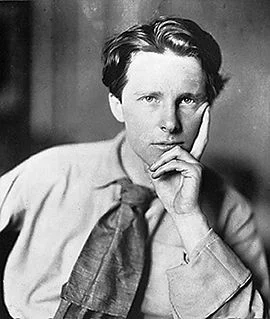 RB
RBRupert Chawner Brooke
Rupert Chawner Brooke (middle name sometimes given as Chaucer)(3 August 1887–23 April 1915) was an English poet known for his idealistic war sonnets written during the First World War (especially The Soldier); however, he never experienced combat at first hand. He was also known for his boyish good looks, which prompted the Irish poet William Butler Yeats to describe him as \"the handsomest young man in England\". English poet Brooke was born at 5 Hillmorton Road in Rugby, Warwickshire, the second of the three sons of William Parker Brooke, a Rugby schoolmaster, and Ruth Mary Brooke, née Cotterill. He attended Hillbrow Prep School before being educated at Rugby School. While travelling in Europe, he prepared a thesis entitled \"John Webster and the Elizabethan Drama\", which won him a scholarship to King\'s College, Cambridge, where he became a member of the Cambridge Apostles, helped found the Marlowe Society drama club and acted in plays including the Cambridge Greek Play. Brooke...
7 poezii, 0 proze
 EB
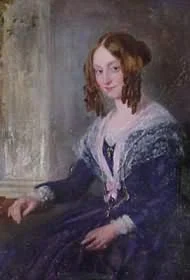
EBElizabeth Barrett Browning
Elizabeth Barrett Browning (6 March 1806 – 29 June 1861) was one of the most prominent poets of the Victorian era. Her poetry was widely popular in both England and the United States during her lifetime.[1] A collection of her last poems was published by her husband, Robert Browning, shortly after her death. Works/Collections 1820: The Battle of Marathon: A Poem. Privately printed 1826: A Essay On Mind, with Other Poems. London: James Duncan 1833: Prometheus Bound, Translated from the Greek of Aeschylus,and Miscellaneous Poems. London: A.J. Valpy 1838: The Seraphim, and Other Poems. London: Saunders and Otley 1844: Poems (UK) / A Drama of Exile, and other Poems (US). London: Edward Moxon. New York: Henry G. Langley 1850: Poems ("New Edition", 2 vols.) Revision of 1844 edition adding Sonnets from the Portuguese and others. London: Chapman & Hall 1851: Casa Guidi Windows. London: Chapman & Hall 1853: Poems (3d ed.). London: Chapman & Hall 1854: Two Poems: "A Plea for the Ragged Schools...
1 poezii, 0 proze
Richard Von Schaukal
1892-1897 studiaza dreptul in Viena; in 1998 promoveaza examenul de licenta; face parte din categoria poetilor simbolisti din Viena; primul volum de poezii il scoate la varsta de 19 ani, sub influenta puternica a lui Hugo von Hofmannsthal. Opere: Poems (Dresden 1893); Verses 1892-96 (Bruenn 1896); My gardens. Lonely verses (Berlin 1897); Tristia. New poems from the years 1897-98 (Leipzig 1898); Days and dreams. New verses (Leipzig 1899; 2 1902 erw. Expenditure.); Longing. New verses (Munich 1900); Pierrot and Combine or the song of the marriage (Leipzig 1902); Previous evening. An act in verses (Leipzig 1902); Selected poems (Leipzig 1904); Book of the soul. New poems (Munich 1908); Child poems (Munich 1913); Autumn. Poems 1912-14 (Munich 1914); Eherne of sonnets 1914 (Munich 1915); Homeland of the soul. Poems 1914-16 (Munich 1916); War songs from Austria (Vienna 1917); Jahresringe. New poems 1918-21 (Braunschweig 1922); Autumn height. New poems 1921-33 (Paderborn 1933); Music of the...
2 poezii, 0 proze
 WW
WWWilliam Wordsworth
William Wordsworth was born on April 17, 1770 in Cockermouth, Cumberland, in the Lake District. His father was John Wordsworth, Sir James Lowther\'s attorney. The magnificent landscape deeply affected Wordsworth\'s imagination and gave him a love of nature. He lost his mother when he was eight and five years later his father. The domestic problems separated Wordsworth from his beloved and neurotic sister Dorothy, who was a very important person in his life. With the help of his two uncles, Wordsworth entered a local school and continued his studies at Cambridge University. Wordsworth made his debut as a writer in 1787, when he published a sonnet in The European Magazine . In that same year he entered St. John\'s College, Cambridge, from where he took his B.A. in 1791. During a summer vacation in 1790 Wordsworth went on a walking tour through revolutionary France and also traveled in Switzerland. On his second journey in France, Wordsworth had an affair with a French girl, Annette...
16 poezii, 0 proze
 MS
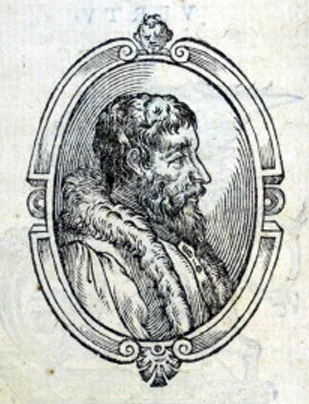
MSMaurice Scève
Maurice Scève (1501-1564?), représentant le plus illustre de l\'école lyonnaise, est né à Lyon, entre 1500 et 1505, dans une famille bourgeoise qui joue un rôle honorable dans la vie de la cité. Son existence reste mal connue. Il reçoit une solide formation intellectuelle. Peut-être devient-il docteur en droit. Vers 1530, il est en Avignon attaché au vicaire de l\'Archevêque. En 1533, il prend part aux recherches qui tentent de retrouver le tombeau de la mythique Laure, la dame que Pétrarque avait aimée et chantée dans son Canzoniere, morte en Avignon lors de la peste de 1348. Il y découvre un sonnet qu\'il attribue à Pétrarque. Cette trouvaille lui vaut la célébrité, et les félicitations du roi François Ier, lui même grand amateur de poésie pétrarquiste. De retour à Lyon, Scève fréquente les cercles cultivés et connaît les milieux néo-latins où s\'épanouisse le sodalitium lugdunense. En 1535, Scève fait la connaissance d\'Étienne Dolet et lui donne à imprimer son premier ouvrage, La...
6 poezii, 0 proze
 GN
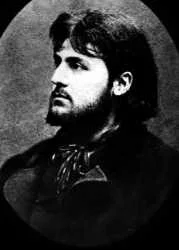
GNGermain Nouveau
Germain Nouveau est l'aîné des 4 enfants de Félicien Nouveau (1826-1884) et de Marie Silvy (1832-1858). Germain Nouveau perd sa mère alors qu'il n'a que sept ans. Il est élevé par son grand-père. Après une enfance à Aix-en-Provence et des études qu'il effectue au petit séminaire, pensant même à embrasser la prêtrise, et après une année d’enseignement au lycée de Marseille en 1871-1872, Nouveau s'installe à Paris à l’automne 1872. Il publie son premier poème, "Sonnet d’été", dans La Renaissance artistique et littéraire, revue d’Émile Blémont et fait connaissance de Mallarmé, de Jean Richepin et les « Vivants » (Ponchon…) qui se réunissent au café Tabourey. Il fréquente aussi les zutistes, fait la connaissance de Charles Cros avec lequel il collabore à la rédaction des Dixains réalistes qui tournent en dérision les parnassiens. Il découvre dans l’Album zutique les poèmes laissés par Rimbaud et Verlaine, qui ont quitté la capitale depuis juillet 1872. Arthur Rimbaud, Paul Verlaine,...
7 poezii, 0 proze
Thomas Gray
1716–71, English poet. He was educated at Eton and Peterhouse, Cambridge. In 1739 he began a grand tour of the Continent with Horace Walpole. They quarreled in Italy, and Gray returned to England in 1741. He continued his studies at Cambridge, and he remained there for most of his life, living in seclusion, studying Greek, and writing. In 1768 he was made professor of history and modern languages, but he did no real teaching. Although he was reconciled with Walpole, and formed other close relationships in his lifetime, his shy and sensitive disposition was ill adapted to the robust century in which he lived. He was offered the laureateship in 1757 but refused it. His first important poems, written in 1742, include “To Spring,” “On a Distant Prospect of Eton College,” and a sonnet on the death of his close friend Richard West. After years of revision he finished his great “Elegy Written in a Country Churchyard” (1751), a meditative poem presenting thoughts conjured up by the sight of a...
1 poezii, 0 proze
 ML
MLMarc de Papillon de Lasphrise
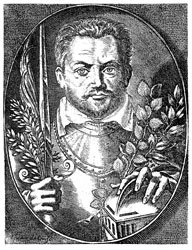
Marc Papillon, seigneur de Lasphrise, dit aussi le Capitaine Lasphrise et parfois nommé Marc de Papillon, né près d'Amboise vers 1555 et mort vers 1599, est un poète baroque satirique et érotique français. Biographie Issu d'une famille méridionale appauvrie par les guerres, orphelin de père, il s'engagé très jeune dans les armées catholiques. Il fait de nombreux séjours à la Cour avant de se retirer à Lasphrise, près de Tours, vers 1587. Amoureux peu soucieux des tabous et des conventions, il reste le poète des Amours de Théophile, composées en l'honneur d'une religieuse [1], et de L'Amour passionnée de Noémie, composé pour une cousine, Noémie-la-Tourangelle, remarquables par leur ton libertin. Il y montre un souci de recherches formelles, ainsi qu'un goût prononcé pour le jeu avec la langue, comme ce sonnet « en langage enfançon » et cet autre « en langue inconnue » qui commence ainsi : Cerdis Zerom deronty toulpinye, Pursis harlins linor orifieux... Il est aussi l'auteur d'une...
1 poezii, 0 proze
Tanase Claudiu
Nu am timp acum.
1 poezii, 0 proze
 TB
TBTed Berrigan
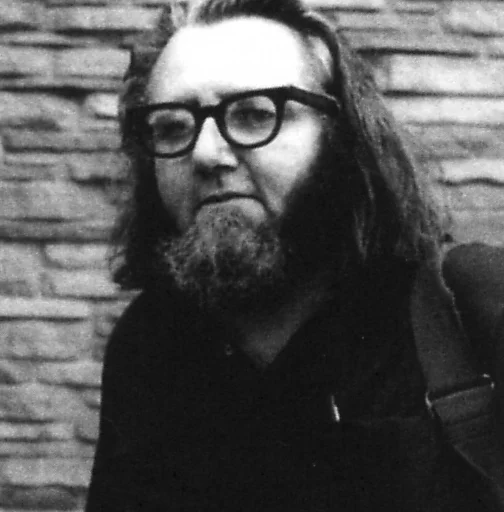
A fost unul dintre cei mai importanți poeți ai generației lui, faimos nu numai pentru scrisul său invocator din The Sonnets (1964) dar și pentru poeziile sale lirice ulterioare. A fost un profesor și un model pentru mulți poeți, în diferite universități, cât și în casa lui din Manhattan s Lower East Side. A murit la 4 iulie 1983. *** Ted Berrigan (15 November 1934 – 4 July 1983) was an American poet. Berrigan was born in Providence, Rhode Island, on November 15, 1934. After high school, he spent a year at Providence College before joining the U.S. Army in 1954 to serve in the Korean War. After three years in the Army, he finished his college studies at the University of Tulsa in Oklahoma, where he received a B.A. in English in 1959. He received his M.A. from Tulsa in 1962. Berrigan was married to Sandy Berrigan, also a poet, and they had two children, David Berrigan and Kate Berrigan. He and his second wife the poet Alice Notley were active in the poetry scene in Chicago for several...
3 poezii, 0 proze
The Poems of Sappho Part I
de Sappho
The Poetry of Sappho: Introduction By J.B Hare Imagine that two millenia or so in the future, literary experts attempt to collect the glories of our literature. Most of our paper writings have...
Sonet 3
de Cristian Vasiliu
În nopțile mâhnite și haine, din care mă trezesc pe veci închis, când liturghia o arunc în mine și se strivește-n fundul de abis; când psalmi-i scriu cu sângele din vine și-n evanghelii sunt și eu...
sonet 35
de Daniel Ciolacu
Mi-am incifrat simtirea si cuvantul si mi-am format o ratiune pura, pacat, tu mi-ai taiat avantul, mi-ai pus suava moarte-n gura. Traiam, la toate eram rece, cu gandul fiind mereu atent la ce-a venit...
Sonet 30
de Cristian Vasiliu
De ce eu plâng când buza ta jilavă Îti desenează zâmbetul? Mereu Ai îndulcit paharul cu otravă Și ai aprins opaițul cu seu În negura draconică și gravă, Pe care-o despicam furios, cu greu, Dar...
Sonet 32
de Cristian Vasiliu
Se culcă-n streșini furia ursuză A ploii după sindrofii zălude Și-n plopii jefuiți de vânt se-aude Ecoul tainic bâiguind o scuză. Un țipăt sec prin negurile crude Și pata de lumină ce acuză...
Sonet 33
de Cristian Vasiliu
“Stârpim în lăncii frica; în cetate, Se răspândește ca o pesta zvonul Ca pasul tău încearcă Rubiconul Și-ți freamătă cohortele în spate. Te-ntorci acasă istovit din conul De umbră al câmpiilor lui...
Sonet 34
de Cristian Vasiliu
“Sub toga elocinței se ascunde Pumnalul infamiei și-al trădării, Pândindu-și stoic clipa-mbrățisării, Pentru-a dicta atacuri furibunde. Am irosit la marginile zării. Prea multă vreme, visele fecunde,...
Sonet 35
de Cristian Vasiliu
Când toamna crudă șerpuia prin vie, Sunând din coadă dragostea amară, Am căutat răspunsuri, într-o seară, Pe munte, la călugărul Ilie. Se așeza domol un cerc de pară, Ca o aureolă, pe chilie Și am...
Sonet 36
de Cristian Vasiliu
Ridică-mi umbra lașă din țărână Și apretează-i liniile nude, Prin patul tău, în așternuturi ude, Cu visul și dorința ce te-ngână. Prin netezire, temerile crude, Ridică colbul nepăsării până Te...
Sonet 37
de Cristian Vasiliu
Îți arde carnea buza mea virgină, Într-un galop febril, către izvoare, Și-ți defrișează cerul de pudoare, Orbecăind cu setea de lumină. Presar apoi, prin pletele murdare De primăvară, gânduri și...