
"Sonnet" – 7064 rezultate
0.01 secundeMeilisearch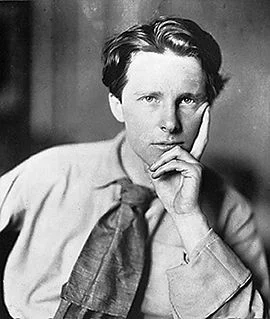 RB
RBRupert Chawner Brooke
Rupert Chawner Brooke (middle name sometimes given as Chaucer)(3 August 1887–23 April 1915) was an English poet known for his idealistic war sonnets written during the First World War (especially The Soldier); however, he never experienced combat at first hand. He was also known for his boyish good looks, which prompted the Irish poet William Butler Yeats to describe him as \"the handsomest young man in England\". English poet Brooke was born at 5 Hillmorton Road in Rugby, Warwickshire, the second of the three sons of William Parker Brooke, a Rugby schoolmaster, and Ruth Mary Brooke, née Cotterill. He attended Hillbrow Prep School before being educated at Rugby School. While travelling in Europe, he prepared a thesis entitled \"John Webster and the Elizabethan Drama\", which won him a scholarship to King\'s College, Cambridge, where he became a member of the Cambridge Apostles, helped found the Marlowe Society drama club and acted in plays including the Cambridge Greek Play. Brooke...
7 poezii, 0 proze
 TB
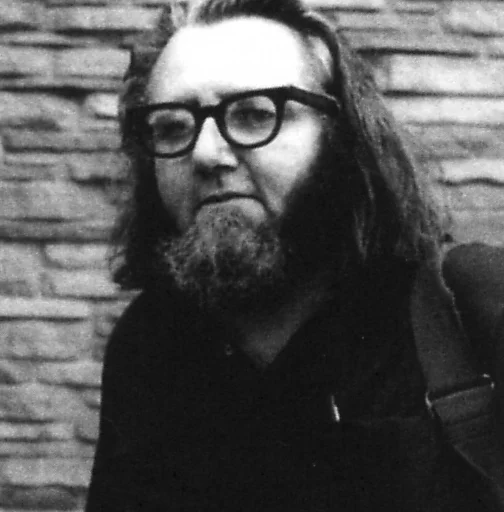
TBTed Berrigan
A fost unul dintre cei mai importanți poeți ai generației lui, faimos nu numai pentru scrisul său invocator din The Sonnets (1964) dar și pentru poeziile sale lirice ulterioare. A fost un profesor și un model pentru mulți poeți, în diferite universități, cât și în casa lui din Manhattan s Lower East Side. A murit la 4 iulie 1983. *** Ted Berrigan (15 November 1934 – 4 July 1983) was an American poet. Berrigan was born in Providence, Rhode Island, on November 15, 1934. After high school, he spent a year at Providence College before joining the U.S. Army in 1954 to serve in the Korean War. After three years in the Army, he finished his college studies at the University of Tulsa in Oklahoma, where he received a B.A. in English in 1959. He received his M.A. from Tulsa in 1962. Berrigan was married to Sandy Berrigan, also a poet, and they had two children, David Berrigan and Kate Berrigan. He and his second wife the poet Alice Notley were active in the poetry scene in Chicago for several...
3 poezii, 0 proze
 WW
WWWilliam Wordsworth
William Wordsworth was born on April 17, 1770 in Cockermouth, Cumberland, in the Lake District. His father was John Wordsworth, Sir James Lowther\'s attorney. The magnificent landscape deeply affected Wordsworth\'s imagination and gave him a love of nature. He lost his mother when he was eight and five years later his father. The domestic problems separated Wordsworth from his beloved and neurotic sister Dorothy, who was a very important person in his life. With the help of his two uncles, Wordsworth entered a local school and continued his studies at Cambridge University. Wordsworth made his debut as a writer in 1787, when he published a sonnet in The European Magazine . In that same year he entered St. John\'s College, Cambridge, from where he took his B.A. in 1791. During a summer vacation in 1790 Wordsworth went on a walking tour through revolutionary France and also traveled in Switzerland. On his second journey in France, Wordsworth had an affair with a French girl, Annette...
16 poezii, 0 proze
 MS
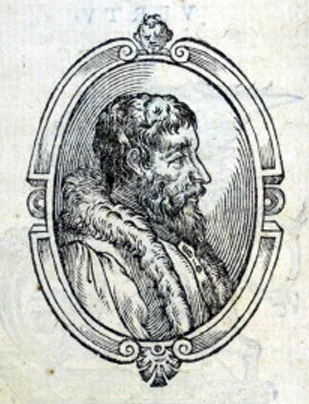
MSMaurice Scève
Maurice Scève (1501-1564?), représentant le plus illustre de l\'école lyonnaise, est né à Lyon, entre 1500 et 1505, dans une famille bourgeoise qui joue un rôle honorable dans la vie de la cité. Son existence reste mal connue. Il reçoit une solide formation intellectuelle. Peut-être devient-il docteur en droit. Vers 1530, il est en Avignon attaché au vicaire de l\'Archevêque. En 1533, il prend part aux recherches qui tentent de retrouver le tombeau de la mythique Laure, la dame que Pétrarque avait aimée et chantée dans son Canzoniere, morte en Avignon lors de la peste de 1348. Il y découvre un sonnet qu\'il attribue à Pétrarque. Cette trouvaille lui vaut la célébrité, et les félicitations du roi François Ier, lui même grand amateur de poésie pétrarquiste. De retour à Lyon, Scève fréquente les cercles cultivés et connaît les milieux néo-latins où s\'épanouisse le sodalitium lugdunense. En 1535, Scève fait la connaissance d\'Étienne Dolet et lui donne à imprimer son premier ouvrage, La...
6 poezii, 0 proze
 GN
GNGermain Nouveau
Germain Nouveau est l'aîné des 4 enfants de Félicien Nouveau (1826-1884) et de Marie Silvy (1832-1858). Germain Nouveau perd sa mère alors qu'il n'a que sept ans. Il est élevé par son grand-père. Après une enfance à Aix-en-Provence et des études qu'il effectue au petit séminaire, pensant même à embrasser la prêtrise, et après une année d’enseignement au lycée de Marseille en 1871-1872, Nouveau s'installe à Paris à l’automne 1872. Il publie son premier poème, "Sonnet d’été", dans La Renaissance artistique et littéraire, revue d’Émile Blémont et fait connaissance de Mallarmé, de Jean Richepin et les « Vivants » (Ponchon…) qui se réunissent au café Tabourey. Il fréquente aussi les zutistes, fait la connaissance de Charles Cros avec lequel il collabore à la rédaction des Dixains réalistes qui tournent en dérision les parnassiens. Il découvre dans l’Album zutique les poèmes laissés par Rimbaud et Verlaine, qui ont quitté la capitale depuis juillet 1872. Arthur Rimbaud, Paul Verlaine,...
7 poezii, 0 proze
 EB
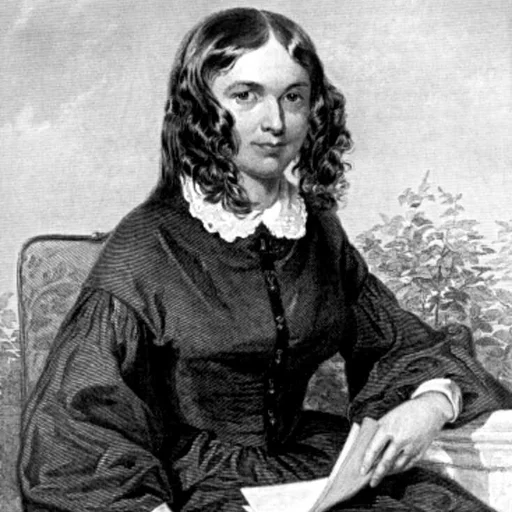
EBElizabeth Barret Browning
Naștere – 6 martie 1806 Kelloe, lângă Durham, Anglia Deces – 29 iunie 1861 (la 55 de ani) Florența, Italia Elizabeth Barrett Browning (n. 6 martie 1806 - d. 29 iunie 1861) a fost o poetă engleză. A scris versuri de o deosebită sensibilitate dedicate soțului ei, poetul Robert Browning. Opera 1847: Sonete din parte portughezei ("Sonnets from the Portuguese"); 1851: Ferestrele casei Guidi ("Casa Guidi Window"); 1860: Poeme înainte de Congres ("Poems Before Congress"); 1857: Aurora Leigh ("Aurora Leigh").
1 poezii, 0 proze
 RV
RVRenée Vivien
Renée Vivien, born Pauline Mary Tarn (11 June 1877 - 18 November 1909) was a British poet who wrote in the French language.[1][2] She took to heart all the mannerisms of Symbolism, as one of the last poets to claim allegiance to the school. Her compositions include sonnets, hendecasyllabic verse, and prose poetry. Vivien was born in London, England to a wealthy British father and an American mother from Jackson, Michigan. She grew up in Paris and London. Upon inheriting her father's fortune at 21, she emigrated permanently to France. In Paris, Vivien's dress and lifestyle were as notorious among the bohemian set as was her verse. She lived lavishly, as an open lesbian, and carried on a well-known affair with American heiress and writer Natalie Clifford Barney. She also harbored a lifelong obsession with her closest childhood friend and neighbor, Violet Shillito – a relationship that remained unconsummated. In 1900 Vivien abandoned this chaste love, when the great romance with Natalie...
17 poezii, 0 proze
 DF
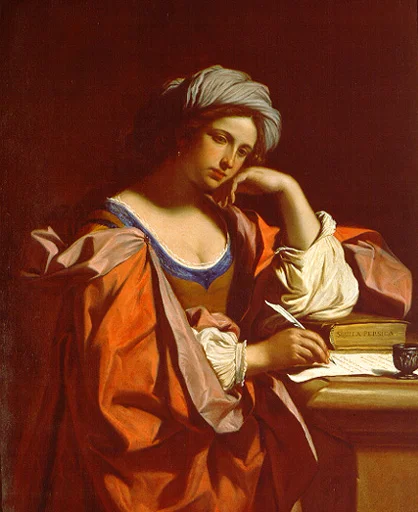
DFDesăvârșita Domniță Florentină
Compiuta Donzella Fiorentina este pseudonimul unei poete din secolul XIII. Existența ei, îndelung contestată, este astăzi în general acceptată de către critică. Contemporană cu Nina Siciliana, iubita lui Dante da Maiano *** La) Compiuta Donzella, called either di Firenze or Fiorentina, was the earliest poetess of the Italian language. Three of her sonnets survive in a single manuscript, and one is half of a tenzone. Compiuta may be her given name, but more probably a senhal (code name). Her full name translates "the accomplished young lady from Florence". Her existence was once in doubt and she was considered a construct of the poets, but this view has been discarded. In A la stagion che 'l mondo foglia e fiora ("In the season when the world sends forth leaves and flowers"), Compiuta complains of her father's choice of a husband for her. She is miserable at sprintime, when other lovers are rejoicing. In Lasciar voria lo mondo e Dio servire ("I would like to leave the world to serve...
1 poezii, 0 proze
 JT
JTJacques Tahureau
Jacques Tahureau Écrivain français (Le Mans 1527 – v. 1555). Il prit part aux guerres d\'Italie ; de retour en France, il se lia d\'amitié avec J.-A. de Baïf et se familiarisa, grâce à ce dernier, avec la doctrine et la pratique de la jeune école de la Pléiade. Il mourut l\'année même de son mariage, en 1555. Il avait, en 1554, édité un recueil de poèmes pétrarquisants, les Sonnets, Odes et Mignardises amoureuses de l\'Admirée. Mais ce sont les Dialogues, publiés après sa mort en 1565, qui constituent la part de son œuvre la plus originale. S\'inspirant du philosophe grec Démocrite, il s\'y livre, au nom de la raison, à une critique systématique et impitoyable de toutes les « folies » humaines : après celle de l\'amour (à quoi est consacrée la plus grande partie du Premier Dialogue) vient celle des diverses impostures dont se sont rendus coupables au cours de l\'Histoire les nobles, les hommes de loi, les médecins, les astrologues, les alchimistes, et, pour finir, ceux qu\'il appelle...
1 poezii, 0 proze
 EB
EBElizabeth Barrett Browning
Elizabeth Barrett Browning (6 March 1806 – 29 June 1861) was one of the most prominent poets of the Victorian era. Her poetry was widely popular in both England and the United States during her lifetime.[1] A collection of her last poems was published by her husband, Robert Browning, shortly after her death. Works/Collections 1820: The Battle of Marathon: A Poem. Privately printed 1826: A Essay On Mind, with Other Poems. London: James Duncan 1833: Prometheus Bound, Translated from the Greek of Aeschylus,and Miscellaneous Poems. London: A.J. Valpy 1838: The Seraphim, and Other Poems. London: Saunders and Otley 1844: Poems (UK) / A Drama of Exile, and other Poems (US). London: Edward Moxon. New York: Henry G. Langley 1850: Poems ("New Edition", 2 vols.) Revision of 1844 edition adding Sonnets from the Portuguese and others. London: Chapman & Hall 1851: Casa Guidi Windows. London: Chapman & Hall 1853: Poems (3d ed.). London: Chapman & Hall 1854: Two Poems: "A Plea for the Ragged Schools...
1 poezii, 0 proze
Sonnet XL
de William Shakespeare
Take all my loves, my love, yea, take them all; What hast thou then more than thou hadst before? No love, my love, that thou mayst true love call; All mine was thine before thou hadst this more. Then...
Sonnet XCI
de William Shakespeare
Some glory in their birth, some in their skill, Some in their wealth, some in their bodies\' force, Some in their garments, though new-fangled ill, Some in their hawks and hounds, some in their...
Sonnet CXVI
de William Shakespeare
Let me not to the marriage of true minds Admit impediments. Love is not love Which alters when it alteration finds, Or bends with the remover to remove: O no! it is an ever-fixed mark That looks on...
Sonnet I
de William Shakespeare
FROM fairest creatures we desire increase, That thereby beauty\'s rose might never die, But as the riper should by time decease, His tender heir might bear his memory: But thou, contracted to thine...
Sonnet II
de William Shakespeare
When forty winters shall beseige thy brow, And dig deep trenches in thy beauty\'s field, Thy youth\'s proud livery, so gazed on now, Will be a tatter\'d weed, of small worth held: Then being ask\'d...
Sonnet III
de William Shakespeare
Look in thy glass, and tell the face thou viewest Now is the time that face should form another; Whose fresh repair if now thou not renewest, Thou dost beguile the world, unbless some mother. For...
Sonnet IV
de William Shakespeare
Unthrifty loveliness, why dost thou spend Upon thyself thy beauty\'s legacy? Nature\'s bequest gives nothing but doth lend, And being frank she lends to those are free. Then, beauteous niggard, why...
Sonnet VII
de William Shakespeare
Lo! in the orient when the gracious light Lifts up his burning head, each under eye Doth homage to his new-appearing sight, Serving with looks his sacred majesty; And having climb\'d the steep-up...
Sonnet VIII
de William Shakespeare
Music to hear, why hear\'st thou music sadly? Sweets with sweets war not, joy delights in joy. Why lovest thou that which thou receivest not gladly, Or else receivest with pleasure thine annoy? If...
Sonnet IX
de William Shakespeare
Is it for fear to wet a widow\'s eye That thou consumest thyself in single life? Ah! if thou issueless shalt hap to die. The world will wail thee, like a makeless wife; The world will be thy widow...