
"Poem în do minor" – 21087 rezultate
0.03 secundeMeilisearchpoezii-cu-ingeri
Poeme cu si despre îngeri
de Marius Surleac
 TS
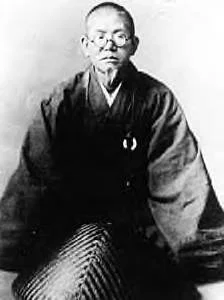
TSTaneda Santôka
Taneda Santōka, birth name: Taneda Shōichi; 3 December 1882 - 11 October 1940) was the pen-name of a Japanese author and haiku poet. He is known for his free verse haiku. Santoka, an ordained Zen priest, after spending most of his life wandering all over the country as a begging monk, chose to settle in Matsuyama only to die 10 months later. The humble cottage where he dwelt -- Isso-an (A Blade of Grass Hermitage) is preserved north of Ehime University. His books and documents are also preserved in Shiki Memorial Museum. "In February of 1929 I received ordination as a monk and became resident priest at Mitori Kannon-do in the countryside of Kumamoto Prefecture. It was truly a solitary forest life (sanrin dokuju); as for quietness it was quiet, as for loneliness it was lonely -- such a life it was." (Taneda Santoka - from "Sômokutô") The Zen he was ultimately to practice, however, though traditional, was unusual. It was the Zen of solitary walking. The open road was to become...
2 poezii, 0 proze
Isaac Asimov
Biographical (non-literary) How do you pronounce \"Isaac Asimov\"? \"EYE\'zik AA\'zi-mov\". The name is spelled with an \"s\" and not a \"z\" because Asimov\'s father didn\'t understand the English alphabet clearly when the family moved to the U.S. in 1923. (In Russian, the spelling was the Cyrillic equivalent of Azimov, and in Yiddish, the Hebrew letters were aleph-zayin-yod-mem-aleph-vav-vav.) One way to remember this pronunciation is the pun from The Flying Sorcerers by Larry Niven and David Gerrold: \"As a color, shade of purple-grey\", or \"As a mauve\". Asimov wrote a poem (\"The Prime of Life\") in which he rhymes his surname with \"stars above\"; someone else suggested amending the poem to rhyme it with \"mazel tov\", which he thought an improvement. Asimov\'s own suggestion, however, as to how to remember his name was to say \"Has Him Off\" and leave out the H\'s. When did Asimov die? What was the cause of his death? Where is he buried? Asimov died on April 6, 1992 of heart...
0 poezii, 0 proze
 AZ
AZAdam Zagajewski
Adam Zagajewski (b. 21 June 1945 in Lwów, Soviet Union (now Lviv, Ukraine)) is a Polish poet, novelist, and essayist. Subsequently lyrical on meta-physical and cultural problems. He had lived in Paris since 1982. In 2002 he has moved to Kraków. His poem Try To Praise The Mutilated World, printed in The New Yorker, became famous after 9/11. He currently is a faculty member on the University of Chicago's Committee on Social Thought, and teaches two classes, one on fellow Polish poet Czes³aw Mi³osz. Poetry Tremor (1985) Canvas (1991) Mysticism for Beginners (1997) Without End: New and Selected Poems (2002) Eternal Enemies: Poems (2008) Essays Solidarity, Solitude (1990) Two Cities (1995) Poetry Komunikat. Kraków, 1972. Sklepy miêsne. Kraków, 1975. List. Oda do wieloœci. Pairs, 1983. Jechaæ do Lwowa. London, 1985. P³ótno. Paris, 1990. Ziemia ognista. Poznañ, 1994. Trzej anio³owie. Kraków, 1998. Pragnienie. Kraków, 1999. Powrót. Kraków, 2003. Anteny. Kraków 2005 Another Beauty (2000) Prose...
4 poezii, 0 proze
 AT
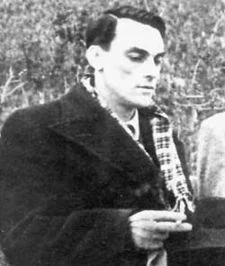
ATArseny Tarkovsky
Arseny Alexandrovich Tarkovsky (Russian: Арсе́ний Алекса́ндрович Тарко́вский, June 25 [O.S. June 12] 1907, Elisavetgrad – May 27, 1989, Moscow) was a prominent Russian poet and translator. His poems appeared in the films The Mirror and Stalker, directed by Andrei Tarkovsky, his son. Tarkovsky was born in Elisavetgrad to the family of a Narodnik on June 24 N.S. 1907. By 1924 he had moved to Moscow, and from 1924-1925 he worked for a newspaper for railroad workers called "Gudok." Tarkovsky managed a section that was to be filled by an editorial written in verse, that was supposedly easier for the readers than the ordinary prosaic editorials. Each day, Tarkovsky would either write such poetical editorials himself, or find somebody else to do it. Needless to say, the poetry of these editorials...
8 poezii, 0 proze
 KI
KIKeiko Imaoka
Beginner\'s Mind (Keiko Imaoka - Tucson, Arizona) I cannot be sure when I first became aware of haiku and tanka in my childhood in Japan. They seemed to have existed for a long time in the perimeter of my awareness, undifferentiated from proverbs, mottoes, aphorisms, and song lyrics that were phrased in similar forms. Sometime during my grade school years, \"Ogura Hyakunin-Isshu\" (\"Ogura Collection of One Hundred Tanka\", edited by Teika Fujiwara around 1235) became known to me as a New Year\'s card game, in which players compete to capture shimonoku cards (100 cards on each of which the last half of a verse is printed, spread out on the floor in front of the players) that finish the verses being read aloud. At abacus school, where we played this game at every new year\'s party, my prowess in the game improved dramatically when I was in the sixth grade, after I had memorized all the poems with my tenth-grade sister who was required to do so in her archaic grammar course in school. I...
1 poezii, 0 proze
 AD
ADAhn Do-hyun
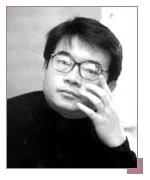
Poet sud-coreean. Născut în 1961 la Yech’on, provincia Gyeongsang. Absolvent al secției de Limba și Literatura Coreeană a Universității Won-Gwang din Iksan. Profesor. Debutează cu un grupaj de poezii în 1981. Obține numeroase premii literare. Volume de poezie și proză: Autodafe; Vreau să vin la tine; Chon Pong-jun pe drumul către Seul; Salmon; Legături de dragoste, Un om etc.
1 poezii, 0 proze
 IM
IMIñigo López de Mendoza
Don Íñigo López de Mendoza y de la Vega, Marquis of Santillana (August 19, 1398 - March 25, 1458) was a Castilian poet who held an important position in society and Literature during the reign of John II of Castile. He was born at Carrión de los Condes in Old Castile to a noble family which figured prominently in the arts. His grandfather, Pedro González de Mendoza, and his father, Diego Hurtado de Mendoza Admiral of Castile, were both poets with close ties to the great literary figures of the time: Chancellor Lopez de Ayala, Fernán Pérez de Guzmán and Gomez Manrique. His mother, Doña Leonor de la Vega, was a wealthy heiress belonging to the House of de la Vega. Lopez de Mendoza's father died when he was five years old, which brought his family into financial difficulties. Part of his childhood was spent living in his grandmother's household, and in the home of his uncle, the future Archbishop of Toledo. As a youth, he spent time in the court king Alfonso V of Aragón, where...
1 poezii, 0 proze
Tudor Damian
My name is Tudor Damian, but friends call me Tudy. I was born April 12, 1984, in Bistrita, Romania. I have been living in Cluj-Napoca since 2003. A few things about me: I work in System Administration for a hosting company in the US, and I’m interested in technology, web standards and systems and network security. I also like anything that has to do with astronomy & astrology, photography, chess, logic puzzles, new-age music and oriental philosophy. As far as my literary preferences go, I like "classic" Sci-Fi (Isaac Asimov, Frank Herbert, Arthur C. Clarke, Douglas Adams) and English poetry (William Blake, Edgar Allan Poe). Over the years, I won a few prizes at local and national poetry and prose contests, and had my texts published in a few magazines. You can find more info about me, and some of the texts I've written on my personal web page (www.tudy.ro).
6 poezii, 0 proze
 IN
INIoan Nenițescu
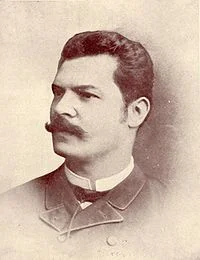
S-a născut la 11 Aprilie 1854, în orașul Galați. Fiu de manufacturier, și-a început școala comercială la Galați, dar a terminat liceul la Iași, apoi a frecventat cursurile Facultății de litere. După Războiul de independență a plecat la Berlin, unde a urmat Filosofia. Și-a dat doctoratul tot în Germania la Leipzig (1887). Moare la 23 Februarie 1901 în timpul unei călători la Buzău cu trenul și a fost inmormântat la București. Poezii Flori de primăvara (Berlin, 1880; Editia a II-a, București, 1889) Șoimii de la Războieni (poem în 9 cânturi, București, 1882) Pui de lei (București, 1891) Pui de lei Țara mea Moartea lui Decebal Voința neamului Tatăl nostru în câteva istorioare pe înțelesul tuturor (Buc., 1894) De la românii din Turcia europeană (studiu etnic și statistic asupra aromânilor, București, 1895) Poezii (București, 1911) Teatru Radu de la Afumați (dramă istorică în 5 acte, București, 1897) O singură iubire Două femei Vlad Țepeș Mihai Viteazul
1 poezii, 0 proze
 ZA
ZAZburlea Ariana
Mă numesc Ariana Zburlea (1 iulie 1997) și sunt pasionată de scris. Am debutat în 2014 cu un poem în revista Vatra Veche, iar de atunci am fost publicată în numeroase reviste și platforme literare, precum Eminesciana, România literară, Vatra, Timpul (Republica Moldova), Zugzwang, Planeta Babel, Critic Arad, Parnas XXI, Helis, Literadura, precum și pe platformele LiterNet, Literomania, Ficțiunea, Noise Poetry și O mie de semne. Textele mele au fost incluse și în câteva antologii, printre care: Peregrinări (2017, Itaca Dublin), Toamna pe acorduri lirice (2024, ed. Boem@), O tandrețe strict teoretică (2025, ed. Cartex) și Cele mai bune texte. Anul IV - Andrei Crăciun (2025, ed. Zugzwang)
294 poezii, 0 proze
Poem în do minor
de Monica Mihaela Pop
prevăd o întâmplare tristă pe-acest împovărat peron, unde sosire mai există doar pe-o pancartă de carton plecări ne vor fi toate, iară, din ochi ni se vor scurge vieți, vom fi doi călători de seară...
... Din neatentie
de Iustina Daniela Cucu
Ma uit in sinea mea Și-mi gandesc pasii inimii Și-mi gasesc pasii linistei De mai sus... Privesc in do-minor Ascult in la-major În hol, dupa oglinda Sau in dormitor. Exist ca artist- Ce lucru trist,...
Din neatentie
de Iustina Daniela Cucu
Mă uit în sinea mea Și-mi gândesc pașii inimii Și-mi găsesc pașii liniștei De mai sus... Privesc în Do-minor Ascult în La-major În hol, după oglindă Sau în dormitor. Exist ca artist- Ce lucru trist,...
Poeți uitați - Albert Samain
de Ionescu Bogdan
A fost o vreme când volumele de poezie se tipăreau într-un numar foarte mic de exemplare pentru a fi dăruite prietenilor. Timpul, accidental și cu al său neprevăzut, a purtat păna la noi unele din...
poem țigănesc
de Blesneag Stefan Ionut
(ora 6) vrăjitoare dă inemi, dă-n vinuri, dă-n ce vrei, dă-n ghiocul sânilor, oceanici în ei, fă deochi dă mâini pe la răscurci și-nvârte paseri în magia ta, pă sus explodate, să dea dân aripi negre,...
Cezar Ivănescu: hulit în viață, refuzat în moarte
de Miron Manega
A murit ultimul mare poet român. De la Nichita încoace, poezia română nu a mai suferit o pierdere atât de mare. După ce a pătimit toată viața pentru adevărurile sale fundamentale, ne-a părăsit...
Cum nu se scrie un haiku
de Corneliu Traian Atanasiu
Do Your Haiku Submissions Contain Any of These Isn\'ts? Better Check! Lorraine Ellis Harr Conțin postările dv. vreunul din aceste NU-uri? Verificați totuși! 1. Haiku ISN\'T a prose sentence divided...
Emilian Marcu. Grădinarul cu bulgărele de lumină
de Paul Gorban
Am avut de multe ori ocazia să-l ascult pe poetul Emilian Marcu recitându-și din poeme și, trebuie să recunosc, îmi este mai dificil să-i citesc textele în singurătate. De aceea l-am invitat în...
ANALIZA LUNII Noiembrie 2003”POEZIE.RO”
de Frentiu Toma Adrian
ANALIZA LUNII Noiembrie 2003”POEZIE.RO” Statistica in functie de citirea textelor Datele au fost culese la 1 decembrie 2003 Scuze pentru eventuale greseli . POEZIE Poezie (538 afișări) Iubind /Silvia...