
"Often I see you..." – 459 rezultate
0.01 secundeMeilisearch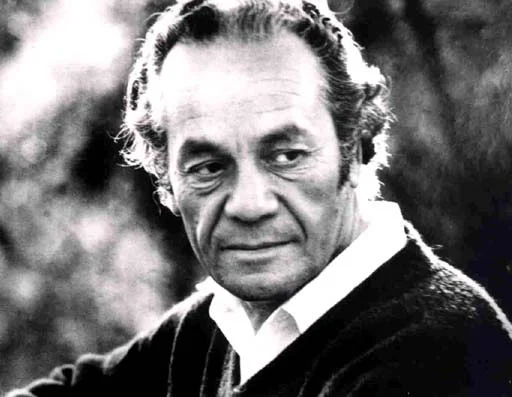 NP
NPNicanor Parra
Nicanor Parra Sandoval (born in San Fabián de Alico, Chile on September 5, 1914) is a mathematician and poet often considered to be the most influential poet Chile has produced since Pablo Neruda.[citation needed] He describes himself as an "antipoet," due to his distaste for standard poetic pomp and function (after recitations he would exclaim Me retracto de todo lo dicho, or, "I take back everything I said"). Trying to get away from the conventions of poetry, Parra's poetic language renounces the refinement of most Latin American literature and adopts a more colloquial tone similar to prose. His first collection, "Poemas y Antipoemas" (1954) is a classic of Latin American literature, one of the most influential Spanish poetry collections of the twentieth century, and is cited as an inspiration by American Beat Writers such as Allen Ginsberg. Parra has been nominated several times for the Nobel Prize in Literature. Parra comes from the artistically prolific Chilean Parra family of...
2 poezii, 0 proze
John Keats
John Keats John Keats (October 31, 1795 – February 23, 1821) was one of the principal poets of the English Romantic movement. During his short life, his work received constant critical attacks from the periodicals of the day, though politics, rather than aesthetics, often dictated those opinions. By the mid-nineteenth century, however, audiences began to appreciate more fully the significance of the cultural change his work both presaged and helped to form. Elaborate word choice and sensual imagery characterize Keats' poetry. He often felt himself working in the shadow of past poets, particularly Milton and Spenser, and only towards the end of his life produced his most original and most memorable poems, including a series of odes that remain among the most popular poems in English. Oscar Wilde, the aestheticist non pareil was to later write: "[...] who but the supreme and perfect artist could have got from a mere colour a motive so full of marvel: and now I am half enamoured of the...
0 poezii, 0 proze
 AS
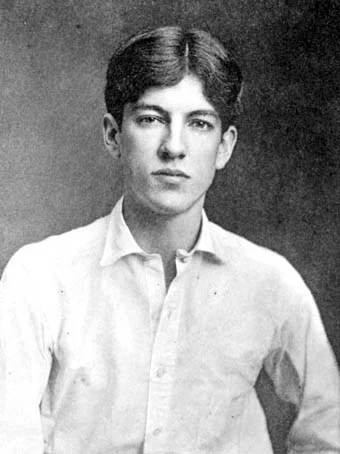
ASAlan Seeger
Alan Seeger, born on June 22, 1888 and died July 4, 1916, was an American poet who also fought in World War I. Born in New York, Seeger moved with his family to Staten Island at the age of one and remained there until the age of ten. In 1900, his family moved to Mexico for two years, which influenced the imagery of some of his poetry. His brother Charles Seeger, a noted musicologist, was the father of the American folk singer, Pete Seeger. Seeger entered Harvard in 1906 after attending several elite preparatory schools, including Hackley School. At Harvard, he edited and wrote for the Harvard Monthly. After graduating in 1910, he moved to Greenwich Village for two years, where he wrote poetry and enjoyed the life of a young bohemian. During that time, he attended soirées at the Mlles. Petitpas\' boardinghouse (319 West 29th Street), where the presiding genius was the artist and sage John Butler Yeats, father of the poet.[1] Having moved to the Latin Quarter of Paris to continue his...
20 poezii, 0 proze
 EC
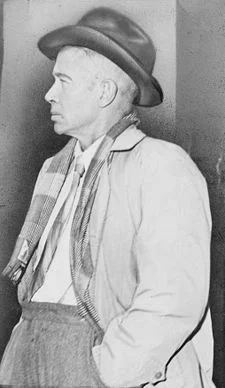
ECEdward Estlin Cummings
Edward Estlin Cummings (October 14, 1894 – September 3, 1962), popularly known as E. E. Cummings, with the abbreviated form of his name often written by others in all lowercase letters as e. e. cummings, was an American poet, painter, essayist, author, and playwright. His body of work encompasses approximately 2,900 poems, an autobiographical novel, four plays and several essays, as well as numerous drawings and paintings. He is remembered as a preeminent voice of 20th century poetry, as well as one of the most popular. Cummings was born in Cambridge, Massachusetts, on October 14, 1894 to Edward and Rebecca Haswell Clarke Cummings. He was named after his father but his family called him by his middle name. Estlin's father was a professor of sociology and political science at Harvard University and later a Unitarian minister. Cummings described his father as a hero and a person who could accomplish anything that he wanted to. He was well skilled and was always working or repairing...
46 poezii, 0 proze
 SL
SLStanis³aw Jerzy Lec
Stanis³aw Jerzy Lec (6 March 1909 – 7 May 1966) (born Baron Stanis³aw Jerzy de Tusch-Letz) was a Polish poet and aphorist of Polish and Jewish noble origin. Often mentioned among the greatest writers of post-WW2 Poland, he was one of the most influential aphorists on the 20th century. Lyrical poetry, sceptical philosophical-moral aphorisms, often with a political subtext. He was born on March 6, 1909 in Lviv (then Lemberg, Austro-Hungarian Empire), the son of the Baron Benon de Tusch-Letz and Adela Safrin. The family moved to Vienna at the onset of First World War, and Lec' early education was received there. After the war the family returned to Lviv-Lemberg to continue his schooling at the Lemberg Evangelical School. In 1927 he matriculated at the Lviv's Jan Kazimir University in jurisprudence and Polish. As a result of his political activities — writing articles for socialist revolutionary periodicals, making speeches in the Technological Institute’s Yellow Hall — Lec had to leave...
1 poezii, 0 proze
James Alan Hetfield
James Hetfield In Brief: James Alan Hetfield Born: August 3, 1963 From: Los Angeles, California Personal: Married, 2 Children Specialty: Angst-ridden, soul-rending, growling, loud-ass vocals Instrument: vocals, guitars Vitals: blue eyes, blonde hair, 6\'1\"/1.85 meters tall, weighs 180 lbs/81.65 kilos Hetfield was born to a truck driver and light opera singer on August 3rd, 1963, in Los Angeles. His family\'s Christian Science religious beliefs are often mentioned as the root of James\' \"tortured soul\" lyrics. Musically, he began at age 9 with piano lessons, then banging away on his brother David\'s drums and finally to guitar. With his guitar in hand, James aspired to become a rock star in his first band, Obsession. The band was made up of the Veloz brothers on bass and drums and Jim Arnold on guitar. A pair of friends, Ron McGovney and Dave Marrs, acted as the band\'s roadies. This meant sitting in the loft of the Veloz garage running a control panel for makeshift lighting...
4 poezii, 0 proze
 EM
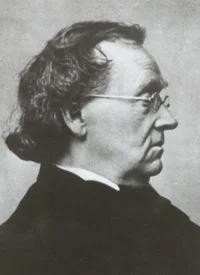
EMEduard Mörike
Eduard Friedrich Mörike (Ludwigsburg, 8 September 1804 – 4 June 1875 in Stuttgart) was a German romantic poet. He studied Theology at the Seminary of Tübingen, and followed the ecclesiastical career, becoming a Lutheran pastor. In 1834 he was appointed pastor of Cleversulzbach near Weinsberg, and, after his early retirement for reasons of health, in 1851 became professor of German literature at the Katharinenstift in Stuttgart. This office he held until his retirement in 1866; but he continued to live at Stuttgart until his death on the 4th of June 1875. Mörike is a member of the so-called Swabian school which gathered round Ludwig Uhland. His poems, Gedichte (1838; 22nd ed., 1905), are mostly lyrics, often humorous, but expressed in simple and natural language. His lieder (songs) are traditional in form and have been compared to those of Goethe. He also wrote a somewhat fantastic Idylle vom Bodensee, oder Fischer Martin und die Glockendiebe (1846; 2nd ed., 1856), and published a...
4 poezii, 0 proze
 SC
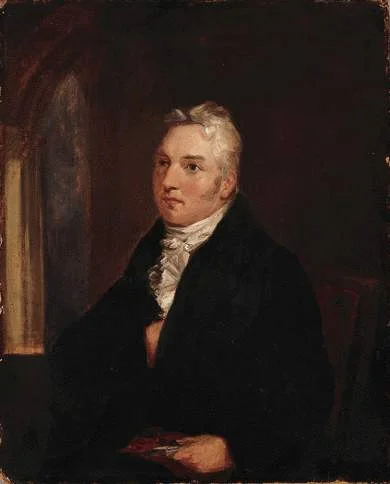
SCSamuel Taylor Coleridge
Samuel Taylor "Estese" Coleridge (1772-1834) Samuel Taylor Coleridge was born in Ottery St. Mary on 21 October 1772, youngest of the ten children of John Coleridge, a minister, and Ann Bowden Coleridge. He was often bullied as a child by Frank, the next youngest, and his mother was apparently a bit distant, so it was no surprise when Col1 ran away at age seven. He was found early the next morning by a neighbor, but the events of his night outdoors frequently showed up in imagery in his poems (and his nightmares) as well as the notebooks he kept for most of his adult life. John Coleridge died in 1781, and Col was sent away to a London charity school for children of the clergy. He stayed with his maternal uncle2. Col was really quite a prodigy; he devoured books and eventually earned first place in his class. His brother Luke died in 1790 and his only sister Ann in 1791, inspiring Col to write "Monody," one of his first poems, in which he likens himself to Thomas Chatterton3. Col was...
22 poezii, 0 proze
Suzanne Nadine Vega
Suzanne Vega was born July 11, 1959, in Santa Monica, CA; her parents divorced shortly thereafter, and after her mother (a jazz guitarist) remarried to Puerto Rican novelist Ed Vega, the family moved to Manhattan. A shy and quiet child, Suzanne nonetheless learned to take care of herself growing up in the tough neighborhoods of Spanish Harlem. Her parents often sang folk songs around the house, and when she began playing the guitar at age 11, she found herself attracted to the poetry of singer/songwriter music (Dylan, Cohen), and found a refuge from New York\'s chaos in traditional folk (Woody Guthrie, Pete Seeger, Judy Collins, Joan Baez). At age 14, she made her first attempts at writing songs; however, when she attended the High School for the Performing Arts as a teenager, it was to study dance, not music. She subsequently enrolled at Barnard College as a literature major, and during this time, she began playing at coffeehouses and folk festivals on the West Side and near Columbia...
1 poezii, 0 proze
 RW
RWRoger Woddis
Roger Woddis, poet: born London 17 May 1917; married Joan Hobson (one son, one daughter; marriage dissolved); died London 16 July 1993. Roger Woddis was a writer and humorous poet. One of his most famous poems, Ethics for Everyman, deals with double-morality of ethical principles. His early writing career included some involvement with Unity Theatre, London, where he contributed material to a number of revues. His poetry featured regularly in Radio Times and other periodicals in the 1970s. During much of the 1980s and early '90s, he had his own weekly poem in the humour magazine Punch: titled "Subverse". This consisted each week of a humorously subversive political poem, often dealing with recent events. He was also New Statesman's weekly poet until months before his death, succeeding 'Sagittarius' (Olga Katzin) in 1970 and, before her, Reginald Reynolds; and succeeded by Bill Greenwell. His poems featured topics such as the Vietnam war, miners strikes, and apartheid. He also wrote...
0 poezii, 0 proze
Dracula
de Bram Stoker
Chapter 5 - Letters, Etc. Letter from Miss Mina Murray to Miss Lucy Westenra. \"9 May. \"My dearest Lucy,- \"Forgive my long delay in writing, but I have been simply overwhelmed with work. The life...
WHY?
de Daniela Noghiu
Hopeless love... Why do you often search Why do I ever wait Why do you always find me? Why do you claim chimaera Why do I give illusion Why do I let you blind me?... Why do you see unseen Why do I...
Dracula
de Bram Stoker
Chapter 6 - Mina Murray\'s Journal 24 July. Whitby.- Lucy met me at the station, looking sweeter and lovelier than ever, and we drove up to the house at the Crescent in which they have rooms. This is...
Interview with Enrique Iglesias
de A.M. Rika
Enrique Iglesias reaches for the stars with his feet on the ground Enrique Iglesias is the boy next door, someone who grew up doing things quietly, but effectively. Dreaming of becoming a pop star...
Silence
de oana stanescu
I seem to have forgotten that Tomorrow is just another yesterday And that my tears Have already dried out My cry Seems so useless Like begging mercy To a cruel tyrant Who will have his way Anyway And...
Christabel
de Samuel Taylor Coleridge
PART I \'Tis the middle of night by the castle clock, And the owls have awakened the crowing cock ; Tu--whit !-- -- Tu--whoo ! And hark, again ! the crowing cock, How drowsily it crew. Sir Leoline,...
The Use and Abuse of History
de Friedrich Nietzsche
The Use and Abuse of History (1878) By Friedrich Nietzsche Forward \"Incidentally, I despise everything which merely instructs me without increasing or immediately enlivening my activity.\" These are...
The Star-Splitter
de Robert Frost
`You know Orion always comes up sideways. Throwing a leg up over our fence of mountains, And rising on his hands, he looks in on me Busy outdoors by lantern-light with something I should have done by...
A lover\'s complaint
de William Shakespeare
FROM off a hill whose concave womb re-worded A plaintful story from a sistering vale, My spirits to attend this double voice accorded, And down I laid to list the sad-tun\'d tale; Ere long espied a...
On This Day I Complete My Thirty-Sixth Year
de George Gordon Noel Byron
Missolonghi, Jan. 22, 1824 \'Tis time this heart should be unmoved, Since others it hath ceased to move: Yet, though I cannot be beloved, Still let me love! My days are in the yellow leaf; The...