
"MARCHA TRIUNFAL" – 2859 rezultate
0.02 secundeMeilisearch MP
MPmarcia peters
1 poezii, 0 proze
 MR
MRMarcea Raluca
1 poezii, 0 proze
 SI
SISilvia Martha Iordache
Multe nu sunt de zis...M-am nascut in orasul Ploiesti, in luna martisorului. De mica am fost un copil retras cu multe ganduri, vorbind mai mult cu mine, cuminte, cu gropite in obraji. Anii au trecut, iar acum am 23 de ani, o varsta la care agoniile nu-ti dau pace, doar pentru ca ai indraznit sa le rascolesti. Am de gand sa-mi urmez cu sarguinta scopul in viata, sa fiu un inginer stralucit. Tot ce imi doresc este sa ma tin de treaba, sa muncesc din greu, aceasta este formula succesului!
59 poezii, 0 proze
 MG
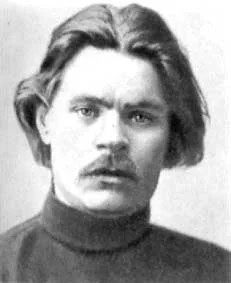
MGMaxim Gorki
[[en]] * Born: 16 March 1868 * Birthplace: Nizhny Novgorod (now Gorky), Russia * Death: June 1936 * Best Known As: Russian writer known for his socialist realism Name at birth: Aleksey Maksimovich Peshkov Maxim Gorky (also spelled Maksim Gorki) is one of the giants of 20th century Russian literature and theater, known for his realistic depictions of how terrible it is to be poor and oppressed. Gorky himself grew up in rough times and was a lifelong spokesperson for the underclass. His political activism led to several years of exile, in spite of his popularity with Russian readers. By 1900 Gorky was a famous literary figure, thanks in part to help from Anton Chekhov. His short stories and his first novel, Foma Gordeyev (1902) gave him notoriety as well as critical success, but his outspoken opposition to the rule of Nicholas II led to his exile to the island of Capri (1907-13). After the 1917 revolution Gorky's criticism of his friend V. I. Lenin and the Bolsheviks led to another...
2 poezii, 0 proze
 MA
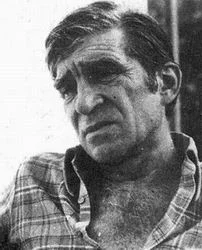
MAMiroslav Antici
Miroslav "Mika" Antiæ (March 14, 1932 – June 24, 1986) was a Serbian poet, journalist and painter. Antiæ was born in Mokrin, Vojvodina, Serbia (then Yugoslavia). He wrote poems, articles, dramas, movie and TV scripts and documentaries. Mika also acted in several movies, and was an amateur painter. His best known poem is "Srem", in which he mourns for dead in World War II and describes the beauty of Srem using "beæarac" song form. He is well known as a bohemian. Mika Antiæ is best known as a children and youth poet, a master of delicate and gentle sentiments. His bohemian, hard-drinking lifestyle is best illustrated by a barely translatable pun about him: "Èika Jova deci, èika Mika Antiæ dva deci" "Èika Jova deci" meaning "Mister Jova to the children", referring to Jovan Jovanoviæ Zmaj, a known children's poet. "Èika Mika Antiæ dva deci" means "Mister Mika Antiæ two deciliters", referring to drinking from a glass, likely of alcohol.
1 poezii, 0 proze
 JS
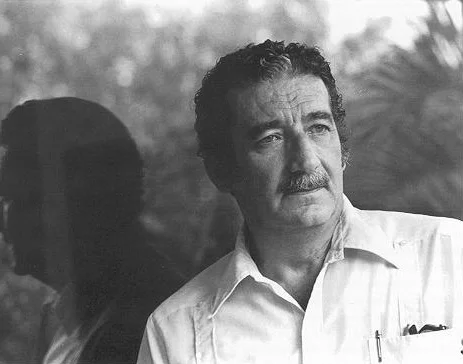
JSJaime Sabines
Jaime Sabines Gutiérrez (March 25, 1926 - March 19, 1999) is arguably Mexico's most influential contemporary poet. Known as “the sniper of Literature” as he formed part of a group that transformed literature into reality, he wrote ten volumes of poetry, and his work has been translated into more than twelve languages. His writings chronicle the experience of everyday people in places such as the street, hospital, and playground. Sabines was also a politician. Jaime Sabines was born on March 25, 1926 in Tuxtla Gutiérrez, Chiapas. Before he devoted himself to the study of literature, he spent three years studying medicine before moving on to his real vocation: Spanish and literature, studying at the Universidad Nacional Autónoma de México (UNAM), and obtaining a postgraduate degree. Sabines was an outstanding student at the Mexican Writers Centre from 1964 to 1965 and part of the jury for the Casa de las Americas prize. In addition to his literary activity, he participated in politics...
8 poezii, 0 proze
 GS
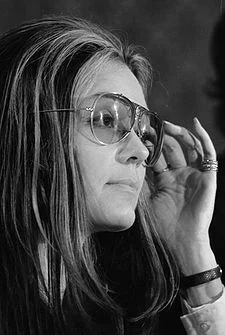
GSGloria Steinem
Gloria Marie Steinem (born March 25, 1934) is an American feminist icon, journalist, and social and political activist. Rising to national prominence as a feminist leader in 1969, Steinem was a founder of New York magazine in the 1960s and broke ground in 1963 with an investigative report of how the women of Playboy were treated. In the 1970s she became a leading political leader and one of the most important heads of the second-wave feminism, the women's rights movement of the 1960s and 1970s. In 1971, Steinem, along with other feminist leaders (including Betty Friedan, Fannie Lou Hamer, Myrlie Evers, and U.S. Representatives Shirley Chisholm and Bella Abzug) founded the National Women's Political Caucus. An influential co-convener of the Caucus, she delivered her memorable "Address to the Women of America." The next year Steinem became the founding editor and publisher of Ms. magazine, which brought feminist issues to the forefront and became the movement's most influential...
2 poezii, 0 proze
 GD
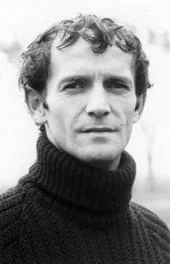
GDGeorges Dor
Georges Dor (March 10, 1931 - July 24, 2001) (born Georges-Henri Dore) was a Québécois author, composer, playwright, singer, poet, translator, and theatrical producer and director. Born in Drummondville, Dor undertook a career in radio as a disk jockey and news director. He worked for Radio-Canada, the national Canadian broadcaster, where he became a director for the Evening News. He wrote poems for many years, but in 1964 he was encouraged by friends to compete in an amateur singing competition. He began singing professionally in early 1965, and released his first album in 1966. One of the songs from this album, his composition "La Manic", whose lyrics were a love letter written by a construction worker on the Manicouagan power project, became the most successful record ever by a Quebec chansonnier. He continued to perform as a singer until 1972, and to record until 1978. After that he worked mainly in the theatre and in television, producing and writing plays and téléromans. He also...
3 poezii, 0 proze
 US
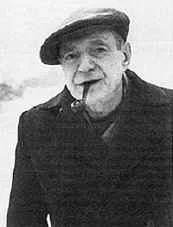
USUmberto Saba
Umberto Saba (9 March 1883 - 26 August 1957) was the pseudonym of Italian poet and novelist Umberto Poli. His creative work was hampered by a life-long struggle with mental illness. Saba was born in Trieste, then a part of the Austro-Hungarian Empire. He had Italian citizenship through his father. His mother was Jewish. His father abandoned the family before Umberto was born, and his mother employed a Slovene nanny, Peppa Sabaz, to raise him. He became very attached to her, and revered her memory in his poetry. From 1903-1904, he attended the University of Pisa, where he studied archaeology, German, and Latin. In was in this period that he began to complain of a nervous disorder, which was to become more severe with time. Quitting school, Saba worked for a time as an apprentice and was a cabin-boy on a merchant ship. From 1907-1908 he served in the military in Salerno. He married Carolina Wölfler in 1909, and they had a daughter, Lina, the following year. By 1928, Saba was suffering...
4 poezii, 0 proze
 SL
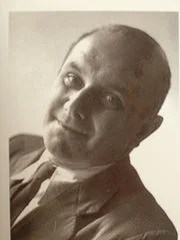
SLStanis³aw Jerzy Lec
Stanis³aw Jerzy Lec (6 March 1909 – 7 May 1966) (born Baron Stanis³aw Jerzy de Tusch-Letz) was a Polish poet and aphorist of Polish and Jewish noble origin. Often mentioned among the greatest writers of post-WW2 Poland, he was one of the most influential aphorists on the 20th century. Lyrical poetry, sceptical philosophical-moral aphorisms, often with a political subtext. He was born on March 6, 1909 in Lviv (then Lemberg, Austro-Hungarian Empire), the son of the Baron Benon de Tusch-Letz and Adela Safrin. The family moved to Vienna at the onset of First World War, and Lec' early education was received there. After the war the family returned to Lviv-Lemberg to continue his schooling at the Lemberg Evangelical School. In 1927 he matriculated at the Lviv's Jan Kazimir University in jurisprudence and Polish. As a result of his political activities — writing articles for socialist revolutionary periodicals, making speeches in the Technological Institute’s Yellow Hall — Lec had to leave...
1 poezii, 0 proze
82T
de Salvador Dali
~ cu mult înainte de piramidele din egipt, cu mult înainte de gara din perpignan, încă de la începuturile lui homo erectus, prima viziune a sufletului său a fost cea a unui lavabou sclipitor de alb...
ce femeie / ce bărbat nu
de Coculeanu Paul
ce femeie n-a avut subit la picioare o mângâiere incitantă de floare pe tălpi buzele senzuale boboci senzația altor degete decât cele umane cu mișcări ferme și fine adieri răcoroase ori calde mai sus...
Pișăcioșii
de felix nicolau
cel mai fain era seara, când se adunau toți verișorii și începeau jocurile. În afară de cei veniți de prin colțurile târgului, mai erau și cei sosiți în vacanță, vreo 7 cu toții. De ce era fain?...
Câte ceva despre poantă, în epigramă (II)
de nicolae bunduri
Câte ceva despre poantă, în epigramă (II) POANTA NÃSCUTÃ DIN CONTRASTE Dacă este frumos pregătită și spontan exprimată, această poantă poate genera o anumită satisfacție cititorului, satisfacție care...
Farmecul nebun al presei de odinioară...
de Ghinea Nouras Cristian
Dintotdeauna, presa scrisă a avut un farmec aparte, care devine tot mai evident... odată cu trecerea timpului. Lucrul este valabil pentru ziarele de acum o sută de ani, după cum, probabil, și peste...
Mica țiganiadă romașcană
de CRETU IOAN
Mica Þiganiadă romașcană De obicei, la lucruri vechi se cuvin îmbătrînite vorbe de aducere aminte. La rromi, despre șatrele nomade, despre dansatoare lovind tamburine zăngănitoare. Scripcari...
De la un sân la altul (II)
de Adrian Firica
Îmi umblă prin cap cuvinte – scrise, vorbite, n-are importanță. Îmi mai umblă și idei, alcătuite din mai multe cuvinte scrise sau spuse. O harababură, ce să mai discutăm. Am suferit un eșec personal...
Festivalul Național de Epigramă \"Donici, cuib de-nțelepciune\"
de Mihai Cucereavii
Pe data de 24 octombrie curent la Chișinău s-a desfășurat Festivalul Național de Epigramă „Donici, cuib de-nțelepciune”, ediția a V-a, organizat de Primăria municipiului Chișinău, Uniunea...
De ce n-a fost jelită Carmen Zgarbur (8)
de Helia Rimoga
Mașina s-a auzit frânând dar era prea aproape și impactul n-a mai putut fi evitat cu toate că Fane a apăsat și el pedala până-n podea. După ce bușitura a răsunat înfundat din cealaltă mașină s-a ițit...
Fascinanta revenire a unui artist plastic de talie mondială: Adrian Costea
de Miron Manega
Una dintre cele mai enigmatice figuri ale României post-decembriste este Adrian Costea. Personalitatea lui în spațiul public românesc este exclusiv negativă. Cunoscut ca mare “păpușar” politic, a...