
"It was a wet night of February" – 4371 rezultate
0.02 secundeMeilisearch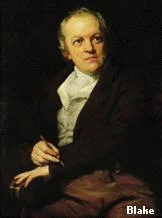 WB
WBWilliam Blake
William Blake (1757-1827) was a British poet, painter, visionary mystic, and engraver, who illustrated and printed his own books. Blake proclaimed the supremacy of the imagination over the rationalism and materialism of the 18th- century. Misunderstanding shadowed his career as a writer and artist and it was left to later generations to recognize his importance. Blake was born in London, where he spent most of his life. His father was a successful London hosier who encouraged Blake\'s artistic talents. Blake was first educated at home, chiefly by his mother. In 1767 he was sent to Henry Pars\' drawing school. Blake has recorded that from his early years, he experienced visions of angels and ghostly monks and that he saw and conversed with the angel Gabriel, the Virgin Mary, and various historical figures. At the age of 14 Blake was apprenticed for seven years to the engraver James Basire. Gothic art and architecture influenced him deeply. In 1783 he married Catherine Boucher, the...
30 poezii, 0 proze
James Joyce
Joyce was born in Dublin, where his father was a rates collector. He was educated at a Jesuit school and University College, Dublin where he studied philosophy and language. When he was still an undergraduate, in 1900, his long review of Ibsen’s last play was published in the Fortnightly Review. At this time he also began writing his poems which were later collected in Chamber Music, published in 1907. In 1902 Joyce left Dublin for Paris, but returned the following year as his mother was dying. From 1904 he lived with Nora Barnacle, whom he married in 1931 (the year his father died), a son was born in 1905, and a daughter in 1918. Their home from 1905 to 1915 was Trieste, where Joyce taught English at the Berlitz school. In 1909 and 1912 he made his final trips to Ireland, attempting to arrange the publication of his first book Dubliners, which finally appeared in England in 1914. It was during this time that he was contacted by Ezra Pound, a leading champion of modernist writers who...
0 poezii, 0 proze
Robert Browning
Robert Browning was born on May 7, 1812 in Camberwell, which is south of London. His birthday falls within a couple of months of the births of Dickens and Thackeray. He was the eldest of 2 children, born to Robert and Sarah Anna Browning. His father was a bank clerk. He attended London University for a short while in 1828, but received most of his education by readinghis from his father\'s library. His first poem, Pauline, was published when he was 21. It was soon followed by Paracelsus (1835) and Sordello (1840). A year later, Pippa Passes, the first in a series entitled Bells and Pomegranates was published; the remaining seven parts appeared between 1841-46. In 1846, Browning eloped with Elizabeth Barrett and lived with her in Italy until his death in 1861. Various difficulties made the poet\'s requested burial in Florence impossible, and his body was returned to England to be interred in Westminster Abbey. The they left you for their pleasure: till in due time, one by one, Some...
12 poezii, 0 proze
 HF
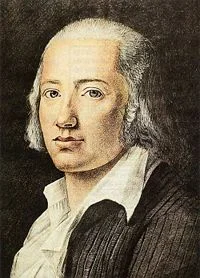
HFHÖLDERLIN, Friedrich
Johann Christian Friedrich Hölderlin (20 March 1770 – 6 June 1843) was a major German lyric poet. His work bridges the Classical and Romantic schools. Having spent most of his life tormented by mental illness, he suffered great loneliness, and often spent his time playing the piano, drawing, reading, writing, and enjoyed travelling when he had the chance. The poetry of Hölderlin, widely recognized today as one of the highest points of German literature, was little known or understood during his lifetime and slipped into obscurity shortly after his death; his illness and reclusion made him fade from his contemporaries' consciousness – and, even though selections of his work were being published by his friends already during his lifetime, it was largely ignored for the rest of the 19th century. In fact, Hölderlin was a man of his time, an early supporter of the French Revolution – in his youth at the Seminary of Tübingen, he and some colleagues from a "republican club" planted a "Tree...
22 poezii, 0 proze
 KT
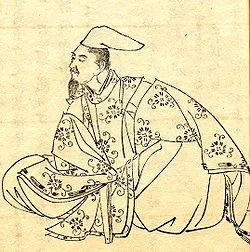
KTKi No Tsurayuki
Poet (waka) japonez din era Heian. A trăit (probabil) între anii 872 și 945. *** Ki no Tsurayuki (872-945) was a Japanese author, poet and courtier of the Heian period. Tsurayuki was a son of Ki no Mochiyuki. He became a waka poet in the 890s. In 905, under the order of Emperor Daigo, he was one of four poets selected to compile the Kokin Wakashū, an anthology of poetry. After holding a few offices in Kyoto, he was appointed the provincial governor of Tosa province and stayed there from 930 until 935. Later he was presumably appointed the provincial governor of Suo province, since it was recorded that he held a waka party (Utaai) at his home in Suo. He is well-known for his waka and is counted as one of the Thirty-six Poetry Immortals selected by Fujiwara no Kinto. He was also known as one of the editors of the Kokin Wakashū. Tsurayuki wrote one of two prefaces to Kokin Wakashū; the other is in Chinese. His preface was the first critical essay on waka. He wrote of its...
1 poezii, 0 proze
 JT
JTJan Twardowski
Jan Jakub Twardowski (June 1, 1915 – January 18, 2006) was a famous Polish poet, but, as he said of himself, he was a priest (of the Catholic Church) first of all. He was a chief Polish representative of contemporary religious lyrics. He wrote short, simple poems, humorous, sometimes with colloquialisms. He joins observation of nature with philosophical reflexion. Twardowski received many awards and medals for his output. Jan Twardowski was born on June 1, 1915 in Warsaw, Congress Poland, Russian Empire as a son of Jan Twardowski and Aniela Maria Konderska. Several weeks later his family was forced to move to Russia (it was World War I). After 3 years the family moved back to Warsaw. In 1927, after finishing a primary school, he started his education in mathematical and environmental gymnasium. He finished it in 1935. In 1932 he began working with the gymnasium youth newspaper called KuŸnia M³odych. He had his own column there, he wrote poems, short stories, interviews with writers,...
1 poezii, 0 proze
 MR
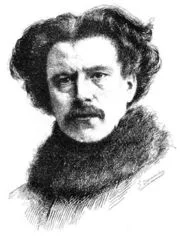
MRMaurice Rollinat
Maurice Rollinat (December 29, 1846 in Châteauroux, France – October 26, 1903 in Ivry-sur-Seine) was a French poet. His father represented Indre in the National Assembly of 1848, and was a friend of George Sand, whose influence is very marked in young Rollinat's first volume, Dans les brandes (1877), and to whom it was dedicated. After its publication, he abandoned realism and worked in a very different manner. He joined a literary circle that called themselves Les Hydropathes, founded by Émile Goudeau, an anti-clerical group with ties to the decadent literary movement. Under their influence wrote the poems that made his reputation. In Les Névroses, with the sub-title Les Âmes, Les Luxures, Les Refuges, Les Spectres, Les Ténèbres, he showed himself as a disciple of Charles Baudelaire. He constantly returns in these poems to the physical horrors of death, and is obsessed by unpleasant images. Less outre in sentiment are L'Abîme (1886), La Nature, and a book of children's verse, Le...
8 poezii, 0 proze
Jakob Bohme
Jakob Böhme (probably April 24, 1575[1] – November 17, 1624) was a German Christian mystic and theologian. He is considered an original thinker within the Lutheran tradition. In contemporary English, his name may be spelled Jacob Boehme; in seventeenth-century England it was also spelled Behmen, approximating the contemporary English pronunciation of the German Böhme.
1 poezii, 0 proze
 FB
FBFranz Bardon
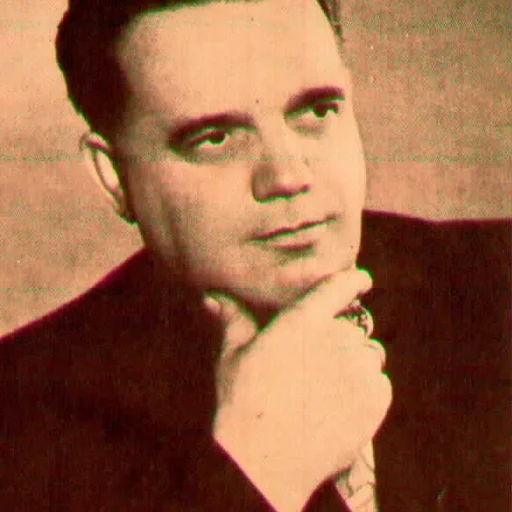
Franz Bardon (December 1, 1909 – July 10, 1958), born in Opava, Austrian Silesia, was both a stage magician and student and teacher of Hermetics. He was member of Czech hermetic society Universalia. During World War II Bardon was at one point held in a concentration camp for refusing to participate in Nazi Mysticism. Bardon was rescued by Russian soldiers who raided the camp. Bardon continued his work in the fields of Hermetics until 1958 when he was arrested and imprisoned in Brno Czechoslovakia. Bardon died on July 10, 1958 while in the custody of police. He is best known for his three volumes on Hermetic magic. These volumes are Initiation Into Hermetics, The Practice of Magical Evocation and The Key to the True Quabbalah. Additionally there was a fourth work attributed to him by the title of Frabato the Magician, supposed to be a disguised autobiography. Though the book lists its author as Bardon, it was actually written by his secretary, Otti Votavova. While some elements of the...
1 poezii, 0 proze
 MR
MRMevlana Jalaluddin Rumi
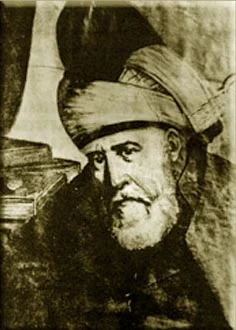
Mawlānā Jalāl ad-Dīn Muḥammad Balkhī, also known as Jalāl ad-Dīn Muḥammad Rūmī, but known to the English-speaking world simply as Rumi, (30 September 1207 – 17 December 1273), was a 13th-century Persian poet, Islamic jurist, theologian, and mystic. Rūmī is a descriptive name meaning "the Roman" since he lived most of his life in an area called Rūm because it was once ruled by the Byzantine Empire. According to tradition, Rumi was born in Balkh, Khorasan (now in Afghanistan), the hometown of his father's family. Scholars, however, argue that he was most likely born in Wakhsh, a small town located at the river Wakhsh in what is now Tajikistan. Wakhsh belonged to the larger province of Balkh, and in the year Rumi was born, his father was an appointed scholar there. Both these cities were at the time included in the Greater Persian cultural sphere of Khorasan, the easternmost province of historical Persia, and were...
162 poezii, 0 proze
Chase your song
de Florea Ana-Maria
It was raining, again- it was normal and expected. Thoughts were sailing through the rain, trying not to get wet, not to be stopped by the strong,wicked clouds. It was the kind of night in which you...
Dracula
de Bram Stoker
Chapter 7 - Cutting from \"the Dailygraph\". (Pasted in Mina Murray\'s Journal.) From a Correspondent. 8 August. Whitby One of the greatest and suddenest storms on record has just been experienced...
on the stairs of your house
de adriana
On the stairs of your house There’s a letter in my hand. Yours. I wrote it on the stairs of your house While waiting. Don’t you remember the day my heart went on a strike? That wet summer...
A lover\'s complaint
de William Shakespeare
FROM off a hill whose concave womb re-worded A plaintful story from a sistering vale, My spirits to attend this double voice accorded, And down I laid to list the sad-tun\'d tale; Ere long espied a...
Mama
de ion untaru
Era o zi ploioasă Întorcându-mă acasă Mașina m-a condus Spre tine Spre mormântul tău... Aș putea oare să uit cât de mult îți plăcea ție ploaia? Marmora albă și udă A mormântului tău Strălucea la fel...
Spieluhr
de Alexandru Red
Ein kleiner Mensch stirbt nur zum Schein Wollte ganz alleine sein Das kleine Herz stand still für Stunden So hat man es für tot befunden Es wird verscharrt in nassem Sand Mit einer Spieluhr in der...
The Last Question
de Isaac Asimov
The last question was asked for the first time, half in jest, on May 21, 2061, at a time when humanity first stepped into the light. The question came about as a result of a five-dollar bet over...
Athanasia
de Oscar Wilde
To that gaunt House of Art which lacks for naught Of all the great things men have saved from Time, The withered body of a girl was brought Dead ere the world\'s glad youth had touched its prime, And...
Venus and Adonis
de William Shakespeare
\'Vilia miretur vulgus; mihi flavus Apollo Pocula Castalia plena ministret aqua.\' To the Right Honourable Henry Wríothestly, EARL OF SOUTHAMPTON, AND BARON OF TICHFIELD. RIGHT HONOURABLE, I know not...
It was a time of triumph for the morons
de Alexandru Paleologu
Mr. Paleologu, to begin with, let us say that this talk is the result of certain hostile attitudes, especially in the Western media, concerning Mircea Eliade and what we call here “Generation ’27”. I...