
"Famous blue raincoat" – 72 rezultate
0.01 secundeMeilisearch CF
CFCarmen Fenesan
"Well. I'll tell you somethin' about your famous future. Every day I wake up, it's still the present. The same grimy, boring present. I don't think this future thing exists." (Titan AE)
19 poezii, 0 proze
 DM
DMdan marius
"Well, I've been a disclaimer for twenty-four years Poor mother drowned in a pillow of tears Im well known in story, famous in song The black sheep, the blemish, the one who went wrong The black sheep, the blemish, the one who went wrong My crime is discomfort, my mind ill at ease Old crow on my shoulder, my favorite disease My siblings, my rivals might tend to my wake Grieve me not brothers, I was mother's mistake Grieve me not brothers, I was mother's mistake And all the grand expectations of an epic of wealth Leave me long to crawl back to the womb Well, I've tasted your grace, placed it back on the shelf Drag your pedigree wives to your tomb Drag your pedigree wives to your tomb Well, I came from this city, a victim of peace But I've grown far too filthy to attend to the feast So I'll take to the hills to live savage and free I don't need nobody, nobody needs me I don't need nobody, nobody needs me" http://www.obliothedagger.blogspot.com/
289 poezii, 0 proze
 RD
RDRené Descartes
René Descartes (1596-1650) is one of the most important Western philosophers of the past few centuries. During his lifetime, Descartes was just as famous as an original physicist, physiologist and mathematician. But it is as a highly original philosopher that he is most frequently read today. He attempted to restart philosophy in a fresh direction. For example, his philosophy refused to accept the Aristotelian and Scholastic traditions that had dominated philosophical thought throughout the Medieval period; it attempted to fully integrate philosophy with the 'new' sciences; and Descartes changed the relationship between philosophy and theology. Such new directions for philosophy made Descartes into a revolutionary figure. The two most widely known of Descartes' philosophical ideas are those of a method of hyperbolic doubt, and the argument that, though he may doubt, he cannot doubt that he exists. The first of these comprises a key aspect of Descartes' philosophical method. As noted...
2 poezii, 0 proze
René Descartes
René Descartes (1596-1650) is one of the most important Western philosophers of the past few centuries. During his lifetime, Descartes was just as famous as an original physicist, physiologist and mathematician. But it is as a highly original philosopher that he is most frequently read today. He attempted to restart philosophy in a fresh direction. For example, his philosophy refused to accept the Aristotelian and Scholastic traditions that had dominated philosophical thought throughout the Medieval period; it attempted to fully integrate philosophy with the \'new\' sciences; and Descartes changed the relationship between philosophy and theology. Such new directions for philosophy made Descartes into a revolutionary figure. The two most widely known of Descartes\' philosophical ideas are those of a method of hyperbolic doubt, and the argument that, though he may doubt, he cannot doubt that he exists. The first of these comprises a key aspect of Descartes\' philosophical method. As...
0 poezii, 0 proze
 JT
JTJan Twardowski
Jan Jakub Twardowski (June 1, 1915 – January 18, 2006) was a famous Polish poet, but, as he said of himself, he was a priest (of the Catholic Church) first of all. He was a chief Polish representative of contemporary religious lyrics. He wrote short, simple poems, humorous, sometimes with colloquialisms. He joins observation of nature with philosophical reflexion. Twardowski received many awards and medals for his output. Jan Twardowski was born on June 1, 1915 in Warsaw, Congress Poland, Russian Empire as a son of Jan Twardowski and Aniela Maria Konderska. Several weeks later his family was forced to move to Russia (it was World War I). After 3 years the family moved back to Warsaw. In 1927, after finishing a primary school, he started his education in mathematical and environmental gymnasium. He finished it in 1935. In 1932 he began working with the gymnasium youth newspaper called KuŸnia M³odych. He had his own column there, he wrote poems, short stories, interviews with writers,...
1 poezii, 0 proze
 TE
TET.S. Eliot
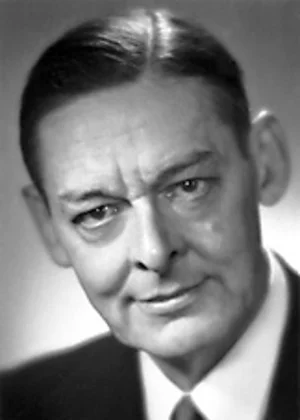
Thomas Stearns Eliot, OM (26 September 1888–4 January 1965), was a poet, playwright and literary critic. He received the Nobel Prize in Literature in 1948. Among his most famous writings are the poems The Love Song of J. Alfred Prufrock, The Waste Land, The Hollow Men, Ash Wednesday and Four Quartets; the plays Murder in the Cathedral and The Cocktail Party; and the essay "Tradition and the Individual Talent". Eliot was born in the United States, moved to the United Kingdom in 1914 (at age 25), and became a British subject in 1927 at the age of 39. Of his nationality and its role in his work, Eliot said: "[My poetry] wouldn't be what it is if I'd been born in England, and it wouldn't be what it is if I'd stayed in America. It's a combination of things. But in its sources, in its emotional springs, it comes from America."
25 poezii, 0 proze
 AW
AWAlice Walker
Alice Walker is an American novelist, short-story writer, poet, essayist, and activist. Her most famous novel, The Color Purple, was awarded the Pulitzer Prize and the National Book Award in 1983. Alice Walker\'s creative vision is rooted in the economic hardship, racial terrorism, and folk wisdom of African American life and culture, particularly in the rural South. Her writing explores multidimensional kinships among women, among men and women, among humans and animals and embraces the redemptive power of social, spiritual and political revolution.
1 poezii, 0 proze
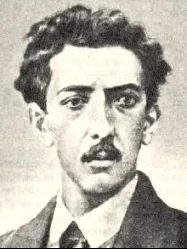 MA
MAManuel Acuña
Manuel Acuña Narro (27 August 1849 – 6 December 1873) was a 19th-century Mexican writer. He focused on poetry, but also wrote some novels and plays. Even though he was famous at an early time of his life, he decided to commit suicide. It is not certain why he killed himself, but it is thought that he did so because of a woman. Acuña was born in the city of Saltillo, Coahuila, on August 27, 1849 to Francisco Acuña and Refugio Narro. He was taught how to write and read at an early age. Later he studied in the “Colegio Josefino”, in Saltillo. Around 1865 he was transferred to Mexico City to the School of San Ildefonso, where he entered as a full time student. Here he studied mathematics, Latin, French and philosophy. Acuña lived at a time at which Mexican society was dominated by philosophical-positivist intellectuality. Furthermore he was living as a romantic tendency in poetry was occurring. In January 1868, Acuña initiated his studies in medicine at the...
1 poezii, 0 proze
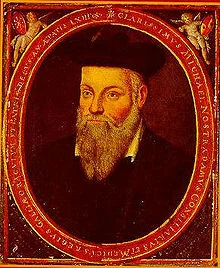 N
NNostradamus
Michel de Nostredame[1] (14 or 21 December 1503[2] – 2 July 1566), usually Latinised to Nostradamus, was a French apothecary and reputed seer who published collections of prophecies that have since become famous worldwide. He is best known for his book Les Propheties (The Prophecies), the first edition of which appeared in 1555. Since the publication of this book, which has rarely been out of print since his death, Nostradamus has attracted a following that, along with the popular press, credits him with predicting many major world events. Most academic sources maintain that the associations made between world events and Nostradamus's quatrains are largely the result of misinterpretations or mistranslations (sometimes deliberate) or else are so tenuous as to render them useless as evidence of any genuine predictive power.[3] Moreover, none of the sources listed offers any evidence that anyone has ever interpreted any of Nostradamus's quatrains specifically enough to allow a clear...
1 poezii, 0 proze
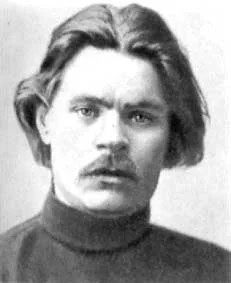 MG
MGMaxim Gorki
[[en]] * Born: 16 March 1868 * Birthplace: Nizhny Novgorod (now Gorky), Russia * Death: June 1936 * Best Known As: Russian writer known for his socialist realism Name at birth: Aleksey Maksimovich Peshkov Maxim Gorky (also spelled Maksim Gorki) is one of the giants of 20th century Russian literature and theater, known for his realistic depictions of how terrible it is to be poor and oppressed. Gorky himself grew up in rough times and was a lifelong spokesperson for the underclass. His political activism led to several years of exile, in spite of his popularity with Russian readers. By 1900 Gorky was a famous literary figure, thanks in part to help from Anton Chekhov. His short stories and his first novel, Foma Gordeyev (1902) gave him notoriety as well as critical success, but his outspoken opposition to the rule of Nicholas II led to his exile to the island of Capri (1907-13). After the 1917 revolution Gorky's criticism of his friend V. I. Lenin and the Bolsheviks led to another...
2 poezii, 0 proze
Famous blue raincoat
de Leonard Cohen
It\'s four in the morning, the end of December I\'m writing you now just to see if you\'re better New York is cold, but I like where I\'m living There\'s music on Clinton Street all through the...
in tempera
de emilian valeriu pal
1 o emilia iubește un emilian scria pe pe o vedere pe care o învîrteam între degete ma chinuiam să-mi aduc aminte cînd am primit-o atît de străin de atunci atît de străin de acum de cînd s-a...
la noapte nu plouă
de tania cozianu
caffe vivaldi near 7th avenue. leonard cohen ora închiderii privirea lunatică a barmanului. cloud 9 cocktail. și cam atât. closing time o dată de două ori. lună de vară pe zidurile cafenelei. undeva...
o zi ca asta
de emilian valeriu pal
uneori te trezești gol fără absolut nici un motiv. pur și simplu nu e nimic în tine ca și cum somnul ar fi o mașină de gunoi care ridică pe timpul nopții tot ce-ai adunat în tine. * stătusem în...
howling
de emilian valeriu pal
mă grăbesc să prind ultimul metrou de parcă mi-aș prinde o venă prin care mi se administrează gentamicină. cam așa e de dureroasă imagine ta pe un peron oarecare și eu beat cu o poftă cumplită să-mi...
oh my god. kenny is dead. no.he\'s not
de emilian valeriu pal
Hello? Are cineva o aspirină? Sau mă rezolv cu Edward Maya? Nu cred că v-ați dori să vă treziți sîmbătă dimineața cu Maya să vă cadă păianjenii de pe tavan. Mi-am încheiat săptămîna cu grație. Ca...
sincerely l. cohen
de ioana negoescu
știm amândoi că nu se poate face nimic. am citit monte cristo. am citit tom sawyer. am trecut de o mie de ori prin pasajul vulturul negru. am stat ore întregi pe malul crișului fără să scot o vorbă....
Jazzmani raposati – biografii scornite (1)
de raluca
Cannonball Adderley at the Village Vanguard http://www.youtube.com/watch?v=8xg9xapJ ... re=related Cannonball Adderley (1928-1975) - a fost numit asa nu datorita fetei sale rotunde, nici datorita...
like a famous line
de mihai amaradia
... try not to run, ca un fel de replică celebră, cuvintele astea mă urmăresc, ca un câine lihnit, parcă le port în păr, îmi miros mâinile, ies afară pentru că nu am aer, îmi rod unghiile, și mi-e...
Beyond Good and Evil
de Friedrich Nietzsche
On the Prejudices of Philosophers 1 The will to truth which will still tempt us to many a venture, that famous truthfulness of which all philosophers so far have spoken with respect - what questions...