
"Because of..." – 303 rezultate
0.01 secundeMeilisearchJelaluddin Rumi
RUMI Rumi is one of the most read and well known poets in the world. Jelaluddin Rumi was born in the Eastern part of the Ancient Persian Empire near Balkh (presently Afghanistan), on September 30, 1207. His first name literally means Majesty of Religion, Jalal means majesty and din means religion. Because of the threat of Mongol invasion in Persia his family fled, finally settling in Konya, Turkey. He passed away, on December 17, 1273. His shrine is in Konya. As a genius theologian, a brilliant scholar, and a pillar of Islam, he followed in his father place until his spiritual friend and teacher, Shams of Tabriz appeared in his life. Rumi underwent a spiritual transformation in 1244 after meeting Shams. With appearance of Shams, Rumi became reborn and soon started his marvelous work \"Masnavi,\" (Mathnawi) consisting of 24,000 verses at age 38. His other famous work is \"Divan-e Shams-e Tabriz\" (the collective poems of Shams of Tabriz). Rumi\'s poetry has a mystic connotation, a...
0 poezii, 0 proze
Jelaluddin Rumi
RUMI Rumi is one of the most read and well known poets in the world. Jelaluddin Rumi was born in the Eastern part of the Ancient Persian Empire near Balkh (presently Afghanistan), on September 30, 1207. His first name literally means Majesty of Religion, Jalal means majesty and din means religion. Because of the threat of Mongol invasion in Persia his family fled, finally settling in Konya, Turkey. He passed away, on December 17, 1273. His shrine is in Konya. As a genius theologian, a brilliant scholar, and a pillar of Islam, he followed in his father place until his spiritual friend and teacher, Shams of Tabriz appeared in his life. Rumi underwent a spiritual transformation in 1244 after meeting Shams. With appearance of Shams, Rumi became reborn and soon started his marvelous work \"Masnavi,\" (Mathnawi) consisting of 24,000 verses at age 38. His other famous work is \"Divan-e Shams-e Tabriz\" (the collective poems of Shams of Tabriz). Rumi\'s poetry has a mystic connotation, a...
0 poezii, 0 proze
 JR
JRJelaluddin Rumi
RUMI Rumi is one of the most read and well known poets in the world. Jelaluddin Rumi was born in the Eastern part of the Ancient Persian Empire near Balkh (presently Afghanistan), on September 30, 1207. His first name literally means Majesty of Religion, Jalal means majesty and din means religion. Because of the threat of Mongol invasion in Persia his family fled, finally settling in Konya, Turkey. He passed away, on December 17, 1273. His shrine is in Konya. As a genius theologian, a brilliant scholar, and a pillar of Islam, he followed in his father place until his spiritual friend and teacher, Shams of Tabriz appeared in his life. Rumi underwent a spiritual transformation in 1244 after meeting Shams. With appearance of Shams, Rumi became reborn and soon started his marvelous work \"Masnavi,\" (Mathnawi) consisting of 24,000 verses at age 38. His other famous work is \"Divan-e Shams-e Tabriz\" (the collective poems of Shams of Tabriz). Rumi\'s poetry has a mystic connotation, a...
13 poezii, 0 proze
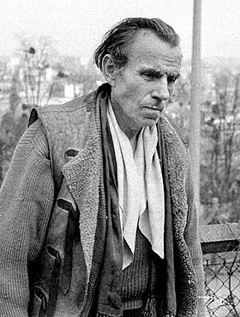 LC
LCLouis-Ferdinand Celine
Louis-Ferdinand Céline was the pen name of French writer and doctor Louis-Ferdinand Destouches (27 May 1894 – 1 July 1961). The name "Céline" was chosen after his grandmother's first name. Céline is considered one of the most influential writers of the twentieth century, developing a new style of writing that modernized both French and World literature. He remains, however, a controversial figure because of anti-Semitic statements published in 1937 and during the Second World War. Only child of Ferdinand-Auguste Destouches and Marguerite-Louise-Céline Guilloux, he was born Louis-Ferdinand Destouches in 1894 at Courbevoie, just outside Paris in the Seine département (now Hauts-de-Seine). His father was a minor functionary in an insurance firm and his mother was a lacemaker. In 1905 he was awarded his Certificat d'études, after which he began working as an apprentice and messenger boy in various trades. Between 1908 and 1910 his parents sent him to Germany and England for a year in each...
1 poezii, 0 proze
 CM
CMCecilia Meireles
Cecília Benevides de Carvalho Meireles (1901-1964, Rio de Janeiro) was a Brazilian writer and educator, known principally as a poet. She is a canonical name of Brazilian Modernism, one of the great female poets in the Portuguese language, and is widely considered the best poetess from Brazil, though she rightly combatted the word "poetess" because of gender discrimination. She traveled in the Americas in the 1940s, on one trip visiting the U.S.A, Mexico, and on others Argentina and Uruguay, and Chile. In the summer of 1940 she gave lectures at the University of Texas, Austin. She wrote two poems about her time in the capital of Texas, and a long (800 lines) very socially-aware poem "USA 1940", which was published posthumously. As a journalist her columns (crônicas, or chronicles) focused most often on education, but also on her trips abroad in the western hemisphere, Portugal, other parts of Europe, Israel, and India (where she received an honorary doctorate). As a poet, her style was...
11 poezii, 0 proze
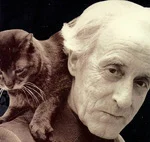 WA
WAWerner Aspenstrom
Karl Werner Aspenström (13 November 1918 – 25 January 1997) was a Swedish poet. Born at Norrbärke, he was a member of the Swedish Academy, where he held Seat 12 from 1981 to 1997. Aspenström claimed that his motivation for writing was "writing for his cat", but apparently hinted that he meant someone else with that. In 1989, together with Lars Gyllensten and Kerstin Ekman, he resigned from the Swedish Academy because of the academy’s response to the Salman Rushdie controversy, which was perceived as weak. He however claimed that this was not the sole reason for his resignation, but rather one amongst several other. He was a friend of Stig Dagerman. Works Förberedelse (1943) Oändligt är vårt äventyr (1945) Snölegend (1949) Varelser (1989) Öva Sitt Eget (2004) (posthumous, co-written with Signe Lund-Aspenström)
1 poezii, 0 proze
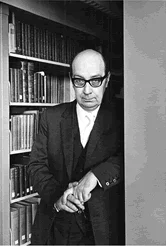 PL
PLPhilip Larkin
Philip Arthur Larkin, CH, CBE, FRSL (9 August 1922 – 2 December 1985) is commonly regarded as one of the greatest English poets of the latter half of the twentieth century. He was also a novelist and a jazz critic. He spent almost all of his working life as a university librarian. He first came to prominence with the publication in 1955 of his second collection of poems, The Less Deceived, which was followed by The Whitsun Weddings in 1964 and High Windows in 1974. He was offered the Poet Laureateship following the death of John Betjeman in 1984, but he declined the honour. Larkin was born in the city of Coventry. From 1930 to 1940 he was educated at King Henry VIII School in Coventry and, in October 1940, in the midst of the Second World War, he went up to St John's College, Oxford, to read English language and literature. Having been rejected for military service because of his poor eyesight, he was able, unlike many of his contemporaries, to follow the traditional full-length...
1 poezii, 0 proze
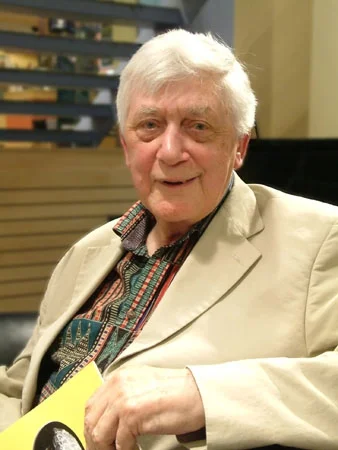 EM
EMEdwin Morgan
Edwin George Morgan OBE (born 27 April 1920) is a Scottish poet and translator who is associated with the Scottish Renaissance. He is widely recognised as one of the foremost Scottish poets of the 20th century. In 1999, Morgan was made the first Glasgow Poet Laureate. In 2004, he was named as the first Scottish national poet: The Scots Makar. Morgan was born in Glasgow and grew up in Rutherglen. He entered the University of Glasgow in 1937 and, after interrupting his studies to serve in World War II as a non-combatant conscientious objector with the Royal Army Medical Corps, graduated in 1947 and became a lecturer at the University. He worked there until his retirement in 1980. He came out as gay in Nothing Not Giving Messages: Reflections on his Work and Life , but explored his sexuality in many previous works.[1] He had written many famous love poems, among them "Strawberries" and "The Unspoken", in which the love object was not gendered; this was partly because of legal problems at...
1 poezii, 0 proze
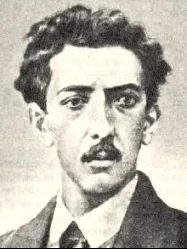 MA
MAManuel Acuña
Manuel Acuña Narro (27 August 1849 – 6 December 1873) was a 19th-century Mexican writer. He focused on poetry, but also wrote some novels and plays. Even though he was famous at an early time of his life, he decided to commit suicide. It is not certain why he killed himself, but it is thought that he did so because of a woman. Acuña was born in the city of Saltillo, Coahuila, on August 27, 1849 to Francisco Acuña and Refugio Narro. He was taught how to write and read at an early age. Later he studied in the “Colegio Josefino”, in Saltillo. Around 1865 he was transferred to Mexico City to the School of San Ildefonso, where he entered as a full time student. Here he studied mathematics, Latin, French and philosophy. Acuña lived at a time at which Mexican society was dominated by philosophical-positivist intellectuality. Furthermore he was living as a romantic tendency in poetry was occurring. In January 1868, Acuña initiated his studies in medicine at the...
1 poezii, 0 proze
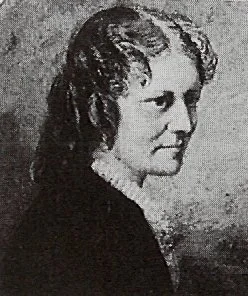 AS
ASAnna Sewell
Anna Sewell (30 March 1820 – 25 April 1878) was an English novelist, best known as the author of the classic novel Black Beauty. Anna Mary Sewell was born in Great Yarmouth, Norfolk, England into a devoutly Quaker family. Her father was Isaac Phillip Sewell (1793-1879), and her mother, Mary Wright Sewell (1798 - 1884) was a successful author of children's books. Anna Sewell had one sibling, a younger brother named Philip Sewell. Anna Sewell was largely educated at home. When Anna was twelve years old, the family moved to Stoke Newington, where Sewell attended school for the first time. Two years later, however, she slipped while walking home from school and severely injured both of her ankles. Her father took a job in Brighton in 1836, partly in the hope that the climate there would help to cure her. Despite this, and most likely because of mistreatment of her injury, for the rest of her life Anna was unable to stand without a crutch or to walk for any length of time. For greater...
5 poezii, 0 proze
Because of...
de Braia Cristina
Because of the violins in my life and its sounds that spread around, Because of the warm wind and its golden leafs that touch the ground, Because of the soft rain and its touch that makes the swetest...
Song of the Bowmen of Shu
de Ezra Pound
Here we are, picking the first fern-shoots And saying: When shall we get back to our country? Here we are because we have the Ken-nin for our foemen, We have no comfort because of these Mongols. We...
The Discourse of History
de Roland Barthes
The formal description of sets of words beyond the level of the sentence (what we call for convenience discourse) is not a modern development: from Gorgias to the nineteenth century, it was the...
Romania, the land of choice
de Alin Farcas
Hello our dear turiști străini, And welcome pe la noi prin țară! If you arrived with jebu` plin… Most certain stați o zi ș-o sară. Călătorit-ați by the plane? Then watch out în aeroport! Because...
Ash Wednesday
de T.S. Eliot
I Because I do not hope to turn again Because I do not hope Because I do not hope to turn Desiring this man\'s gift and that man\'s scope I no longer strive to strive towards such things (Why should...
Yours
de Lia Miruna Dumitrache
You’ve left rains of dust on my cheeks On my eyelids and eyes Though it’s been enough weeks And I vowed not to cry. My right arm seems to tremble Because of a weight that is no more And I’m lonely,...
Necronomikon
de Abdul al-Hazred
THE TESTIMONY OF MAD ARAB THIS is the testimony of all that I have seen, and all that I have learned, in those years that I have possesed the Three Seals of MASSHU. I have seen One Thousand and-One...
My withered self
de Nicolae Goje
I feel as nothing I really do I am in sheer panic because there is no life after death because i feel in my flesh that there is not division by zero because my will has withered like a vestigial...
Confused
de Cristina
Confusion...bluring my thoughts I don\'t know wheather to stay or to go Whether to love or to hate Or just be indiferent to everything My emotions are mixed My reactions are unrealistic To what\'s...
knot
de Nichita Stănescu
Knot 19 Be aware that I can kill, that I can crush with my heel the sweet head of the peaceful rising star, because of this I\'ve turned to painting houses! Be aware that I take no pity on myself,...