
"the call" – 11458 rezultate
0.02 secundeMeilisearch OD
ODOriah Mountain Dreamer
Oriah Mountain Dreamer is the author of the inspirational prose-poem and international best-selling books, The Invitation (now translated into over fifteen languages), The Dance and The Call: Discovering Why You Are Here . Her writing explores how to follow the thread of our deepest heart\'s longing into a life of meaning and purpose. Her latest book, What We Ache For: Creativity and the Unfolding of Your Soul, (Harper San Francisco, April 2005) offers reflections on and practical guidelines for finding and cultivating creative work that is not separated from your spirituality, your direct experience of that which is both what you are and larger than yourself, or your sexuality, the fire and sensuality of life lived in the physical world. Oriah has shared her insights and stories with audiences throughout the world at conferences and retreats and through radio and TV appearances (CBC, TVO, Oprah, NPR, PBS, Wisdom Network.) Blending ruthless honesty, humour, insight and compassion for...
0 poezii, 0 proze
 WH
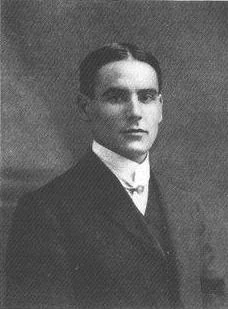
WHWilliam Hope Hodgson
William Hope Hodgson (15 noiembrie 1877 - aprilie 1918) a fost un scriitor englez. Este autorul unui număr impresionant de scrieri, raportat la scurta sa viață. Opera sa cuprinde eseuri, poezii, proză scurtă și romane, aparținând mai multor genuri care uneori se suprapun în cadrul aceleiași scrieri, în special genurile fantasy, horror și science-fiction. Moare în Primul Război Mondial, la vârsta de 40 de ani. Scrieri reprezentative: Romane: • The Boats of the \"Glen Carrig\" (1907) • The House on the Borderland (1908) • The Ghost Pirates (1909) • The Night Land (1912) Proză scurtă: • Ciclul Carnacki • Ciclul Captain Gault Poezii: • The Calling of the Sea (1920) • The Voice of the Ocean (1921) • Poems of the Sea (1977) • The Lost Poetry of William Hope Hodgson (2005) Traduceri în limba română: Căpitanul Gault, Ed. Aldo Press, 2003. Carnacki, vânătorul de fantome, Ed. Aldo Press, 2003. Tărâmul Nopții, Ed. Aldo Press, 2004. Pirații fantomă, Ed. Aldo Press, 2004. Casa de la marginea...
1 poezii, 0 proze
Jim Morrison
The facts are very simple. So simple that they might mislead you into thinking that the young man whose picture you see on this page is- well, a lot like a lot of other young men. But he isn`t. His full real name is James Douglas Morrison. He was born on December 8, 1943, in Melbourne, Fla.- which is near Cape Kennedy. Jim is six feet tall and has brown hair and haunting blue-grey eyes. After attending Florida State University, he moved to California, where he studied film-making at UCLA. Fortunately, he was side-tracked into the world of music (which had always held great interest for him) and he soon found himself the lead singer of a group called the Doors.
44 poezii, 0 proze
 AA
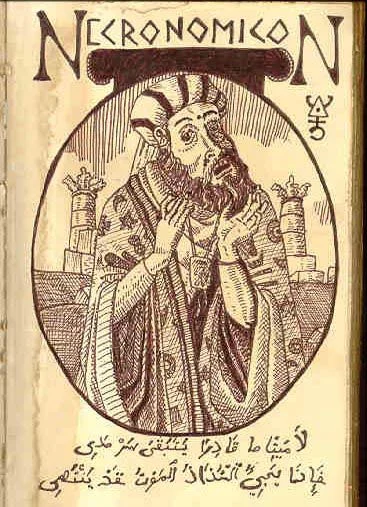
AAAbdul al-Hazred
Abdul Alhazred is a fictional character created by American horror writer H. P. Lovecraft. He is the so-called "Mad Arab" credited with authoring the imaginary book Kitab al-Azif (the Necronomicon), and as such an integral part of Cthulhu Mythos lore. Despite the existence of several hoax Necronomicons, it is clear that neither Alhazred nor his book ever existed. The name Abdul Alhazred is a pseudonym that Lovecraft created in his youth, which he took on after reading 1001 Arabian Nights at the age of about five years. The name was invented either by Lovecraft, or by Albert Baker, the Phillips family lawyer. Abdul is a common Arabic name component (but never a name by itself; additionally the ending -ul and the beginning Al- are redundant), but Alhazred may allude to Hazard, a name from Lovecraft's family tree. It might also have been a pun on "all-has-read", since Lovecraft was an avid reader in youth. Abdul Alhazred is not a real Arabic name, and seems to contain the Arabic definite...
1 poezii, 0 proze
Dylan Thomas
Dylan Marlais Thomas was born on October 27, 1914 in Swansea, Glamorganshire (Wales). He was educated at Swansea Grammar School and became well-known for his obscure poetry and amusing plays and prose. Before the publishing of Thomas' first book in 1934, he worked as a reporter for The South Wales Daily Post, in Swansea, (1931-1932) and as a free-lance writer from 1933. "18 Poems", Thomas' first book, was published as the result of a prize. Thomas was only 19 when this volume of poetry was released. He wrote nearly 30 poems in late 1933 and early 1934, of which 13 were published in this volume. Between May and October 1934, he completed another five for inclusion in the book. The Thomas' poems first appeared in the Sunday Referee in 1933 in a feature column called the "Poets' Corner," edited by Victor Neuburg and Runia Sheila MacLeod. Neuburg began to award prizes to poets whose work was judged to be the finest printed in the column over a period of six months. The prize was that the...
28 poezii, 0 proze
 EM
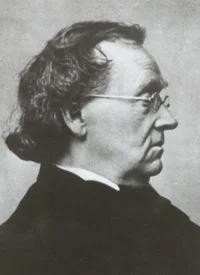
EMEduard Mörike
Eduard Friedrich Mörike (Ludwigsburg, 8 September 1804 – 4 June 1875 in Stuttgart) was a German romantic poet. He studied Theology at the Seminary of Tübingen, and followed the ecclesiastical career, becoming a Lutheran pastor. In 1834 he was appointed pastor of Cleversulzbach near Weinsberg, and, after his early retirement for reasons of health, in 1851 became professor of German literature at the Katharinenstift in Stuttgart. This office he held until his retirement in 1866; but he continued to live at Stuttgart until his death on the 4th of June 1875. Mörike is a member of the so-called Swabian school which gathered round Ludwig Uhland. His poems, Gedichte (1838; 22nd ed., 1905), are mostly lyrics, often humorous, but expressed in simple and natural language. His lieder (songs) are traditional in form and have been compared to those of Goethe. He also wrote a somewhat fantastic Idylle vom Bodensee, oder Fischer Martin und die Glockendiebe (1846; 2nd ed., 1856), and published a...
4 poezii, 0 proze
 JO
JOJohn James Osborne
English dramatist. He began his theatrical career as an actor and playwright in provincial English repertory theaters. Osborne\'s plays usually focus on an individual character and the sheer force of his language rather than on action. His first commercial success was Look Back in Anger (1956), concerning a restless and vociferous young man of the working class who is at war with himself and society; it became the seminal work for the so-called angry young men. His other plays depict the frustration of living without hope in a world filled with false values. Among Osborne\'s other plays are The Entertainer (1957), Luther (1961), Inadmissible Evidence (1964), A Patriot for Me (1965), The End of Me Old Cigar (1974), Watch It Come Down (1976), and Déjà vu (1991). He also wrote the screenplay for Tom Jones (1963).
1 poezii, 0 proze
 SC
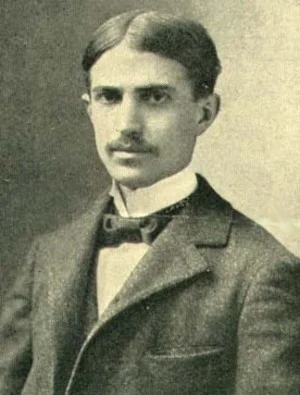
SCStephen Crane
Stephen Crane (1871-1900), American author, whose second novel, The Red Badge Of Courage (1895), brought him international fame. The Red Badge of Courage depicted the American Civil War from the point of view of an ordinary soldier. It has been called the first modern war novel. Crane was born in Newark, New Jersey, on November1, 1871, as the 14th child of a Methodist minister. He started to write stories at the age of eight and at 16 he was writing articles for the New York Tribune. Crane studied at Lafayette College and Syracuse University. After his mother's death in 1890 - his father had died earlier - Crane moved to New York, where he lived a bohemian life, and worked as a free-lance writer and journalist. While supporting himself by his writings, he lived among the poor in the Bowery slums to research his first novel. Crane's first novel, Maggie: A Girl Of The Streets(1893) was a milestone in the development of literary naturalism. Crane had to print the book at his own expense,...
11 poezii, 0 proze
Carmen Harra
Carmen Harra in her own words: Even as a little girl growing up in Romania, I knew I was different. After a near-death experience at age five, I was able to see things others couldn\'t. Everyone who has had a near-death experience describes the sensation of \"going toward the light.” In this parallel world, extraordinary light energy surrounds you and you see an inexpressibly beautiful light. There is no negativity and no anger or sadness, only love. It is a perfect, glowing world, filled with dazzling insights and pure truth, the way our Creator meant it to be. I\'ve never forgotten the lessons this experience taught me. Why, I wondered, wasn\'t life on Earth like this? This parallel world, which I call the Invisible World, is just as real as the physical world here on Earth. It is even more real because the people there are souls unencumbered by ego, emotions, and attachment to material things. Without these negative distractions, souls exist harmoniously in love, joy, and peace. On...
8 poezii, 0 proze
 JH
JHJames Leigh Hunt
James Leigh Hunt was born on 19th October, 1784 in Southgate, Middlesex. His father, a clergyman, got into financial difficulties and ended up in a debtor's prison. As a young man, Hunt developed an interest in politics and poetry. Leigh Hunt became friends with other young writers who favoured political reform including Percy Bysshe Shelley, William Hazlitt, Henry Brougham, Lord Byron,Thomas Barnes and Charles Lamb. As well as writing poetry and articles on politics, Leigh Hunt worked as a drama critic for the News. In 1808 Leigh Hunt helped his brother, John Hunt, to start a political journal called the Examiner. The journal gave support to radicals in Parliament such as Henry Brougham and Sir Francis Burdett and the political ideas of people like Robert Owen and Jeremy Bentham. Leigh Hunt upset the authorities by pointing out on the front page of every edition of the Examiner that half the cost of the price was the result of the government's "tax on knowledge". In 1812 Leigh and...
1 poezii, 0 proze
Cuțitele
de Dafina David
Ce era dacă toți oamenii cu limba cernită asupra steluțe de miere, cristale zbrobite din geam toată iarna - my middle gave to the poor, the call flipped red in their mouth, in their thin sand sandy...
Porn meditation
de Theodor Emilian Barbu
Porn has ruined it for me. I mean now I can never be with a girl who is less than perfect. Pretty just won’t do it anymore. It seems this is my curse. It’s hard even to talk to the ugly ones. That...
Despre Visual Poetry
de Meda Bittermann
Despre Visual Poetry In cele ce urmeaza va voi supune atentiei doua pareri (a mea si a unei creatoare deja faimoasa -m-am decis sa o citez pe aceasta in original, deci in engleza) in legatura cu ceea...
The Discourse of History
de Roland Barthes
The formal description of sets of words beyond the level of the sentence (what we call for convenience discourse) is not a modern development: from Gorgias to the nineteenth century, it was the...
The freedom of the leaf
de Vavila Popovici
You want the freedom of the leaf, its power to reveal and color in the green of hope; to call the warm rays of the sun and happy raindrops, to her sweet delight! The freedom and generosity of the...
The Poems of Sappho, Part IV
de Sappho
The Poems of Sappho, Part IV 110 H?mitu\'bion stala\'sson. A napkin dripping. From the Scholiast on the Plutus of Aristophanes to show the meaning of h?mitu\'bion. This was a piece of soft linen for...
The Little Mermaid
de Radu Herinean
The Little Mermaid - - - - by Hans Christian Andersen Far out in the ocean, where the water is as blue as the prettiest cornflower, cornflower, and as clear as the purest glass. But it is very deep...
The Sphinx
de Oscar Wilde
In a dim corner of my room for longer than my fancy thinks A beautiful and silent Sphinx has watched me through the shifting gloom. Inviolate and immobile she does not rise she does not stir For...
It was a time of triumph for the morons
de Alexandru Paleologu
Mr. Paleologu, to begin with, let us say that this talk is the result of certain hostile attitudes, especially in the Western media, concerning Mircea Eliade and what we call here “Generation ’27”. I...
Ode to the Book
de Pablo Neruda
When I close a book I open life. I hear faltering cries among harbours. Copper ignots slide down sand-pits to Tocopilla. Night time. Among the islands our ocean throbs with fish, touches the feet,...