
"near by" – 11428 rezultate
0.01 secundeMeilisearchPercy Bysshe Shelley
Percy Bysshe Shelley was born on August 4, 1792, at Field Place, near Horsham in Sussex, into an aristocratic family. His father, Timothy Shelley, was a Sussex squire and a member of Parliament. Shelley attended Syon House Academy and Eton and in 1810 he entered the Oxford University College. In 1811 Shelley was expelled from the college for publishing The Necessity Of Atheism, which he wrote with Thomas Jefferson Hogg. Shelley\'s father withdrew his inheritance in favor of a small annuity, after he eloped with the 16-year old Harriet Westbrook, the daughter of a London tavern owner. The pair spent the following two years traveling in England and Ireland, distributing pamphlets and speaking against political injustice. In 1813 Shelley published his first important poem, the atheistic Queen Mab. The poet\'s marriage to Harriet was a failure. In 1814 Shelley traveled abroad with Mary Wollstonecraft Godwin, the daughter of the philosopher and anarchist William Godwin (1756-1836). Mary\'s...
0 poezii, 0 proze
Li Po
Li Po was born in central Asia. After his father moved the family back into China in 705, he started his poetic compositions. With mountains near his house, he found adventure and became a skilled swordsman and led a life of a knight-errant when he was older. Po traveled and married a daughter of a retired prime minister in 727, but soon went back to traveling the regions and neighboring countries around him. His most exciting travels were to the capital Ch’ang-an where he was presented to the emperor Hsuan-tsung and was showered with extravagant gifts. He was then appointed as a member of the Hanlin Academy and was lionized by fellow scholar-officials. The next travel he experienced was in 744. By this time he was divorced from his first wife and remarried. He was also becoming a drunk and visiting city taverns. Soon Po became known as one of the “Eight Immortals of the Wine-Cup”. During this year he was initiated in the Taoist religion along with his friend Tu Fu. After 10 years of...
1 poezii, 0 proze
 IA
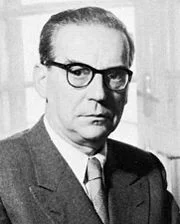
IAIvo Andriæ
Ivo Andriæ, singurul sârb laureat al premiului Nobel, a terminat gimnaziul la Sarajevo. A studiat istoria la Zagreb, Cracovia și Graz. În timpul primului război mondial a fost închis de regimul austro-ungar ca deținut politic, iar între cele două conflagrații mondiale a lucrat ca diplomat în slujba Regatului Iugoslaviei. După război s-a ocupat exclusiv de literatură. Premiul Nobel pentru literatură l-a primit în anul 1961. A murit la Belgrad, în 1975. Engleză Ivo Andric was born in the village of Dolac, near Travnik, in 1892. After spending his youth in his native Bosnia, which was at the time part of the Austro-Hungarian Empire, he studied philosophy at the Universities of Zagreb, Vienna, and Cracow. His studies were interrupted by the outbreak of the First World War, at the beginning of which he was jailed for his anti-Austrian activities. After receiving a doctorate in letters from the University of Graz in 1923, he entered the Yugoslav diplomatic service. The last diplomatic post...
1 poezii, 0 proze
Carmen Harra
Carmen Harra in her own words: Even as a little girl growing up in Romania, I knew I was different. After a near-death experience at age five, I was able to see things others couldn\'t. Everyone who has had a near-death experience describes the sensation of \"going toward the light.” In this parallel world, extraordinary light energy surrounds you and you see an inexpressibly beautiful light. There is no negativity and no anger or sadness, only love. It is a perfect, glowing world, filled with dazzling insights and pure truth, the way our Creator meant it to be. I\'ve never forgotten the lessons this experience taught me. Why, I wondered, wasn\'t life on Earth like this? This parallel world, which I call the Invisible World, is just as real as the physical world here on Earth. It is even more real because the people there are souls unencumbered by ego, emotions, and attachment to material things. Without these negative distractions, souls exist harmoniously in love, joy, and peace. On...
8 poezii, 0 proze
 VL
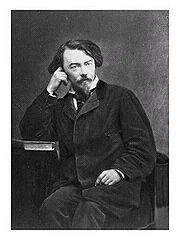
VLVilliers de l'Isle-Adam
Jean-Marie-Mathias-Philippe-Auguste, comte de Villiers de l'Isle-Adam (7 November 1838 – 19 August 1889) was a French symbolist writer. Villiers de l'Isle-Adam was born in Saint-Brieuc, Brittany, to a distinguished aristocratic family. His parents, Marquis Joseph-Toussaint and Marie-Francoise (née Le Nepvou de Carfort) were not rich, however, and were financially supported by Marie's aunt, Mademoiselle de Kerinou. His father became obsessed with the idea he could restore the family fortune by finding the lost treasure of the Knights of Malta (Philippe Villiers de L'Isle-Adam, 16th century Grand Master of the Knights Hospitaller, was his ancestor), which had reputedly been buried near Quintin during the French Revolution. Consequently, he spent large sums of money buying land, excavating it and then selling it at a loss when he failed to find anything of value. The young Villiers' education was troubled (he attended over half a dozen different schools) but from an early age his family...
1 poezii, 0 proze
 S
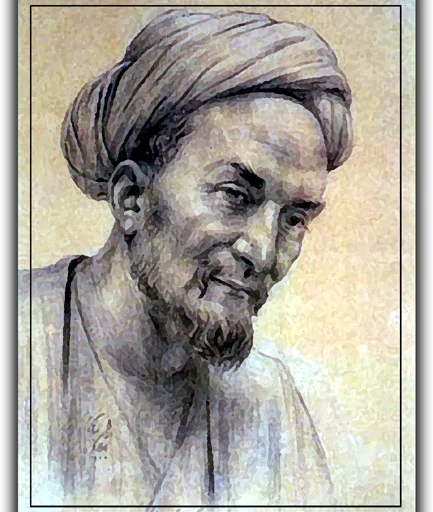
SSaadi
Abū-Muḥammad Muṣliḥ al-Dīn bin Abdallāh Shīrāzī, better known by his pen-name as Saʿdī or, simply, Saadi, was one of the major Persian poets of the medieval period. He is not only famous in Persian-speaking countries, but he has also been quoted in western sources. He is recognized for the quality of his writings, and for the depth of his social and moral thoughts. A native of Shiraz, his father died when he was an infant. Saadi experienced a youth of poverty and hardship, and left his native town at a young age for Baghdad to pursue a better education. As a young man he was inducted to study at the famous an-Nizzāmīya center of knowledge (1195–1226), where he excelled in Islamic Sciences, law, governance, history, Arabic literature and theology. The unsettled conditions following the Mongol invasion of Khwarezm and Iran led him to wander for 30 years abroad through Anatolia (he visited the Port of Adana, and near...
2 poezii, 0 proze
 EL
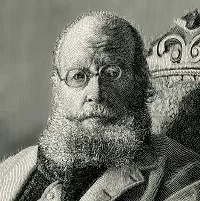
ELEdward Lear
Edward Lear (12 May 1812 – 29 January 1888) was an English artist, illustrator, author, and poet, renowned today primarily for his literary nonsense, in poetry and prose, and especially his limericks, a form that he popularised. Lear was born into a middle-class family in the village of Holloway, the 21st child of Ann and Jeremiah Lear. He was raised by his eldest sister, also named Ann, 21 years his senior. Ann doted on Lear and continued to mother him until her death, when Lear was almost 50 years of age. Due to the family's failing financial fortune, at age four he and his sister had to leave the family home and set up house together. Largely educated by himself, Lear has been described as idiosyncratic yet brilliantly talented[citation needed]. Lear also suffered from health issues. From the age of six he suffered frequent grand mal epileptic seizures, and bronchitis, asthma, and in later life, partial blindness. Lear experienced his first seizure at a fair near Highgate with his...
2 poezii, 0 proze
 CA
CACecco Angiolieri
(1260 cca - 1313 cca) Născut la Siena din părinți bogați, bigoți și avari cu fiul lor, Cecco moare lăsând în urmă nenumărate datorii și amintirea unei vieți extravagante, trândăvie și desfrâu. Poet original și bizar, este autorul unui Canțonier de 110 sonete cu atribuire certă, jurnal de o sinceritate brutală al vieții lui familiale și citadine. *** Cecco Angiolieri was born in Siena in 1260, son of Angioliero, who was himself the son of Angioliero Solàfica who was for several years a banker to Pope Gregory IX; his mother was Lisa de' Salimbeni, from a powerful Senese family. In 1281 he was with the Guelphs of Siena who were besieging their Ghibelline fellow citizens in the Torri di Maremma, near Roccastrada, Tuscany, and he was fined many times for deserting the battlefield without permission. He was fined again on July 11, 1282, for violating the curfew of Siena, signalled by the third ringing of the commune bells. He was slapped with another fine in 1291 in similar...
1 poezii, 0 proze
 LM
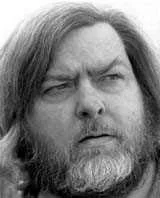
LMLouis McKee
Louis McKee (born July 31, 1951, Philadelphia, Pennsylvania) has been a fixture of the Philadelphia poetry scene since the early 70s. He is the author of Schuylkill County (Wampeter, 1982), The True Speed of Things (Slash & Burn, 1984) and eleven other collections. More recently, he has published River Architecture: Poems from Here & There 1973-1993 (Cynic, 1999), Loose Change (Marsh River Editions, 2001) and a volume in the Pudding House Greatest Hits series. Gerald Stern has called his work “heart-breaking” and “necessary,” while William Stafford has written, “Louis McKee makes me think of how much fun it was to put your hand out a car window and make the air carry you into quick adventures and curlicues. He is so adept at turning all kinds of sudden glimpses into good patterns.” Naomi Shihab Nye says, “Louis McKee is one of the truest hearts and voices in poetry we will ever be lucky to know.” Near Occasions of Sin, a collection issued in 2006 by Cynic Press, has been praised by...
2 poezii, 0 proze
William Carlos Williams
He was born in Rutherford, New Jersey, a town near the city of Paterson. He attended public school in Rutherford, New Jersey until 1897, then was sent to study at Château de Lancy near Geneva, Switzerland, the Lycée Condorcet in Paris, France, for two years and Horace Mann High School in New York City. Then, in 1902, he entered the University of Pennsylvania Medical School. During his time at Penn, Williams befriended Ezra Pound, Hilda Doolittle (H.D.) and the painter Charles Demuth. These friendships supported his growing passion for poetry. He received his M.D. in 1906 and spent the next four years in internships in New York City and in travel and postgraduate studies abroad (e.g., at the Univ. of Leipzig where he studied pediatrics). He returned to Rutherford in 1910 and began his medical practice, which lasted until 1951. In his life he helped to deliver more than two thousand babies but regarded his medical career as a way to finance his final goal of becoming a poet. In 1912 he...
0 poezii, 0 proze
near by
de Maia Cheregi
Mă gândesc la tot felul de lucruri. Sunt acasă. Parcă ceva este în apropiere. Mă duc să beau apă. Parcă apa este roșie. Este sânge. Mă duc să caut intrusul. Parcă văd tot felul de umbre fugind. Mă...
A morning of Rose
de doris
A morning of Rose In dreams a flower forms the light of dawn And, as it follows, sends down to all of us An image left so shallow. It is a glimpse Of gilded summer in nights of winter grey`n blue It...
Stopping by Woods on a Snowy Evening
de Robert Frost
Whose woods these are I think I know. His house is in the village though; He will not see me stopping here To watch his woods fill up with snow. My little horse must think it queer To stop without a...
STOPPING BY WOODS ON A SNOWY EVENING
de Robert Frost
Whose woods these are I think I know . His house is in the village though ; He will not see me stopping here To watch his woods fill up with snow . My little horse must think is queer To stop without...
Suzanne
de Leonard Cohen
Suzanne takes you down to her place near the river You can hear the boats go by You can spend the night beside her And you know that she\'s half crazy But that\'s why you want to be there And she...
Avatar
de Otilia Mărculescu
I see you and by this meaning that I am not naive you can rest assure about that- I will not preach that at my birth the goddesses came and blessed me with the gift of sight this is something I...
Dracula
de Bram Stoker
DRACULA (1897) written by Bram Stoker Chapter 1 - Jonathan Harker\'s Journal 3 May. Bistriz. Left Munich at 8:35 P.M., on 1st May, arriving at Vienna early next morning; should have arrived at 6:46,...
Christabel
de Samuel Taylor Coleridge
PART I \'Tis the middle of night by the castle clock, And the owls have awakened the crowing cock ; Tu--whit !-- -- Tu--whoo ! And hark, again ! the crowing cock, How drowsily it crew. Sir Leoline,...
little story
de .
There was once a little boy lonely, grump, depressed and coy. so the days come one by one poor boy, spitting on fun. long time passed and near him came a red blue submarine. some jump out of this old...
Two Look at Two
de Robert Frost
Love and forgetting might have carried them A little further up the mountain side With night so near, but not much further up. They must have halted soon in any case With thoughts of a path back, how...