
"all which isn\'t singing is mere talking" – 2187 rezultate
0.02 secundeMeilisearch SC
SCStefan Ciobanasu
Which way is the right path, as I stand upon This chaotic crossroads of hate... How many ways are there to roam On this dark and damned road of fate... "There are many ways, my son, to find where the souls of demons remain...But it takes only one second of despair and of doubt Until at last, your soul, they will gain... Inherit these lands, these things, these dreams That are yours, forever, to adore... For there is no life, in the depths of chaos, my son, For you to explore... C. Vincent Metzen - 'The Initiate' All I ever craved were the two dreams I shared with you. One I now have, will the other one ever dream remain. For yours I truly wish to be. Nightwish - Ever Dream
2 poezii, 0 proze
Igor Ursenco
CURRICULUM VITAE(Epekeina tes ousias: "beyond the being" Plato)) It's my thirst which concedes that there is water... Irrigated, my soul awakes forth: I'm surviving my nigts,for I taper this body worth... I exceed all my fates.I should figth her wasted battles, anxious to allot penitences of Eva & wagger fleengs of Loth... Who I am? Could she know? Yet I master her thougts - trespassing my bounds - remote... May I be her breath, confined by - rather - things she sais me not..?
2 poezii, 0 proze
Bram Stoker
Bram Stoker, a Scottish novelist, was born in Dublin, Scotland on November 8, 1847. Although he was the author of many horror stories, Stoker is best known for his most potent story, Dracula (1897). The gothic romance, which is based on vampire myths and on the occurence of supernatural phenomenon, became the prototype of all subsequent vampire stories. Many plays and films have been developed from the story of Dracula.
8 poezii, 0 proze
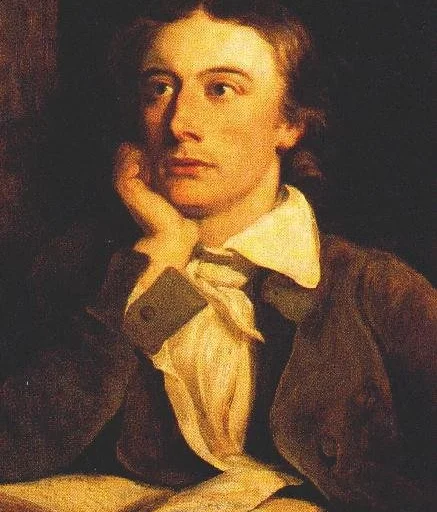 JK
JKJohn Keats
John Keats was born on 31 October 1795 (probably), first child of Thomas Keats and Frances Jennings Keats, who had apparently eloped1. Everything was pretty ordinary for all concerned for a while--the Keatses had three more sons (George and Thomas, plus Edward who died as a baby) and one daughter, Frances, by 1803. That was also the year when John went away to school at Enfield. In 1804, John\'s father was killed in a fall from a horse. Just over two months later, for mysterious reasons, Frances remarried, to a London bank clerk named William Rawlings. Frances quickly decided she\'d made some sort of terrible error and left, taking nothing with her since the laws of the time decreed that all her property and even her children belonged to her husband. Frances\' mother, Alice, swept in and took custody of the children, but she could do nothing about the Swan and Hoop, which Rawlings sold immediately before disappearing. It was around this time that John became prone to fistfights, which...
32 poezii, 0 proze
John Steinbeck
John Steinbeck (1902-1968), born in Salinas, California, came from a family of moderate means. He worked his way through college at Stanford University but never graduated. In 1925 he went to New York, where he tried for a few years to establish himself as a free-lance writer, but he failed and returned to California. After publishing some novels and short stories, Steinbeck first became widely known with Tortilla Flat (1935), a series of humorous stories about Monterey paisanos. Steinbeck's novels can all be classified as social novels dealing with the economic problems of rural labour, but there is also a streak of worship of the soil in his books, which does not always agree with his matter-of-fact sociological approach. After the rough and earthy humour of Tortilla Flat, he moved on to more serious fiction, often aggressive in its social criticism, to In Dubious Battle (1936), which deals with the strikes of the migratory fruit pickers on California plantations. This was followed...
4 poezii, 0 proze
Thomas Moore
Thomas Moore (1779-1852) Irish poet, friend of Lord Byron and P.B. Shelley. Moore\'s writings range from lyric to satire, from prose romance to history and biography. His popular IRISH MELODIES appeared in ten parts between 1807 and 1835. Moore was a good musician and skillful writer of songs, which he set to Irish tunes, mainly of the 18th century. \'Tis the last rose of summer, Left blooming alone; All her lovely companions Are faded and gone. (from \'The Last Rose of Summer\') } Thomas Moore was born in Dublin as the son of a grocer. His background was poor and he never varnished it. In his poem \'Epitaph on a Tuft-Hunter\' he mocked snobbery: \"Heaven grant him now some noble nook / For, rest his soul! he\'d rather be / Genteelly damn\'d beside a Duke, / Than sav\'d in vulgar company.\" Moore studied at Trinity College, Dublin and London, and published his first book, THE POETICAL WORKS OF THOMAS LITTLE, in 1801. He became in 1803 a civil officer to Bermuda, where he stayed for a...
2 poezii, 0 proze
 PS
PSPublilius Syrus
Scriitor latin, de origine siriană. Autor de mimi (farse), care abundau în maxime morale (sententiae) foarte apreciate atât de contemporanii săi, cât și de posteritate. Engleză Publilius (less correctly Publius) Syrus, a Latin writer of maxims, flourished in the 1st century BC. He was a Syrian who was brought as a slave to Italy, but by his wit and talent he won the favor of his master, who freed and educated him. His mimes, in which he acted himself, had a great success in the provincial towns of Italy and at the games given by Caesar in 46 BC. Publilius was perhaps even more famous as an improviser, and received from Caesar himself the prize in a contest in which he vanquished all his competitors, including the celebrated Decimus Laberius. All that remains of his works is a collection of Sentences (Sententiae), a series of moral maxims in iambic and trochaic verse. This collection must have been made at a very early date, since it was known to Aulus Gellius in the 2nd century AD....
1 poezii, 0 proze
 LC
LCLuis Cernuda
Luis Cernuda (born Luis Cernuda Bidón September 21, 1902, Seville – November 5, 1963, Mexico City), was a Spanish poet and literary critic. The son of a military man, Cernuda received a strict education as a child, and then studied law at the University of Seville, where he met the poet and literature professor Pedro Salinas. In 1928, after his mother died, Cernuda left his hometown, with which he had all his life an intense love-hate relationship. He briefly moved to Madrid, where he quickly became part of the literary scene. However, his detached, timid and morose character, his search of perfection frequently made him lose friendships and popularity. His mentor and former professor Salinas arranged for him to take a lectureship for a year at the University of Toulouse. From June 1929 until 1937 Cernuda lived in Madrid and participated actively in the literary and cultural scene of the Spanish capital. Cernuda collaborated with many organisations working to support a more liberal...
22 poezii, 0 proze
 JJ
JJJohn Jenkins
Rev. John Jenkins (1872 - 1936), known by his bardic name of Gwili, was a Welsh poet and theologian, and served as Archdruid of the National Eisteddfod of Wales from 1932 to 1936. Jenkins was born at Hendy in Carmarthenshire. He was educated at Bangor Baptist College, University of Wales, Cardiff, and Jesus College, Oxford. Like all Archdruids, he was a winner of one of the major poetry prizes at the National Eisteddfod, in his case the Crown, which he won in 1901. Works Poems (1920) Hanfod Duw a Pherson Crist (1931) Caniadau (1934)
1 poezii, 0 proze
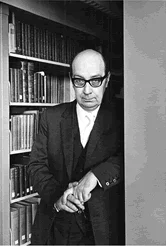 PL
PLPhilip Larkin
Philip Arthur Larkin, CH, CBE, FRSL (9 August 1922 – 2 December 1985) is commonly regarded as one of the greatest English poets of the latter half of the twentieth century. He was also a novelist and a jazz critic. He spent almost all of his working life as a university librarian. He first came to prominence with the publication in 1955 of his second collection of poems, The Less Deceived, which was followed by The Whitsun Weddings in 1964 and High Windows in 1974. He was offered the Poet Laureateship following the death of John Betjeman in 1984, but he declined the honour. Larkin was born in the city of Coventry. From 1930 to 1940 he was educated at King Henry VIII School in Coventry and, in October 1940, in the midst of the Second World War, he went up to St John's College, Oxford, to read English language and literature. Having been rejected for military service because of his poor eyesight, he was able, unlike many of his contemporaries, to follow the traditional full-length...
1 poezii, 0 proze
Atlas Shrugged
de Ayn Rand
\"Ladies and gentlemen,\" said a voice that came from the radio receiver—a man\'s clear, calm, implacable voice, the kind of voice that had not been heard on the airwaves for years—\"Mr. Thompson...
Cum nu se scrie un haiku
de Corneliu Traian Atanasiu
Do Your Haiku Submissions Contain Any of These Isn\'ts? Better Check! Lorraine Ellis Harr Conțin postările dv. vreunul din aceste NU-uri? Verificați totuși! 1. Haiku ISN\'T a prose sentence divided...
The Matrix
de Andrei Dumitrescu
Classes, hours streets... The VETO right over sunrise, heads of concrete... As water takes the shape of the vase, So does man take the elaborate shape of the maze in its underscored power. Witness to...
The Witch of Coos
de Robert Frost
I staid the night for shelter at a farm Behind the mountains, with a mother and son, Two old-believers. They did all the talking. MOTHER Folks think a witch who has familiar spirits She could call up...
Selected strophes from Les Chants de Maldoror Translated by Dan Clore
de Comte de Lautreamont
Canto I: 6 You should let your fingernails grow for fifteen days. Oh! -- How sweet it is to brutally tear a youth with a hairless upper lip from his bed and, eyes wide open, pretend that you\'ll...
The Mountain
de Robert Frost
The mountain held the town as in a shadow. I saw so much before I slept there once: I noticed that I missed stars in the west, Where its black body cut into the sky. Near me it seemed: I felt it like...
Darkness
de George Gordon Noel Byron
I had a dream, which was not all a dream. The bright sun was extinguish'd, and the stars Did wander darkling in the eternal space, Rayless, and pathless, and the icy earth Swung blind and blackening...
Darkness
de George Gordon Noel Byron
I had a dream, which was not all a dream. The bright sun was extinguished, and the stars Did wander darkling in the eternal space, Rayless, and pathless, and the icy earth Swung blind and blackening...
Beyond Good and Evil
de Friedrich Nietzsche
On the Prejudices of Philosophers 1 The will to truth which will still tempt us to many a venture, that famous truthfulness of which all philosophers so far have spoken with respect - what questions...
Churchill\'s Grave
de George Gordon Noel Byron
I stood beside the grave of him who blazed The comet of a season, and I saw The humblest of all sepulchres, and gazed With not the less of sorrow and of awe On that neglected turf and quiet stone,...