
"The Tree" – 11463 rezultate
0.01 secundeMeilisearch IT
ITIoan Tițian
Prenume: Ioan Nume: Tițian email: maa_eendo@yahoo.com Photo: by Me ... 1 Does the Eagle know what is in the pit? 2 Or wilt thou go ask the Mole? 3 Can Wisdom be put in a silver rod? 4 Or Love in a golden bowl? (by W. Blake) ... I ne'er was struck before that hour With love so sudden and so sweet. Her face it bloomed like a sweet flower And stole my heart away complete. My face turned pale, a deadly pale. My legs refused to walk away, And when she looked what could I ail My life and all seemed turned to clay. And then my blood rushed to my face And took my eyesight quite away. The trees and bushes round the place Seemed midnight at noonday. I could not see a single thing, Words from my eyes did start. They spoke as chords do from the string, And blood burnt round my heart. Are flowers the winter's choice Is love's bed always snow She seemed to hear my silent voice Not love appeals to know. I never saw so sweet a face As that I stood before. My heart has left its dwelling place And can...
6 poezii, 0 proze
 KV
KVKatri Vala
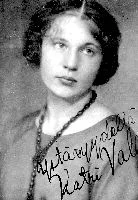
( 1901 – 1944 ) One of the Finnish poets who brought a free verse style of writing poetry into the mainstream of Finnish literature. Her work is full of the ecstasy of life, longing for distant places, and a use of vocabulary glutted in color, into which are woven a general radical quality, which affects her late works especially. She is considered a late proponent of the ideals of the Carriers of the Flame. Her earlier works show her dedicated to light and its power. Her output is not extensive. Mention should be made of: Kaukainen puutarha (The Distant Garden) (1924) Sininen ovi (The Blue Door) (1926) Maan laiturilla (On the Land Wharf) (1930) In some later works, there is a more serious, darker tone, represented by: Paluu (The Return) (1934) Pesäpuu palaa (The Nest Tree Burns) (1942) Her life’s program was: Oh! If life could be better than death! Katri Vala died of tuberculosis at the end of WW II, while under treatment in Sweden. Even so, her poetry remained more life-positive...
1 poezii, 0 proze
 FC
FCFred Cogswell
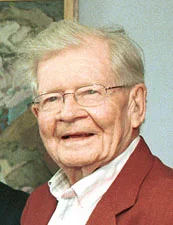
Născut în 1917, în East Contreville, provincia Brunswick, Canada. Poet și critic literar. Studii la Universitatea din New Brunswick (Canada) și Edinburg (Anglia). Profesor de literatură engeză la Universitatea New Brunswick. Redactor șef al revistei literare "The Fiddlehead", una dintre cele mai apreciate ale continentului american. Opere: "The Haloed Tree" (1956); "Lost Dimension" (1960); "Star People" (1968); "Light Bird of Life - Selected Poems (1974). *** Fred Cogswell, CM (November 8, 1917- June 20, 2004) was a Canadian poet. Born in East Centreville, New Brunswick he served overseas in the Canadian Army during the Second World War. A teacher at the age of sixteen, Cogswell gained a BA(Hons) and MA at the University of New Brunswick and received a PhD from Edinburgh University. He later became a professor of English at the University of New Brunswick, a position he held from 1952 to 1983. In 1958, Cogswell and a group of students and faculty from the University of New Brunswick...
1 poezii, 0 proze
 AA
AAAbdul al-Hazred
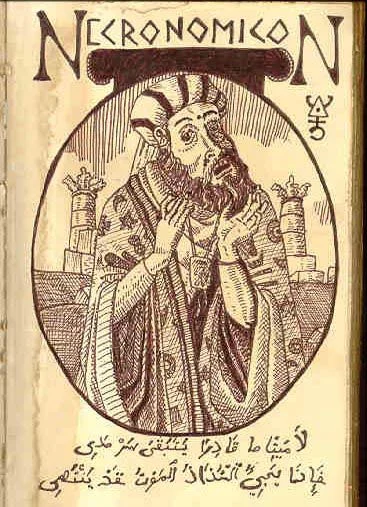
Abdul Alhazred is a fictional character created by American horror writer H. P. Lovecraft. He is the so-called "Mad Arab" credited with authoring the imaginary book Kitab al-Azif (the Necronomicon), and as such an integral part of Cthulhu Mythos lore. Despite the existence of several hoax Necronomicons, it is clear that neither Alhazred nor his book ever existed. The name Abdul Alhazred is a pseudonym that Lovecraft created in his youth, which he took on after reading 1001 Arabian Nights at the age of about five years. The name was invented either by Lovecraft, or by Albert Baker, the Phillips family lawyer. Abdul is a common Arabic name component (but never a name by itself; additionally the ending -ul and the beginning Al- are redundant), but Alhazred may allude to Hazard, a name from Lovecraft's family tree. It might also have been a pun on "all-has-read", since Lovecraft was an avid reader in youth. Abdul Alhazred is not a real Arabic name, and seems to contain the Arabic definite...
1 poezii, 0 proze
 HF
HFHÖLDERLIN, Friedrich
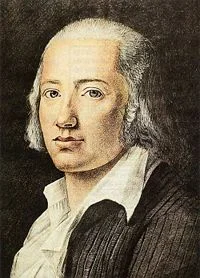
Johann Christian Friedrich Hölderlin (20 March 1770 – 6 June 1843) was a major German lyric poet. His work bridges the Classical and Romantic schools. Having spent most of his life tormented by mental illness, he suffered great loneliness, and often spent his time playing the piano, drawing, reading, writing, and enjoyed travelling when he had the chance. The poetry of Hölderlin, widely recognized today as one of the highest points of German literature, was little known or understood during his lifetime and slipped into obscurity shortly after his death; his illness and reclusion made him fade from his contemporaries' consciousness – and, even though selections of his work were being published by his friends already during his lifetime, it was largely ignored for the rest of the 19th century. In fact, Hölderlin was a man of his time, an early supporter of the French Revolution – in his youth at the Seminary of Tübingen, he and some colleagues from a "republican club" planted a "Tree...
22 poezii, 0 proze
 DL
DLDenise Levertov
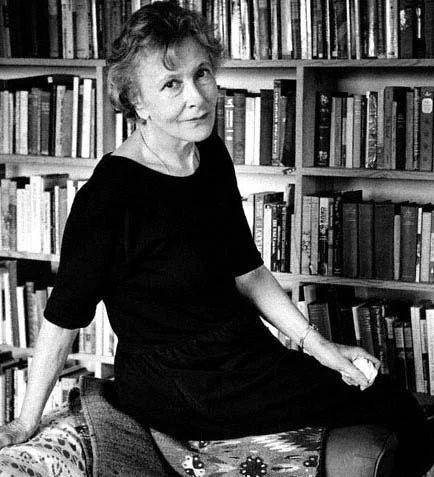
Denise Levertov (October 24, 1923–December 20, 1997) S-a născut în 1923, la Ilford, Anglia. În 1947 îl cunoaște, la Geneva, pe poetul american Michael Goodman cu care se căsătorește, stabilindu-se, din 1948, la New York. A predat cursuri de literatură la mai multe universități și a ținut un mare număr de conferințe, în urma cărora influența sa asupra tinerei generații a crescut. Dintre operele ei cităm: “Here and Now” (1956); “Overland to the Isles” (1968); “With Eyes at the Back of our Heads” (1959); “The Jacob’s Ladder” (1961); “O Taste and See” (1964); “Sorrow Dance” (1967); “ A Tree Telling of Orpheus” (1968). Cunoscându-l pe Robert Creeley, Denise Levertov se atașează grupului de poeți de la Black Mountain, devenind o adeptă a versului proiectiv, care vrea să dea expresie noului ritm accelerat de viață. În ce o privește, această poezie a însemnat o permanentă explorare, un act de devotament aproape religios pentru adevăr și autenticitate.
1 poezii, 0 proze
 LN
LNLassi Nummi
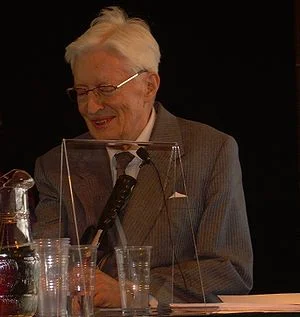
Lassi Nummi (born 1928) considers himself a prose-writer who has strayed into poetry. In a career spanning almost half a century and 25 collections of poetry, his preoccupations, and his central metaphors, have remained constant: landscape, trees, bushes, blades of grass. Interview by Tarja Roinila; poems translated by Herbert Lomas and Anselm Hollo 'During my "social period" I was on the board of the Writers' Union, and its chairman from 1969 to 1972; after that I worked for the Uusi Suomi newspaper and for the PEN Club, whose chairman I was from 1983 to 1988. I was a member of the Bible translation committee for the entire period of its existence, 17 years. A completely different choice would have been to become either a Buddhist or a Christian monk, or then to be a really convinced down-and-out- that might have been the most elegant solution. One could have regulated one's liquid intake, but the freedom of movement would have been pleasant. At the moment I am working out how much...
2 poezii, 0 proze
Kurt Weill
Biography Early Years Kurt Weill was born on 2 March 1900 in Dessau, Germany. The son of a cantor, Weill displayed musical talent early on. By the time he was twelve, he was composing and mounting concerts and dramatic works in the hall above his family\'s quarters in the Gemeindehaus. During the First World War, the teenage Weill was conscripted as a substitute accompanist at the Dessau Court Theater. After studying theory and composition with Albert Bing, Kapellmeister of the Theater, Weill enrolled at the Berlin Hochschule für Musik, but found the conservative training and the infrequent lessons with Engelbert Humperdinck too stifling. After a season as conductor of the newly formed municipal theater in Lüdenscheid, he returned to Berlin and was accepted into Ferruccio Busoni\'s master class in composition. He supported himself through a wide range of musical occupations, from playing organ in a synagogue to piano in a Bierkeller, by tutoring students (including Claudio Arrau and...
1 poezii, 0 proze
 RB
RBRupert Chawner Brooke
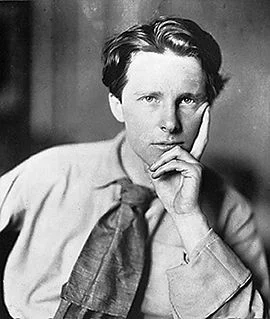
Rupert Chawner Brooke (middle name sometimes given as Chaucer)(3 August 1887–23 April 1915) was an English poet known for his idealistic war sonnets written during the First World War (especially The Soldier); however, he never experienced combat at first hand. He was also known for his boyish good looks, which prompted the Irish poet William Butler Yeats to describe him as \"the handsomest young man in England\". English poet Brooke was born at 5 Hillmorton Road in Rugby, Warwickshire, the second of the three sons of William Parker Brooke, a Rugby schoolmaster, and Ruth Mary Brooke, née Cotterill. He attended Hillbrow Prep School before being educated at Rugby School. While travelling in Europe, he prepared a thesis entitled \"John Webster and the Elizabethan Drama\", which won him a scholarship to King\'s College, Cambridge, where he became a member of the Cambridge Apostles, helped found the Marlowe Society drama club and acted in plays including the Cambridge Greek Play. Brooke...
7 poezii, 0 proze
 VH
VHVicente Huidobro
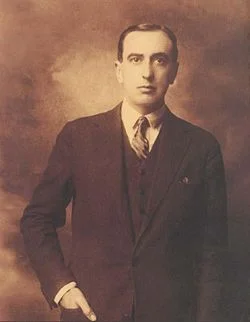
Vicente García-Huidobro Fernández (January 10, 1893 – January 2, 1948) was a Chilean poet born to an aristocratic family. He was an exponent of the artistic movement called Creacionismo ("Creationism"), which held that a poet should bring life to the things he or she writes about, rather than just describe them. Huidobro was born into a wealthy family in Santiago. After spending his first years in Europe, he enrolled in a Jesuit secondary school in Santiago where he was expelled for using a ring, which he claimed, was for marriage. He studied literature at the University of Chile and published Ecos del alma (Soul's Echoes) in 1911, a work with modernist tendencies. The following year he married, and started to edit the journal Musa Joven (Young Muse), where part of his later book, Canciones en la noche (Songs in the Night) appeared, as well as his first calligram, "Triángulo armónico" ("Harmonic Triangle"). In 1913, along with Carlos Díaz Loyola, he edited the three issues of the...
4 poezii, 0 proze
The Tree
de Ezra Pound
I stood still and was a tree amid the wood, Knowing the truth of things unseen before; Of Daphne and the laurel bow And that god-feasting couple old that grew elm-oak amid the wold. \'Twas not until...
The Tree
de Ezra Pound
I stood still and was a tree amid the wood, Knowing the truth of things unseen before; Of Daphne and the laurel bow And that god-feasting couple old that grew elm-oak amid the wold. \'Twas not until...
The Bear
de Robert Frost
The bear puts both arms around the tree above her And draws it down as if it were a lover And its choke cherries lips to kiss good-bye, Then lets it snap back upright in the sky. Her next step rocks...
The death of the nature
de Vlad Adrian
All the lives are on the ground And I scatter them around All the trees are empty now I don't know why, I don't know how Everything has died today There's nothing I can do, there's nothing I can say...
Now Close the Windows
de Robert Frost
Now close the windows and hush all the fields: If the trees must, let them silently toss; No bird is singing in them now, and if there is, Be it my loss. It will be long ere the marshes resume, It...
THE GRIFFIN
de Alina Mihai
I took the path of silence and of black night The sunlit world was far behind me The grass swayed gently in the moonlight And trees were tall, and starry sky And yet all these I could not see. On...
The Little Mermaid
de Radu Herinean
The Little Mermaid - - - - by Hans Christian Andersen Far out in the ocean, where the water is as blue as the prettiest cornflower, cornflower, and as clear as the purest glass. But it is very deep...
Ballad of the Goodly Fere
de Ezra Pound
Simon Zelotes speaketh it somewhile after the Crucifixion Ha\' we lost the goodliest fere o\' all For the priests and the gallows tree? Aye lover he was of brawny men, O\' ships and the open sea....
The freedom of the leaf
de Vavila Popovici
You want the freedom of the leaf, its power to reveal and color in the green of hope; to call the warm rays of the sun and happy raindrops, to her sweet delight! The freedom and generosity of the...
Light As The Breeze
de Leonard Cohen
She stands before you naked you can see it, you can taste it, and she comes to you light as the breeze. Now you can drink it or you can nurse it, it don\'t matter how you worship as long as you\'re...